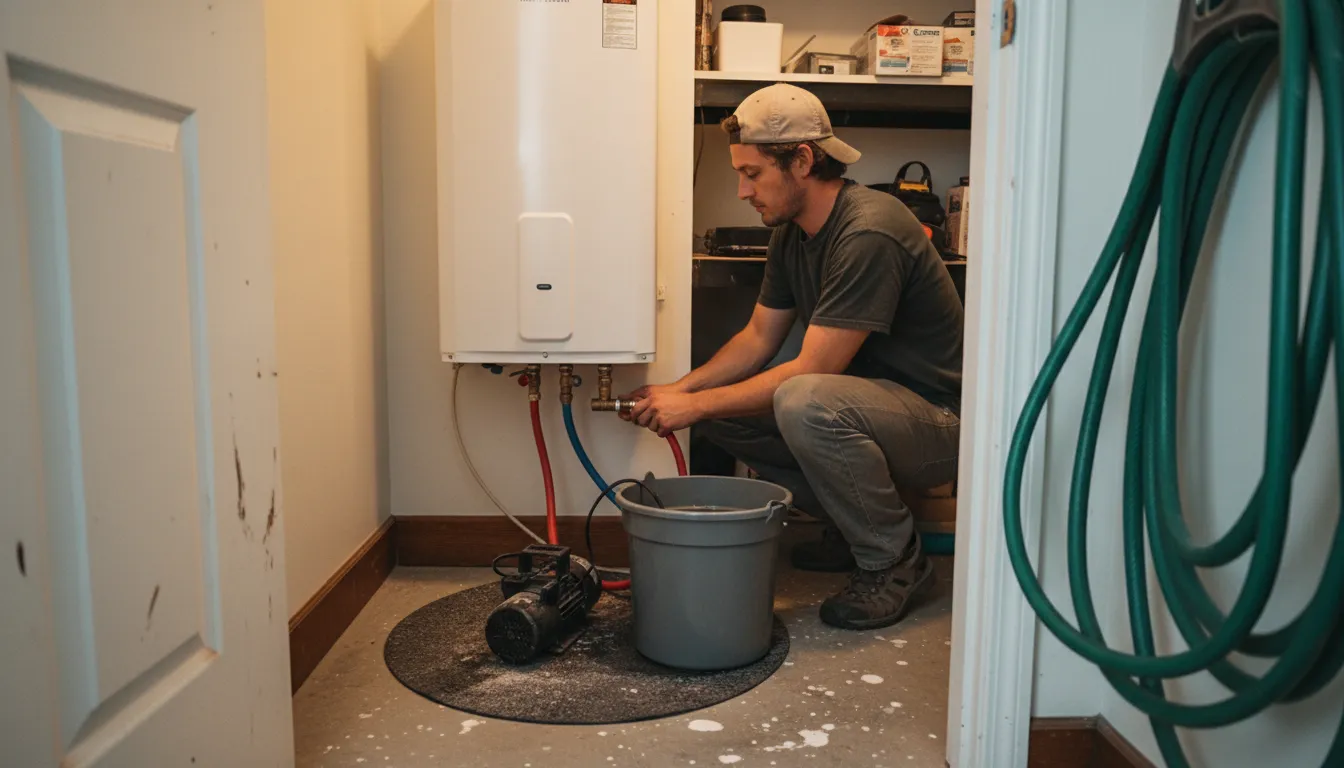
Find the Best Tankless Water Heater Service Companies for Your Business
No obligation • Fast responses • Nationwide coverage

Why you can trust Search a Plumber
Search a Plumber is a leading United States resource for finding and evaluating professional plumbing services. Our team researches licensing, experience, and customer feedback to create unbiased, fact-driven overviews. Companies cannot pay to change ratings or placement, ensuring homeowners get trustworthy information.
Search providers near you
Top Tankless Water Heater Service Companies in Indianapolis, Indiana Ranked
A tankless water heater provides hot water on demand, eliminating the standby energy loss of a traditional storage tank. This modern system is a significant upgrade for Indianapolis homes, offering long-term energy savings and an endless supply of hot water. Finding a qualified local specialist is crucial, as proper sizing, installation, and maintenance are key to unlocking the full benefits of this technology. This guide will help you understand the local considerations, costs, and process for installing or repairing an on-demand water heater in your home.

Home Heroes Plumbing Heating & Air
7768 Kane Ct, Fishers, IN 46038
Home Heroes Plumbing Heating & Air is a locally owned plumbing, heating, and air conditioning service provider based in Fishers, Indiana. Serving Indianapolis, IN, and surrounding areas, they offer a range of services including water heater repair and installation, tankless water heater services, water softener installation, sump pump repair, drain cleaning, leak detection, gas line installation, and toilet repair. The company specializes in handling plumbing emergencies during business hours and provides expert solutions such as Rheem water heater installations, including tankless models. With over a decade of experience, Home Heroes Plumbing Heating & Air is committed to delivering reliable service tailored to customer needs.

Cornwell Plumbing
5724 N Green St 2nd Floor, Brownsburg, IN 46112
Cornwell Plumbing is a family-owned plumbing company serving Indianapolis, IN, and surrounding areas including Brownsburg, Pittsboro, and Hendricks County. Established in 1989, they offer a wide range of plumbing services such as sewer camera inspections, water heater repair and installation, water softener installation, sump pump and sewage pump repair, drain cleaning, leak detection, repiping, toilet and garbage disposal repair. Their expertise includes using advanced tools like sewer cameras to diagnose pipe issues accurately. Cornwell Plumbing provides emergency plumbing services when available and focuses on personalized, honest service for both residential and commercial clients.
Mowery Heating, Cooling & Plumbing
710 E Main St, Brownsburg, IN 46112
Mowery Heating, Cooling & Plumbing is a full-service plumbing and HVAC company serving Indianapolis, IN. They offer a wide range of services including sewer camera inspections, water heater installation and repair, tankless water heater services, water softener installation, sump pump repair, drain cleaning, sewer line repair, leak detection, repiping, gas line installation, toilet repair, and garbage disposal repair. The company is equipped to handle complex plumbing issues such as sewer line blockages and gas leak repairs. Mowery has a long-standing presence in the community with over 20 years of experience. They also provide emergency plumbing services, including after-hours support for urgent repairs.
Godby Heating Plumbing Electrical
7852 Moller Rd, Indianapolis, IN 46268
Godby Heating Plumbing Electrical is a full-service provider based in Indianapolis, IN, offering heating, cooling, plumbing, and electrical services. They handle water heater installation and repair, including tankless models, water softener installation, sump pump repair, drain cleaning, leak detection, repiping, and toilet repair. Their team also provides HVAC services such as furnace and air conditioner maintenance to ensure year-round home comfort. Godby emphasizes expert work without gimmicks, aiming to keep homes comfortable and systems running efficiently throughout the seasons.
Mr. Plumber by Metzler & Hallam
10640 E 59th St, Indianapolis, IN 46236
Mr. Plumber by Metzler & Hallam is a licensed and insured plumbing service provider located in Indianapolis, IN. They offer a wide range of plumbing services including water heater repair and installation, tankless water heater services, drain cleaning, sewer line repair with trenchless options, sump pump repair, leak detection, gas line installation, toilet and garbage disposal repair, and water softener installation. The company emphasizes thorough diagnostics and customer education to help homeowners make informed decisions. They provide 24/7 emergency plumbing services to address urgent issues promptly. Mr. Plumber also specializes in hydro jetting for effective drain cleaning and sewer maintenance.
Understanding Tankless Water Heater Systems
Often called on-demand or instantaneous water heaters, these units heat water directly without using a storage tank. When a hot water tap is turned on, cold water travels through a pipe into the unit, where it is heated by either a gas burner or an electric element. This provides a continuous supply of hot water, ideal for larger households or those who dislike running out mid-shower. The primary advantage is energy efficiency; by only heating water as it's needed, you can avoid the energy costs associated with keeping 40-80 gallons of water hot 24/7.
For Indianapolis residents, this efficiency can translate to noticeable savings on utility bills. However, the upfront investment is higher than a traditional tank model, and the installation is more complex. It's not a simple swap; it requires a professional assessment of your home's capacity to support the unit's demands, whether gas or electric.
Key Home Requirements for Installation
Before you can enjoy endless hot water, your Indianapolis home must meet specific requirements. A professional installer will evaluate these critical factors to ensure a safe and effective setup.
Fuel Source: Gas vs. Electric Your choice between a gas or electric on-demand heater is often dictated by your home's existing infrastructure.
- Natural Gas or Propane: This is a common choice in Indianapolis for homes with existing gas service. Gas tankless heaters typically provide a higher flow rate, making them suitable for homes with greater simultaneous hot water needs (like multiple showers). However, they require a gas line of sufficient size; your existing line may need to be upgraded to handle the unit's higher demand, which adds to the installation cost 1.
- Electric: Electric tankless systems have a simpler installation process as they don't require venting. This can make them ideal for point-of-use applications or homes without gas service. The major consideration is your home's electrical capacity. High-flow electric models can require a significant amperage upgrade, often needing dedicated 240-volt circuits. An electrician may need to upgrade your panel to accommodate the new load.
Proper Venting for Gas Models Safety is paramount. Gas-fired tankless water heaters produce combustion gases that must be vented directly outside. Most modern units use a "direct-vent" system with specially rated PVC piping. The venting route-through a wall or roof-must be carefully planned to meet manufacturer specifications and local building codes. Improper venting can lead to dangerous carbon monoxide buildup in your home.
Correct Sizing is Critical Perhaps the most important step is selecting the right size unit. Sizing for a tankless system is not about tank capacity but about flow rate and temperature rise. It's measured in Gallons Per Minute (GPM) and calculated based on your household's peak hot water demand. A professional will calculate the total GPM needed if, for example, someone is showering (2.5 GPM) while the dishwasher (1.5 GPM) is running on a cold winter day when the incoming groundwater temperature is low. An undersized unit will fail to meet your needs, leading to lukewarm water and dissatisfaction 2.
Physical Space and Access While tankless units are compact and mount on a wall, saving floor space compared to a traditional tank, they still require specific clearances for safety and service access. They need to be installed in a location with adequate airflow (for gas models) and access to fuel, water, and electrical connections. Your installer will identify the optimal location that meets all these requirements.
Find the perfect tankless water heater service companies for your needs
Get personalized recommendations and expert advice
Installation and Replacement Costs in Indianapolis
The total cost for a new tankless water heater in Indianapolis is a significant investment in your home's efficiency. Understanding the cost breakdown helps in planning and getting accurate quotes.
Total Installed Cost Range For a full tankless water heater installation in Indianapolis, homeowners can expect a total cost ranging from $2,500 to $4,500 or more 3 4. This wide range reflects the variables involved. A straightforward replacement in a home with perfect existing conditions will be at the lower end, while a complex install requiring new gas lines, upgraded electrical service, or intricate venting will reach the higher end.
Cost Breakdown: Equipment vs. Labor The cost consists of two main parts:
- Equipment: The tankless unit itself is more expensive than a standard tank-style heater. High-efficiency condensing gas models or large-capacity electric models command a premium price.
- Labor & Materials: This is where costs can vary dramatically. Labor for a standard install may range from $400 to $1,800+. This fee covers the skilled work of mounting the unit, making all water, gas, and electrical connections, installing venting, and ensuring everything is up to code. The "materials" part includes all necessary pipes, fittings, vent kits, wiring, and any new circuit breakers or gas line components 5 6.
Factors Influencing Your Final Price
- Fuel Type: Gas installations are generally more complex and costly due to venting and potential gas line work. Electric installs may be simpler but can incur high costs if an electrical panel upgrade is needed.
- Unit Size and Efficiency: A larger, higher-GPM unit or one with a higher energy factor (EF) will cost more.
- Existing Infrastructure: The condition and capacity of your current gas lines, electrical service, and water pipes. Upgrading any of these systems adds to the project cost.
- Installation Complexity: Running new vent pipes through finished walls or installing the unit far from the main utilities increases labor time and material costs.
The Importance of Professional Maintenance
To protect your investment and ensure your tankless system lasts its expected 15-20+ year lifespan, annual maintenance is highly recommended. This is especially important in the Indianapolis area, which has moderately hard water. Minerals like calcium and lime can build up inside the heat exchanger over time, reducing efficiency, causing overheating, and potentially voiding the manufacturer's warranty 7.
A standard maintenance visit from a qualified technician includes flushing the system with a descaling solution to remove mineral deposits and checking all connections, vents, and filters. This proactive service helps maintain peak energy efficiency, ensures safe operation, and can prevent costly repairs down the line.
Repair Costs for Tankless Water Heaters
Even with proper maintenance, components can fail. The average cost to repair a tankless water heater in Indianapolis is approximately $643, with most repairs falling within a range of $238 to $1,047 8. Common issues include:
- Ignition or Flame Failure (Gas Units): Problems with the gas valve, igniter, or flame sensor.
- Flow Sensor Issues: The unit doesn't detect water flow and therefore doesn't activate.
- Scale Buildup: Severe mineral accumulation causing error codes or reduced performance.
- Heat Exchanger Problems: Cracks or leaks, which are often serious and costly repairs.
Diagnosing the specific issue requires a trained professional familiar with the complex electronics and mechanics of on-demand water heaters.
Making the Decision: Is Tankless Right for You?
A tankless water heater is an excellent choice for Indianapolis homeowners who prioritize long-term energy savings, have a sufficient upfront budget, and live in a home that can accommodate the system's requirements. It's ideal for families with high hot water usage or those looking to free up valuable floor space.
The key to a successful project is a professional assessment. A reputable local specialist, like those referenced in local guides, will evaluate your home's fuel sources, electrical capacity, and hot water usage patterns to provide an accurate quote and recommend the correctly sized unit 9 10. This ensures your new on-demand water heater delivers reliable, efficient performance for years to come.
Frequently asked questions
Sources
Footnotes
-
Indianapolis Tankless Water Heater Installation & Service - https://williamscomfortair.com/tankless-water-heaters/ ↩
-
Tankless Water Heater Cost in Indianapolis [2026 Data] - https://www.angi.com/articles/how-much-does-tankless-water-heater-cost/in/indianapolis ↩
-
How Much Does Water Heater Replacement Cost in Indianapolis, IN? - https://www.angi.com/articles/how-much-does-water-heater-installation-cost/in/indianapolis ↩
-
Water Heater Replacement Costs: What Indianapolis Homeowners ... - https://www.isleyplumbing.com/2025/04/water-heater-replacement-costs-what-indianapolis-homeowners-can-expect/ ↩
-
The Cost of Your New Water Heater Will Make Your Blood Boil. - https://polarismanagementindianapolis.com/the-cost-of-water-heaters-is-gonna-make-your-blood-boil/ ↩
-
How Much Does a New Indianapolis Water Heater Cost? - https://mrplumberindy.com/knowledge-center/water-heater-cost-indianapolis/ ↩
-
Water Heater Installation & Replacement in Indianapolis, IN - https://northerncomfortsystems.com/indianapolis/plumbing/water-heaters/installation/ ↩
-
How Much Does Water Heater Repair Cost in Indianapolis, IN? | Angi - https://www.angi.com/articles/how-much-does-it-cost-repair-water-heater/in/indianapolis ↩
-
Tankless Water Heaters Indianapolis IN - Hope Plumbing - https://www.hopeplumbing.com/tankless-water-heaters-indianapolis-in/ ↩
-
Tankless Water Heater Repair & Services in Indianapolis, IN - https://chapmanheating.com/plumbing/tankless-water-heater-repairs-installation/ ↩