Find the Best Sewer Line Repair Companies for Your Business
No obligation • Fast responses • Nationwide coverage

Why you can trust Search a Plumber
Search a Plumber is a leading United States resource for finding and evaluating professional plumbing services. Our team researches licensing, experience, and customer feedback to create unbiased, fact-driven overviews. Companies cannot pay to change ratings or placement, ensuring homeowners get trustworthy information.
Search providers near you
Best Sewer Line Repair Companies in West Virginia Ranked
A failing sewer line is a serious issue that can disrupt your home and pose health risks. Sewer line repair involves diagnosing and fixing the underground pipe that carries wastewater from your home to the municipal sewer main. In West Virginia, this work often requires navigating specific challenges like soil conditions, depth, and older pipe materials. This guide provides clear, practical information to help you understand the repair process, costs, and how to find qualified local professionals for the job.
Common Causes of Sewer Line Problems in West Virginia
Several factors can lead to sewer line failure, especially in older West Virginia homes. Understanding the cause is the first step toward an effective repair.
- Aging Pipes: Many homes built before the 1970s have sewer lines made of cast iron, clay, or concrete. Over decades, these materials can corrode, crack, or collapse. Cast iron rusts from the inside out, while clay and concrete are brittle and prone to root intrusion and shifting soil.
- Tree Root Intrusion: This is a leading cause of blockages and damage. Tree roots seek out moisture and can infiltrate even small cracks or loose joints in sewer pipes. Once inside, they grow and expand, causing major clogs and eventually breaking the pipe.
- Ground Shifting and Settlement: West Virginia's varied terrain and soil types can lead to ground movement. Freeze-thaw cycles, heavy rains, or soil erosion can cause pipes to settle, shift, or lose proper slope, leading to sags (bellies) where waste collects and causes blockages.
- Grease and Debris Buildup: Pouring fats, oils, and grease down drains, or flushing non-flushable items, can create stubborn clogs that solidify within the pipe, restricting flow and increasing pressure.
Materials: From Old Pipes to Modern Solutions
The material of your existing sewer line greatly influences the repair approach and cost.
- Common Old Materials: Cast iron, clay, and concrete were standard for decades. While durable, they have a finite lifespan and are more susceptible to the problems listed above.
- Modern Replacement Standard: Today, PVC (Polyvinyl Chloride) is the preferred material for sewer line replacement. Schedule 35 or 40 PVC is cost-effective, highly durable, resistant to corrosion, and has smooth interior walls that resist root intrusion and scaling. When damaged cast iron or clay lines are replaced, PVC is almost always the recommended choice for its long-term performance and value 1.
- Other Options: ABS plastic is similar to PVC. While cast iron and copper are still used in some specific applications, they are significantly more expensive for materials alone.
The Sewer Line Repair and Replacement Process
A major sewer line project is a multi-step process. Knowing what to expect can help you plan and communicate effectively with your contractor.
- Inspection and Diagnosis: A professional will typically use a specialized sewer camera to inspect the line. This identifies the exact location, nature, and extent of the damage, which is crucial for determining the best repair method.
- Utility Locate (Call 811): Before any digging, you or your contractor must call 811 (or 1-800-245-4545). This free service alerts all relevant utility companies to mark the location of underground gas, water, electric, and communication lines. This is a critical safety and legal step to prevent dangerous and costly damage.
- Permitting: Significant sewer line work usually requires a permit from your local municipality. A reputable contractor will handle this, ensuring the project complies with West Virginia and local building codes. The work will typically need to be inspected and approved upon completion.
- Excavation vs. Trenchless Methods:
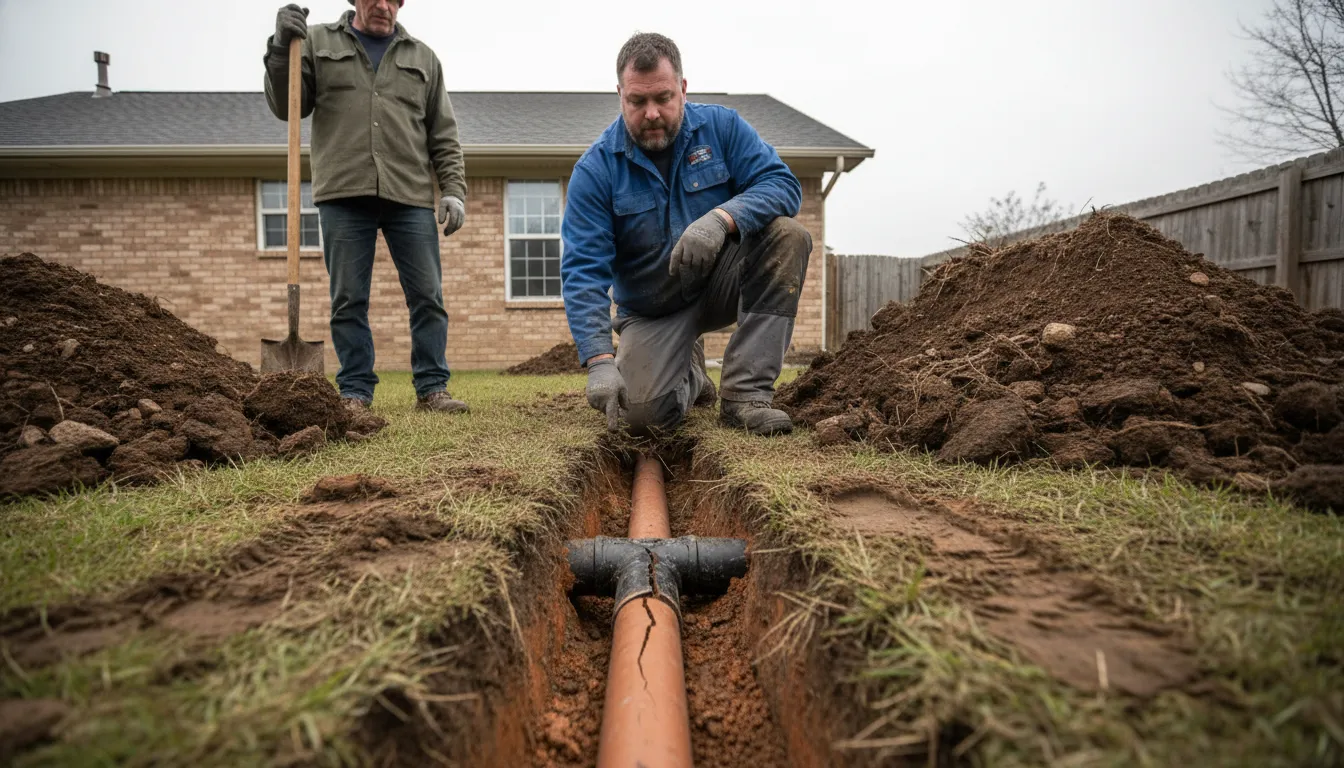
- Traditional Excavation: This involves digging a trench along the path of the sewer line to access and replace the pipe. The required depth is a key factor. In West Virginia, residential sewer lines are typically buried 18 to 30 inches deep, but in colder areas or under driveways, they can be as deep as 6 feet to prevent freezing 2. Depth, length, and obstacles (like landscaping, patios, or driveways) significantly impact labor and restoration costs.
- Trenchless Repair: Methods like pipe bursting can be a less disruptive alternative. A new pipe (usually PVC) is pulled through the old, shattered pipe, creating a new line without a continuous trench. While it saves on landscape restoration, it has specific requirements and setup costs.
- Installation and Testing: The new pipe (most often PVC) is installed, connected, and tested for leaks and proper flow.
- Backfill and Restoration: The trench is filled, compacted, and the surface (grass, concrete, etc.) is restored as closely as possible to its original condition.
Find the perfect sewer line repair companies for your needs
Get personalized recommendations and expert advice
Cost Factors for Sewer Work in West Virginia
Sewer line repair costs in West Virginia vary widely based on the project's scope. Here's a breakdown of key factors:
- Extent of Damage: A small, localized spot repair is less expensive than a full line replacement. Costs can range from $1,000 to $4,000 for repairs to $3,000 to $7,000 or more for a full replacement, with complex jobs exceeding $10,000 3.
- Pipe Material: The cost of the pipe itself varies. For a 40-foot run, material costs can be approximately:
- PVC/ABS: ~$120 - $440
- Cast Iron: ~$800 - $3,000 4
- Copper: ~$1,200 - $3,200 5
- Labor and Access: This is often the largest cost driver. Depth, length, and obstacles (rocky soil, tree roots, paved surfaces) increase excavation time and complexity. Trenchless methods may reduce restoration costs but have higher equipment fees 6 7 8.
- Permits and Inspections: Local permit fees and any required inspection costs will add to the total project price 9.
Choosing a Service Provider in West Virginia
Selecting the right professional is crucial for a successful, long-lasting repair.
- Licensing and Insurance: Always verify that the plumber or contractor is licensed to work in West Virginia and carries both liability and workers' compensation insurance.
- Experience and Specialization: Look for companies with specific experience in sewer line diagnostics and the repair methods you're considering (e.g., trenchless technology).
- Detailed Estimates: Obtain written, itemized estimates from at least three companies. The estimate should detail labor, materials, permit fees, and restoration work. Be wary of quotes that seem unusually low.
- References and Reviews: Check online reviews and ask for references from recent, similar projects. A reputable company should be willing to provide them.
- Warranties: Ask about warranties on both the materials used and the labor performed.
Maintaining Your Sewer Line
Preventive maintenance can extend the life of your sewer line and help you avoid emergency repairs.
- Mind What You Flush: Only flush human waste and toilet paper. Never flush wipes (even "flushable" ones), feminine hygiene products, paper towels, or grease.
- Manage Grease: Collect cooking fats and oils in a container and dispose of them in the trash, not down the sink.
- Landscaping Awareness: Be mindful of planting trees with aggressive root systems near your sewer line's path. If you have existing trees, consider root barrier treatments.
- Regular Inspections: For older homes, consider a professional sewer camera inspection every few years or before purchasing a property to identify minor issues before they become major failures.
Frequently asked questions
Sources
Footnotes
-
The Cost of Sewer Line Replacement: What to Expect - https://www.secondopinionsewer.com/the-cost-of-sewer-line-replacement/ ↩
-
Understanding Sewer Line Replacement: What to Expect - https://flomaxxinc.net/blogs/understanding-sewer-line-replacement-guide-cost-process/ ↩
-
Cost to Repair Sewer Line - Whitney Services - https://callwhitney.com/how-much-does-it-cost-to-repair-sewer-line/ ↩
-
2026 Sewer Line Repair & Replacement Costs | What to Expect - https://modernize.com/plumbing/systems/drainage/sewer-line-repair-replace-cost ↩
-
How Much Does It Cost to Fix a Sewer Line in 2025 - VEVOR - https://www.vevor.com/diy-ideas/how-much-does-it-cost-to-fix-a-sewer-line/ ↩
-
Average Cost Of Sewer Line Repair & Replacement 2023 - https://www.superbrothers.com/average-cost-of-sewer-line-repair-replacement-2023/ ↩
-
How Deep Are Sewer Lines Buried? Complete Guide for 2025 - https://steadyflowdrainco.com/blog/how-deep-are-sewer-lines-buried/ ↩
-
Who Pays for Water Line Repair? Complete Cost Guide - https://yoderplumbing.com/who-pays-for-water-line-repair-and-what-to-know-about-costs/ ↩
-
How Much Does It Cost to Replace a Sewer Line? [2025 Data] - https://www.homeadvisor.com/cost/plumbing/repair-a-sewer-main/ ↩