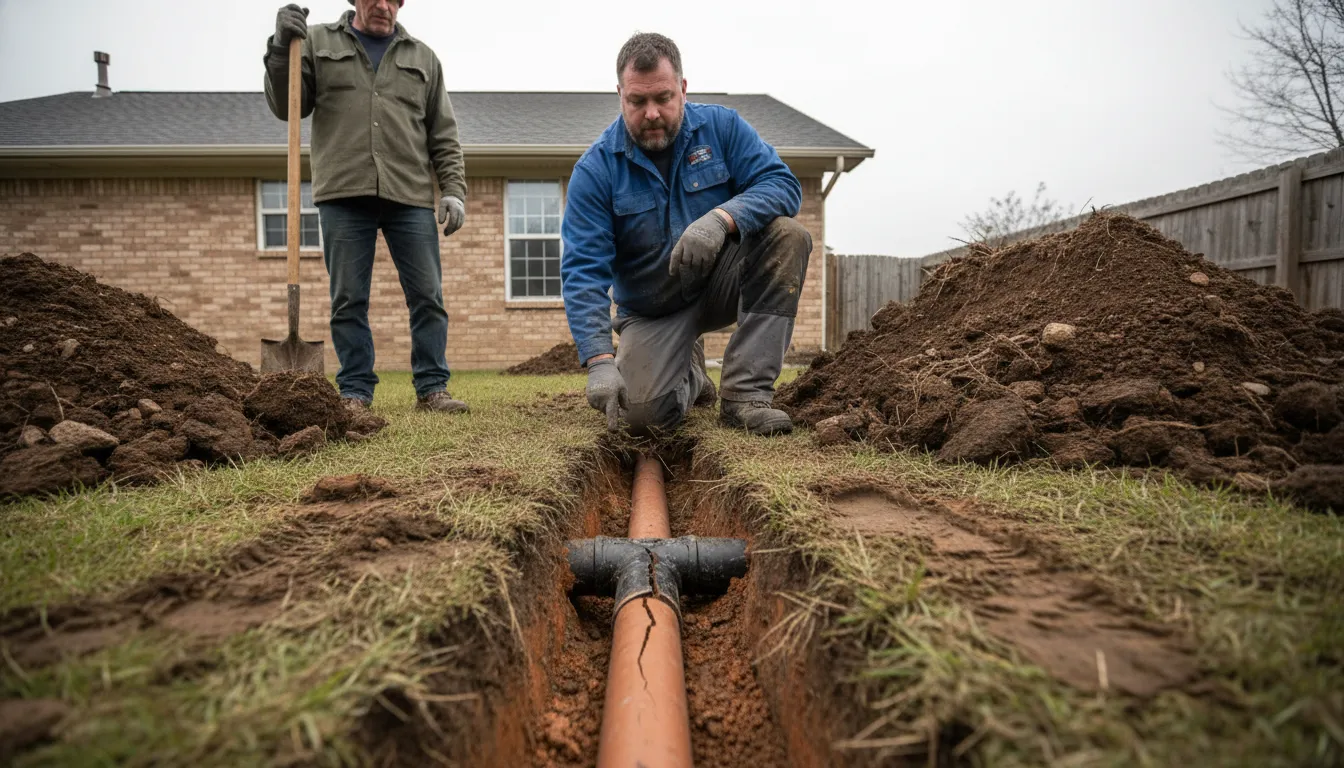
Find the Best Sewer Line Repair Companies for Your Business
No obligation • Fast responses • Nationwide coverage

Why you can trust Search a Plumber
Search a Plumber is a leading United States resource for finding and evaluating professional plumbing services. Our team researches licensing, experience, and customer feedback to create unbiased, fact-driven overviews. Companies cannot pay to change ratings or placement, ensuring homeowners get trustworthy information.
Search providers near you
Best Sewer Line Repair Companies in Washington Ranked
A damaged sewer line is a serious issue that can disrupt your home, pose health risks, and lead to costly property damage. Sewer line repair involves diagnosing and fixing the underground pipe that carries all your home's wastewater to the public sewer main. This guide explains the key considerations for Washington homeowners, from common pipe materials and repair methods to local regulations and cost factors, helping you make an informed decision when you need to find a qualified professional.
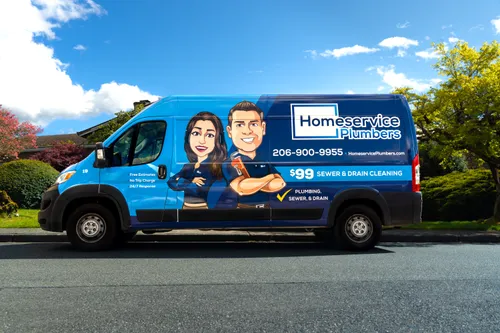
Homeservice Plumbers
13306 SE 30th St, Bellevue, WA 98005
Homeservice Plumbers is a licensed, bonded, and insured plumbing company serving Seattle, WA. They specialize in sewer camera inspections, drain cleaning, sewer line repair, and trenchless sewer repair for both residential and commercial properties. The company offers 24/7 emergency services with no trip or after-hours charges, ensuring help is available anytime plumbing issues arise. Homeservice Plumbers provides a one-year warranty on plumbing, sewer, and drain services, reflecting their commitment to quality and reliability.
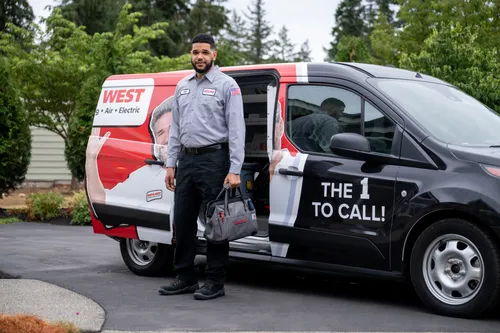
South West Plumbing, Heating, Air, & Electric
825 S Stacy St, Seattle, WA 98134
South West Plumbing, Heating, Air, & Electric provides a range of plumbing, HVAC, and electrical services in Seattle, WA. With over 40 years of experience, they offer plumbing repairs, drain cleaning, sewer line repairs including hydro jetting and video camera inspections, as well as heating and air conditioning services. Their certified technicians handle everything from clogged drains and sewer issues to furnace repairs and electrical panel upgrades, serving the Seattle community with skilled and comprehensive solutions.
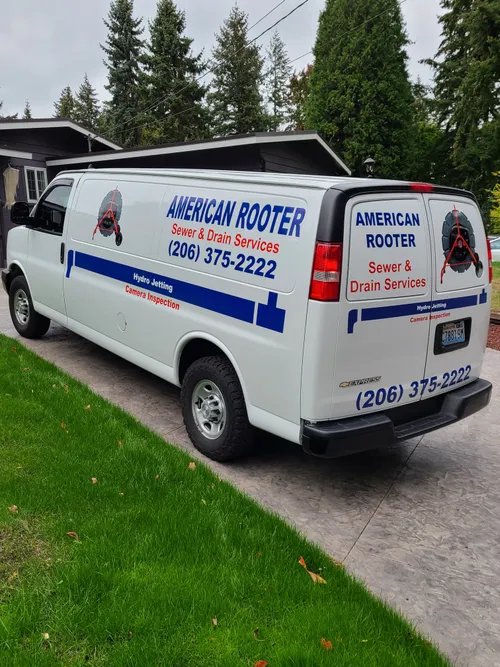
American Rooter Sewer & Drain Service LLC
1623 151st Ave SE, Bellevue, WA 98007
American Rooter Sewer & Drain Service LLC provides comprehensive sewer and drain solutions in Seattle, WA. Serving both residential and commercial clients, they offer services such as sewer line replacement, camera inspection, trenchless sewer repair, drain cleaning, and hydro jetting. With over 35 years of experience in King County, the company uses advanced technology to address a wide range of sewer and drain issues. They are licensed, bonded, and insured, and provide 24/7 availability for emergency and routine service needs.
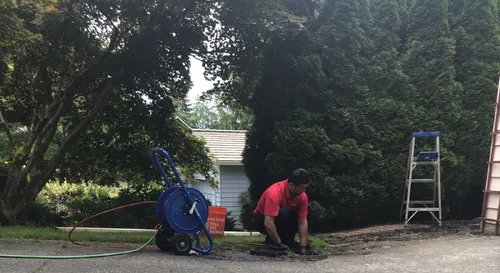
Washington Rooter Sewer & Drain Service LLC
2018 156th Ave NE Suite 100 Bldg. F, Bellevue, WA 98007
Washington Rooter Sewer & Drain Service LLC provides a wide range of plumbing services in Seattle, WA, including drain cleaning, sewer line repair, water heater installation, and hydro jetting. They serve both residential and commercial customers in the Seattle area and surrounding communities such as Kirkland, Woodinville, Redmond, Bellevue, and Kenmore. The company specializes in sewer line repair and replacement using camera-guided inspection technology to diagnose issues accurately. With over 25 years of experience, Washington Rooter is licensed, bonded, and insured, offering professional plumbing solutions for various needs.
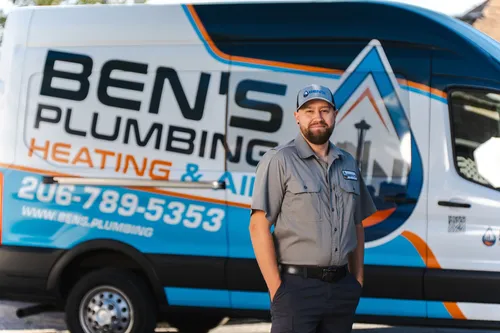
Ben’s Plumbing & Drain Cleaning
1141 NW 53rd St, Seattle, WA 98107
Ben's Plumbing & Drain Cleaning is a licensed plumbing and HVAC company serving Seattle, WA. The company offers a wide range of services including plumbing repairs, water heater installation and repair, drain cleaning, sewer line repair with trenchless options, leak detection, and repiping. They use advanced equipment such as drain inspection cameras and video inspection for sewer lines to accurately diagnose and resolve issues. Founded by industry veteran Ben Foster, Ben's Plumbing has over 25 years of experience providing personalized plumbing and HVAC services to both residential and commercial clients in the Seattle area.
Common Sewer Pipe Materials in Washington Homes
The material of your sewer line is a primary factor in its longevity and the complexity of repairs. Washington's housing stock spans many decades, leading to a variety of pipe materials in the ground.
- Clay (Terra Cotta): Common in homes built before the 1960s. While durable, clay pipes are joined with mortar and are prone to cracking from ground movement and root intrusion at the joints. They are also brittle and can be difficult to repair without full replacement.
- Cast Iron: Found in many older homes, cast iron is strong but susceptible to internal corrosion (rust) over decades, which can lead to blockages and eventual failure. Roots can also exploit small cracks or deteriorated joints.
- Orangeburg: A bitumen-impregnated fiber conduit used primarily from the 1940s to the 1970s. Often called "paper pipe," it is now known to be brittle, prone to deformation, and has a very limited lifespan. If you have Orangeburg, full replacement is highly likely.
- PVC (Polyvinyl Chloride) / ABS (Acrylonitrile Butadiene Styrene): These plastic pipes are the modern standard for new installations and replacements. They are lightweight, durable, resistant to root intrusion and corrosion, and easier for technicians to work with. Most repairs and replacements today will use PVC or ABS 1.
Identifying your pipe material, often through a video camera inspection, is the first critical step in diagnosing the problem and determining the best repair strategy.
Understanding Sewer Line Depth and Access Challenges
Sewer lines in Washington are buried at specific depths for functional and environmental reasons, which directly impacts repair difficulty and cost.
- Typical Depth: Residential sewer lines are typically buried 18 inches to 6 feet deep, or more in some cases. The depth ensures a proper slope for gravity flow and provides frost protection in Washington's colder regions. The main line connecting to the city sewer is often deeper than branch lines.
- Access Complications: The repair's location is a major cost driver. A line running under an open lawn is the most straightforward and least expensive to access. Complications arise when the damaged section is:
- Under a concrete slab (like a foundation, garage, or patio).
- Beneath driveways or extensive hardscaping.
- Underneath large trees, gardens, or other valuable landscaping.
- In a very deep or narrow trench.
Repairs in these areas require specialized equipment for detection, tunneling, or directional boring, significantly increasing the project's scope and price 2 3.
Washington Permits and the Critical "Call Before You Dig" Step
Before any shovel hits the ground, two non-negotiable steps must be completed to ensure a legal and safe repair.
- Call 811 for Utility Locates: This is a free, mandatory service. Dialing 811 (or using your state's online system) notifies all relevant utility companies, who will send locators to mark the approximate location of public underground lines (gas, water, electric, communications) on your property. This prevents catastrophic damage, service outages, and hefty fines. Never skip this step 4.
- Local Side Sewer Permits: In Washington, most cities require a permit for work on the private sewer lateral (side sewer) that connects your home to the public main. For example, Seattle requires a Side Sewer Permit for any repair, replacement, or new connection. Your licensed plumbing contractor will typically pull this permit, which ensures the work is inspected and meets current code standards for materials, slope, and connection integrity.
Find the perfect sewer line repair companies for your needs
Get personalized recommendations and expert advice
Repair Methods: From Traditional Digging to Trenchless Solutions
The chosen repair technique depends on the damage's location, extent, pipe material, and your property's layout. There are two main categories.
Traditional "Open-Cut" or "Dig and Replace"
This is the conventional method where a trench is excavated along the path of the damaged pipe. The old pipe is removed, and a new pipe (typically PVC) is laid in the trench.
- Pros: Universally applicable, allows for full inspection of the surrounding soil, and is often the best solution for severely collapsed or misaligned pipes.
- Cons: Highly invasive, destroys landscaping, driveways, and hardscapes. Requires extensive restoration work after the pipe is replaced. Excavation in tight urban lots or under structures can be prohibitively difficult.
Trenchless Sewer Repair
These advanced methods minimize surface disruption by repairing or replacing the pipe from within.
- Pipe Lining (Cured-in-Place Pipe or CIPP): A flexible, resin-saturated liner is inserted into the old pipe and inflated. The resin cures, forming a new, seamless pipe-within-a-pipe. Ideal for repairing cracks, holes, and root intrusion without excavation.
- Pipe Bursting: A conical bursting head is pulled through the old, damaged pipe, fracturing it outward while simultaneously pulling a new HDPE (high-density polyethylene) pipe into place behind it. This method completely replaces the old line with a new, slightly larger one but requires access pits at both ends of the run.
- Pros of Trenchless: Minimal digging (only at access points), preserves landscaping and hardscapes, faster completion time, and often a longer warranty on the new liner/pipe.
- Cons: Not suitable for all situations (e.g., severely collapsed pipes, sharp bends). Requires specialized equipment and trained technicians, which can influence cost.
Cost Factors for Sewer Line Repair in Washington
Costs can vary dramatically based on a confluence of factors. Here is a general breakdown of what influences the final price:
- Extent of Damage: A simple spot repair for a small crack or root intrusion will cost significantly less ($200 - $2,000+) than a full line replacement 5.
- Repair Method: Traditional dig-and-replace costs are often calculated per linear foot ($60 - $250+), but the total is heavily influenced by depth and restoration needs. Trenchless methods like CIPP or pipe bursting also run per linear foot ($110 - $250+) and can be more affordable when factoring in avoided restoration costs, though the upfront equipment cost is higher 6 7.
- Pipe Material: Working with old cast iron or clay is more labor-intensive than installing modern PVC, affecting labor costs.
- Length and Depth: Longer and deeper lines require more materials, labor, and potentially heavier equipment.
- Accessibility: As discussed, repairs under slabs, driveways, or dense landscaping add major costs for tunneling, concrete work, and restoration.
- Permits and Locates: Permit fees vary by city and are a necessary part of the project budget 8.
In the Seattle area, for context, full sewer line replacement can range from approximately $2,800 to over $8,000, with complex cases exceeding $10,000 9. The only way to get an accurate estimate is to have a professional perform a video camera inspection to diagnose the specific issue on your property.
Signs You May Need Sewer Line Repair
Be proactive. Watch for these warning signs of a potential sewer line problem:
- Multiple drain clogs throughout the home (toilets, showers, sinks).
- Gurgling sounds coming from drains or toilets.
- Sewage odors in your yard or inside the house.
- Unusually lush or soggy patches of grass in your yard, especially near the sewer line path.
- Slow drainage that standard plunging or drain cleaning cannot resolve.
- Backups in floor drains or the lowest fixtures in the home.
If you notice any of these issues, it's time to contact a professional for an inspection before the problem escalates into a major emergency.
Frequently asked questions
Sources
Footnotes
-
What materials are used for water and sewer line replacements? - https://www.quora.com/What-materials-are-used-for-water-and-sewer-line-replacements ↩
-
How Deep Should A Sewer System Be? Factors That Affect The ... - https://www.draincleaningut.com/depth-of-a-sewer-line/ ↩
-
How Deep Are Sewer Lines Buried? Complete Guide for 2025 - https://steadyflowdrainco.com/blog/how-deep-are-sewer-lines-buried/ ↩
-
Complete Guide to Residential Sewer Line Maintenance & Repair - https://sswaterworks.com/complete-guide-to-residential-sewer-line/ ↩
-
Cost to Repair Sewer Line - Whitney Services - https://callwhitney.com/how-much-does-it-cost-to-repair-sewer-line/ ↩
-
How Much Does It Cost to Fix a Sewer Line in 2025 - VEVOR - https://www.vevor.com/diy-ideas/how-much-does-it-cost-to-fix-a-sewer-line/ ↩
-
How Much Does Trenchless Sewer Repair Cost In Seattle? - https://www.secondopinionsewer.com/how-much-does-trenchless-sewer-repair-cost/ ↩
-
Side Sewer Permits - Utilities | seattle.gov - https://www.seattle.gov/utilities/construction-resources/sewer-and-drainage/side-sewer-permits ↩
-
How Much Does Sewer Line Replacement Cost in Seattle, WA? | Angi - https://www.angi.com/articles/how-much-does-sewer-line-replacement-or-repair-cost/wa/seattle ↩