Find the Best Sewer Line Repair Companies for Your Business
No obligation • Fast responses • Nationwide coverage

Why you can trust Search a Plumber
Search a Plumber is a leading United States resource for finding and evaluating professional plumbing services. Our team researches licensing, experience, and customer feedback to create unbiased, fact-driven overviews. Companies cannot pay to change ratings or placement, ensuring homeowners get trustworthy information.
Search providers near you
Best Sewer Line Repair Companies in Vermont Ranked
A damaged sewer line is a serious issue that can disrupt your home, pose health risks, and lead to costly property damage. Sewer line repair involves diagnosing and fixing the underground pipe that carries all wastewater from your home to the public sewer main. In Vermont, this work is influenced by unique factors like deep frost lines, varied soil conditions, and local regulations. This guide provides the essential information you need to understand the process, materials, costs, and legal requirements for sewer line repair in the Green Mountain State, helping you make informed decisions when seeking professional service.
Common Sewer Line Materials in Vermont Homes
The type of pipe buried on your property significantly impacts its lifespan, common failure points, and repair options. Vermont homes feature a range of materials, often reflecting the age of the plumbing system.
- PVC (Polyvinyl Chloride): This is the standard for modern installations. PVC is affordable, durable, resistant to root intrusion and corrosion, and offers excellent longevity.
- Cast Iron (CI): Common in mid-20th century homes, cast iron is very strong but prone to internal corrosion over decades, which can eventually lead to leaks or complete failure 1.
- Clay (Vitrified Clay): Found in older and historic properties, clay pipe is brittle and susceptible to cracking from ground movement. Its porous joints are magnets for tree root intrusion.
- Orangeburg (Bituminous Fiber): Used primarily from the 1940s to the 1970s, this pipe is made from wood pulp and pitch. It can deform and disintegrate over time and is often in a state of failure in older Vermont homes, requiring full replacement.
- HDPE (High-Density Polyethylene): A flexible, durable plastic often used in trenchless repair methods. Its jointless design makes it highly resistant to root and leak problems.
Key Factors Influencing Sewer Repair in Vermont
Several Vermont-specific conditions directly affect the complexity and approach to fixing a sewer main.
- Depth and Frost Line: Sewer lines must be buried below the frost line to prevent freezing. In much of Vermont, this depth is 4 to 6 feet or more, requiring significant excavation 2. Deeper digs mean more labor, time, and cost.
- Access and Terrain: The path of your sewer line dictates the repair challenge. Lines running under driveways, patios, mature landscaping, or bedrock ledge dramatically increase difficulty and expense. Rocky Vermont soil can make excavation slower and more costly compared to softer soils.
- Local Regulations: Vermont has strict rules governing wastewater. All significant sewer line work typically requires permits from your local town or wastewater district. These permits ensure the work meets state plumbing codes and environmental standards.
Legal and Safety Requirements: Permits and 811
Before any digging begins, two critical steps are non-negotiable for a safe, legal, and successful sewer line project in Vermont.
- Call 811 (Dig Safe): This free service is mandatory. Utility locators will mark the approximate locations of public underground lines (gas, electric, cable, etc.) on your property. Digging without calling can result in severe injury, service outages, and hefty fines.
- Secure Local Permits: Contact your town office or wastewater district to determine the specific permits required for your sewer line repair or replacement. Permit requirements often include detailed site plans, inspections during the work, and a final inspection. Failure to obtain permits can lead to stop-work orders and problems when selling your home 3.
Sewer Line Repair Methods and Cost Considerations
The chosen repair strategy depends on the damage's extent, pipe material, and site conditions. Costs in Vermont vary widely based on these factors.
- Partial/Spot Repair: For an isolated break or hole, a small section can be excavated and replaced. This is often the least expensive option if the rest of the pipe is sound.
- Typical Cost: $50+ per linear foot (excavation, repair, backfill) 4.
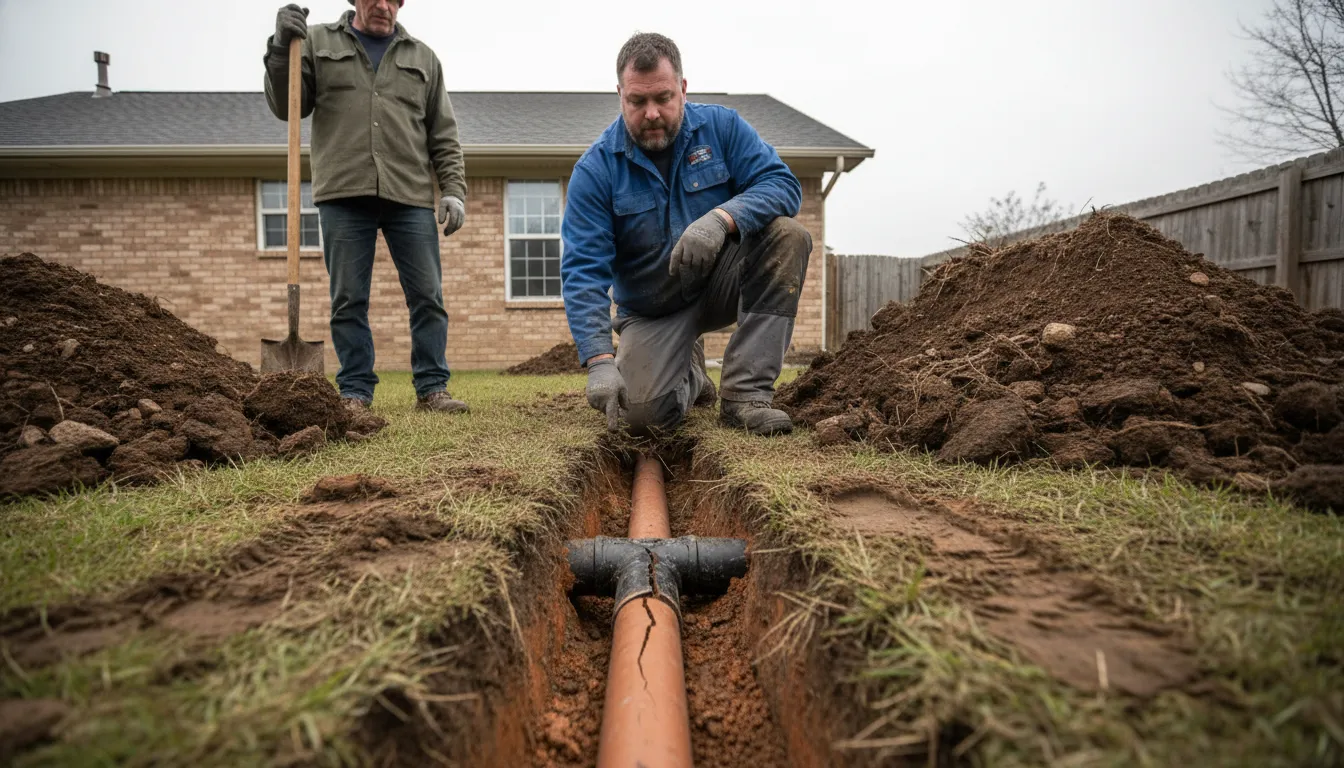
- Full Traditional Replacement (Open Trench): The entire failed line is excavated, removed, and replaced with new pipe (typically PVC). This is highly disruptive but sometimes necessary for severely damaged or collapsed lines.
- Typical Cost: $100 to $250+ per linear foot. Total project costs often range from $4,000 to $20,000+, heavily influenced by length, depth, and access challenges 5.
- Trenchless Repair (CIPP Lining): A resin-saturated liner is inserted through the existing pipe and inflated, creating a new, seamless pipe within the old one. This minimizes yard damage and is excellent for lines under obstacles.
Find the perfect sewer line repair companies for your needs
Get personalized recommendations and expert advice
Signs You Need Sewer Line Repair
Recognizing early warning signs can prevent a minor issue from becoming a major disaster. Be alert for these common indicators:
- Multiple Drain Clogs: Frequent backups in toilets, tubs, and multiple sinks simultaneously, especially when using fixtures downstairs.
- Unpleasant Odors: Persistent sewer gas smells in your yard, basement, or drains.
- Soggy or Lush Patches: Unexplained soggy, sunken, or unusually green and lush areas in your yard, indicating a leak.
- Gurgling Sounds: Hearing gurgling from toilets or drains when water is running elsewhere.
- Slow Drains: Water drains slowly from tubs, showers, and sinks despite attempts to clear them.
- Foundation Cracks or Settlement: In severe cases, a leaking sewer line can saturate soil and contribute to foundation movement.
The Professional Repair Process: What to Expect
When you hire a licensed Vermont plumbing contractor for sewer line work, the process generally follows these steps:
- Inspection & Diagnosis: A professional will likely use a sewer camera to visually inspect the interior of the pipe, pinpointing the exact location, cause, and extent of the damage.
- Locating & Permitting: They will coordinate the 811 utility locate and pull all necessary local permits on your behalf.
- Method Recommendation: Based on the camera inspection and site assessment, the contractor will recommend the most effective and efficient repair method (spot repair, full replacement, or trenchless).
- Execution: The crew will perform the repair, which may involve excavation, pipe installation, or trenchless lining.
- Testing & Inspection: The new or repaired line will be tested. A municipal inspector may visit to approve the work before backfilling.
- Restoration: The excavation site is backfilled. Final restoration (sod, gravel, pavement repair) may be included or quoted separately.
Choosing a Qualified Contractor in Vermont
Selecting the right professional is crucial. Look for a licensed, insured plumber with specific experience in sewer line repair. Ask for references, detailed written estimates that break down labor, materials, and permit fees, and ensure they handle the 811 and permitting process. A reputable contractor will provide a clear explanation of the problem, your options, and the associated costs.
Frequently asked questions
Sources
Footnotes
-
Cost to Replace Cast Iron Drain Pipe Under Slab - https://www.benjaminfranklinplumbing.com/league-city/blog/2024/december/cost-to-replace-cast-iron-drain-pipe-under-slab-key-factors-and-pricing-guide/ ↩
-
Laying a New Supply Pipe - SES Water - https://seswater.co.uk/-/media/files/seswater/developers/fact-sheet---laying-a-new-supply-pipe.pdf ↩
-
Wastewater System and Potable Water Supply Rules Effective - https://dec.vermont.gov/sites/dec/files/dwgwp/rorules/pdf/Wastewater-System-and-Potable-Water-Supply-Rules-April-12-2019.pdf ↩
-
How Much Does It Cost to Repair Sewer Line - https://callwhitney.com/how-much-does-it-cost-to-repair-sewer-line/ ↩
-
How Is the Cost of Sewer Line Repair Determined? - https://www.callwaldrop.com/blog/how-is-the-cost-of-sewer-line-repair-determined/ ↩
-
Understanding Sewer Line Replacement: What to Expect - https://flomaxxinc.net/blogs/understanding-sewer-line-replacement-guide-cost-process/ ↩
-
Complete Guide to Residential Sewer Line Maintenance ... - https://sswaterworks.com/complete-guide-to-residential-sewer-line/ ↩