Find the Best Sewer Line Repair Companies for Your Business
No obligation • Fast responses • Nationwide coverage

Why you can trust Search a Plumber
Search a Plumber is a leading United States resource for finding and evaluating professional plumbing services. Our team researches licensing, experience, and customer feedback to create unbiased, fact-driven overviews. Companies cannot pay to change ratings or placement, ensuring homeowners get trustworthy information.
Search providers near you
Best Sewer Line Repair Companies in South Carolina Ranked
A damaged sewer line is a serious issue that can lead to unpleasant odors, soggy lawns, and major property damage if left unaddressed. In South Carolina, repairing or replacing a main sewer line is a significant project that requires understanding local materials, regulations, and repair methods. This guide provides clear, practical information to help you navigate the process, understand the factors that influence cost, and connect with qualified local professionals for your repair needs.
Understanding Your Sewer Line System
Your home's main sewer line is the critical pipe that carries all wastewater from your house to the municipal sewer main or a private septic system. In South Carolina, these lines are typically buried between 2 to 6 feet deep, with depth being a major factor in repair complexity and cost. Knowing the basics of your system is the first step toward an effective repair.
Common Pipe Materials in South Carolina Homes
The material of your existing sewer pipe dictates its lifespan, common failure points, and suitable repair options.
- PVC/ABS Plastic: This is the most common material in newer homes (generally those built after the 1980s). It's affordable, durable, and resistant to root intrusion and corrosion.
- Cast Iron: Found in many older homes, cast iron is strong but prone to rust and corrosion over decades. Joints can deteriorate, making them vulnerable to root intrusion 1.
- Clay Tile: Common in very old systems, clay is brittle and can crack from ground movement or root pressure. Its joints are also prime entry points for tree roots.
- Copper: Less common for main sewer lines but occasionally used in older systems for certain sections. It is durable but can be costly to repair or replace.
- HDPE (High-Density Polyethylene): This flexible, durable plastic is often not original but is frequently used in modern trenchless repair methods like pipe bursting.
Signs You Need Sewer Line Repair
Recognizing early warning signs can prevent a small problem from becoming a catastrophic failure. Be alert for:
- Multiple Drain Clogs: Frequent backups in toilets, tubs, and sinks, especially when using multiple fixtures.
- Sewage Odors: Persistent foul smells in your yard, basement, or drains.
- Soggy or Lush Patches: Unexplained soggy areas, sinkholes, or unusually green and fast-growing patches of grass in your yard.
- Gurgling Sounds: Strange gurgling noises coming from toilets or drains when water is running elsewhere.
- Pest Infestations: An increase in insects or rodents, which can be attracted to sewer leaks.
If you notice any of these signs, it's time to contact a professional for a video camera inspection to diagnose the exact issue and location.
The Repair Process: From Diagnosis to Completion
A professional sewer line repair follows a structured process to ensure safety, compliance, and a lasting solution.
- Inspection & Diagnosis: A licensed plumber will use a specialized sewer camera to travel through your line. This provides a real-time video feed, pinpointing the exact location, depth, and cause of the problem (e.g., a crack, root intrusion, or collapsed section).
- Utility Locate (Call 811): This is a mandatory step in South Carolina and is free. Before any digging, you or your contractor must call 811 at least a few business days in advance. Utility companies will mark the locations of public underground lines (gas, water, electric) on your property to prevent dangerous strikes.
- Permitting: Most municipalities in South Carolina require a permit for sewer line work. A reputable, licensed contractor will typically handle pulling the necessary local county or city permits, ensuring the work meets all building and health codes.
- Choosing a Repair Method: Based on the inspection, your contractor will recommend the most effective solution. The two primary categories are traditional excavation and trenchless technology.
Traditional Excavation (Open Trench)
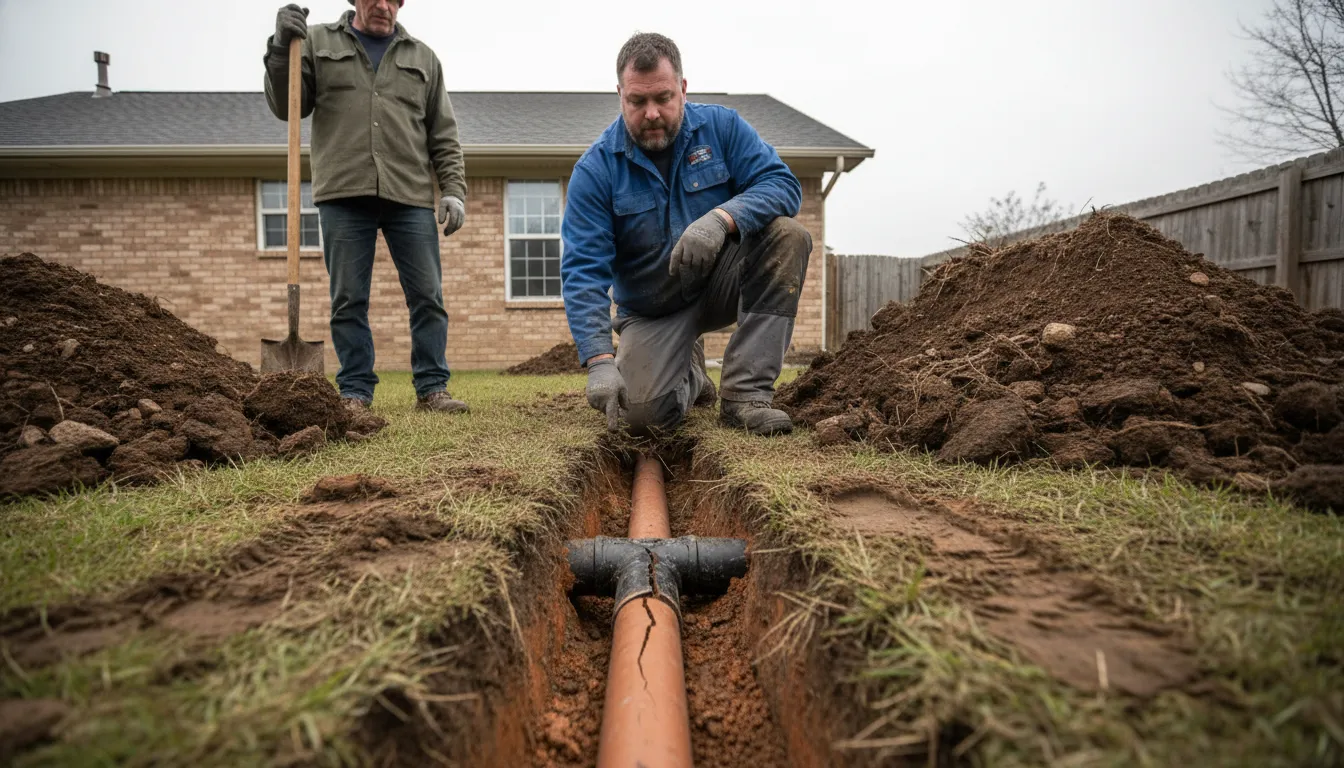
This involves using a backhoe to dig a trench along the path of the sewer line to fully expose the damaged pipe. The old pipe is removed and a new one is laid in its place. While highly effective, this method is invasive, requires significant landscape restoration, and is often more expensive due to labor and reinstatement costs 2 3.
Trenchless Repair Methods
These advanced techniques minimize digging, preserving your lawn, driveway, and landscaping. They are often faster and can be more cost-effective for certain situations.
- Pipe Lining (Cured-in-Place Pipe - CIPP): A flexible, resin-saturated liner is inserted into the old pipe and inflated. The resin cures, forming a hard, seamless "pipe within a pipe." This method is excellent for sealing cracks and holes and preventing root intrusion.
- Pipe Bursting: A bursting head is pulled through the old, damaged pipe, fracturing it outward while simultaneously pulling a new HDPE pipe into place behind it. This method replaces the old line with a new, slightly larger one without digging a continuous trench.
Find the perfect sewer line repair companies for your needs
Get personalized recommendations and expert advice
Cost Factors for Sewer Line Repair in South Carolina
Sewer line repair costs in South Carolina vary widely, typically ranging from $1,000 to over $12,000. The final price depends on a combination of factors:
- Extent of Damage: A simple spot repair is far less expensive than a full line replacement.
- Repair Method: Trenchless methods (like lining or bursting) often cost $80 to $250+ per linear foot but can save money on landscape restoration. Traditional digging can range from $50 to $250 per linear foot for replacement, with a full project often costing $3,000 to $12,000+ 4 5.
- Depth & Length: Deeper pipes (beyond 6 feet) and longer runs require more labor and equipment, increasing cost 6 7.
- Pipe Material & Access: The cost to excavate and replace cast iron or copper is higher than PVC. Easy access to the line lowers costs; obstacles like trees, pools, or driveways increase them.
- Labor & Permits: Local labor rates and permit fees will be factored into the total estimate.
Example Material Costs: For a 40-foot section, material costs alone can illustrate the difference: PVC/ABS may range from $120-$440, while cast iron or copper could be $800-$3,200+ 8.
Why Hiring a Licensed South Carolina Professional is Essential
Sewer line work is not a DIY project. It involves heavy machinery, deep excavation, and strict adherence to health and building codes.
- Licensing: South Carolina requires certain plumbing and sewer work to be performed by licensed professionals. A licensed contractor carries the necessary insurance and bonding to protect you and your property 9.
- Expertise & Equipment: Professionals have the training, experience, and specialized equipment (like sewer cameras and trenchless machinery) to diagnose and fix the problem correctly the first time.
- Regulatory Compliance: They understand local codes and will secure all required permits and coordinate the mandatory 811 utility locate, keeping your project legal and safe 10 11.
Always get detailed, written estimates from at least three licensed contractors. The estimate should include a clear scope of work, the repair method to be used, a timeline, and a breakdown of all costs, including permits and restoration.
Frequently asked questions
Sources
Footnotes
-
Sewer Line Repairs and Replacement - https://www.siteprep.com/sewer-repairs/ ↩
-
Sewer Line Repair and Replacement - This Old House - https://www.thisoldhouse.com/plumbing/sewer-line-repair ↩
-
Sewer Line Replacement vs. Repair: Cost, Lifespan & ROI - https://www.ktplumbinginc.com/expert-tips/sewer-line-replacement-vs-repair-cost-lifespan-roi/ ↩
-
Cost to Repair Sewer Line - Whitney Services - https://callwhitney.com/how-much-does-it-cost-to-repair-sewer-line/ ↩
-
2026 Sewer Line Repair & Replacement Costs | What to Expect - https://modernize.com/plumbing/systems/drainage/sewer-line-repair-replace-cost ↩
-
How Much Does Sewer Line Repair Typically Cost? - https://www.jsewerandplumbing.com/how-much-does-sewer-line-repair-typically-cost/ ↩
-
How Deep Should A Sewer System Be? Factors That Affect The ... - https://www.draincleaningut.com/depth-of-a-sewer-line/ ↩
-
How Much Does Sewer Line Replacement Cost? | CPI Service - https://cpiservice.com/blog/sewer-line-replacement-cost/ ↩
-
How Much Does Sewer Line Replacement Cost? - https://www.bobvila.com/articles/sewer-line-replacement-cost/ ↩
-
Sewer System Standards and Specifications - https://www.gswsa.com/gswsa_public_site/userfiles/file/Sewer%20System%20Standards%202021.pdf ↩
-
How Much Does It Cost To Replace A Sewer Line? - https://www.universehomeservices.com/blog/cost-to-replace-sewer-line/ ↩