Find the Best Sewer Line Repair Companies for Your Business
No obligation • Fast responses • Nationwide coverage

Why you can trust Search a Plumber
Search a Plumber is a leading United States resource for finding and evaluating professional plumbing services. Our team researches licensing, experience, and customer feedback to create unbiased, fact-driven overviews. Companies cannot pay to change ratings or placement, ensuring homeowners get trustworthy information.
Search providers near you
Best Sewer Line Repair Companies in Montana Ranked
A damaged sewer line is a serious issue for any Montana homeowner, disrupting daily life and posing health risks. Proper sewer line repair ensures wastewater flows safely from your property to the public sewer or private septic system, protecting your home's foundation and your family's well-being. This guide explains the key considerations for sewer line repair in Montana, from identifying materials and navigating regulations to understanding repair methods and costs, helping you make informed decisions when you need to connect with a qualified local professional.
Understanding Your Montana Sewer Line
The first step in addressing a potential problem is understanding what type of sewer line you have and how it functions. In Montana, several factors are crucial.
Common Pipe Materials: The material of your underground drain line significantly impacts its lifespan and repair options. In older Montana homes, you may find clay tile or cast iron pipes. While durable, these materials are prone to root intrusion, cracking, and corrosion over decades. Newer construction and replacements almost exclusively use plastic pipes like PVC or ABS. These materials are more flexible, resistant to root penetration, and generally easier and less expensive to repair or replace 1.
Depth and Slope Requirements: Sewer lines in Montana are typically buried 4 to 6 feet deep. This depth is critical to protect the pipes from freezing during the state's harsh winters and from surface damage. Furthermore, the pipe must be installed with a specific downward slope-usually about 1/4 inch per foot-toward the street sewer main or septic tank. This slope allows wastewater to flow via gravity; an improper slope can lead to constant clogs and backups 2 3.
Legal and Safety Requirements: What to Know Before You Dig
Excavating for a sewer repair is not a simple DIY project. State and local regulations are in place for safety and environmental protection.
Call 811 Before Digging: This is the most critical first step. By calling 811 or making an online request, you initiate a process where utility companies will come to your property and mark the locations of public underground lines, such as gas, water, and electricity. This free service is mandatory and prevents catastrophic accidents, service disruptions, and costly fines 4.
Arrange for Private Utility Locates: The 811 call only covers public utility lines up to your meter. It does not locate private underground features like your sewer line itself, septic tank, drain field, sprinkler systems, or invisible dog fences. For this, you must hire a private utility locating company. This step is essential to avoid damaging your own infrastructure during excavation.
Secure Necessary Permits: Most municipalities in Montana require a permit for sewer line repair, especially if the work involves connecting to or disturbing the public city main. Permits ensure the work is inspected and meets local engineering and public health standards. For example, connections must often use specific materials and methods approved by the local public works department. Failing to get a permit can result in work stoppages, fines, and problems when you sell your home.
Repair and Replacement Methods
When a sewer line fails, you generally have two broad approaches: traditional excavation or modern trenchless methods. The best choice depends on the damage's extent, location, pipe material, and landscape.
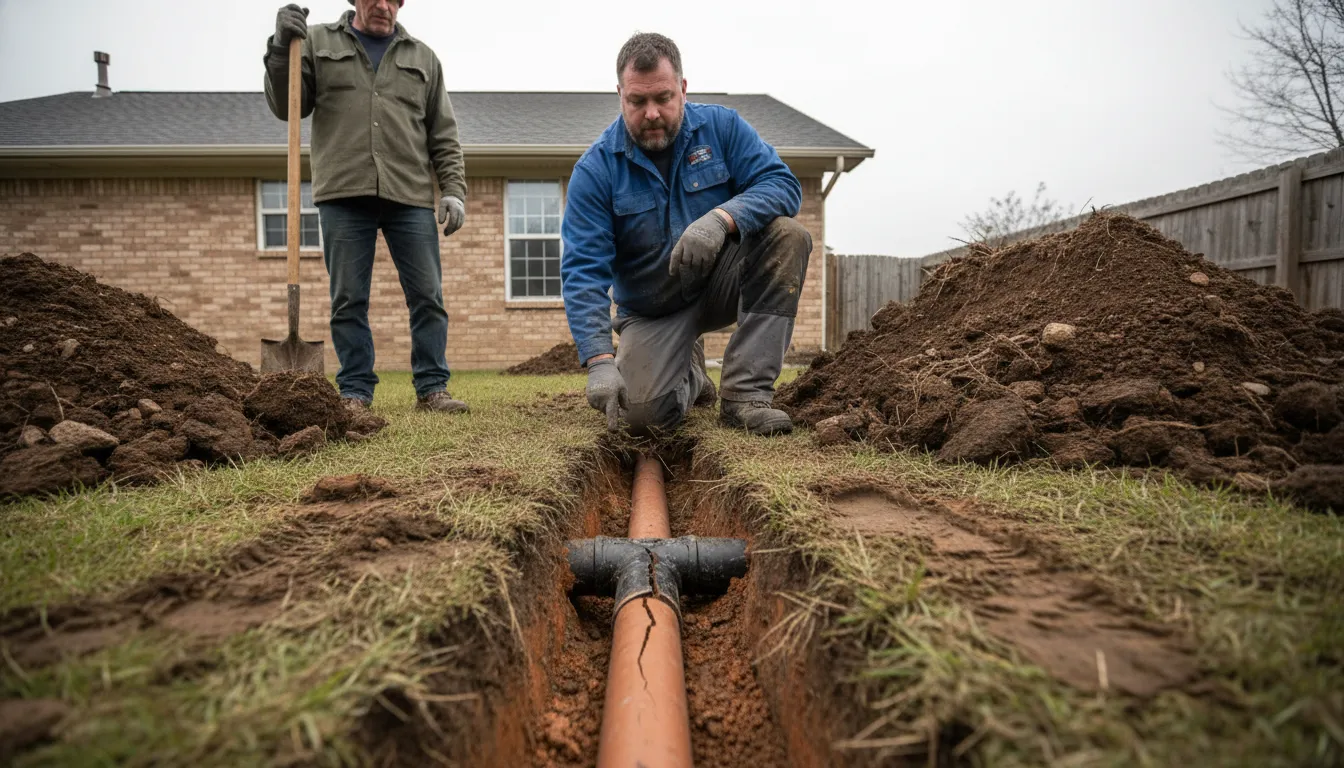
Traditional Excavation (Trenching): This is the conventional method where a trench is dug along the entire length of the damaged pipe. The old pipe is removed, and a new one is laid in its place. While highly effective and sometimes necessary for severely collapsed pipes, it is the most invasive option. It requires significant digging through yards, driveways, or landscaping, leading to higher restoration costs and longer project timelines 5.
Trenchless Repair Methods: These innovative techniques minimize surface disruption, making them ideal for repairing lines under driveways, gardens, or mature trees.
- Pipe Bursting: A conical bursting head is pulled through the old pipe, fracturing it outward while simultaneously pulling a new, often larger-diameter, HDPE pipe into place. This method replaces the old line with a new one with only small access pits at each end.
- Cured-in-Place Pipe (CIPP): A flexible liner soaked with resin is inserted into the damaged pipe. It is then inflated and cured using heat or UV light, forming a hard, seamless "pipe within a pipe." CIPP is excellent for sealing cracks and holes and preventing root intrusion but does not address major misalignment or collapse.
Find the perfect sewer line repair companies for your needs
Get personalized recommendations and expert advice
Cost Factors for Sewer Line Repair in Montana
The cost of fixing or replacing a main sewer line in Montana can vary widely, with average full replacements typically ranging from $1,388 to over $5,323 6 7. Several key factors influence the final price:
- Extent of Damage: A simple spot repair for a small crack costs far less than a full-line replacement.
- Repair Method: Trenchless methods often have higher material and equipment costs but can save significantly on labor and landscape restoration compared to open trench excavation.
- Pipe Material and Depth: Replacing cast iron is more labor-intensive and costly than replacing PVC. Deeper pipes require more excavation time and safety measures.
- Length and Accessibility: A longer line costs more. Lines under concrete slabs, driveways, or dense tree roots are more challenging and expensive to access.
- Local Labor Rates and Permits: Costs can vary between regions in Montana, and permit fees add to the project total.
- Landscape Restoration: After traditional trenching, you must budget for backfilling, re-grading, and restoring lawns, sidewalks, or hardscapes.
Adhering to Montana Standards and the Value of Professionals
Sewer systems are regulated to protect public health and water quality. The Montana Department of Environmental Quality (DEQ) sets overarching standards, particularly for septic systems and connections to public water bodies 8 9. Local cities and counties then enforce more specific plumbing and construction codes that contractors must follow 10.
Hiring a licensed, insured plumbing professional is not just a recommendation-it's a necessity for sewer work. A qualified pro will:
- Accurately diagnose the problem using camera inspection technology.
- Understand and secure all required permits and pass necessary inspections.
- Adhere to all state and local codes for materials, depth, slope, and connection methods.
- Perform the job safely, knowing how to navigate other utilities and soil conditions.
- Often provide warranties on both labor and materials, giving you long-term peace of mind.
Attempting a sewer repair without this expertise can lead to improper installation, environmental contamination, failed inspections, and even more costly damage to your property or public infrastructure.
Frequently asked questions
Sources
Footnotes
-
9 Important Plumbing Codes All Homeowners Should Know - https://www.asiheatingandair.com/plumbing/9-important-plumbing-codes-all-homeowners-should-know/ ↩
-
Complete Guide to Sewer Lines | How to Find & Warning Signs - https://johnsewer.com/a-complete-guide-to-sewer-lines/ ↩
-
Complete Guide to Residential Sewer Line Maintenance ... - https://sswaterworks.com/complete-guide-to-residential-sewer-line/ ↩
-
Private Utilities Vs Public (811) - https://www.auulinc.com/private-vs-public ↩
-
Sewer Line Replacement: Complete Guide & Cost Breakdown 2025 - https://flomaxxinc.net/blogs/understanding-sewer-line-replacement-guide-cost-process/ ↩
-
How Much Does It Cost to Replace a Sewer Line? [2025 Data] - https://www.homeadvisor.com/cost/plumbing/repair-a-sewer-main/ ↩
-
Average Cost Of Sewer Line Repair & Replacement 2023 - https://www.superbrothers.com/average-cost-of-sewer-line-repair-replacement-2023/ ↩
-
A Montana Homeowner's Guide to Septic Systems - https://deq.mt.gov/files/Land/SolidWaste/Documents/HomeownerGuideSepticSystems.pdf ↩
-
Circular DEQ 2 - Montana Department of Environmental Quality - https://deq.mt.gov/files/water/WQInfo/Documents/Circulars/Circulars/2018DEQ-2.pdf ↩
-
Engineering and Design Standards and Construction Standards - https://www.cityofdeerlodgemt.gov/sites/g/files/vyhlif12766/files/media/administrative-officer/file/2046/final-engineering-standards-july-2-2019.pdf ↩