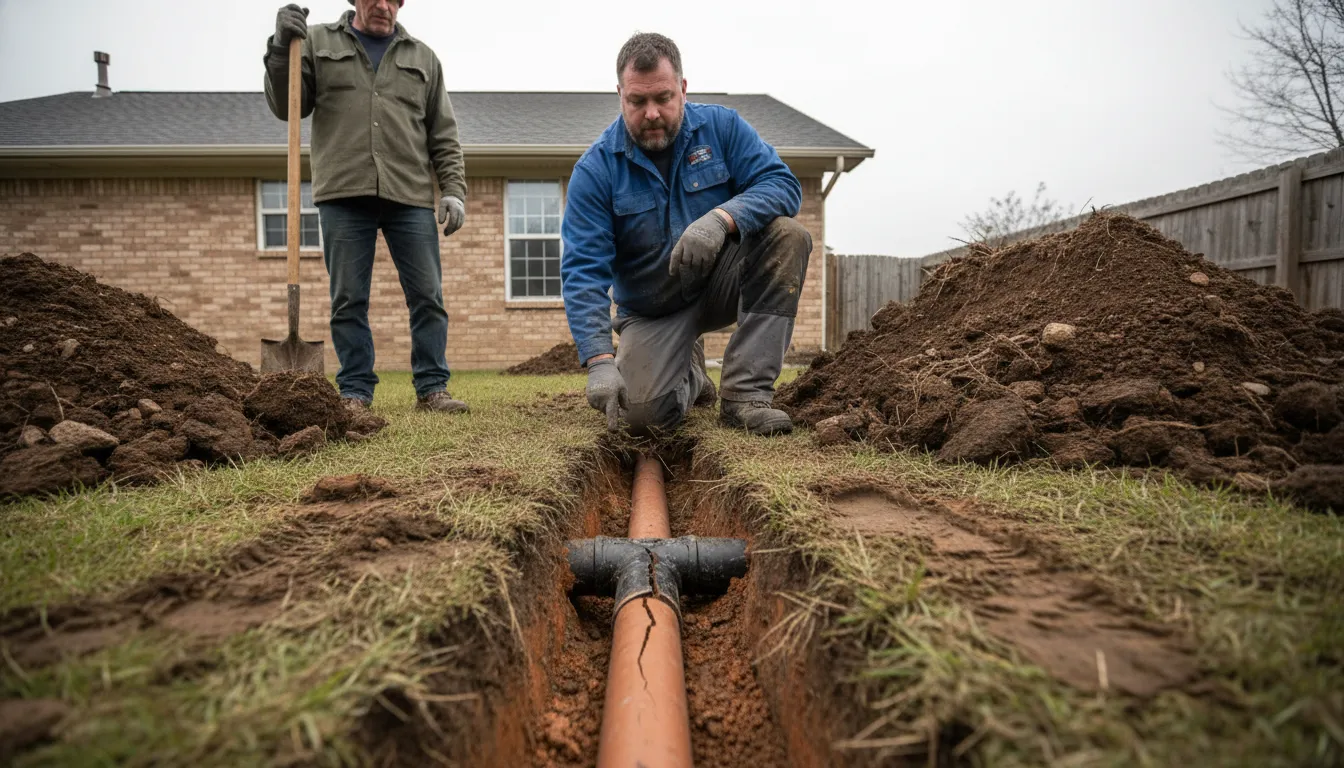
Find the Best Sewer Line Repair Companies for Your Business
No obligation • Fast responses • Nationwide coverage

Why you can trust Search a Plumber
Search a Plumber is a leading United States resource for finding and evaluating professional plumbing services. Our team researches licensing, experience, and customer feedback to create unbiased, fact-driven overviews. Companies cannot pay to change ratings or placement, ensuring homeowners get trustworthy information.
Search providers near you
Top Sewer Line Repair Companies in Redford, Michigan Ranked
A damaged sewer line is a serious issue that can disrupt your home and lead to costly property damage. Sewer line repair involves fixing or replacing the underground pipe that carries wastewater from your home to the city's main sewer line. This guide explains the common causes of sewer line failure in Redford, the repair methods available, and how to find a qualified local professional to restore proper function to your home's essential plumbing system.
Bubby's Plumbing
1074 Crawford Ave, Windsor, ON N9A 5C9, Canada
Bubby's Plumbing offers plumbing, heating, and drain services in Detroit, MI, with a focus on residential and commercial needs. They provide sewer camera inspections, drain cleaning, and sewer line repairs. The company serves the Windsor-Essex region and is available 24 hours a day for emergency plumbing support. Bubby's Plumbing emphasizes individualized plumbing options and aims to complete all work to high standards.
Triton Plumbing
1307 E Maple Rd, Troy, MI 48083
Triton Plumbing is a plumbing company serving Detroit, MI, led by a fourth-generation master plumber. They offer a range of residential and commercial plumbing services including trenchless sewer repair, sewer camera inspections, water heater installation and repair, sump pump services, drain cleaning, leak detection, and toilet repairs. Their trenchless sewer repair uses advanced technology to minimize property disruption by creating small access points for pipe repairs. Triton Plumbing also provides sump pump solutions to protect properties from flooding, especially in Oakland and Macomb County. The company emphasizes quality and integrity in their work and has experience handling complex sewer line replacements and hydro jetting services.
Bison Plumbing
25780 Ryan Rd, Warren, MI 48091
Bison Plumbing is a family-owned and operated plumbing company serving Detroit, MI, and the surrounding Metro Detroit area since 1998. They provide a wide range of commercial and residential plumbing services, including sewer camera inspections, drain cleaning, hydro jetting, trenchless sewer repair, and general plumbing repairs. Their expertise in no-dig sewer repairs, such as pipe lining and pipe patching, allows them to rehabilitate sewer and storm lines without traditional digging methods. Bison Plumbing also offers backflow testing and mechanical piping services, ensuring compliance with local codes and standards.
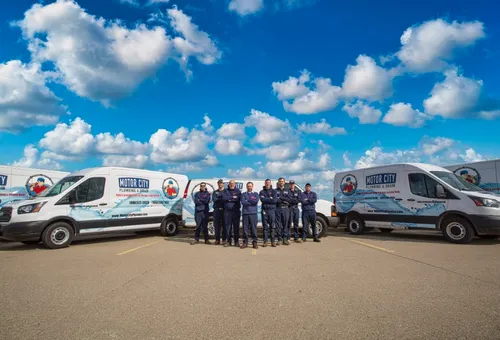
Motor City Plumbing and Drain
30367 Gratiot Ave, Roseville, MI 48066
Motor City Plumbing and Drain is a plumbing service provider based in Detroit, MI. They offer a wide range of plumbing services including sewer camera inspections, water heater repair and installation, sump pump repair, drain cleaning, hydro jetting, sewer line repair, leak detection, repiping, gas line installation, and toilet repair. The company is known for its use of advanced techniques such as hydro jetting and sewer camera inspections to diagnose and resolve plumbing issues efficiently. Motor City Plumbing and Drain has built a reputation for thorough and professional service, with many customers noting the expertise and clear communication of their technicians. They serve residential and commercial clients in the Detroit area and emphasize customer education and transparency throughout their work.
Detroit Furnace LLC
31313 Kendall, Fraser, MI 48026
Detroit Furnace LLC provides comprehensive plumbing and HVAC services in Detroit, MI. Their offerings include water heater repair and installation, drain cleaning, sewer line repair, leak detection, repiping, gas line installation, toilet repair, and garbage disposal repair. The company serves the Detroit Metro area and is equipped to handle a wide range of plumbing and heating needs with skilled technicians. They offer 24/7 emergency service and support all brands and models. Detroit Furnace LLC is known for its commitment to proper installation and maintenance, including a "no lemon" guarantee for heating systems maintained by their team.
Understanding Your Home's Sewer System
Your home's main sewer drain line is a critical but hidden component of your plumbing. It runs underground from your home's foundation to the public sewer main, typically located at the street. In many older Redford neighborhoods, these lines are aging and susceptible to failure. Recognizing the signs of a problem early can prevent a minor issue from becoming a major, disruptive repair.
Common indicators of a sewer line problem include:
- Multiple drains backing up or gurgling simultaneously.
- Unpleasant sewage odors in your yard or home.
- Patches of unusually lush, soggy grass in your yard.
- Sinkholes or depressions forming along the path of the sewer line.
- Frequent clogs that standard drain cleaning cannot resolve.
Common Causes of Sewer Line Damage in Redford
Several factors contribute to the need for sewer line replacement or repair in this area. Understanding the cause helps professionals determine the best solution.
Aging Pipes: Many homes in Redford were built with cast iron or Orangeburg (bituminized fiber) sewer pipes. Over decades, cast iron corrodes and cracks, while Orangeburg pipe can soften, collapse, and deform, leading to persistent blockages and failures.
Tree Root Intrusion: This is a leading cause of blockages and damage. Roots seek out moisture and can infiltrate tiny cracks or loose joints in the pipe. Once inside, they expand, causing major blockages and can eventually crack or break the pipe.
Ground Shifts and Settlement: Michigan's freeze-thaw cycles and soil composition can cause the ground to shift over time. This movement puts stress on rigid sewer pipes, leading to misaligned joints, cracks, or complete breaks 1.
External Factors: Improper disposal of grease, wipes, or other foreign objects can cause severe clogs. Additionally, external pressure from soil compaction or construction activity above the line can lead to damage 2.
Repair Method 1: Trenchless Sewer Repair
Trenchless technology has revolutionized sewer line repair by minimizing excavation. These methods are often faster and preserve your landscaping, driveway, and hardscaping.
Pipe Lining (Cured-in-Place Pipe): This process involves inserting a flexible, resin-saturated tube into the damaged pipe. The tube is inflated and cured (often with heat or UV light) to form a rigid, seamless "pipe within a pipe." It seals cracks and holes, restores flow, and resists root intrusion and corrosion.
- Pros: Very little digging (only at access points), often completed in a day, creates a jointless new pipe, and dramatically reduces restoration work and costs.
- Cons: May not be suitable for pipes that have completely collapsed or have severe deformities. The new liner has a slightly reduced inner diameter.
Pipe Bursting: This method is used for full replacement. A bursting head is pulled through the old, damaged pipe, fracturing it outward while simultaneously pulling a new, high-density polyethylene (HDPE) pipe into place behind it.
- Pros: Installs a brand new pipe of equal or larger diameter with minimal excavation. Effective for replacing severely damaged lines.
- Cons: Requires slightly larger access pits than lining. The bursting process can cause vibration, and it may not be feasible near other underground utilities 3 4.
Find the perfect sewer line repair companies for your needs
Get personalized recommendations and expert advice
Repair Method 2: Traditional Excavation Repair
Traditional sewer line excavation, or "dig and replace," involves using backhoes or other equipment to dig a trench along the path of the sewer line to fully expose and replace the damaged section 5.
- Pros: It is a straightforward, time-tested method. It allows for a complete visual inspection of the pipe and surrounding soil and is often the only option for pipes that are totally collapsed, severely misaligned, or in complex configurations that trenchless methods can't address 6 7.
- Cons: The primary drawback is the significant disruption. This method can destroy lawns, gardens, sidewalks, and driveways, leading to high restoration costs and a lengthy project timeline. The open trench also poses a safety concern and can be weather-dependent 8.
Comparing Costs: Trenchless vs. Traditional in Redford
Cost is a major factor for homeowners. While trenchless methods often have a higher upfront cost per linear foot, the total project cost can be competitive when restoration expenses are factored in.
- Trenchless Repair Costs: Pipe lining typically ranges from $80 to $250 per foot, while pipe bursting may cost $60 to $200 per foot. For a full project, homeowners might expect a range of $3,000 to $12,000 or more, depending on length, depth, and pipe condition 9 10 11.
- Traditional Excavation Costs: Dig-and-replace can range from $50 to $450 per foot for the repair itself. However, this almost never includes the cost of restoring your property-re-sodding lawns, repaving driveways, or repairing concrete-which can add thousands to the final bill 12 13 14.
The final price for any sewer line fix in Redford depends on several variables: the extent and location of the damage, the depth and material of the existing pipe, local permit requirements, and the specific rates of the plumbing contractor. Getting multiple detailed quotes is essential.
The Diagnostic Step: Sewer Camera Inspection
Before any repair method is chosen, a professional sewer camera inspection is non-negotiable. A skilled technician will insert a high-resolution, waterproof camera into your sewer line. This allows them to see the exact condition, locate the problem, identify the pipe material, and measure the distance to the blockage or break 15 16. This inspection provides the evidence needed to recommend the most effective and cost-efficient repair strategy, whether it's a spot repair, a full trenchless rehabilitation, or a traditional excavation.
Choosing the Right Solution for Your Home
Your choice between trenchless and traditional sewer repair will depend on your specific situation, budget, and tolerance for disruption.
- Choose Trenchless if: Your pipe is structurally sound enough to host a liner or be burst, you want to preserve your landscaping, you need a faster solution, and you are willing to pay a premium upfront to avoid massive restoration work.
- Choose Traditional Excavation if: The pipe is completely collapsed, has major sags or offsets, or is in a location with many other utilities that rule out trenchless methods. It may also be more cost-effective for very short, accessible repairs.
Always work with a licensed, insured, and experienced local plumbing contractor who specializes in sewer line work. They should provide a clear, written estimate, explain all necessary permits, and offer a warranty on both materials and labor.
Frequently asked questions
Sources
Footnotes
-
How Plumbers Fix a Sewer Without Digging - https://www.benjaminfranklinplumbing.com/dallas/blog/2017/november/how-plumbers-fix-a-sewer-without-digging/ ↩
-
Everything You Need to Know About Your Main Sewer Drain Line - https://www.omaha-drain.com/single-post/everything-you-need-to-know-about-your-main-sewer-drain-line ↩
-
Trenchless Sewer Line Repair vs. Sewer Line Excavation - https://dandfplumbing.com/sewer-line-repair-vs-sewer-line-excavation/ ↩
-
Trenchless Sewer Repair vs. Traditional Excavation - https://alphaenvironmental.net/blog/trenchless-sewer-repair-vs-traditional-excavation-which-is-better/ ↩
-
Trenchless vs. Traditional Sewer Repair - https://sewerlinesonly.com/trenchless-vs-traditional-sewer-repair-which-is-more-cost-effective-for-lakewood-homeowners/ ↩
-
Sewer Repair Cost: Trenchless Vs Traditional Methods - https://www.superbrothers.com/sewer-repair-cost-trenchless-vs-traditional-methods/ ↩
-
Sewer Repair Options: Trenchless vs. Traditional Methods | TYCO - https://tycoplumbingco.com/sewer-repair-options-trenchless-vs-traditional-methods/ ↩
-
Trenchless Sewer Repair vs. Traditional Excavation - AQUALIS - https://aqualisco.com/trenchless-sewer-repair-vs-traditional/ ↩
-
Is Trenchless Sewer Line Repair Cheaper? - AP Plumbing - https://applumbing.com/blog/is-trenchless-sewer-line-repair-cheaper/ ↩
-
Empower Your Decision: Decoding Trenchless Sewer Repair Costs - https://pipelinerpros.com/trenchless-sewer-repair-cost/ ↩
-
How Much Does Sewer Line Replacement Cost in Detroit, MI? - https://www.angi.com/articles/how-much-does-sewer-line-replacement-or-repair-cost/mi/detroit ↩
-
Trenchless Sewer Repair vs. Traditional Excavation - https://tdtplumbing.com/trenchless-sewer-repair/difference-to-traditional-repair/ ↩
-
Cost Comparison: Trenchless vs. Traditional Sewer Line Repair - https://www.advancedtrenchlesssolutions.com/blog/cost-comparison-trenchless-vs-traditional-sewer-line-repair ↩
-
2026 Sewer Line Repair & Replacement Costs | What to Expect - https://modernize.com/plumbing/systems/drainage/sewer-line-repair-replace-cost ↩
-
Sewer Line Replacement Cost for a Michigan Homeowner - https://edwardsph.com/sewer-line-replacement-cost-for-a-michigan-homeowner/ ↩
-
Sewer Repair Methods: A Comprehensive Comparison - https://redrocktrenchless.com/sewer-repair-methods-a-comprehensive-comparison/ ↩