Find the Best Sewer Line Repair Companies for Your Business
No obligation • Fast responses • Nationwide coverage

Why you can trust Search a Plumber
Search a Plumber is a leading United States resource for finding and evaluating professional plumbing services. Our team researches licensing, experience, and customer feedback to create unbiased, fact-driven overviews. Companies cannot pay to change ratings or placement, ensuring homeowners get trustworthy information.
Search providers near you
Top Sewer Line Repair Companies in Revere, Massachusetts Ranked
A damaged sewer line is a serious issue that can disrupt your home, pose health risks, and lead to costly property damage if ignored. Sewer line repair involves diagnosing and fixing the underground pipe that carries all your home's wastewater to the city's main sewer system. This guide explains the common causes of sewer line failures in Revere, compares the modern trenchless repair methods with traditional excavation, and provides key information to help you make an informed decision when you need to address this critical home infrastructure problem.
Rooterman
Boston, MA
Rooterman is a sewer and drain service provider based in Boston, MA, offering residential and commercial plumbing solutions. Established in 1970, the company specializes in sewer line repair, drain cleaning, leak detection, toilet repair, and sewer camera inspections. Rooterman also provides certified Title V septic system inspections and offers same-day service for most non-emergency calls. With over 50 years of experience, Rooterman serves the Greater Boston area and surrounding communities, focusing on maintaining sewer and drain systems to protect homes and businesses.
Leo Drain Services Inc.
39 Burns Ave, Quincy, MA 02169
Leo Drain Services Inc. provides drain cleaning, sewer line repair, and sewer camera inspection services in Boston, MA. Established in 2017, the company uses advanced pipeline inspection technology and push camera pipe inspection to diagnose and resolve drainage issues efficiently. They also offer pipe locating with depth and direction, root cutting, and handle both residential and commercial sewer drain cleaning. Leo Drain Services prioritizes respectful service and clear communication to ensure a smooth experience for their customers. They offer 24/7 emergency service to address urgent drainage problems promptly.
Rapid Flow Sewer & Drain Cleaning
Boston, MA
Rapid Flow Sewer & Drain Cleaning is a plumbing service provider based in Boston, MA, specializing in sewer and drain solutions for both residential and commercial properties. They offer a range of services including sewer camera inspections, drain cleaning, sewer line repairs, leak detection, and trenchless sewer repair techniques such as pipe lining. Using advanced technology and modern trenchless methods, they minimize disruption while restoring pipe functionality. The company provides 24/7 emergency services to address urgent plumbing issues promptly and offers preventive maintenance programs to extend the life of plumbing systems and prevent future problems.
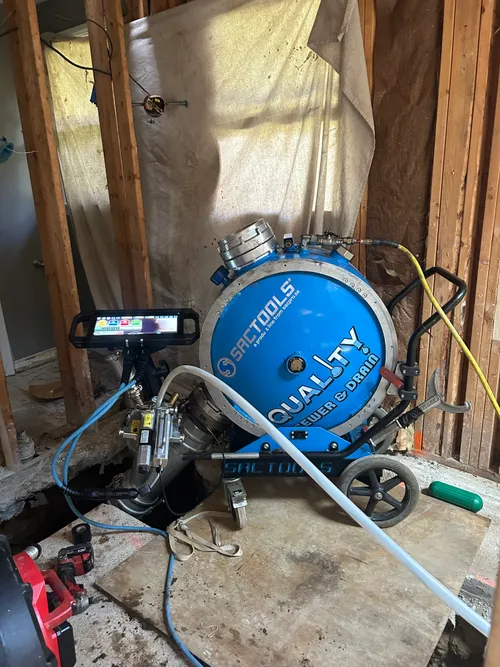
Quality Sewer & Drain, Inc
77 Walnut St Unit 5, Peabody, MA 01960
Quality Sewer & Drain, Inc is a family-owned business serving Boston, MA, and the surrounding North Shore area. They provide residential, commercial, and industrial sewer and drain services, including trenchless sewer pipe lining, hydro jetting, video drain inspections, and drain cleaning. The company specializes in trenchless pipe rehabilitation using CIPP lining and pipe patching techniques to restore sewer and drain functionality without extensive digging. With over 20 years of combined experience, Quality Sewer & Drain is certified in multiple pipe lining technologies and serves a wide range of communities in Massachusetts and parts of Southern Maine and New Hampshire.
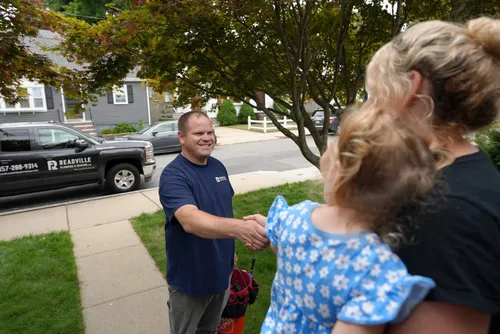
Readville Plumbing & Heating, LLC
Boston, MA
Readville Plumbing & Heating, LLC provides a wide range of plumbing, heating, and HVAC services in Boston, MA. Their offerings include faucet repairs, water heater installations, drain and sewer cleaning, gas line installations, and boiler services. They also handle HVAC repairs and maintenance to ensure year-round home comfort. The company serves Boston and surrounding communities including Readville, Hyde Park, Milton, and others in the Greater Boston area. One notable capability is their comprehensive drain and sewer services, which cover cleaning, inspections, and repairs to maintain proper plumbing function.
Understanding Your Home's Sewer System
The sewer line, also known as a main drain line or lateral, is a crucial but hidden component of your property. It runs from the point where your home's main drain exits the foundation, underground across your yard, and connects to the municipal sewer main typically located at the street or property line. In many older Revere neighborhoods, these lines are original cast iron, a material known to corrode and fail over decades of use. When this pipe is compromised, it affects every toilet, sink, shower, and appliance that drains water in your house.
Why Sewer Lines Fail in Revere
Several factors specific to the local environment and housing stock contribute to sewer line problems here. Understanding the cause is the first step toward an effective solution.
- Tree Root Intrusion: This is one of the most common culprits. Roots from mature trees are naturally drawn to the moisture and nutrients in sewer pipes. They can infiltrate through tiny cracks or loose joints, eventually growing large enough to cause complete blockages or break the pipe apart 1.
- Aging Cast Iron Pipes: Many homes in Revere were built with cast iron sewer lines. Over time, this material corrodes from the inside out, becoming brittle, developing cracks, and eventually collapsing. The rough interior of corroded pipe also catches debris more easily, leading to frequent clogs 2.
- Ground Movement and Settling: New England's freeze-thaw cycles and natural soil shifting can cause pipes to settle unevenly or shift. This movement can break rigid pipes, misalign sections, or create low spots where waste collects and causes blockages.
- Grease and Debris Buildup: Pouring fats, oils, and grease (FOG) down drains is a major issue. These substances solidify inside pipes, narrowing the passage and trapping other debris, which leads to stubborn, recurring clogs 3.
Diagnosing Sewer Line Problems: The Camera Inspection
Before any repair can be planned, a proper diagnosis is essential. Modern plumbing professionals use a specialized sewer camera-a waterproof, high-resolution video camera mounted on a flexible rod. This tool is fed through a cleanout access point and travels the length of your sewer line, sending real-time video to a monitor.
A camera inspection allows a technician to pinpoint the exact location, nature, and severity of the problem, whether it's a root mass, a crack, a belly (sagging section), or a complete collapse. This critical step prevents guesswork, ensures an accurate repair plan, and provides you with visual proof of the issue.
Repair Method 1: Traditional Excavation
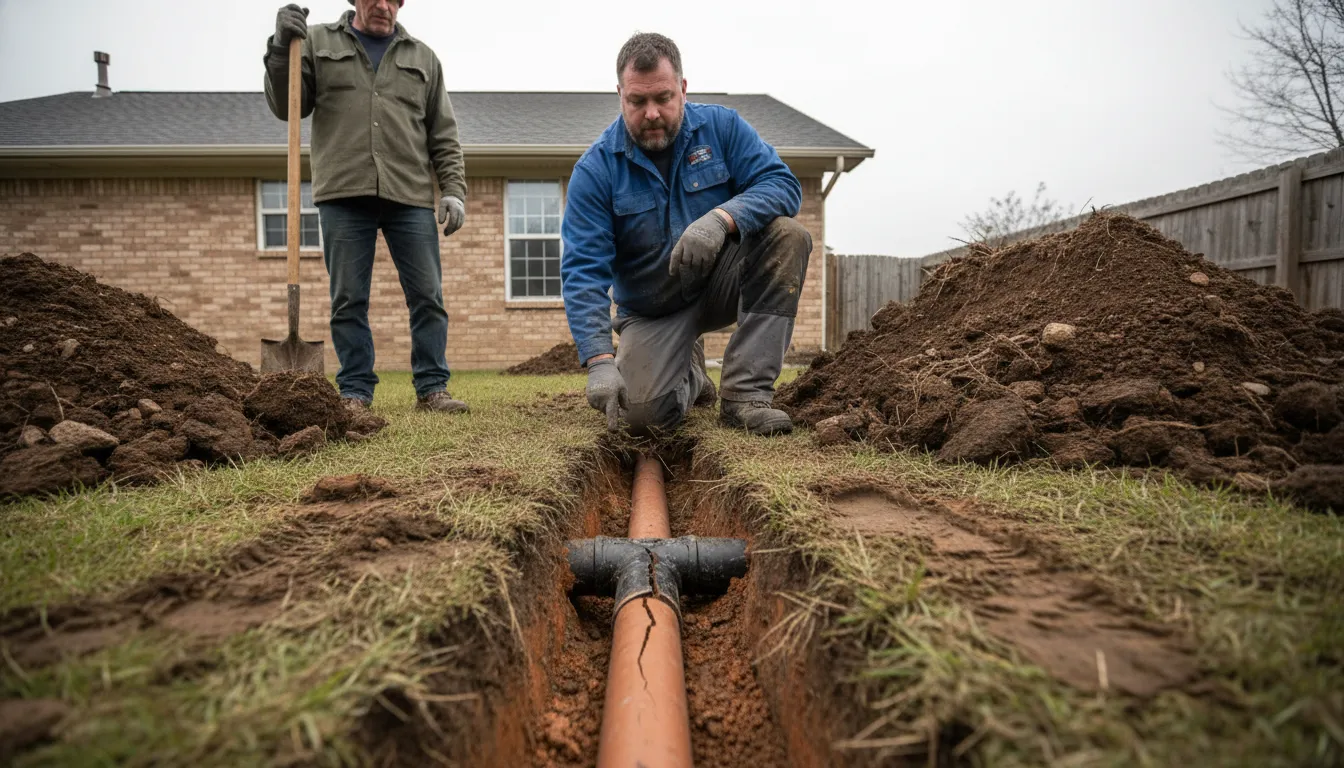
For decades, the only way to fix a sewer line was to dig it up. This method, known as traditional excavation or "dig and replace," involves using backhoes and shovels to open a trench along the path of the pipe to expose it fully.
How It Works: Once the pipe is exposed, the damaged section is cut out and replaced with new piping (typically modern PVC), and the connections are sealed. The trench is then backfilled, leaving significant restoration work.
Pros of Excavation:
- Direct Access: Provides full physical access to the pipe, allowing for any type of repair, including replacement of severely collapsed or misaligned sections.
- Complete Replacement: The entire damaged section can be replaced with new material, which can be reassuring for very old lines.
- Widely Available: Most general excavation and plumbing crews are equipped for this work.
Cons of Excavation:
- Major Disruption: It destroys lawns, gardens, driveways, sidewalks, and patios in the pipe's path. Restoring these features is a separate, costly project.
- Time-Consuming: The process of digging, repairing, backfilling, and restoring the landscape can take a week or more.
- High Restoration Costs: The cost to repair landscaping, concrete, asphalt, or hardscaping can add thousands to the final bill, often exceeding the cost of the plumbing work itself.
Repair Method 2: Modern Trenchless Technology
Trenchless sewer repair has revolutionized the industry by offering solutions that require minimal digging. These methods are often ideal for Revere homes where preserving mature landscaping, driveways, or patios is a priority.
How It Works: Trenchless repairs generally use one of two main techniques:
- Pipe Lining (Cured-in-Place Pipe - CIPP): A flexible, resin-saturated tube is inverted or pulled into the damaged pipe. It is then inflated and cured (often with hot air or UV light) to form a rigid, seamless "pipe-within-a-pipe." This new lining seals cracks and holes and resists root intrusion 4 5 6.
- Pipe Bursting: A conical bursting head is pulled through the old, broken pipe, fracturing it outward while simultaneously pulling in a new, high-density polyethylene (HDPE) pipe of equal or larger diameter behind it 7 8.
Pros of Trenchless Repair:
- Minimal Disruption: Often only requires two small access pits at the beginning and end of the repair section, leaving your yard, driveway, and landscaping virtually untouched.
- Faster Completion: Many trenchless repairs can be completed in one or two days.
- Durable Result: The new pipe liners are corrosion-resistant and have a projected lifespan of 50 years or more 9.
- Often More Cost-Effective: When the cost of landscape and hardscape restoration is factored in, trenchless methods can be comparable or even less expensive than full excavation.
Cons of Trenchless Repair:
- Not for All Cases: It cannot repair a pipe that has fully collapsed or has severe misalignment, as the liner or bursting head needs a clear path.
- Specialized Equipment & Skill: Requires trained technicians and specific equipment.
- Slight Diameter Reduction: Lining can slightly reduce the internal diameter of the pipe (though bursting can maintain or increase it).
Find the perfect sewer line repair companies for your needs
Get personalized recommendations and expert advice
Comparing Costs: Trenchless vs. Excavation in Revere
Cost is a major factor for any homeowner. It's important to get detailed, line-item estimates that include all aspects of the job. Prices vary widely based on the specific damage, pipe material, length, depth, and access.
General Cost Estimates for the Massachusetts Area:
- Trenchless Repair (Lining or Bursting): Often estimated on a per linear foot basis, ranging from $80 to $250 per foot 10. The total project cost depends on how many feet of pipe need repair.
- Traditional Excavation: The pipe work itself may range from $50 to $450+ per linear foot 11 12. However, the major added expense is restoration, which can cost an additional $1,500 to $8,000 or more to rebuild driveways, sidewalks, and landscaping 13.
- Total Project Range: For a full sewer line replacement in Revere, total costs can range from $3,000 for a minor, localized repair to $10,000 - $20,000+ for a complete replacement of a long line under difficult conditions 14 15.
Key Factors That Influence Your Final Cost
- Length and Depth: The total footage of pipe that needs repair is the primary driver.
- Pipe Material: Replacing old cast iron is generally more labor-intensive and costly than working with PVC.
- Severity of Damage: A simple crack repaired with lining costs less than a fully collapsed section requiring bursting or excavation.
- Access and Obstacles: Tight spaces, proximity to other utilities, trees, or structures can increase labor time and complexity.
- Necessary Permits: Revere may require permits for sewer work, which add to the cost and timeline.
Choosing the Right Solution for Your Home
The best repair method depends on your specific situation. A reputable professional will recommend the most effective and efficient solution after a camera inspection. Trenchless methods are an excellent choice for repairing cracked, root-intruded, or corroded pipes where the structural integrity is still somewhat intact. Traditional excavation remains the necessary solution for pipes that have completely failed, have major sags (bellies), or are in locations where trenchless equipment cannot be used.
Frequently asked questions
Sources
Footnotes
-
Broken Sewer Pipe Under House: Causes and Effective Solutions - https://www.benjaminfranklinplumbing.com/league-city/blog/2024/december/broken-sewer-pipe-under-house-causes-and-effective-solutions/ ↩
-
Defects that Inspectors Look for in a Home's Sewer Line - https://prospectivehomeinspections.com/defects-that-inspectors-look-for-in-a-homes-sewer-line/ ↩
-
Sewer Line Repair & Replacement In New England - https://www.netrinc.com/drain-services/sewer-line/ ↩
-
Sewer Pipe Lining vs Residential Excavation - 128 Plumbing - https://www.128plumbing.com/sewer-pipe-lining-vs-residential-excavation/ ↩
-
Solutions for Sewer Line Repair: Trenchless Options - https://www.serviceprofessor.com/trenchless-sewer-line-repair/ ↩
-
You Need To Know Facts of Trenchless Sewer Repair in ... - https://nepipe.com/need-know-facts-trenchless-sewer-repair-massachusetts/ ↩
-
Trenchless Sewer Line Repair vs. Sewer Line Excavation - https://dandfplumbing.com/sewer-line-repair-vs-sewer-line-excavation/ ↩
-
Trenchless Sewer Repair vs. Traditional Excavation - AQUALIS - https://aqualisco.com/trenchless-sewer-repair-vs-traditional/ ↩
-
Trenchless Sewer Line Repair vs Traditional: Which Is Better - https://cactusplumbingandair.com/trenchless-sewer-line-repair-vs-traditional/ ↩
-
Is Trenchless Sewer Line Repair Cheaper? - AP Plumbing - https://applumbing.com/blog/is-trenchless-sewer-line-repair-cheaper/ ↩
-
Cost Comparison: Trenchless vs. Traditional Sewer Line Repair - https://www.advancedtrenchlesssolutions.com/blog/cost-comparison-trenchless-vs-traditional-sewer-line-repair ↩
-
The Cost of Sewer Line Replacement: What to Expect - https://dirtcheapsewer.com/the-cost-of-sewer-line-replacement/ ↩
-
Trenchless vs. Traditional Sewer Repair - https://sewerlinesonly.com/trenchless-vs-traditional-sewer-repair-which-is-more-cost-effective-for-lakewood-homeowners/ ↩
-
Cost of Sewer Repair Boston, MA | New England Pipe Restoration - https://nepipe.com/residential-services/cost-of-sewer-repair/ ↩
-
Average Cost Of Sewer Line Repair & Replacement 2023 - https://www.superbrothers.com/average-cost-of-sewer-line-repair-replacement-2023/ ↩