Find the Best Sewer Line Repair Companies for Your Business
No obligation • Fast responses • Nationwide coverage

Why you can trust Search a Plumber
Search a Plumber is a leading United States resource for finding and evaluating professional plumbing services. Our team researches licensing, experience, and customer feedback to create unbiased, fact-driven overviews. Companies cannot pay to change ratings or placement, ensuring homeowners get trustworthy information.
Search providers near you
Top Sewer Line Repair Companies in Lawrence, Kansas Ranked
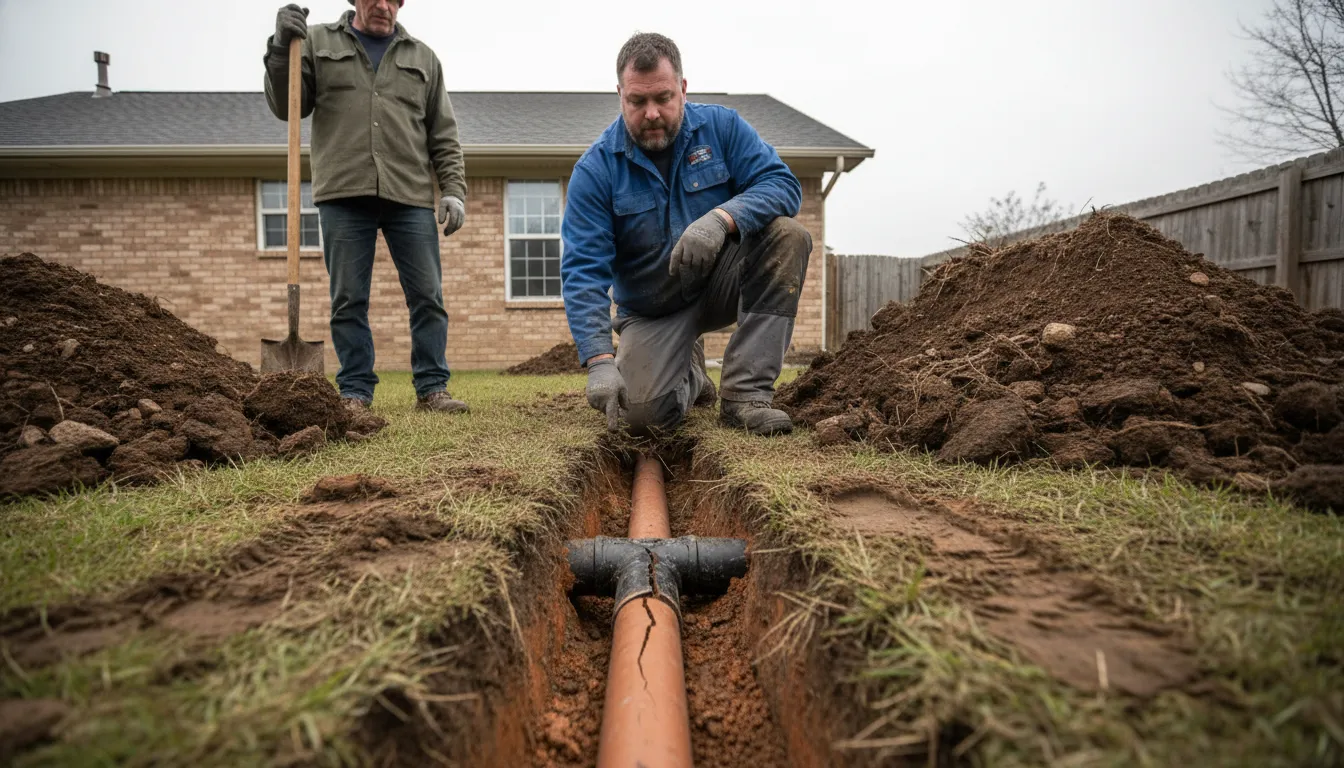
Dealing with a failing sewer line is a stressful and disruptive problem for any Lawrence homeowner. When your main drain line is damaged, it can lead to persistent clogs, foul odors, and even raw sewage backing up into your home. Understanding your repair options is crucial to making an informed decision that protects your property and your budget. This guide explains the common causes of sewer line failure in Lawrence, compares modern trenchless methods with traditional excavation, and provides the information you need to find a qualified local professional for an assessment.
Mr. Rooter Plumbing of Johnson County
13480 S Arapaho Dr, Olathe, KS 66062
Mr. Rooter Plumbing of Johnson County provides a range of plumbing services in Kansas City, MO, including water heater repair and installation, sump pump repair, and sewer line repair. They use advanced technology such as hydro jetting, trenchless sewer repair, and video camera inspections to address plumbing issues with minimal disruption. The company serves both residential and commercial customers across multiple nearby communities. Their plumbers are licensed, insured, and background-checked to ensure qualified service. Mr. Rooter Plumbing offers in-home estimates and flexible scheduling to accommodate customer needs.
Anthony Plumbing, Heating, Cooling & Electric
15203 W 99th St, Lenexa, KS 66219
Anthony Plumbing, Heating, Cooling & Electric has been serving the Kansas City, MO area for over 70 years. The company offers a wide range of plumbing services including sewer camera inspections, tankless water heater installation and repair, water softener installation, sump pump repair, drain cleaning, hydro jetting, trenchless sewer repair, and toilet and garbage disposal repairs. Their experienced plumbers provide detailed problem investigations and multiple solution options tailored to long-term needs and budgets. Anthony Plumbing also offers 24/7 emergency support, ensuring assistance is available whenever needed.
Everest Heating, Cooling, Plumbing & Rooter
100 American Ave, Lansing, KS 66043
Everest Heating, Cooling, Plumbing & Rooter provides a range of HVAC and plumbing services in Kansas City, MO. They offer water heater repair, water softener installation, drain cleaning, hydro jetting, sewer line repair, leak detection, and sewer camera inspections. Their team uses advanced technology for leak detection and sewer inspections, ensuring accurate diagnosis and effective repairs. As a family business with nearly 15 years of experience, they serve the KC Metro area with a commitment to tailored solutions and quality products. They also provide 24/7 heating and cooling services to address urgent needs any time.

Tried & True Plumbing KC
15577 S Mahaffie St, Olathe, KS 66062
Tried & True Plumbing KC is a family-owned plumbing company serving Kansas City, MO, and the surrounding areas including Olathe. They provide a wide range of plumbing services for both residential and commercial clients, including water heater repair and installation, drain cleaning, sewer line maintenance, sump pump repair, toilet repair, garbage disposal repair, and gas line installation. Their licensed plumbers offer emergency and same-day services to address urgent plumbing issues efficiently. The company emphasizes upfront pricing and quality workmanship to ensure customer satisfaction.

Beemer Plumbing, LLC
23270 Waverly Rd, Spring Hill, KS 66083
Beemer Plumbing, LLC is a family-owned plumbing company serving Kansas City, MO. Founded in the early 1990s by James Lee Beem Jr., the company specializes in a wide range of plumbing services including sewer camera inspections, water heater installation and repair, drain cleaning, leak detection, gas line installation, and sewer line repair. They also offer commercial plumbing, utility repair, and excavation services. With a focus on clear communication and customer education, Beemer Plumbing provides upfront pricing and detailed diagnostics. The business is currently run by the founder's descendants, continuing a legacy of quality workmanship and family values.
Understanding Your Sewer Line System in Lawrence
Your home's sewer lateral is the critical pipe that carries all wastewater from your house to the city's main sewer line, typically located under the street. In Lawrence, this pipe runs underground from your foundation-often through a basement wall or crawlspace-across your property to the public connection. When this line fails, the entire household plumbing system is compromised. Common issues in our area stem from the region's aging infrastructure and environmental factors.
Common Causes of Sewer Line Damage
Several factors contribute to the need for sewer line repair or replacement in Lawrence homes:
- Tree Root Intrusion: This is a leading cause. Roots from mature trees are attracted to the moisture and nutrients in older clay or cast iron pipes. They can infiltrate through tiny cracks or pipe joints, eventually causing major blockages and structural damage.
- Aging and Deteriorating Pipes: Many Lawrence neighborhoods have homes with original sewer pipes made of materials like Orangeburg (bituminous fiber), clay tile, or cast iron. Over decades, these materials can crack, corrode, sag (creating a "belly" that traps waste), or completely collapse.
- Ground Shifting and Settlement: New England's freeze-thaw cycles and soil composition can cause the ground to shift over time. This movement puts stress on buried pipes, leading to misalignment, cracks, or breaks.
- Grease and Debris Buildup: Improper disposal of fats, oils, and non-flushable items can create severe blockages that accelerate wear and tear on the pipe walls, leading to more frequent backups and potential damage 1.
Modern Repair Methods: Trenchless Sewer Technology
For many homeowners, the thought of a massive trench dug across their yard is a major concern. Fortunately, trenchless sewer repair offers a less invasive alternative that has become a preferred solution for suitable situations. These methods typically require only one or two small access points, minimizing disruption to your landscaping, driveway, and daily life.
Trenchless Pipe Lining (CIPP)
This process, known as Cured-In-Place Pipe (CIPP) lining, involves inserting a flexible, resin-saturated tube into the damaged pipe. The tube is then inflated and cured using heat or UV light, forming a hard, seamless "pipe-within-a-pipe." The new liner seals cracks and holes, prevents root intrusion, and restores full flow.
- Pros: Extremely minimally invasive, often completed in a day, and preserves your property's hardscape and landscaping. It strengthens the existing pipe without removing it 2.
- Cons: May slightly reduce the internal pipe diameter (though modern liners are very thin). It is not suitable for pipes that have fully collapsed or are severely misaligned, as it requires an existing host pipe to guide the liner.
Trenchless Pipe Bursting
This method is used for full sewer line replacement without a trench. A specialized bursting head is pulled through the old, damaged pipe, fracturing it outward while simultaneously pulling a new, high-density polyethylene (HDPE) pipe into place behind it.
- Pros: Completely replaces the old line with a new, durable pipe of equal or larger diameter. Still far less disruptive than traditional excavation, as it only requires access pits at each end of the run 3.
- Cons: Requires slightly more excavation than lining (for the entry and exit pits). May not be feasible if there are many utility lines or other obstructions very close to the existing sewer path.
Find the perfect sewer line repair companies for your needs
Get personalized recommendations and expert advice
Traditional Excavation for Sewer Replacement
Sometimes referred to as "dig and replace," this is the conventional method where a backhoe or excavator digs a trench along the entire length of the failed sewer line. The old pipe is removed, a new one is laid, and the trench is backfilled. Surface restoration (sod, pavement, etc.) is then required.
- Pros: It is a definitive solution for any type of damage, including total collapses, severe bellies, or complex situations where trenchless methods are not viable. It allows for a complete visual inspection of the surrounding area.
- Cons: Highly disruptive, time-consuming, and expensive when restoration costs are factored in. It can destroy lawns, gardens, patios, driveways, and sidewalks, requiring significant additional work and cost to return your property to its original state 4.
Comparing Costs: Trenchless vs. Traditional in Lawrence
The cost of sewer line repair in Lawrence varies widely based on the method, the length and depth of the pipe, the extent of damage, and site accessibility. It's important to consider the total project cost, including any necessary restoration.
- Trenchless Pipe Lining: Typically ranges from $80 to $250 per foot. For a standard residential line, total project costs often fall between $5,000 and $9,000 5 6.
- Trenchless Pipe Bursting: Generally costs $60 to $200 per foot, with total project costs similar to lining, as the material and technology involved are comparable 7.
- Traditional Excavation Replacement: While the per-foot cost for the pipe itself can range from $50 to $450+, the true total cost must include excavation, backfill, and-critically-landscape and hardscape restoration. These restoration costs can add $1,000 to $8,000 or more for repairing lawns, driveways, or walkways. Consequently, total projects frequently exceed $10,000 to $20,000 8 9 10.
Key Takeaway: While trenchless methods often have a higher per-foot material cost, they can be more cost-effective overall by eliminating massive restoration expenses and project delays. For Lawrence homeowners, the choice isn't always about the cheapest initial quote, but the most efficient and least disruptive long-term solution for their specific property 11.
Making the Right Choice for Your Home
Choosing between trenchless and traditional sewer repair depends on a professional assessment. Here's how to proceed:
- Get a Professional Camera Inspection: A sewer camera inspection is non-negotiable. A skilled technician will feed a specialized camera into your line to provide a real-time video diagnosis, pinpointing the exact location, cause, and severity of the problem. This inspection is the foundation for an accurate repair plan and quote 12.
- Understand the Recommendations: Based on the video, a reputable contractor will explain whether your line is a candidate for trenchless repair or if traditional excavation is necessary due to a total collapse, severe offset, or other complicating factors.
- Get Multiple Detailed Quotes: Always obtain written estimates from at least two or three licensed, insured plumbing contractors. Ensure the quotes detail the proposed method, materials, timeline, and a clear breakdown of all costs, including permits and restoration. This allows for a true apples-to-apples comparison.
Frequently asked questions
Sources
Footnotes
-
Trenchless Pipe Repair: Smart Fixes for Sewer Line Problems - https://hydromaxplumbing.com/blog/trenchless-pipe-repair-fixes-for-sewer-line-problems/ ↩
-
Trenchless Sewer Repair: Lower Cost, Lower Impact Sewer ... - https://www.sewerflowllc.com/2025/03/06/trenchless-sewer-repair-lower-cost-lower-impact-sewer-repair/ ↩
-
Trenchless Sewer Repair vs. Traditional Excavation - AQUALIS - https://aqualisco.com/trenchless-sewer-repair-vs-traditional/ ↩
-
Traditional vs. Trenchless Sewer Line Repair & Replacement - https://www.rotorooter.com/blog/plumbing/traditional-vs-trenchless-sewer-lines/ ↩
-
Is Trenchless Sewer Line Repair Cheaper? - AP Plumbing - https://applumbing.com/blog/is-trenchless-sewer-line-repair-cheaper/ ↩
-
Is Trenchless Sewer Line Repair Cheaper? - https://applumbing.com/blog/is-trenchless-sewer-line-repair-cheaper/ ↩
-
Cost Comparison: Trenchless vs. Traditional Sewer Line Repair - https://www.advancedtrenchlesssolutions.com/blog/cost-comparison-trenchless-vs-traditional-sewer-line-repair ↩
-
Cost of Sewer Repair Boston, MA | New England Pipe Restoration - https://nepipe.com/residential-services/cost-of-sewer-repair/ ↩
-
HOW MUCH IS SEWER LINE REPLACEMENT IN ... - https://spencerhomeservice.com/how-much-is-sewer-line-replacement-in-massachusetts-cost-factors/ ↩
-
How Much Does a Sewer Pipe Replacement Cost in Denver? - https://plumblineservices.com/help-guides/how-much-does-a-sewer-pipe-replacement-cost-in-denver ↩
-
Trenchless vs. Traditional Sewer Repair - https://sewerlinesonly.com/trenchless-vs-traditional-sewer-repair-which-is-more-cost-effective-for-lakewood-homeowners/ ↩
-
Sewer Repair Options: Trenchless vs. Traditional Methods | TYCO - https://tycoplumbingco.com/sewer-repair-options-trenchless-vs-traditional-methods/ ↩