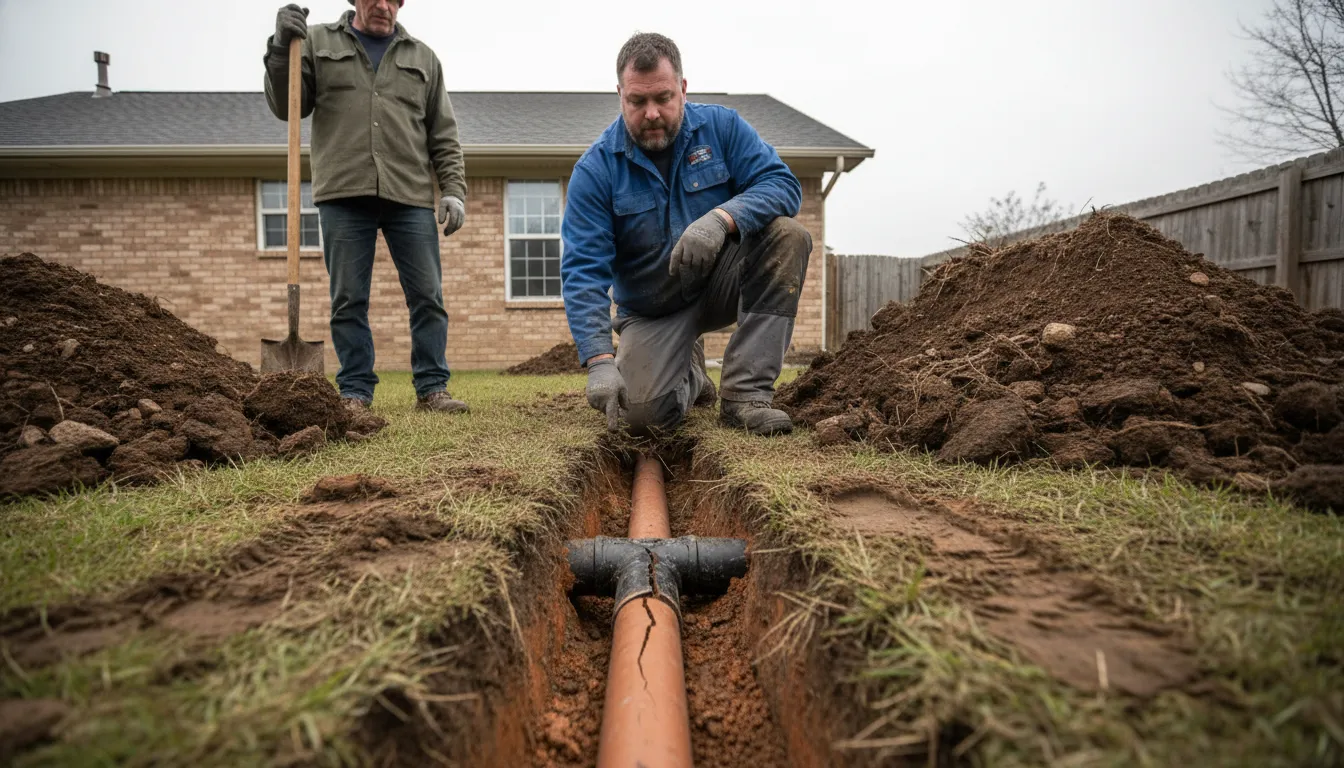
Find the Best Sewer Line Repair Companies for Your Business
No obligation • Fast responses • Nationwide coverage

Why you can trust Search a Plumber
Search a Plumber is a leading United States resource for finding and evaluating professional plumbing services. Our team researches licensing, experience, and customer feedback to create unbiased, fact-driven overviews. Companies cannot pay to change ratings or placement, ensuring homeowners get trustworthy information.
Search providers near you
Top Sewer Line Repair Companies in Noblesville, Indiana Ranked
A damaged sewer line is a serious issue that can disrupt your home's entire plumbing system and lead to costly property damage. Sewer line repair involves fixing or replacing the underground pipe that carries all your home's wastewater to the city's main sewer system. This guide is designed to help Noblesville homeowners understand the common causes of sewer line failure, the modern repair methods available, and how to navigate the process of finding a qualified local specialist to restore proper function with minimal disruption to your property.
Roto-Rooter Plumbing & Water Cleanup
18 E Main St Ste 230, Greenfield, IN 46140
Roto-Rooter Plumbing & Water Cleanup provides a wide range of plumbing services in Indianapolis, IN, including sewer and drain cleaning, water heater repair and installation, sump pump services, and leak detection. They specialize in both residential and commercial plumbing, offering advanced solutions such as hydro jetting and trenchless sewer repair to address complex plumbing issues. Established in 1935, Roto-Rooter has a long history of innovation and expertise in plumbing, and they offer 24/7 emergency services to handle urgent plumbing problems at any time.
Plumber Near Me LLC
Indianapolis, IN
Plumber Near Me LLC is a family-owned plumbing company serving Indianapolis, IN, and nearby communities. They offer a wide range of plumbing services including water heater repair and installation, water softener installation, sump pump repair, drain cleaning, sewer line repair, leak detection, and garbage disposal repair. With over 40 years of combined experience, they provide solutions for both new installations and repairs, including emergency plumbing services for urgent issues like leaks and sewer backups. Their expertise includes professional water service repair and main shutoff valve installation to protect homes from water damage.
JW's Plumbing Services
Indianapolis, IN
JW's Plumbing Services is a family-owned plumbing company serving Indianapolis, IN, and surrounding areas such as Lebanon, Frankfort, and Carmel. They offer a wide range of plumbing services including drain cleaning, water heater repair and installation, sewer line repair, leak detection, and water softener installation. One notable capability is their use of sewer camera inspections and trenchless sewer repair techniques, which allow many repairs without extensive excavation. JW's Plumbing Services employs licensed and certified plumbers and holds an A rating from the BBB, emphasizing their commitment to professional and trustworthy service.
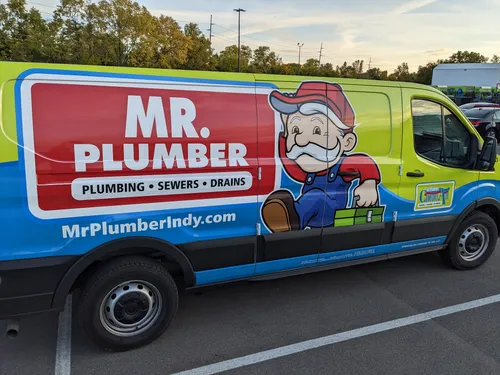
Mr. Plumber by Metzler & Hallam
1033 3rd Ave SW Suite 205, Carmel, IN 46032
Mr. Plumber by Metzler & Hallam is a licensed plumbing service provider based in Indianapolis, IN, offering a wide range of plumbing solutions. Their services include sewer camera inspection, water heater repair, water softener installation, sump pump repair, sewer line repair with trenchless technology, leak detection, gas line installation, toilet and garbage disposal repair, among others. They utilize advanced tools such as camera snaking systems and infrared cameras to diagnose plumbing issues efficiently. The company emphasizes trenchless sewer line repair methods like pipe bursting and relining to minimize property disruption. Mr. Plumber provides 24/7 emergency service, ensuring assistance is available whenever needed.

Summers Plumbing Heating & Cooling
8002 Castleway Dr, Indianapolis, IN 46250
Summers Plumbing Heating & Cooling is a plumbing and heating service provider located in Indianapolis, IN. They offer a variety of services including water heater repair and installation, sewer line repair, and heating system maintenance. With over 40 years of experience, Summers Plumbing Heating & Cooling has developed expertise in handling a wide range of plumbing and heating issues, ensuring efficient and affordable solutions for their customers. Their team is known for transparent pricing and honest assessments, making them a reliable choice for plumbing and heating needs in Indianapolis.
Understanding Your Sewer Main in Noblesville
The main sewer line, or lateral, is a critical but often overlooked component of your home. It runs from the foundation of your house, under your yard, driveway, and landscaping, and connects to the municipal sewer main typically located under the street or in a public easement. This pipe handles all the wastewater from your toilets, sinks, showers, and appliances. When it fails, the consequences are immediate and unpleasant, ranging from slow drains and gurgling noises to sewage backups in your lowest drains or even in your yard.
In Noblesville, many neighborhoods feature mature trees and older housing stock, which are two primary contributors to sewer line issues. Understanding the location and common vulnerabilities of your main drain line is the first step in diagnosing a problem.
Common Causes of Sewer Line Failure
Several factors can lead to the need for sewer line repair or replacement in our area. Identifying the root cause helps professionals determine the most effective and long-lasting solution.
- Tree Root Intrusion: This is one of the most frequent culprits in Noblesville. Tree roots are naturally drawn to the moisture and nutrients inside sewer pipes, especially at pipe joints. They can infiltrate through tiny cracks or loose connections, eventually growing and creating a complete blockage or causing the pipe to collapse.
- Aging and Deteriorating Pipes: Many older homes in the region were built with clay tile or cast iron sewer pipes 1. Over decades, these materials can corrode, crack, or simply wear out. Clay pipes are brittle and susceptible to ground movement, while cast iron can rust through.
- Ground Shifting and Soil Conditions: Indiana's freeze-thaw cycles and soil composition can lead to ground movement. This shifting can put pressure on sewer lines, causing them to crack, separate at the joints, or sag (creating a "belly" where waste collects) 2.
- Poor Installation or Ground Erosion: Improperly installed pipes or significant soil erosion around a pipe can lead to misalignment and failure over time 3.
Modern Repair Methods: Trenchless vs. Traditional
Today, homeowners have more options than ever. The choice between trenchless (or "no-dig") methods and traditional excavation depends on the damage, your property layout, and your budget.
Trenchless Sewer Repair
Trenchless technology has revolutionized sewer line work by minimizing the need for large, destructive trenches. There are two primary methods:
- Pipe Lining (Cured-in-Place Pipe - CIPP): This process involves inserting a flexible, resin-saturated tube into the damaged pipe. The tube is then inflated and cured (often with heat or UV light), forming a hard, seamless "pipe within a pipe." It seals cracks and holes and resists root intrusion. This is excellent for repairing leaks and restoring structural integrity without replacing the entire pipe.
- Pipe Bursting: This method is used for full sewer line replacement. A conical bursting head is pulled through the old, broken pipe, simultaneously fracturing it outward and pulling a new, high-density polyethylene (HDPE) pipe into place behind it 4 5. It requires only two small access pits but completely replaces the old line with a new, durable one.
Key Advantages of Trenchless Methods:
- Minimal Landscape Disruption: Your lawn, gardens, driveways, and patios remain largely intact.
- Faster Completion: Many jobs can be completed in a day or two.
- Long-Term Durability: The new pipe liners or HDPE pipes are highly resistant to roots and corrosion.
Traditional Excavation Repair
This is the conventional method, where a backhoe or other equipment digs a trench along the entire length of the damaged sewer line to expose it for repair or replacement 6. While it may have a lower upfront cost for the pipe work itself in some simple scenarios, it comes with significant additional considerations.
Considerations for Traditional Excavation:
- Major Property Disruption: It requires a deep trench across your yard, often impacting landscaping, fences, sprinkler systems, and hardscapes.
- High Restoration Costs: After the pipe is fixed, you must pay to refill the trench, re-sod or re-seed your lawn, and repair any damaged driveways, walkways, or other structures. These costs can be substantial.
- Longer Project Timeline: The digging, repair, and subsequent restoration make for a much longer overall project.
Find the perfect sewer line repair companies for your needs
Get personalized recommendations and expert advice
Cost Factors for Sewer Line Repair in Noblesville
The cost of fixing your main sewer drain can vary dramatically, from a few thousand dollars to over $20,000, depending on the scope and method. Here's a breakdown of what influences the price:
- Extent of Damage: A simple spot repair for a small section of pipe will cost significantly less than a full line replacement. The length of pipe that needs attention is a primary cost driver.
- Repair Method: Trenchless repairs often have a higher initial cost for labor and specialized equipment. However, when you factor in the avoided costs of landscape and hardscape restoration, they can be 30-50% less expensive overall than traditional excavation 7 8. Traditional excavation may seem cheaper for the pipe work itself but becomes very expensive once restoration is added 9.
- Depth and Accessibility: Pipes buried deeper or located under a concrete slab foundation, driveway, or mature trees are more complex and costly to access, regardless of method.
- Permits and City Connections: Repairs near the city main or sidewalk often require permits and may involve coordination with municipal authorities, adding to the cost.
- Material Costs: The type of new pipe material (e.g., HDPE for bursting, epoxy for lining) affects the price.
General Cost Ranges (for reference):
- Minor Spot Repair: Can start around $650 and go up from there 10.
- Full Trenchless Replacement (30-50 ft): Often ranges from $1,250 to $11,000 or more 11.
- Cost Per Foot: Trenchless methods can range from $60 - $250 per foot, with lining generally on the lower end and bursting on the higher end. Traditional excavation can range from $50 - $450+ per foot, plus the added restoration costs for landscaping ($1,000-$5,000), driveways ($2,000-$8,000), and tree removal/relocation ($200-$2,000+) 12.
Choosing the Right Service Provider
Selecting a qualified professional for your sewer main repair is crucial. Look for a licensed, insured plumbing contractor with specific experience in sewer line diagnostics and the full range of repair methods. They should conduct a thorough video camera inspection to accurately diagnose the problem before recommending a solution. A reputable provider will explain all your options-both trenchless and traditional-along with a detailed, transparent estimate that outlines all costs, including potential permits and restoration.
Frequently asked questions
Sources
Footnotes
-
Everything You Need to Know About Your Main Sewer Drain Line - https://www.omaha-drain.com/single-post/everything-you-need-to-know-about-your-main-sewer-drain-line ↩
-
Sewer Line Replacement - Noblesville Plumbing - https://noblesvilleplumbingservices.com/pages/services/sewer-line-replacement.php ↩
-
Sewage Repair - Noblesville Plumbing - https://noblesvilleplumbingservices.com/pages/services/sewage-repair.php ↩
-
Indianapolis Trenchless Sewer Pipe Repair - https://mrplumberindy.com/trenchless-pipe-bursting/ ↩
-
Trenchless Pipe Bursting in Indianapolis - Williams Comfort Air - https://williamscomfortair.com/trenchless-pipe-bursting/ ↩
-
Trenchless Sewer Line Replacement Cost - NuFlow Indy - https://nuflowindy.com/the-cost-of-no-dig-trenchless-sewer-line-repair-or-replacement/ ↩
-
Is Trenchless Sewer Line Repair Cheaper? - AP Plumbing - https://applumbing.com/blog/is-trenchless-sewer-line-repair-cheaper/ ↩
-
The Cost of Sewer Line Replacement: What to Expect - https://dirtcheapsewer.com/the-cost-of-sewer-line-replacement/ ↩
-
Cost Comparison: Trenchless vs. Traditional Sewer Line Repair - https://www.advancedtrenchlesssolutions.com/blog/cost-comparison-trenchless-vs-traditional-sewer-line-repair ↩
-
How Is the Cost of Sewer Line Repair Determined? - https://www.callwaldrop.com/blog/how-is-the-cost-of-sewer-line-repair-determined/ ↩
-
How Much Does Sewer Line Repair Typically Cost? - https://www.jsewerandplumbing.com/how-much-does-sewer-line-repair-typically-cost/ ↩
-
Trenchless vs. Traditional Sewer Repair - https://sewerlinesonly.com/trenchless-vs-traditional-sewer-repair-which-is-more-cost-effective-for-lakewood-homeowners/ ↩