Find the Best Sewer Line Repair Companies for Your Business
No obligation • Fast responses • Nationwide coverage

Why you can trust Search a Plumber
Search a Plumber is a leading United States resource for finding and evaluating professional plumbing services. Our team researches licensing, experience, and customer feedback to create unbiased, fact-driven overviews. Companies cannot pay to change ratings or placement, ensuring homeowners get trustworthy information.
Search providers near you
Best Sewer Line Repair Companies in Iowa Ranked
A damaged sewer line is a serious issue that can lead to unpleasant odors, slow drains, and even sewage backups into your home. In Iowa, where soil conditions and deep frost lines add complexity, addressing sewer problems quickly is essential to protect your property's value and your family's health. This guide provides Iowa homeowners with clear, practical information on sewer line repair, from identifying common materials and understanding local regulations to navigating the repair process and finding qualified local professionals to restore proper function to your home's most critical drainage system.
Common Sewer Pipe Materials in Iowa Homes
The type of pipe buried under your yard significantly influences its lifespan, common failure points, and repair options. Iowa's housing stock features a mix of materials installed over the decades.
- Clay Tile: Common in homes built before the 1960s, clay pipes are durable but brittle. They are highly susceptible to cracking from ground movement and root intrusion at the joints, which can lead to blockages and misalignment.
- Cast Iron: Also found in older Iowa homes, cast iron is strong but eventually succumbs to internal corrosion and rust, which can cause the pipe walls to thin and collapse over time.
- PVC (Polyvinyl Chloride): This is the modern standard for new installations and replacements. PVC is lightweight, highly durable, resistant to corrosion and root intrusion, and has smooth joints that facilitate better flow. Most contemporary sewer line repairs in Iowa involve replacing older materials with PVC.
Identifying your pipe material is a key first step, typically done by a professional using a sewer camera inspection.
Key Factors Affecting Sewer Repair in Iowa
Several Iowa-specific conditions make sewer line work more complex than in warmer climates. Understanding these factors helps set realistic expectations for the scope and cost of a project.
Depth and Slope: In Iowa, sewer lines must be buried below the frost line to prevent freezing, which is often 8 feet or deeper depending on your specific region. This depth alone increases excavation work. Furthermore, the pipe must maintain a precise slope (typically 1/8" to 1/4" per foot) for waste to flow properly via gravity. 1 A sagging or improperly sloped section can cause repeated clogs and requires correction.
Access and Obstacles: The presence of a cleanout-an access point to the main line-is crucial for inspection and some repair methods like trenchless lining. Many older Iowa homes lack a cleanout, meaning one must be installed, adding to the project. The repair path must also navigate under driveways, sidewalks, mature trees, or landscaping, which can dramatically increase complexity and cost. 2
The Iowa Sewer Repair Process: Permits and Locates
Before any digging begins, Iowa homeowners and contractors must follow specific legal and safety steps. Skipping these can result in fines, dangerous utility strikes, or failed inspections.
- Call 811 for Utility Locates: This free, nationwide service is mandatory. A few days before any excavation, call 811 or submit an online request. Utility companies will then mark the approximate locations of public underground lines (gas, electric, water, communications) in your yard with colored paint or flags. This prevents life-threatening accidents and service disruptions.
- Secure the Required Permit: A Construction Permit from the Iowa Department of Natural Resources (DNR) or a locally delegated authority (like your city's Public Works department) is required for any new sewer construction or major repair/replacement. 3 Your plumbing professional should typically handle this, but it's important to confirm.
- Schedule Inspections: Many local sanitary districts in Iowa require on-site inspections at key stages, such as after the trench is dug and the pipe is laid but before it is covered. For example, the Iowa Great Lakes Sanitary District mandates inspections to ensure proper depth, slope, and connection. 4 Passing inspection is necessary for final approval.
Find the perfect sewer line repair companies for your needs
Get personalized recommendations and expert advice
Repair Methods: From Full Excavation to Trenchless Solutions
The chosen repair technique depends on the damage's extent, location, pipe material, and budget. Iowa contractors offer both traditional and modern methods.
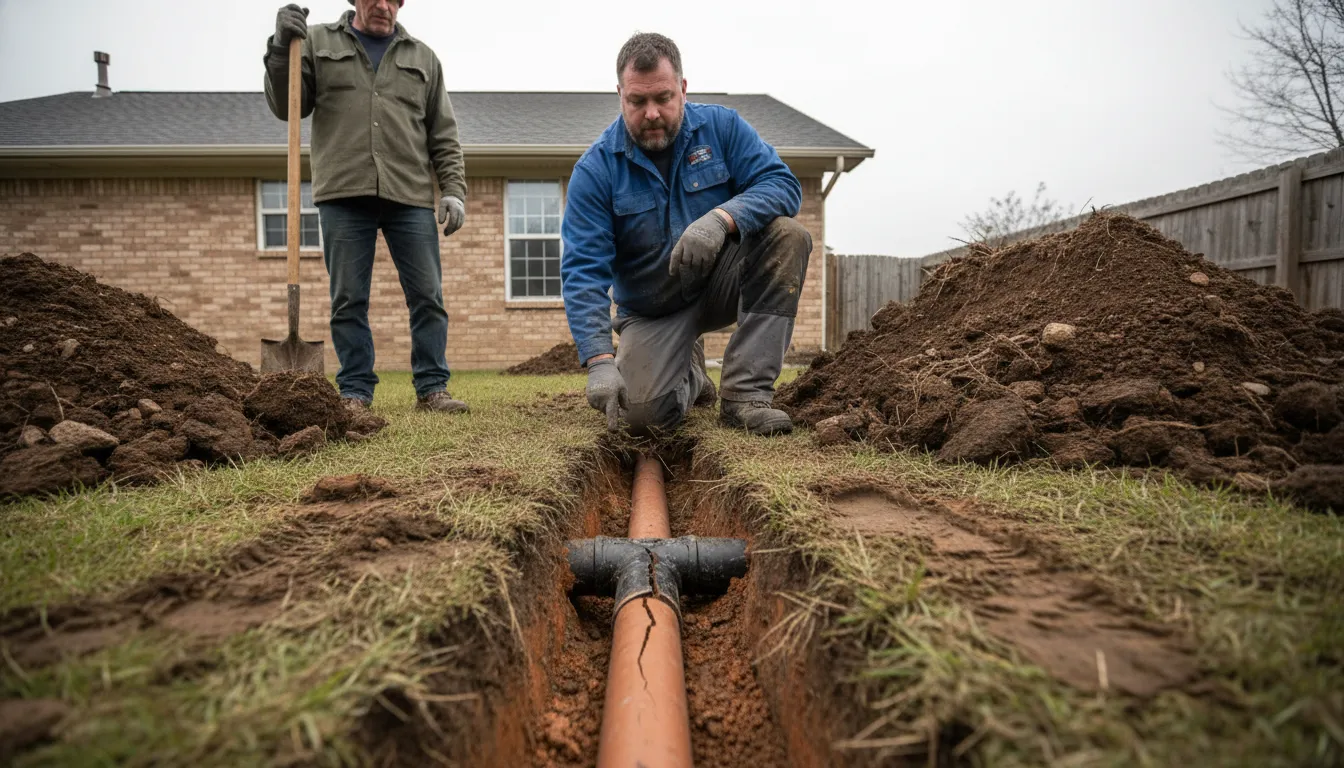
Traditional Dig & Replace: This is the most straightforward method, involving excavating a trench along the entire length of the failed pipe, removing the old line, and installing a new one (usually PVC). It's often necessary for severely collapsed pipes, major misalignments, or when switching from clay/iron to PVC. The primary drawbacks are the significant landscape disruption and restoration required afterward.
Trenchless Sewer Repair (CIPP Lining): Trenchless technology, specifically Cured-In-Place Pipe (CIPP) lining, is a popular alternative for suitable situations. A resin-saturated felt tube is inserted through the existing pipe and inflated. The resin cures, forming a hard, seamless "pipe-within-a-pipe." This method minimizes digging (often only at the access points), preserves landscaping, and can be completed faster. It's ideal for repairing cracks, holes, and root intrusion in pipes that are structurally sound but leaking.
Spot Repair: For an isolated section of damage, a localized "spot repair" may be possible. This can sometimes be done trenchlessly or with a small, targeted excavation to replace just a few feet of pipe.
Understanding Sewer Line Repair Costs in Iowa
Costs for sewer line repair in Iowa vary extremely widely based on the factors discussed. The following ranges are estimates to help you budget; a detailed, written quote from a local professional is essential.
- Minor Repairs & Trenchless Lining: For a small section repair or a CIPP lining project, homeowners might expect costs ranging from $1,000 to $5,000 or more. The final price depends on the length being lined and access requirements. 5
- Full Traditional Replacement: For a complete dig-and-replace of a significant sewer line run (e.g., 50 to 100 feet from house to street), costs commonly range from $5,000 to $30,000+. A typical average for a substantial but straightforward replacement in Iowa often falls between $12,000 and $15,000. 6 7 8
- Major Cost Drivers: The final price is heavily influenced by:
- Length & Depth: More pipe and deeper trenches mean more labor, materials, and backfill.
- Access Difficulty: Repairing a line under a concrete driveway, patio, or mature tree adds major expense for cutting, removal, and restoration.
- Pipe Material: Installing new PVC has standard material costs, while the disposal of old clay or cast iron may add minor fees.
- Labor Rates & Permits: Costs vary by region within Iowa, and local permit fees will be included in the total.
Always seek multiple detailed estimates that break down labor, materials, permit fees, and restoration. The cheapest bid is not always the best value; prioritize licensed, insured, and well-reviewed local professionals who understand Iowa's specific code and soil challenges.
Signs You May Need Sewer Line Repair
Recognizing early warning signs can help you address problems before they become catastrophic and more expensive.
- Multiple Drain Backups: If more than one plumbing fixture (e.g., toilets, tubs, basement drains) backs up simultaneously, especially when using a washing machine, it strongly indicates a blockage or break in the main sewer line.
- Unusual Lawn Conditions: Soggy patches, sinkholes, or areas of unusually lush and fast-growing grass in your yard (particularly along the suspected pipe path) can signal a leaking sewer line fertilizing the soil.
- Persistent Foul Odors: The smell of sewage inside your home or near floor drains, or outside in your yard, is a clear red flag.
- Gurgling Sounds: Hearing gurgling from toilets or drains when water is running elsewhere points to a ventilation or blockage issue in the main line.
- Slow Drains: Chronic slow drainage throughout the house, not resolved by plunging or snaking individual drains, suggests a main line problem.
If you notice any of these issues, contact a professional for a sewer camera inspection. This diagnostic tool is inserted into the line, providing a real-time video view of the pipe's interior to accurately identify the problem's location and nature.
Frequently asked questions
Sources
Footnotes
-
Chapter 3 - Sanitary Sewers - Iowa's SUDAS - https://www.iowasudas.org/wp-content/uploads/sites/15/2020/12/Chapter_03-2020.pdf ↩
-
Complete Guide to Residential Sewer Line Maintenance ... - https://sswaterworks.com/complete-guide-to-residential-sewer-line/ ↩
-
Chapter 3 - Sanitary Sewers - Iowa's SUDAS - https://www.iowasudas.org/wp-content/uploads/sites/15/2020/03/Chapter_03.pdf ↩
-
Inspections - Iowa Great Lakes Sanitary District - https://www.iowagreatlakessanitarydistrict.com/inspections/ ↩
-
How Is the Cost of Sewer Line Repair Determined? - https://www.callwaldrop.com/blog/how-is-the-cost-of-sewer-line-repair-determined/ ↩
-
Everything You Need to Know About Sewer Line Replacement - https://www.splashplumbing.com/everything-you-need-to-know-about-sewer-line-replacement-a-comprehensive-guide-for-homeowners-in-2025/ ↩
-
Understanding Sewer Line Replacement: What to Expect - https://flomaxxinc.net/blogs/understanding-sewer-line-replacement-guide-cost-process/ ↩
-
How Much Does It Cost to Replace a Sewer Line? [2025 Data] - https://www.homeadvisor.com/cost/plumbing/repair-a-sewer-main/ ↩