Find the Best Sewer Line Repair Companies for Your Business
No obligation • Fast responses • Nationwide coverage

Why you can trust Search a Plumber
Search a Plumber is a leading United States resource for finding and evaluating professional plumbing services. Our team researches licensing, experience, and customer feedback to create unbiased, fact-driven overviews. Companies cannot pay to change ratings or placement, ensuring homeowners get trustworthy information.
Search providers near you
Top Sewer Line Repair Companies in Apopka, Florida Ranked
Dealing with a failing sewer line is a stressful and urgent situation for any Apopka homeowner. When wastewater isn't flowing properly from your home to the city main, it can lead to unpleasant backups, property damage, and significant inconvenience. Understanding your options for sewer line repair or replacement is crucial to making an informed, cost-effective decision that minimizes disruption to your home and yard. This guide explains the common causes of sewer line failure in our area, details the two primary repair methods, and provides insights to help you navigate the process of finding a qualified local specialist.
Mechanical One
217 N Westmonte Dr #1007, Altamonte Springs, FL 32714
Mechanical One is a full-service HVAC, plumbing, gas, and electrical company based in Altamonte Springs, FL, serving the Orlando area and surrounding communities. They provide a wide range of services including water heater repair and installation, drain cleaning, sewer line repair, leak detection, and gas line installation. Their licensed technicians work with leading brands and offer capabilities such as gas safety inspections and leak detection to ensure home safety. Mechanical One has been part of the Altamonte Springs community since its founding and offers 24/7 emergency repair services for HVAC, plumbing, electrical, and gas line issues.
Mechanical One
307 Cranes Roost Blvd #2010, Altamonte Springs, FL 32701
Mechanical One is a multi-service company based in Orlando, FL, offering plumbing, HVAC, gas, and electrical services. They provide water heater repair and installation, drain cleaning, sewer line repair, leak detection, and gas line installation. Their licensed technicians work with leading brands and handle a wide range of residential systems. Mechanical One serves the Orlando area and surrounding communities, with a strong presence in Altamonte Springs and Seminole County. They offer 24/7 emergency repair services for HVAC, plumbing, electrical, and gas line issues, ensuring timely assistance when needed.
Roto-Rooter Plumbing & Water Cleanup
1234 S John Young Pkwy, Kissimmee, FL 34741
Roto-Rooter Plumbing & Water Cleanup is a plumbing service provider located in Orlando, FL, offering a wide range of plumbing and water-related solutions. Their services include sewer camera inspections, water heater repairs and installations, water softener installation, drain cleaning, hydro jetting, and sewer line repair using both conventional excavation and trenchless methods. They also provide water filtration system installations to improve water quality. Roto-Rooter serves the Kissimmee metro area and surrounding communities. The company is available 24/7 to address urgent plumbing emergencies and uses video camera inspections to diagnose sewer line issues accurately.
Blue Sky Plumbing
4602 N Orange Blossom Trail, Mt Dora, FL 32757
Blue Sky Plumbing is a licensed plumbing company serving Orlando, FL, and surrounding areas. They offer a wide range of services including sewer camera inspections, water heater repair and installation, tankless water heater services, water softener installation, drain cleaning, hydro jetting, sewer line repair, leak detection, repiping, gas line installation, toilet repair, and garbage disposal repair. The company is equipped to handle complex plumbing issues such as sewer line jetting and thorough leak detection using advanced technology. With over 10 years in business, Blue Sky Plumbing provides 24-hour emergency plumbing services to assist customers outside of regular business hours.
Matt's Plumbing Services
1314 S Semoran Blvd, Orlando, FL 32807
Matt's Plumbing Services is a family-owned plumbing company serving Orlando, FL, and the surrounding Western Florida region. They specialize in sewer line repair, leak detection, water main services, and slab leak repairs. Their team is equipped to handle plumbing issues that affect home foundations and wastewater management, ensuring safe and reliable solutions. Since 2015, they have provided 24/7 emergency plumbing services across multiple Florida counties, including Polk, Hillsborough, and Pasco.
What Causes Sewer Line Problems in Apopka?
Your main sewer line is a critical, yet out-of-sight, component of your home's plumbing system. It runs underground from your home's foundation to the city sewer main, typically located at the street. Several factors common to Central Florida can lead to its failure:
- Tree Root Intrusion: This is a leading cause. Roots from Apopka's beautiful oak and other trees seek moisture and can infiltrate tiny cracks or loose joints in older pipes. Once inside, they grow and expand, causing major blockages and even breaking the pipe 1.
- Aging and Deteriorating Pipes: Many homes in the area have original sewer lines made of cast iron, clay (Orangeburg), or concrete. Over decades, these materials can corrode, crack, collapse, or have their joints fail 2.
- Ground Shifting and Settlement: Florida's sandy soil and weather patterns can cause the ground to shift or settle over time. This movement puts stress on rigid pipes, leading to misalignments, cracks, or breaks 3.
- Improper Flushing and Blockages: Despite labels, "flushable" wipes, hygiene products, paper towels, and excessive grease do not break down like toilet paper. They accumulate in the line, creating stubborn clogs that can strain and damage pipes.
- Faulty Connections: Poor initial installation or deteriorated connections between pipe sections can create weak points where leaks and blockages begin.
Recognizing the Signs of a Sewer Line Issue
Early detection can prevent a minor repair from becoming a major excavation project. Be alert for these warning signs:
- Multiple Drain Backups: If more than one fixture (like a toilet and a shower) backs up simultaneously, especially when using a washing machine, it strongly points to a main line clog.
- Gurgling Sounds: Strange gurgling noises coming from toilets or drains when water is running elsewhere in the house.
- Slow Drains Throughout the House: A pervasive slow-draining issue that isn't solved by plunging a single fixture.
- Sewage Odors: Foul smells emanating from floor drains, cleanouts, or your yard.
- Unusually Lush or Soggy Patches in Yard: A leaking sewer line acts as a fertilizer, causing one area of your grass to be greener or creating a persistently soggy spot.
- Foundation Cracks or Sinkholes: In severe cases, wastewater erosion from a broken line can undermine soil and affect your home's foundation.
If you notice any of these signs, the next critical step is a professional diagnosis. Local Apopka plumbing specialists use specialized sewer cameras to inspect the line. This video inspection identifies the exact location, nature, and severity of the problem, which is essential for determining the right repair method and providing an accurate quote.
Your Repair Options: Trenchless vs. Traditional Excavation
Once a problem is confirmed, you will generally have two paths forward: modern trenchless technology or traditional open-cut excavation. Each has distinct advantages and ideal use cases.
Traditional Excavation (Open-Trench Repair)
This is the conventional method that has been used for decades.
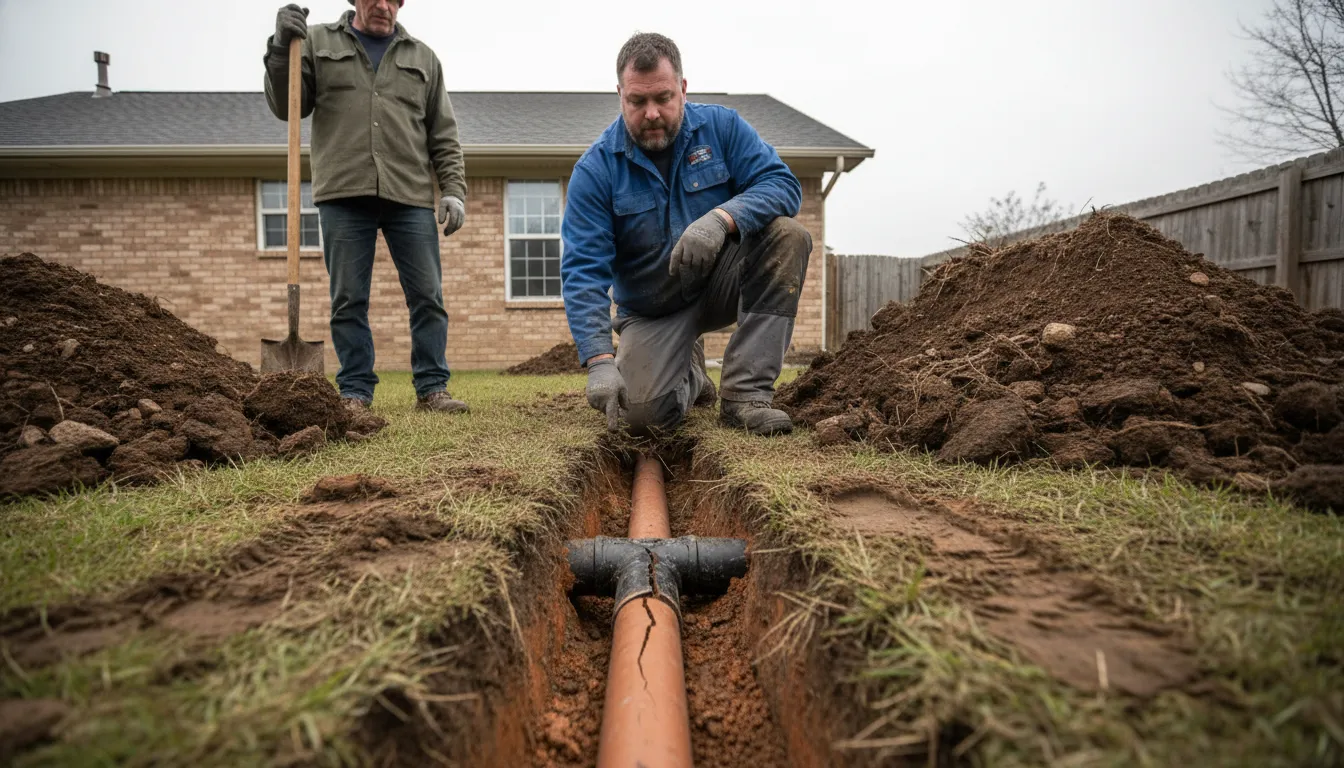
- The Process: Plumbers use excavation equipment to dig a long, deep trench along the path of the existing sewer pipe. The old, damaged pipe is completely removed and a new pipe is laid in the trench before it is backfilled 4.
- Pros:
- Direct Access: Provides complete visual access to the pipe and surrounding soil, which is beneficial for complex problems or severe, collapsed sections.
- Versatility: Can handle any type of damage and allows for repairs to other underground utilities if discovered.
- Potentially Lower Material Cost: For straightforward, short-line replacements, the upfront material costs can sometimes be less than trenchless options.
- Cons:
- Major Disruption: This is the most significant drawback. The trench can destroy landscaping, driveways, sidewalks, and patios 5.
- Labor-Intensive: Requires more manual labor for digging and later for restoration of the property.
- Longer Timeline: The process of digging, repairing, and restoring the site typically takes longer than trenchless methods.
- Messy Cleanup: Your property will be left with piles of dirt and a major restoration project.
Trenchless Sewer Repair
Trenchless technology has revolutionized sewer line work by minimizing surface disruption. The two primary techniques are pipe lining and pipe bursting.
- The Process (Pipe Lining): Also called Cured-In-Place Pipe (CIPP), this involves saturating a flexible epoxy resin liner, inserting it into the old pipe through an access point, and inflating it. The resin cures in place, forming a hard, seamless "pipe within a pipe" 6.
- The Process (Pipe Bursting): A conical bursting head is pulled through the old, damaged pipe, fracturing it outward while simultaneously pulling a new, high-density polyethylene (HDPE) pipe into place behind it 7.
- Pros:
- Minimal Disruption: Often requires only one or two small access holes, preserving your lawn, driveway, and landscaping 8.
- Faster Completion: Many trenchless repairs can be completed in a single day.
- Durable Result: The new liner or pipe is highly resistant to root intrusion and corrosion, often with a 50-year lifespan.
- Less Restoration Cost: Since your yard remains largely intact, you avoid costly landscaping or hardscaping repairs.
- Cons:
- Not for All Damage: Trenchless methods typically require a somewhat intact host pipe. Severely collapsed, misaligned, or crushed pipes may not be candidates 9.
- Higher Upfront Cost: The specialized equipment and materials can make the initial quote higher than a simple excavation in some scenarios, though total project cost may be lower when restoration is factored in.
Find the perfect sewer line repair companies for your needs
Get personalized recommendations and expert advice
Cost Considerations for Apopka Homeowners
Sewer line repair is a significant investment, and costs in Florida can vary widely based on the method, pipe depth, length of the damaged section, soil conditions, and accessibility. It's important to view quotes in the context of the entire project, including any necessary restoration.
Based on Florida-specific data, here are general cost ranges:
- Traditional Excavation: Often quoted between $50 to $150 or more per linear foot.
- Trenchless Repair (Lining or Bursting): Typically ranges from $60 to $280 or more per linear foot, depending on the technique and diameter 10 11.
- Overall Project Range: For a common 30-foot section of sewer line, total costs can range from $650 on the very low end for a simple spot repair to $7,500 or more for a full-length replacement using advanced methods 12 13.
Crucial Note: These are estimates. The only way to get an accurate price for your home is to have a local Apopka professional perform a camera inspection and provide a detailed quote for the solution that fits your specific situation.
How to Choose the Right Method for Your Home
The "best" method depends entirely on the diagnosis of your line and your property's characteristics. Here's a simple guide:
- Consider Trenchless Repair If: Your sewer camera inspection shows a pipe that is cracked, bellied, or has root intrusion but is still structurally intact. It's also an excellent choice if you have expensive landscaping, a pool, a deck, or a paved driveway over the line that you want to preserve 14.
- Traditional Excavation May Be Necessary If: The pipe has fully collapsed, has a severe misalignment, or is made of a material like Orangeburg that doesn't provide a stable host for trenchless methods. It may also be the more practical choice if the line runs under an open, easily accessible area of your yard with no obstacles.
The most reliable approach is to get assessments and quotes from reputable local providers who offer both services. This allows you to compare the scope, cost, and pros and cons of each option for your unique property 15 16.
Frequently asked questions
Sources
Footnotes
-
The Impact of Tree Root Intrusion on Sewer Lines: Prevention and Remediation Techniques - https://suburbanplumbingexperts.com/the-impact-of-tree-root-intrusion-on-sewer-lines-prevention-and-remediation-techniques/ ↩
-
Sewer Repair - https://littekenplumbing.com/sewer-repair/ ↩
-
Main Sewer Line 101 - Top Tier Plumbing - https://toptierplumbingandrooter.com/main-sewer-line/ ↩
-
Open Excavation versus Trenchless Repair - T3 Lining Supply - https://www.t3liningsupply.com/blog/open-excavation-versus-trenchless ↩
-
Trenchless Sewer Repair vs. Traditional Excavation - AQUALIS - https://aqualisco.com/trenchless-sewer-repair-vs-traditional/ ↩
-
Trenchless Sewer Repair: Lower Cost, Lower Impact Sewer ... - https://www.sewerflowllc.com/2025/03/06/trenchless-sewer-repair-lower-cost-lower-impact-sewer-repair/ ↩
-
What Are Trenchless Sewer Pipe Repair Methods? - https://www.superiorplumbingjax.com/what-are-trenchless-sewer-pipe-repair-methods ↩
-
Trenchless vs. Traditional Sewer Repair - https://sewerlinesonly.com/trenchless-vs-traditional-sewer-repair-which-is-more-cost-effective-for-lakewood-homeowners/ ↩
-
Trenchless Sewer Repair vs. Traditional Excavation: Which is Better? - https://alphaenvironmental.net/blog/trenchless-sewer-repair-vs-traditional-excavation-which-is-better/ ↩
-
Empower Your Decision: Decoding Trenchless Sewer Repair Costs - Pipeliner Pros - https://pipelinerpros.com/trenchless-sewer-repair-cost/ ↩
-
Is Trenchless Sewer Line Repair Cheaper? - AP Plumbing - https://applumbing.com/blog/is-trenchless-sewer-line-repair-cheaper/ ↩
-
How Much Does It Cost to Replace a Sewer Line in Florida? - https://www.cooltoday.com/blog/how-much-does-it-cost-to-replace-a-sewer-line-in-florida ↩
-
Cost Comparison: Trenchless vs. Traditional Sewer Line Repair - https://www.advancedtrenchlesssolutions.com/blog/cost-comparison-trenchless-vs-traditional-sewer-line-repair ↩
-
Sewer Pipe Lining vs Residential Excavation - 128 Plumbing - https://www.128plumbing.com/sewer-pipe-lining-vs-residential-excavation/ ↩
-
Sewer Line Connections | Apopka Sewer Repair - Drain Genie - https://www.draingenieplumbing.com/apopka-sewer-line-connection-poor-connection-cause-clogged-drain/ ↩
-
Sewer Repair Options: Trenchless vs. Traditional Methods | TYCO - https://tycoplumbingco.com/sewer-repair-options-trenchless-vs-traditional-methods/ ↩