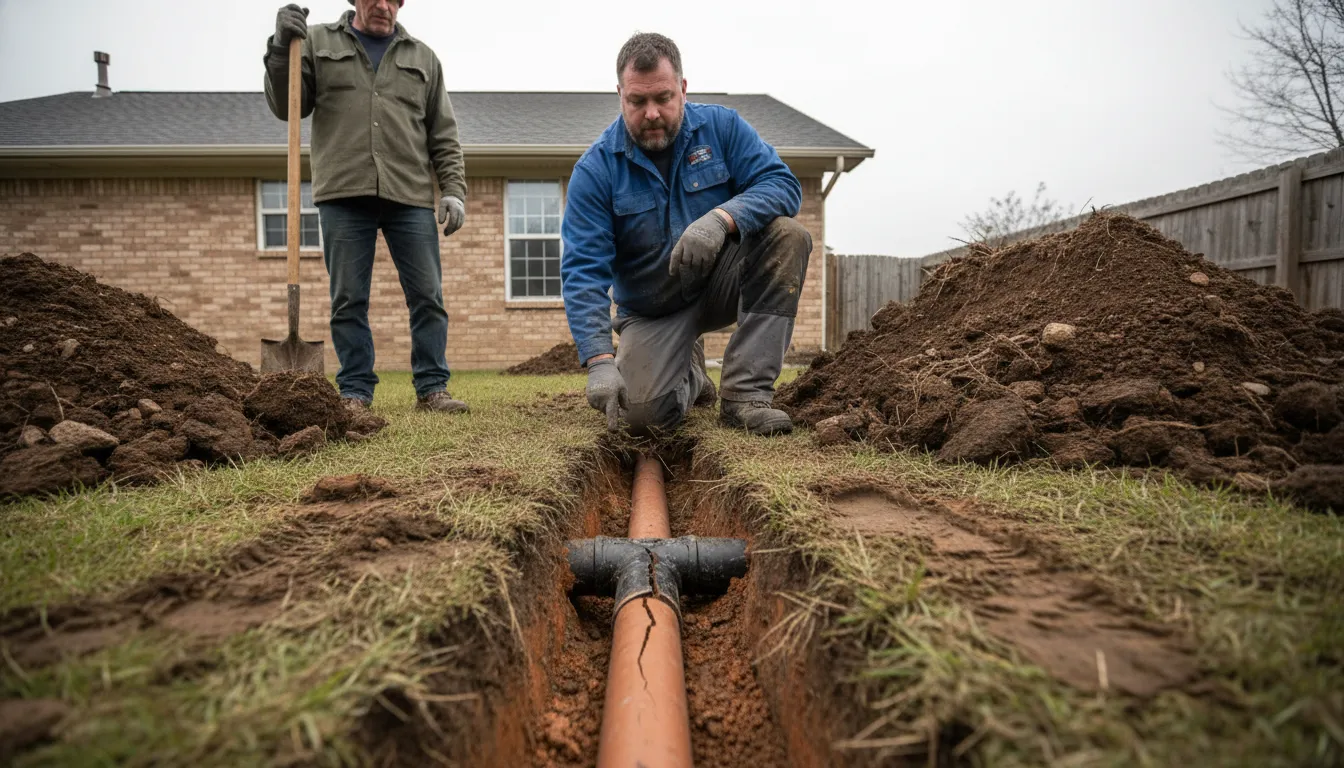
Find the Best Sewer Line Repair Companies for Your Business
No obligation • Fast responses • Nationwide coverage

Why you can trust Search a Plumber
Search a Plumber is a leading United States resource for finding and evaluating professional plumbing services. Our team researches licensing, experience, and customer feedback to create unbiased, fact-driven overviews. Companies cannot pay to change ratings or placement, ensuring homeowners get trustworthy information.
Search providers near you
Top Sewer Line Repair Companies in Peoria, Arizona Ranked
A failing sewer line is a serious issue that can disrupt your home and lead to costly property damage. Sewer line repair involves fixing or replacing the underground pipe that carries wastewater from your home to the city's main sewer system. In Peoria, common problems like invasive tree roots and aging pipes require prompt, professional attention. This guide will help you understand your options, from modern trenchless methods to traditional excavation, so you can make an informed decision when selecting a local specialist for the job.
Plumbers Near Me, LLC
8990 E Raintree Dr Unit 100-G, Scottsdale, AZ 85260
Plumbers Near Me, LLC offers a wide range of plumbing services in Phoenix, AZ, including water heater repair and installation, drain cleaning, sewer line repair, leak detection, repiping, and toilet repair. They serve both residential and commercial clients throughout the Phoenix metropolitan area. Their capabilities include handling tankless and traditional water heater systems, as well as slab leak repairs using specialized equipment. The company is fully licensed and insured, providing service with the latest tools and training. They are available for extended hours most days of the week to accommodate customer needs.
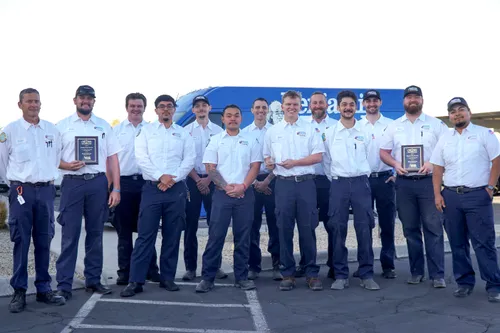
Benjamin Franklin The Punctual Plumber
7440 E Karen Dr # 500, Scottsdale, AZ 85260
Benjamin Franklin The Punctual Plumber is a locally owned plumbing company serving Scottsdale, AZ, and the greater Phoenix metropolitan area. They provide a wide range of plumbing services including water heater repair and installation, sewer line repair, drain cleaning, leak detection, repiping, and garbage disposal repair. The company offers specialized capabilities such as video camera inspections to accurately diagnose plumbing issues. Established in 2005, Benjamin Franklin Plumbing also provides 24/7 emergency plumbing services to address urgent needs at any time.
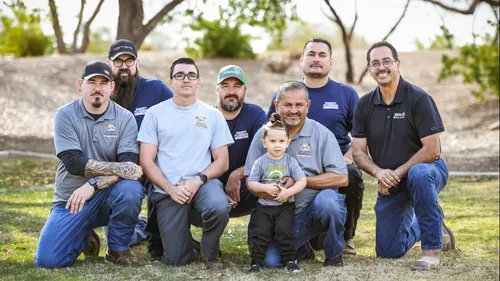
Dignity Plumbers Service & Water Softeners
11200 W Wisconsin Ave #5A, Youngtown, AZ 85363
Dignity Plumbers Service & Water Softeners is a family-owned plumbing company serving Phoenix, AZ, and surrounding West Valley communities. They provide a wide range of plumbing services including water heater repair and installation, tankless water heater services, water softener installation, drain cleaning, sewer line repair, leak detection, gas line installation, toilet repair, and garbage disposal repair. With over 20 years of experience, their master plumbers are equipped to handle emergency plumbing needs 24/7, ensuring prompt attention to urgent issues. They also specialize in tankless water heater installation and recommend water softeners to protect plumbing investments.
Plumbers Near Me - Water Heater & Plumbing Services
201 S Washington St Space A, Chandler, AZ 85225
Plumbers Near Me - Water Heater & Plumbing Services is a licensed and insured plumbing company based in Phoenix, AZ. They provide a wide range of plumbing services including water heater repair and installation, tankless water heater services, drain cleaning, sewer line repair, leak detection, toilet repair, and garbage disposal repair. Their expertise includes slab leak detection and repair, and they serve both residential and commercial clients. Plumbers Near Me offers 24/7 emergency plumbing services, ensuring rapid response for urgent plumbing needs across the Phoenix area.
Peerless Plumbing & Nudrain Phoenix
3801 E Roeser Rd #20, Phoenix, AZ 85040
Peerless Plumbing & Nudrain Phoenix is a family-owned trenchless plumbing contractor based in Phoenix, AZ. They specialize in trenchless sewer repair, sewer camera inspections, repiping, and sewer line repairs using innovative, minimally disruptive technology. As the first licensed NuFlow contractor in Arizona, they offer services that avoid traditional digging, preserving landscapes and structures while restoring pipes efficiently. With over 30 years and more than 10,000 piping installations experience, Peerless Plumbing provides long-term plumbing solutions throughout Arizona and partners with professionals across the U.S. and Canada to extend their reach. They are certified by NASSCO and NuFlow and have been recognized in industry publications and podcasts for their expertise.
Common Causes of Sewer Line Problems in Peoria
Understanding what damages your underground sewer pipe is the first step toward an effective solution. The desert environment and common pipe materials in Peoria create specific vulnerabilities.
- Tree Root Intrusion: Despite the arid climate, tree roots are a leading cause of sewer line damage in Arizona. Roots are drawn to the moisture and nutrients inside pipes, and they can infiltrate through tiny cracks or loose joints. Once inside, they cause blockages and can eventually crack or collapse the pipe entirely.
- Aging and Corroding Pipes: Many older homes in the area have sewer lines made of cast iron or clay (Orangeburg) pipe. Over decades, these materials corrode, crack, and deteriorate. Cast iron rusts from the inside out, while clay pipes can crack from soil pressure or root intrusion.
- Ground Shifting and Soil Movement: The expansive, clay-heavy soils common in the Phoenix metro area, including Peoria, can shift significantly with moisture changes. This movement puts immense stress on sewer pipes, leading to misaligned joints, cracks, and even complete breaks 1.
- Grease and Debris Blockages: While not always a structural repair issue, the buildup of grease, non-flushable items, and other debris can cause severe clogs that mimic or exacerbate line damage, often requiring professional hydro jetting to clear 2.
Diagnosing Your Sewer Line Issue
Before any repair can be planned, a precise diagnosis is essential. Reputable plumbing professionals use specialized camera inspection technology. A high-definition, waterproof camera is snaked through your sewer line, providing a real-time video feed of the pipe's interior condition. This inspection identifies the exact location, nature, and severity of the problem-whether it's a root mass, a belly (sagging section), a crack, or a collapsed pipe. This critical step determines which repair method is both feasible and most cost-effective for your situation.
Modern Trenchless Sewer Repair Methods
Trenchless technology has revolutionized sewer line repair by minimizing property disruption. These methods repair or replace the pipe from the inside using only small access points, often at the beginning and end of the damaged section.
Cured-in-Place Pipe (CIPP) Lining
This is the most common form of trenchless rehabilitation. A flexible, resin-saturated tube (liner) is inserted into the damaged pipe. It is then inflated, pressing the liner against the host pipe's walls. The resin is cured using hot water or UV light, forming a hard, seamless "pipe-within-a-pipe." CIPP lining can seal cracks, holes, and joint failures, and it strengthens the existing line against root intrusion.
- Pros: Extremely minimal digging, preserves landscaping, driveways, and patios. The smooth interior can improve flow. It's a durable, long-lasting solution.
- Cons: Requires the old pipe to have a structurally sound path (not fully collapsed). It slightly reduces the internal diameter of the pipe. The upfront material cost can be higher than other methods 3 4.
Pipe Bursting
This method is used for full pipe replacement when the old line is too damaged to line. A conical bursting head is pulled through the old pipe, fracturing it outward while simultaneously pulling a new, high-density polyethylene (HDPE) pipe into place behind it. The old pipe fragments remain in the ground as the new pipe is installed.
- Pros: Installs a brand-new, root-resistant pipe. Can slightly increase the pipe diameter. Still requires only small access pits.
- Cons: Requires more pulling force and may not be suitable near other underground utilities. Slightly more disruptive than lining but far less than excavation.
Find the perfect sewer line repair companies for your needs
Get personalized recommendations and expert advice
Traditional Excavation and Repair
The conventional method involves using a backhoe or other equipment to dig a large, open trench along the path of the sewer line to fully expose it. The damaged section is then cut out and replaced, or the entire line is swapped for new pipe. The trench is backfilled, but significant restoration work (sod, concrete, pavers) is often left to the homeowner.
- Pros: Can address any type of damage, including total collapses. The per-foot material cost for the pipe itself is often lower.
- Cons: Highly disruptive to your yard, driveway, or landscaping. Restoration costs can be substantial and are often not included in the initial repair quote. The process is slower and more labor-intensive 5 6.
Cost Considerations for Peoria Homeowners
Sewer line repair is a significant investment, and costs in Peoria vary based on the method, pipe length, depth, and extent of damage. Here's a general breakdown based on regional data:
- Trenchless CIPP Lining: Typically ranges from $90 to $250 per linear foot. For an average repair, total costs often fall between $4,000 and $20,000+ 7.
- Trenchless Pipe Bursting: Generally costs $60 to $200 per linear foot, with total project costs similar to CIPP lining 8 9.
- Traditional Excavation: While the pipe replacement itself might start around $2,000 to $10,000, the true total cost with landscape, concrete, and hardscape restoration frequently reaches $12,000 to $25,000 or more, especially for long runs under driveways or patios 10.
- Minor Services: Professional drain snaking for a clog may cost $150-$500, while hydro jetting to scour the pipe interior ranges from $250-$800 11.
Key Takeaway: While trenchless methods often have a higher per-foot repair cost, they frequently provide better overall value by eliminating thousands of dollars in restoration work and preserving your property 12 13.
Choosing the Right Repair Method for Your Home
The best solution depends entirely on the diagnosis from your video inspection. However, some general guidelines apply:
- Trenchless (Lining or Bursting) is often ideal for: Long runs under landscaped yards, driveways, pools, or patios; pipes with cracks, root intrusions, or corrosion; homeowners seeking to minimize disruption and long-term property damage.
- Traditional Excavation may be necessary for: Severely misaligned or completely collapsed pipes where a liner cannot pass; very shallow lines where trenchless equipment isn't feasible; very short repair sections where digging two access pits isn't efficient 14.
For most Peoria homeowners facing common issues, trenchless sewer repair offers a superior balance of minimal disruption, long-term durability, and overall value. The critical first step is to contact a licensed, experienced professional who can provide a thorough camera inspection and discuss all viable options for your specific situation.
Frequently asked questions
Sources
Footnotes
-
Sewer Repair Options: Trenchless vs. Traditional Methods | TYCO - https://tycoplumbingco.com/sewer-repair-options-trenchless-vs-traditional-methods/ ↩
-
Understanding the Main Causes of Sewer Clogs in Mesa - https://goldstarplumbingaz.com/understanding-the-main-causes-of-sewer-clogs-in-mesa/ ↩
-
Solutions for Sewer Line Repair: Trenchless Options - https://www.serviceprofessor.com/trenchless-sewer-line-repair/ ↩
-
What Are The Pros and Cons of Trenchless Sewer Repair? - https://www.southernairnow.com/blog/what-are-the-pros-and-cons-of-trenchless-sewer-repair/ ↩
-
Traditional Excavation vs. Trenchless Pipe Repair in Phoenix - https://nuflowphoenix.com/traditional-excavation-vs-trenchless-pipe-repair-in-phoenix-a-full-cost-benefit-analysis/ ↩
-
Trenchless Sewer Line Repair vs Traditional: Which Is Better - https://cactusplumbingandair.com/trenchless-sewer-line-repair-vs-traditional/ ↩
-
Sewer Pipe Liner Cost Per Foot - https://www.benjaminfranklinplumbing.com/league-city/blog/2025/april/sewer-pipe-liner-cost-key-factors-and-budgeting-tips/ ↩
-
Decoding Trenchless Sewer Repair Costs - Pipeliner Pros - https://pipelinerpros.com/trenchless-sewer-repair-cost/ ↩
-
Sewer Pipe Line Repair: Relining Versus Pipe Bursting - TRIC Tools - https://www.trictools.com/sewer-pipe-line-repair-relining-versus-pipe-bursting/ ↩
-
Cost Comparison: Trenchless vs. Traditional Sewer Line Repair - https://www.advancedtrenchlesssolutions.com/blog/cost-comparison-trenchless-vs-traditional-sewer-line-repair ↩
-
Understanding the Costs of Sewer Line Repairs In Phoenix AZ - https://phoenixplumbanddrain.com/understanding-the-costs-of-sewer-line-repairs/ ↩
-
The Pros and Cons of Trenchless Sewer Line Repair in Peoria ... - https://www.faucetdoctorplumbingaz.com/the-pros-and-cons-of-trenchless-sewer-line-repair-in-peoria-az/ ↩
-
Is Trenchless Sewer Repair Right For Your Home? - https://www.callmattioni.com/blog/t-trenchless-sewer-repair/ ↩
-
Trenchless Sewer Repair vs. Traditional Excavation: Which is Better? - https://alphaenvironmental.net/blog/trenchless-sewer-repair-vs-traditional-excavation-which-is-better/ ↩