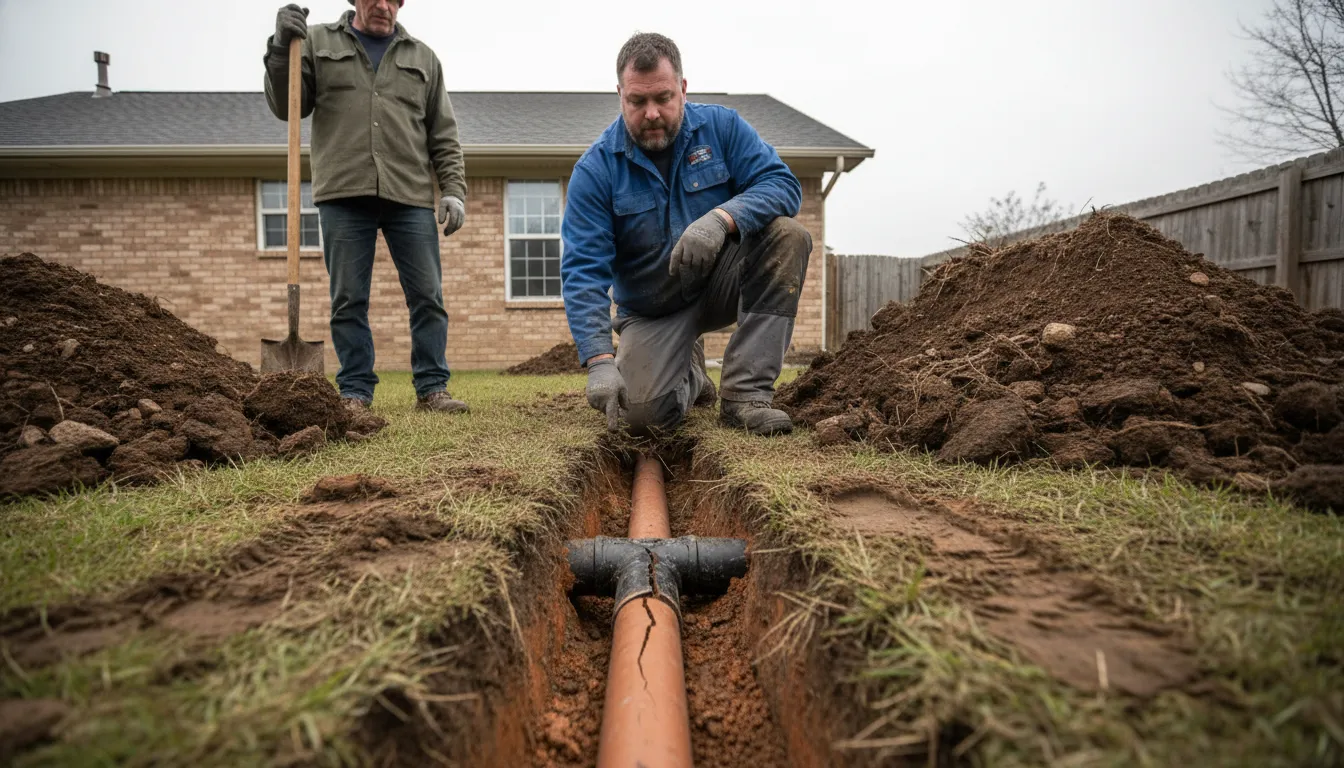
Find the Best Sewer Line Repair Companies for Your Business
No obligation • Fast responses • Nationwide coverage

Why you can trust Search a Plumber
Search a Plumber is a leading United States resource for finding and evaluating professional plumbing services. Our team researches licensing, experience, and customer feedback to create unbiased, fact-driven overviews. Companies cannot pay to change ratings or placement, ensuring homeowners get trustworthy information.
Search providers near you
Top Sewer Line Repair Companies in Buckeye, Arizona Ranked
A failing sewer line is a serious issue that can disrupt your home and pose health risks. Sewer line repair involves fixing or replacing the underground pipe that carries wastewater from your home to the city's main sewer connection. When this critical line is damaged, it's essential to find a reliable, local professional who can diagnose the problem accurately and recommend the most effective solution. This guide will help you understand your options for sewer repair in Buckeye, from common causes to modern repair methods, so you can make an informed decision when contacting local specialists.
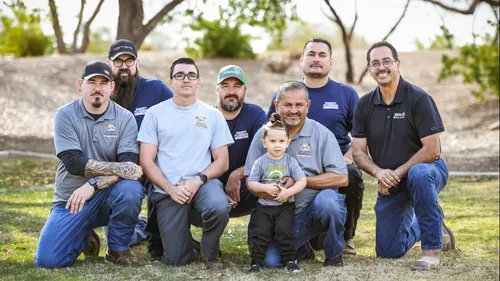
Dignity Plumbers Service & Water Softeners
11200 W Wisconsin Ave #5A, Youngtown, AZ 85363
Dignity Plumbers Service & Water Softeners is a family-owned plumbing company serving Phoenix, AZ, and surrounding West Valley communities. They provide a wide range of plumbing services including water heater repair and installation, tankless water heater services, water softener installation, drain cleaning, sewer line repair, leak detection, gas line installation, toilet repair, and garbage disposal repair. With over 20 years of experience, their master plumbers are equipped to handle emergency plumbing needs 24/7, ensuring prompt attention to urgent issues. They also specialize in tankless water heater installation and recommend water softeners to protect plumbing investments.
Roto-Rooter Plumbing & Water Cleanup
12133 W Bell Rd #104, Surprise, AZ 85378
Roto-Rooter Plumbing & Water Cleanup provides comprehensive plumbing and water cleanup services in Phoenix, AZ, and the surrounding areas. They serve both residential and commercial clients with a wide range of services including sewer and drain cleaning, water heater repair and installation, leak detection, gas line installation, and trenchless sewer repair. The company is equipped to handle emergency plumbing situations and offers 24/7 availability to address urgent issues such as sewer backups, flooding, and gas leaks. Roto-Rooter also specializes in hydro jetting and mold remediation, using advanced technology to maintain and restore plumbing systems effectively. Serving the greater Phoenix area, Roto-Rooter has a strong local presence and understands the unique plumbing challenges posed by the region's weather and infrastructure. Their team is experienced in both conventional and trenchless sewer repair methods, providing tailored solutions for each property. The company emphasizes emergency readiness with around-the-clock service to minimize damage and disruption during plumbing crises.
Near Me Plumbing & Drains, LLC
Phoenix, AZ
Near Me Plumbing & Drains, LLC is a family-owned plumbing company serving Phoenix, AZ, and surrounding areas. They provide a range of plumbing services including tankless water heater installation, water softener setup, drain cleaning, sewer line repair, leak detection, and toilet repair. The company emphasizes quality workmanship and offers same-day plumbing services with licensed plumbers equipped to handle both residential and commercial needs. They have a licensed team and operate Monday through Saturday with emergency availability, focusing on tailored solutions for each customer.
AZ Family Plumbing Co LLC
Phoenix, AZ
AZ Family Plumbing Co LLC is a plumbing company serving Phoenix, AZ, and the surrounding areas. They offer a range of plumbing services including drain cleaning, sewer line repair, trenchless sewer repair, water heater installation and repair, water softener installation, leak detection, and hydro jetting. The company uses camera inspections to diagnose sewer and drain issues and provides hydro jetting to clear pipes effectively. Founded in 2021, AZ Family Plumbing is led by a Master Plumber with over 25 years of experience. They also provide emergency plumbing services to address urgent plumbing problems.
Special Ops Plumbing AZ
Scottsdale, AZ
Special Ops Plumbing AZ is a master plumbing service based in Scottsdale, AZ, serving the Phoenix metro area. They provide a wide range of plumbing services including water heater repair and installation, tankless water heater replacement, water softener installation, drain cleaning, sewer line repair, leak detection, gas line installation, toilet repair, and garbage disposal repair. With over 20 years of experience, they handle both emergency and planned plumbing needs. Special Ops Plumbing AZ offers 24/7 emergency plumbing services, ensuring help is available day or night. Their expertise includes professional sewer line clog clearing without the use of harmful chemicals, protecting both property and health.
Understanding Your Sewer System in Buckeye
Your home's main sewer line is a crucial, yet out-of-sight, component of your plumbing. In Buckeye, this pipe typically runs underground from your home's foundation, beneath your yard, and connects to the municipal sewer main in the street. These lines are designed to last for decades, but several factors common to the Arizona environment can lead to premature failure. Understanding the location and function of this pipe is the first step in recognizing when something is wrong.
When a sewer line fails, the consequences are immediate and unpleasant. Slow drains, gurgling toilets, foul odors in the yard, or even sewage backups into the home are clear warning signs. Ignoring these symptoms can lead to more extensive damage, costly property restoration, and potential health hazards. A prompt, professional assessment is key to preventing a minor issue from becoming a major disaster.
Common Causes of Sewer Line Damage
Several factors specific to Buckeye and the wider Phoenix metro area contribute to sewer line problems. Knowing the likely culprit can help you discuss the issue more effectively with a repair technician.
- Tree Root Intrusion: This is one of the most frequent causes of sewer line blockages and breaks in residential areas. Tree roots are naturally drawn to the moisture and nutrients inside sewer pipes. They can infiltrate through tiny cracks or pipe joints, eventually growing large enough to cause severe blockages, crush the pipe, or displace sections of the line 1.
- Aging and Deteriorating Pipes: Many older homes in the region were built with clay tile or cast iron sewer pipes. Over time, these materials can crack, corrode, collapse, or have their joints compromised 2. Clay pipes are particularly susceptible to root intrusion, while cast iron can rust through.
- Ground Shifting and Soil Conditions: Arizona's soil is known for its expansive clay content, which swells when wet and shrinks during dry periods. This constant movement can put significant stress on underground sewer pipes, leading to misaligned joints, cracks, or complete breaks 3 4.
- General Wear and Tear: Like all infrastructure, sewer lines have a finite lifespan. Constant use, ground pressure, and minor seismic activity can gradually degrade even modern PVC pipes.
Repair Method 1: Trenchless Sewer Repair
Trenchless technology has revolutionized sewer line repair, offering a less invasive alternative to traditional excavation. These methods are often ideal for Buckeye homes, where preserving landscaping, driveways, and patios is a major concern.
How It Works: Trenchless repairs typically require only one or two small access holes dug at the beginning and end of the damaged section. There are two primary trenchless techniques:
- Cured-In-Place Pipe (CIPP) Lining: A flexible, resin-saturated tube is inserted into the old pipe and inflated. The resin cures in place, forming a seamless, durable "pipe-within-a-pipe" that seals cracks and blocks root intrusion.
- Pipe Bursting: A conical bursting head is pulled through the old, damaged pipe, simultaneously fracturing it outward and pulling a new, high-density polyethylene (HDPE) pipe into place behind it.
Pros of Trenchless Repair:
- Minimal Disruption: Your yard, driveway, and landscaping remain largely intact, saving thousands in restoration costs 5.
- Speed: Most trenchless repairs can be completed in a day or two.
- Durability: The new pipe lining or HDPE pipe is highly resistant to roots and corrosion, with a lifespan often exceeding 50 years.
- Long-Term Value: While the upfront cost per foot can be higher, the avoidance of extensive restoration often makes trenchless more cost-effective overall.
Cons of Trenchless Repair:
- Not for All Scenarios: If a pipe has completely collapsed or has severe misalignment, trenchless methods may not be feasible.
- Upfront Cost: The material and technology involved can make the initial quote higher than a simple, short excavation.
Repair Method 2: Traditional Excavation Repair
Traditional sewer repair, also known as "dig and replace," involves using a backhoe or other equipment to excavate a trench along the entire length of the damaged pipe. This method provides direct access to the problem.
How It Works: The repair crew locates the damaged section, digs an open trench to fully expose the pipe, removes the old section, and installs a new one. The trench is then backfilled, and the surface (sod, concrete, etc.) must be restored.
Pros of Traditional Excavation:
- Direct Access: Allows for a complete visual inspection and is a guaranteed solution for any type of damage, including total collapses.
- Potential for Lower Material Costs: For very short, shallow repairs, the cost of new PVC pipe and a small amount of digging can be less than mobilizing trenchless equipment.
Cons of Traditional Excavation:
- Major Disruption: It creates a large, open trench through your property, destroying lawns, gardens, sidewalks, or driveways.
- High Restoration Costs: The repair bill must include not just the plumbing work but also the cost to repave, re-sod, and rebuild any hardscaping that was removed, which can add thousands of dollars.
- Time-Consuming: The process of digging, repairing, and restoring the landscape can take days or even weeks.
Find the perfect sewer line repair companies for your needs
Get personalized recommendations and expert advice
Comparing Costs: Trenchless vs. Traditional in Buckeye
Cost is a primary concern for any major home repair. For sewer line work, the price depends heavily on the chosen method, the extent of damage, and the pipe's length and depth. Here's a general breakdown of what Buckeye homeowners might expect 6 7 8 9:
- Minor Cleaning/Repair: For simple blockages not requiring full repair, services like power rodding or hydro-jetting may cost between $150 and $800.
- Trenchless Repair (CIPP Lining or Pipe Bursting): Costs typically range from $60 to $250 per linear foot. For an average residential sewer line, total project costs often fall between $1,000 and $5,000+.
- Traditional Excavation & Replacement: Digging can cost $50 to $450 per linear foot for the plumbing work alone. However, you must then add the significant cost of restoring the excavated area-repaving a driveway, replanting a lawn, etc.-which can easily add $2,000 to $10,000 or more to the final bill.
- Complete Sewer Line Replacement: For a full line replacement using either method, total costs in Buckeye generally range from $2,000 to $15,000 or higher, depending on all the variables mentioned.
Key Takeaway: While trenchless repair may have a higher per-foot rate, the total project cost is frequently comparable or even lower than traditional digging when landscape and hardscape restoration are factored in 10 11. It also provides a more durable, long-term solution with far less hassle.
The Critical Role of Professional Video Inspection
Before any repair method is chosen, a professional video inspection is non-negotiable. A skilled technician will insert a waterproof camera into your sewer line, providing a real-time view of the interior condition on a monitor.
This inspection allows them to:
- Accurately Diagnose the Problem: Identify the exact location, cause, and severity of the damage (e.g., root mass, crack, offset joint, collapse).
- Determine the Best Repair Method: Assess whether the pipe is a candidate for trenchless lining or bursting, or if excavation is the only viable option.
- Provide a Precise Quote: Measure the exact length of the damaged section, allowing for an accurate, fair estimate rather than a rough guess.
- Document the Condition: Provide you with a video record of the problem, which is useful for insurance claims or future reference.
Never agree to a major sewer repair without first seeing the video evidence of the problem. Reputable companies in Buckeye will perform this inspection and review the findings with you before recommending a solution.
Choosing the Right Solution for Your Home
So, which method is better? The answer depends entirely on your specific situation.
- Trenchless repair is often the superior choice for long runs of pipe, lines under landscaping or driveways, and when the existing pipe is structurally sound enough to host a new liner or be burst. It offers the best balance of durability, minimal disruption, and long-term value 12 13.
- Traditional excavation may be necessary or more practical for very short repairs close to the surface, in areas with no landscaping to preserve, or when the pipe has completely failed and cannot be lined or burst 14.
The most important step is to consult with experienced, licensed professionals who offer both services. Get multiple detailed quotes that include a full breakdown of costs for the repair itself and any required restoration. A trustworthy provider will explain all your options without bias and help you choose the most cost-effective and durable solution for your Buckeye home.
Frequently asked questions
Sources
Footnotes
-
Sewer Repair - https://littekenplumbing.com/sewer-repair/ ↩
-
Sewer Repair Cost: Trenchless Vs Traditional Methods - https://www.superbrothers.com/sewer-repair-cost-trenchless-vs-traditional-methods/ ↩
-
Arizona Sewer Line Replacement Cost & Factors - https://www.rooterranger.com/blog/sewer-line-replacement-cost-in-arizona/ ↩
-
Complete Guide to Sewer Lines | How to Find & Warning Signs - https://johnsewer.com/a-complete-guide-to-sewer-lines/ ↩
-
Trenchless Pipe Repair vs Traditional: Which Is Better? - https://www.bullseyeleak.com/blog/trenchless-pipe-repair-vs-traditional/ ↩
-
Cost Comparison: Trenchless vs. Traditional Sewer Line Repair - https://www.advancedtrenchlesssolutions.com/blog/cost-comparison-trenchless-vs-traditional-sewer-line-repair ↩
-
Understanding the Costs of Sewer Line Repairs In Phoenix AZ - https://phoenixplumbanddrain.com/understanding-the-costs-of-sewer-line-repairs/ ↩
-
Is Trenchless Sewer Line Repair Cheaper? - AP Plumbing - https://applumbing.com/blog/is-trenchless-sewer-line-repair-cheaper/ ↩
-
Decoding Trenchless Sewer Repair Costs - Pipeliner Pros - https://pipelinerpros.com/trenchless-sewer-repair-cost/ ↩
-
Traditional Excavation vs. Trenchless Pipe Repair in Phoenix - https://nuflowphoenix.com/traditional-excavation-vs-trenchless-pipe-repair-in-phoenix-a-full-cost-benefit-analysis/ ↩
-
Trenchless vs. Traditional Sewer Repair - https://sewerlinesonly.com/trenchless-vs-traditional-sewer-repair-which-is-more-cost-effective-for-lakewood-homeowners/ ↩
-
Sewer Pipe Lining vs Residential Excavation - 128 Plumbing - https://www.128plumbing.com/sewer-pipe-lining-vs-residential-excavation/ ↩
-
Trenchless Sewer Line Repair vs Traditional: Which Is Better - https://cactusplumbingandair.com/trenchless-sewer-line-repair-vs-traditional/ ↩
-
Trenchless Sewer Repair vs. Traditional Excavation - AQUALIS - https://aqualisco.com/trenchless-sewer-repair-vs-traditional/ ↩