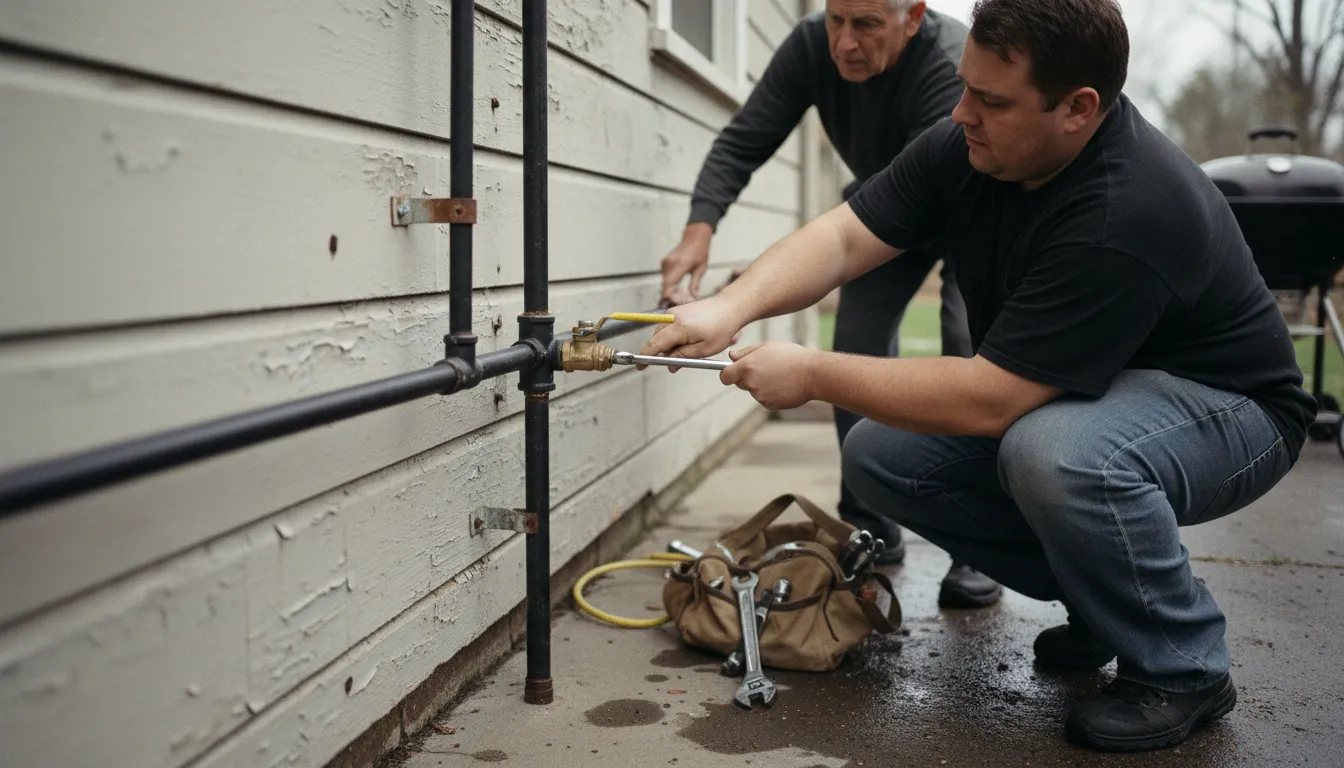
Find the Best Gas Line Plumbing Companies for Your Business
No obligation • Fast responses • Nationwide coverage

Why you can trust Search a Plumber
Search a Plumber is a leading United States resource for finding and evaluating professional plumbing services. Our team researches licensing, experience, and customer feedback to create unbiased, fact-driven overviews. Companies cannot pay to change ratings or placement, ensuring homeowners get trustworthy information.
Search providers near you
Best Gas Line Plumbing Companies in Wyoming Ranked
Installing or repairing a gas line is a critical home improvement project that requires precision, safety, and strict adherence to state and local codes. In Wyoming, this work is governed by the Wyoming Fuel Gas Code, which is based on national standards to ensure the safe delivery of natural gas or propane to your appliances. Whether you're adding a gas fireplace, stove, or outdoor grill, understanding the regulatory process and hiring a qualified professional is essential. This guide explains the key steps, from permits to final inspection, to help you navigate your project safely and successfully.
Understanding Wyoming's Gas Line Regulations
All gas piping work in Wyoming, including new installations, extensions, and major repairs, must comply with the Wyoming Fuel Gas Code (WFGC). This code is largely based on the International Fuel Gas Code (IFGC) and sets the minimum safety standards for materials, pipe sizing, installation methods, and ventilation 1. The code exists to prevent leaks, explosions, and carbon monoxide poisoning, making compliance non-negotiable for the safety of your household.
The authority for enforcing these codes lies with your local building department. Wyoming does not have a statewide permitting entity; instead, you must obtain permits and schedule inspections through your city or county government. For example, residents in Natrona County, Campbell County, or the City of Riverton must contact their respective local offices. Always check with your local authority having jurisdiction (AHJ) before starting any work, as specific application processes, fees, and additional requirements can vary.
When is a Permit Required?
Permits are typically mandatory for:
- New gas line installations for appliances, fireplaces, or outdoor fixtures.
- Extending or altering existing gas piping systems.
- Replacing a significant section of gas pipe.
- Installing or relocating a gas meter (this often requires coordination with your utility provider).
Simple appliance hookups using an existing, code-compliant shut-off valve may not require a permit, but verification with your local building department is crucial.
The Step-by-Step Process for Gas Line Projects
A successful gas line project follows a clear sequence to ensure code compliance and safety from start to finish.
1. Planning and Design
This initial phase is critical. A qualified professional will:
- Determine Appliance Needs: Calculate the total British Thermal Unit (BTU) demand of all appliances the new line will supply.
- Plan the Route: Map the most efficient and code-compliant path from the gas source (meter or tank) to the appliance(s), considering obstacles, wall penetrations, and required clearances from electrical systems.
- Size the Pipe: Using code tables and calculations, the installer will determine the correct pipe diameter. Undersized pipes cannot deliver sufficient gas volume, causing appliance malfunction, while oversized pipes are unnecessarily costly 2 3.
2. Permit Application
Before any digging or cutting, you or your contractor must submit an application to your local building department. This usually involves providing details about the project, paying a fee, and waiting for approval. The permit is your legal permission to begin the work and triggers the inspection schedule.
3. Rough-In Installation
A licensed technician will install the gas pipes, fittings, shut-off valves, and sediment traps according to the approved plan. This stage involves running pipe through walls, under floors, or in trenches, ensuring all penetrations are properly sealed. Only approved materials like specific grades of steel (black iron), copper, or polyethylene (PE) pipe may be used.
4. Rough-In Inspection
Once the piping is installed but before it is concealed behind walls or covered in a trench, you must schedule a rough-in inspection. The municipal inspector will verify:
- Proper pipe material and sizing.
- Correct installation of fittings, supports, and valves.
- Adequate clearance from electrical wiring and other systems (often a minimum of 3 feet from electrical meters).
- Proper sealing of wall and floor penetrations. Passing this inspection is required before proceeding to close up walls or cover trenches 4 5.
5. Final Installation and Pressure Test
After the rough-in is approved, the line can be connected to the appliance and the gas source. A critical safety step performed here is the pressure test. The installer will pressurize the system with air or an inert gas and monitor it for drops that indicate a leak. All connections are also checked with a leak detection solution (soapy water) or electronic gas detectors.
6. Final Inspection
The last official step is the final inspection. The inspector will ensure the appliance is connected correctly, the pressure test was passed, and the entire installation meets all code requirements. Once the final inspection is passed, your permit can be closed, and the system is officially approved for use 6.
Find the perfect gas line plumbing companies for your needs
Get personalized recommendations and expert advice
Safety Considerations: Non-Negotiable Practices
Gas line work involves inherent risks. Adhering to these safety practices is paramount:
- Hire a Qualified Professional: Gas line installation is not a DIY project. Always hire a licensed, insured, and experienced professional familiar with Wyoming and local codes. They have the training to handle materials safely, perform correct calculations, and ensure a leak-free system 7.
- Ensure Proper Ventilation: During installation and especially if a leak is suspected, ensure the work area is well-ventilated to prevent the accumulation of gas, which can lead to explosion or asphyxiation.
- Know Leak Detection and Response: Everyone in the home should recognize the signs of a gas leak: the distinctive "rotten egg" odor (added mercaptan), a hissing sound near a gas line, or dead vegetation near a buried pipe. If you suspect a leak:
- Do not use electrical switches, phones, or open flames.
- Evacuate the area immediately.
- From a safe distance, call your gas utility or 911 8.
- Maintain Clearances: The code specifies minimum distances between gas lines and other utilities, ignition sources, and building openings. Professionals ensure these clearances are met to prevent fire hazards 9 10.
Cost Factors for Gas Line Work in Wyoming
Costs can vary widely based on project specifics. Key factors include:
- Length and Path Complexity: A simple 10-foot run in an open basement is less expensive than a 50-foot run requiring trenching across a yard or snaking through finished walls.
- Materials: The type and diameter of pipe used affect material costs.
- Labor: Rates for licensed gas fitters and plumbers.
- Permits and Inspections: Local fees for applications and required inspections, which can add several hundred dollars to the project total.
While prices fluctuate, a general range for basic gas line installation in Wyoming is $15 to $25 or more per linear foot, excluding appliances and major site work 11. Short "stub-out" lines for grills or dryers will be on the lower end, while extensive systems for new construction or whole-home additions will be significantly higher. Always get detailed, written estimates from multiple licensed contractors.
Coordination with Your Gas Utility
For projects involving a new service line from the street or meter work, you must coordinate with your natural gas utility company (e.g., Black Hills Energy, Dominion Energy). The utility typically owns and is responsible for the meter and the service line up to it. They must be involved to:
- Turn off the gas supply during work.
- Set or relocate the meter.
- Connect the final service line.
- Relight appliances and verify meter operation 12 13. Contact your utility early in the planning process to understand their requirements, timelines, and any associated fees.
Frequently asked questions
Sources
Footnotes
-
Chapter 3 General Regulations: Wyoming Fuel Gas Code 2021 - https://up.codes/viewer/wyoming/ifgc-2021/chapter/3/general-regulations ↩
-
Chapter 4 Gas Piping Installations: Wyoming Fuel ... - UpCodes - https://up.codes/viewer/wyoming/ifgc-2024/chapter/4/gas-piping-installations ↩
-
Everything You Need To Know About Gas Line Installation ... - https://www.aspenmtnplumbing.com/article/everything-you-need-to-know-about-gas-line-installation-services-in-wyoming ↩
-
FAQs • What needs to be inspected on my project and for a fi - https://www.natronacounty-wy.gov/FAQ.aspx?QID=253 ↩
-
Inspections may be scheduled by calling 307-682-1970 - https://www.campbellcountywy.gov/DocumentCenter/Home/View/222 ↩
-
Inspection Procedures - Welcome to City of Riverton, Wyoming - https://www.rivertonwy.gov/departments/community_dev/building_permits___inspections/inspection_procedures.php ↩
-
Gas Line Installation | Quality Plumbing - https://qualityplumbing.cc/gas-line-installation-what-homeowners-need-to-know/ ↩
-
Gas Line Installations: Safety Tips for Residents | Southport Home - https://southportheating.com/gas-line-installations-safety-tips-for-residents/ ↩
-
Chapter 4 Gas Piping Installations: Wyoming Fuel Gas Code 2021 - https://up.codes/viewer/wyoming/ifgc-2021/chapter/4/gas-piping-installations ↩
-
Meter Installation Guidelines - We Energies - https://www.we-energies.com/partners/builders/meter-installation-guidelines ↩
-
How to Install Natural Gas Lines Safely and Correctly - https://bluegasexpress.com/how-to-install-natural-gas-lines/ ↩
-
Requirements for Gas or Liquid Storage Tanks - Teton County, WY - https://www.tetoncountywy.gov/665/Requirements-for-Gas-or-Liquid-Storage-T ↩
-
THE GAS MAIN AND SERVICE INSTALLATION PROCESS - PGW - https://www.pgworks.com/uploads/media/GasMainServiceInstallation-Steps.pdf ↩