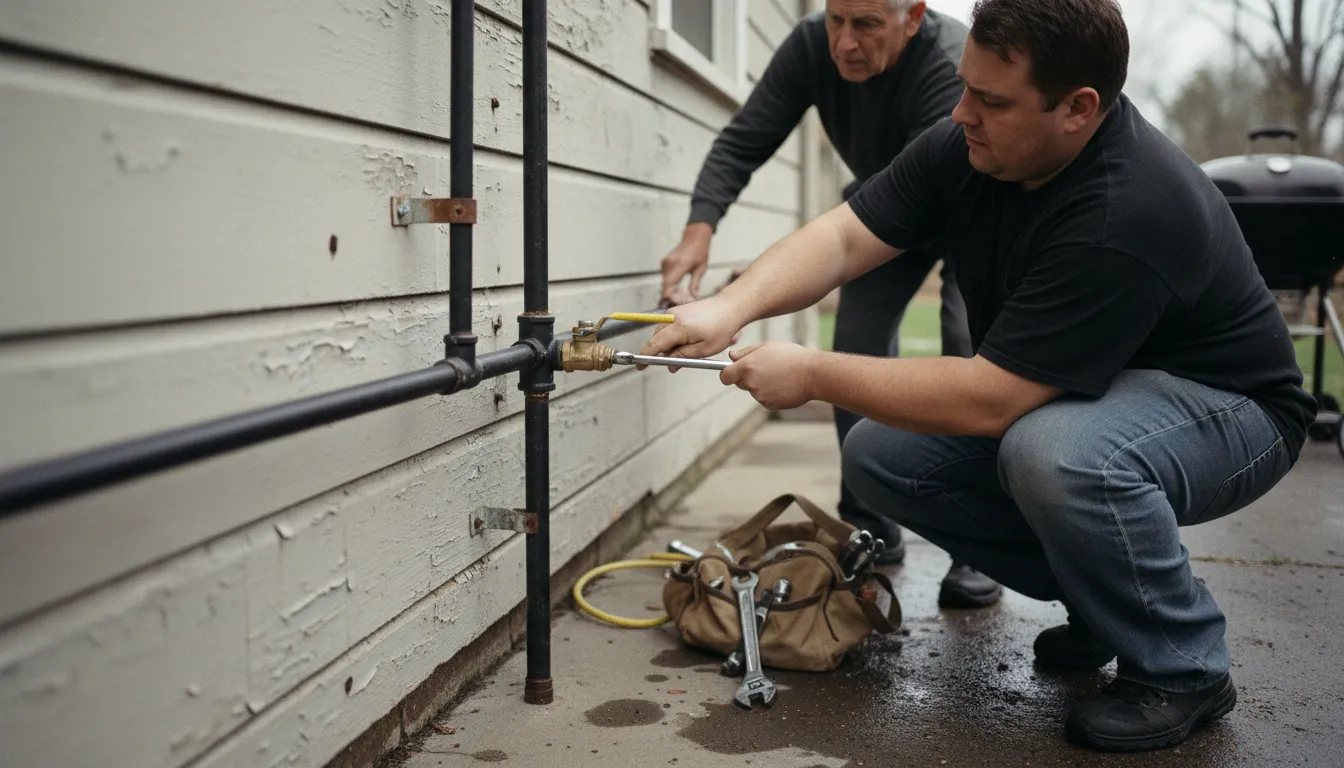
Find the Best Gas Line Plumbing Companies for Your Business
No obligation • Fast responses • Nationwide coverage

Why you can trust Search a Plumber
Search a Plumber is a leading United States resource for finding and evaluating professional plumbing services. Our team researches licensing, experience, and customer feedback to create unbiased, fact-driven overviews. Companies cannot pay to change ratings or placement, ensuring homeowners get trustworthy information.
Search providers near you
Top Gas Line Plumbing Companies in Vancouver, Washington Ranked
Installing or repairing a gas line is a critical home improvement project that directly impacts the safety and functionality of your appliances. Whether you're connecting a new gas range, installing a tankless water heater, or addressing a leak, this work requires precision and strict adherence to local codes. For Vancouver homeowners, navigating the permit process, material choices, and safety protocols is essential. This guide will help you understand the key steps and regulations, empowering you to find qualified local professionals for your gas piping needs.
Service Plus Plumbing
12009 NE Marx St, Portland, OR 97220
Service Plus Plumbing is a locally owned plumbing contractor based in Portland, OR. They offer a wide range of plumbing services including water heater repair, drain cleaning, leak detection, repiping, gas line installation, and toilet repair. The company serves many neighborhoods throughout Portland and is known for handling plumbing emergencies to prevent further damage. Their expertise includes water line repair and sewer line installation, with a focus on environmentally conscious solutions that support Portland's sustainability goals. Service Plus Plumbing is committed to serving the Portland community with reliable and professional plumbing services.
Cornel's Plumbing, Heating & Air Conditioning
4015 SE 56th Ave, Portland, OR 97206
Cornel's Plumbing, Heating & Air Conditioning is a licensed plumbing and HVAC company serving Portland, OR. With over 20 years of experience, they provide a range of services including water heater installation, drain cleaning, leak detection, repiping, and gas line installation. The company is known for addressing plumbing and HVAC issues efficiently, offering same-day responses for emergency repairs. One notable capability is their expertise in water heater installation and repair. Cornel's Plumbing, Heating & Air Conditioning operates with a focus on residential customers in the Portland metro area.
Perfect Service Plumbing and Drain Cleaning
1011 SE Oak St, Portland, OR 97214
Perfect Service Plumbing and Drain Cleaning is a plumbing company serving Portland, OR, with over 20 years of experience. They provide a wide range of plumbing services for both residential and commercial clients, including sewer camera inspections, water heater repair and installation, drain cleaning, hydro jetting, sewer line repair, leak detection, repiping, gas line installation, and toilet and garbage disposal repairs. The company offers 24/7 emergency response to address urgent plumbing needs and uses high-tech equipment to diagnose and resolve issues effectively.
Sun Glow Inc.
2428 SE 105th Ave, Portland, OR 97216
Sun Glow Inc. is a family-owned business serving Portland, OR, with over 50 years of experience in HVAC, plumbing, and electrical services. They specialize in gas line installation and offer comprehensive heating, cooling, and electrification solutions to improve energy efficiency and reduce reliance on fossil fuels. Their team provides services for both residential and commercial clients, including whole-house generator installation and heat pump systems. Sun Glow Inc. supports the local community and emphasizes sustainable energy transitions.
True Plumbing
12401 NE 60th Way Unit A 10, Vancouver, WA 98682
True Plumbing is a family-owned plumbing company serving Portland, OR, and the surrounding area. They offer a range of plumbing services including water heater repair and installation, water softener installation, drain cleaning, leak detection, repiping, and gas line installation. True Plumbing is known for handling emergency plumbing needs and specializes in pipe leak repairs, whole house repiping with PEX, and water filtration system installations. Founded in 1997, the company has a team of licensed plumbers who bring years of experience and local knowledge to their work. They also participate actively in community support and local events.
Understanding Gas Line Work in Vancouver
Gas line services encompass the installation of new piping systems and the maintenance or repair of existing ones. This includes running lines for appliances like furnaces, water heaters, fireplaces, stoves, and dryers. In Vancouver, all natural gas and propane piping work falls under the 2021 Washington State Fuel Gas Code and requires involvement from both licensed contractors and city inspectors. This ensures every connection is secure and every system is tested for leaks before being put into service.
The complexity of gas fitting can vary widely. A simple appliance hookup in your kitchen may be straightforward, while running a new gas main to a detached garage or installing a line for a pool heater involves significant excavation and planning. Regardless of the project's scale, the paramount concern is always safety. Properly installed gas lines provide reliable, efficient energy; faulty installations pose serious risks.
The Permit and Inspection Process
One of the first and most crucial steps for any gas line project in Clark County is obtaining the proper permits. A permit is required for all new installations, significant repairs, or replacements of gas piping 1. Your licensed plumber or gas fitter will typically pull this permit on your behalf through the City of Vancouver or Clark County Building Safety department.
The permit process exists to ensure code compliance and safety. It triggers mandatory inspections at critical stages of the work. For underground lines, an inspector will need to examine the trench, piping, and fittings before the trench is backfilled 2 3. They will verify proper burial depth, pipe material, and the installation of required components like sediment traps and shut-off valves. The system must also pass a pressure test in the inspector's presence.
Furthermore, if your project involves a new service line from the street to your home, you must coordinate with NW Natural, the local utility provider. They have specific guidelines for service line installation and will need to be involved to connect the main line to your property's system.
Key Steps in Gas Line Installation
A professional gas line installation follows a meticulous sequence to ensure safety and longevity. Here's an overview of what the process typically entails.
1. Planning and Utility Location
Before any digging begins, your contractor will help plan the route. The most critical safety step is calling 811 to have all public underground utilities marked. This free service prevents accidental strikes to water, sewer, electrical, or communication lines 4.
2. Trenching and Pipe Laying
For outdoor lines, a trench is dug along the planned route. According to Washington code, underground gas piping must be buried at least 18 inches below grade, though many contractors recommend going deeper (up to 24 inches) for added protection from future digging or frost 5 6. The trench bottom is often prepared with a bed of sand to protect the pipe.
3. Material Selection and Installation
The choice of piping material depends on the application:
- Black Iron Pipe: The traditional, rigid steel pipe used for most indoor gas line runs. It is highly durable and is the standard for exposed piping in basements, crawl spaces, and behind walls.
- CSST (Corrugated Stainless Steel Tubing): A flexible, yellow-jacketed tubing often used for running lines through finished walls and attics. It must be properly bonded and grounded to prevent electrical damage.
- Polyethylene (PE) Pipe: A flexible, plastic pipe commonly used for the underground portion of service lines and long runs. It is resistant to corrosion and is the standard material for buried lines from the meter to the house 7 8.
Fittings, shut-off valves, and sediment traps (which catch debris to protect appliances) are installed at this stage.
4. Pressure Testing and Inspection
Once the pipe is run and connected, the entire system is pressurized with air for a leak test. The pressure is monitored to ensure it holds steady, confirming there are no leaks in the joints or fittings 9. This test is usually performed in front of the city or county inspector. Only after the system passes inspection can the trench be backfilled and the walls be closed up.
Find the perfect gas line plumbing companies for your needs
Get personalized recommendations and expert advice
Safety: The Non-Negotiable Priority
Gas line work is not a DIY project. The risks associated with natural gas and propane-including fire, explosion, and carbon monoxide poisoning-are too great. Always hire a professional who is licensed, bonded, and insured to work on fuel gas systems in Washington.
Be vigilant for signs of a gas leak, which include the distinctive rotten egg odor (added to natural gas), a hissing sound near a gas line, or dead vegetation in an otherwise green area above an underground line. If you suspect a leak, leave the area immediately and call 911 or your gas company from a safe distance. Many local plumbing companies offer 24-hour emergency service for such urgent situations 10.
Cost Considerations for Gas Piping Projects
The price for gas line services in Vancouver depends heavily on the project's scope. Here are some general estimates based on local provider data:
- Simple Appliance Connection: Installing a new line for a gas range, dryer, or fireplace typically ranges from $300 to $800. This covers a relatively short run of pipe, basic fittings, and the hookup.
- Complex or Long-Distance Runs: Projects like running a line to a detached garage, installing a pool heater, or connecting a new HVAC system are more involved. These can range from $1,000 to $3,000 or more, depending on the distance, trenching difficulty, pipe size required, and obstacles like driveways or landscaping that need to be navigated 11.
The final cost is influenced by the trench length, depth requirements, materials used, and whether the work is scheduled as an emergency. A reputable contractor will provide a detailed, upfront estimate after assessing your specific job site.
Choosing the Right Professional in Vancouver
When selecting a contractor for your gas fitting project, verify their Washington state license for plumbing or gas work. Ask for proof of insurance and bonding to protect yourself from liability. Don't hesitate to request references for similar projects. A qualified professional will be familiar with the local Vancouver/Clark County permit process, NW Natural requirements, and will prioritize code compliance and safety testing in their work plan.
Frequently asked questions
Sources
Footnotes
-
Gas Installation Permits | TSBC - https://www.technicalsafetybc.ca/technologies/gas/installation-permits ↩
-
Gas Inspection Requirements - WSSC Water - https://www.wsscwater.com/work-us/plumbing-and-inspections/inspections/gas-inspection-requirements ↩
-
Underground Utilites - Gas Line Installation in Redondo Beach - https://developmentandengineering.com/los-angeles-county/gas-line-installation-in-redondo-beach/ ↩
-
Running Natural Gas Lines Underground for Your New Building - Drone - https://www.rsvc.com/blog-posts/running-natural-gas-lines-underground-for-your-new-building ↩
-
Frequently Asked Questions - CivicPlus.CMS.FAQ - https://www.rpvca.gov/faq.aspx?TID=40 ↩
-
2021 Washington State Fuel Gas Code - 404.12 Minimum burial depth. - https://codes.iccsafe.org/s/WAFGC2021P1/chapter-4-gas-piping-installations/WAFGC2021P1-Ch04-Sec404.12 ↩
-
Services and mains guidelines for builders and developers - https://www.nwnatural.com/business/builders-hvac/builder-and-developer-services/services-mains-guidelines ↩
-
Underground Gas Line - GasGuys.ca Inc. - https://www.gasguys.ca/underground-gas-lines/ ↩
-
Gas Piping Vancouver, WA - https://prolineplumbingandsewer.com/services/plumbing/gas-piping ↩
-
Gas Line Services in Washington - CPI Plumbing & Heating - https://www.cpiplumbing.com/plumbing/gas-lines/ ↩
-
Gas Line Installation & Repair Services Vancouver WA - https://24hourrotopro.com/plumbing-services/gas-line-installation-and-repair/ ↩