Find the Best Gas Line Plumbing Companies for Your Business
No obligation • Fast responses • Nationwide coverage

Why you can trust Search a Plumber
Search a Plumber is a leading United States resource for finding and evaluating professional plumbing services. Our team researches licensing, experience, and customer feedback to create unbiased, fact-driven overviews. Companies cannot pay to change ratings or placement, ensuring homeowners get trustworthy information.
Search providers near you
Top Gas Line Plumbing Companies in Cranston, Rhode Island Ranked
Connecting your home or business to natural gas requires specialized knowledge and strict adherence to safety codes. Whether you're adding a gas stove, furnace, or outdoor grill, proper gas line installation and repair is a critical project that demands a licensed professional. This guide explains the process, local requirements, and key considerations for Cranston residents, helping you understand what's involved so you can confidently connect with qualified local specialists for your gas fitting needs.
Understanding Gas Line Services in Cranston
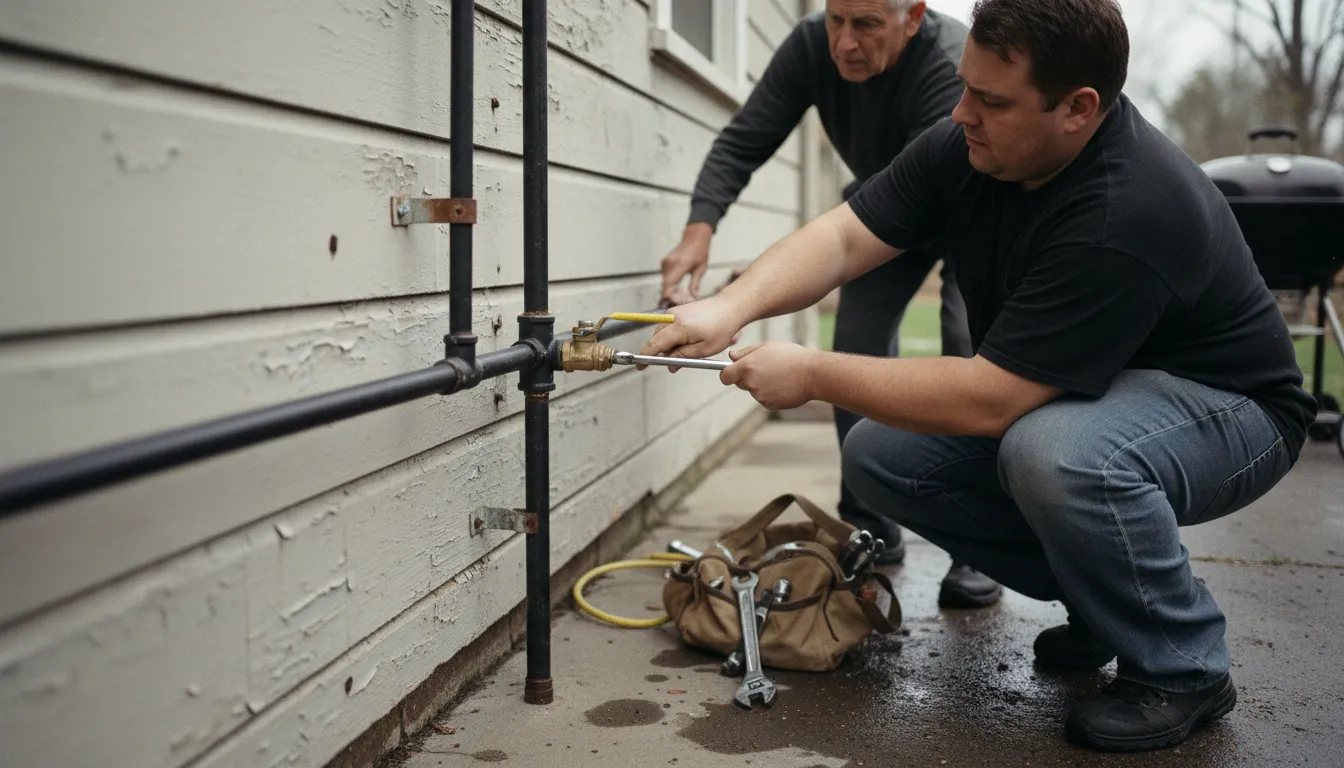
Gas line work encompasses more than just running a pipe. It involves a complete system designed to safely deliver natural gas from the utility main to your appliances. This includes new installations for renovations or additions, repairs for leaks or corrosion, and extensions to connect new appliances like fireplaces, dryers, or pool heaters. Given the inherent risks of gas leaks, which can lead to fire, explosion, or carbon monoxide poisoning, this is not a do-it-yourself project. Rhode Island state law and Cranston city codes require that all gas piping work be performed by a licensed professional to ensure it meets rigorous safety standards.
The Critical First Step: Hiring a Licensed Professional
Your most important decision is choosing the right contractor. In Cranston, you must hire a plumber or gas fitter who holds the proper state and local licenses for fuel gas piping. These professionals are trained in the specific codes, materials, and pressure testing required for safe operation. They will also manage the entire permitting and inspection process on your behalf. You can verify a contractor's credentials and find local specialists through trusted review platforms 1. A qualified pro will provide a detailed estimate that outlines the scope of work, materials to be used, and all associated costs.
Navigating Cranston Permits and Inspections
Before any work begins, your contractor must secure the necessary permits from the City of Cranston Building Inspection Department 2. Permits are required for altering, extending, or installing any new gas piping. The permit process ensures your project plan complies with the Rhode Island State Plumbing Code, the International Fuel Gas Code, and any local amendments. Your licensed installer will submit the application, including diagrams if needed. Once work is complete, they will schedule the mandatory inspection with the city. A city inspector will check the installation for proper materials, support, labeling, and safety before authorizing the system to be pressurized and connected. This official sign-off is crucial for your safety and liability.
The Step-by-Step Installation Process
A professional gas line installation follows a meticulous sequence. Here's what you can expect when you hire a certified expert in Cranston:
- Site Assessment and Planning: The contractor will visit your property to determine the best route from the gas meter or existing line to the new appliance, considering obstacles, required pipe size (based on appliance BTU demand), and local code requirements for clearances and burial depth.
- Calling Dig Safe (811): This is a non-negotiable, free, and legally required step before any excavation. Calling 811 at least three business days before digging ensures all underground public utilities (electric, water, cable) are marked to prevent dangerous and costly strikes 3 4.
- Excavation and Trenching: For buried lines, a trench is dug. In Cranston, gas lines are typically buried at a minimum depth of 18 to 24 inches to protect them from surface activity and frost. The trench must be properly prepared and may require sand bedding.
- Pipe Installation: The contractor will install code-approved piping. Common materials include black iron (steel) pipe, which is durable and traditional, or Corrugated Stainless Steel Tubing (CSST), which is flexible and often easier to install in existing structures. All connections are made using proper threading and fittings.
- Pressure Testing: Before the line is connected to the gas source, it undergoes a rigorous pressure test. The system is sealed and pressurized with air (often to 10 psi or more) and monitored for a set period (e.g., 15 minutes). Any drop in pressure indicates a leak that must be found and repaired 5 6. This is a critical safety checkpoint.
- Final Connection and Activation: Once the system passes the pressure test and the city inspection, the final connection is made. For new meters or major work, this may need to be performed by or coordinated with the utility company, National Grid. They will ensure the meter is properly set and the system is safely activated.
Find the perfect gas line plumbing companies for your needs
Get personalized recommendations and expert advice
Safety Considerations for Homeowners
While your licensed professional handles the technical work, being an informed homeowner is key. Always ensure any technician working on your gas system is licensed. Be aware of the signs of a gas leak: the distinctive rotten egg smell (odorant added to natural gas), a hissing sound near a gas line, or dead vegetation in an otherwise green area over a buried line. If you suspect a leak, leave the area immediately and call 911 and National Grid from a safe distance. Furthermore, any gas-burning appliance should be vented properly and equipped with a carbon monoxide (CO) detector nearby. Proper installation is your first defense against CO poisoning 7 8.
Understanding Costs for Gas Line Projects
The cost of gas line work in Cranston varies significantly based on the project's complexity, length of pipe run, materials used, and difficulty of excavation. Here's a general breakdown based on typical market data 9 10 11:
- Simple Appliance Hookup: Running a short, accessible line for a kitchen stove or laundry dryer might range from $500 to $2,000.
- Buried Line Installation/Repair: Projects requiring trenching across your yard to connect a garage, pool heater, or outdoor kitchen are more involved. Costs typically range from $1,500 to $5,000+, heavily influenced by the distance and landscaping restoration needed.
- Whole-House Gas Line System: For a new construction home or a major conversion from oil, installing the main gas service and distribution lines throughout the house can cost $2,200 to $7,500 or more.
- Additional Fees: Remember to factor in the cost of permits (often $100 to $300), any required city inspections, and potential fees from National Grid for meter work or new service connections 12.
Materials Used in Modern Gas Lines
Your contractor will select the appropriate material based on the application:
- Black Iron Pipe: The traditional standard, known for its strength and durability. It is used for both interior and exterior applications but requires more labor to cut, thread, and assemble.
- Corrugated Stainless Steel Tubing (CSST): A flexible, yellow-jacketed tubing that can be snaked through walls and joists with fewer fittings. It must be properly bonded and grounded to mitigate electrical surge risks 13.
- Polyethylene (PE) Pipe: Often used by utilities for underground main lines due to its corrosion resistance. It may be used for long buried runs on private property but requires specific fusion joining techniques.
Frequently asked questions
Sources
Footnotes
-
Top 10 Best Gas Line Installation Near Cranston, Rhode Island - Yelp - https://m.yelp.com/search?find_desc=Gas+Line+Installation&find_loc=Cranston%2C+RI ↩
-
Building Inspection - https://www.cranstonri.gov/departments/building-and-public-works/building-inspection/ ↩
-
Natural Gas Pipeline Safety | National Grid - https://www.nationalgridus.com/MA-Home/Natural-Gas-Safety/Pipeline-Safety ↩
-
How Deep Are Gas Lines Buried? - J.D. Power - https://www.jdpower.com/cars/shopping-guides/how-deep-are-gas-lines-buried ↩
-
Local Gas Line Installation In Warwick, RI - https://evergreenplumbingri.com/plumbing-services/gas-line-installation/ ↩
-
Frequently Asked Questions - CivicPlus.CMS.FAQ - https://www.rpvca.gov/faq.aspx?TID=40 ↩
-
Essential Guide to Gas Line Installation: Tips and Safety ... - https://gaeberly.com/gas-line-installation/ ↩
-
FUEL GAS PIPE SIZING & INSTALLATION with ... - Moorpark, CA - https://moorparkca.gov/DocumentCenter/View/10251/Fuel-Gas-Pipe-Sizing-and-Installation ↩
-
How Much Does It Cost to Install a Gas Line? [2025 Data] - https://www.homeadvisor.com/cost/plumbing/install-or-repair-gas-pipes/ ↩
-
How Much Does Gas Line Installation Cost? (2026) - HomeGuide - https://homeguide.com/costs/gas-line-installation-cost ↩
-
How Much Do Gas Line Installation or Repairs Cost? [2026 ... - https://www.angi.com/articles/what-average-cost-85-run-natural-gas-line.htm ↩
-
Gas Line Installation Cost: 2023 Guide - Super Brothers - https://www.superbrothers.com/gas-line-installation-cost-2023-guide/ ↩
-
How to Install Natural Gas Lines Safely and Correctly - https://bluegasexpress.com/how-to-install-natural-gas-lines/ ↩