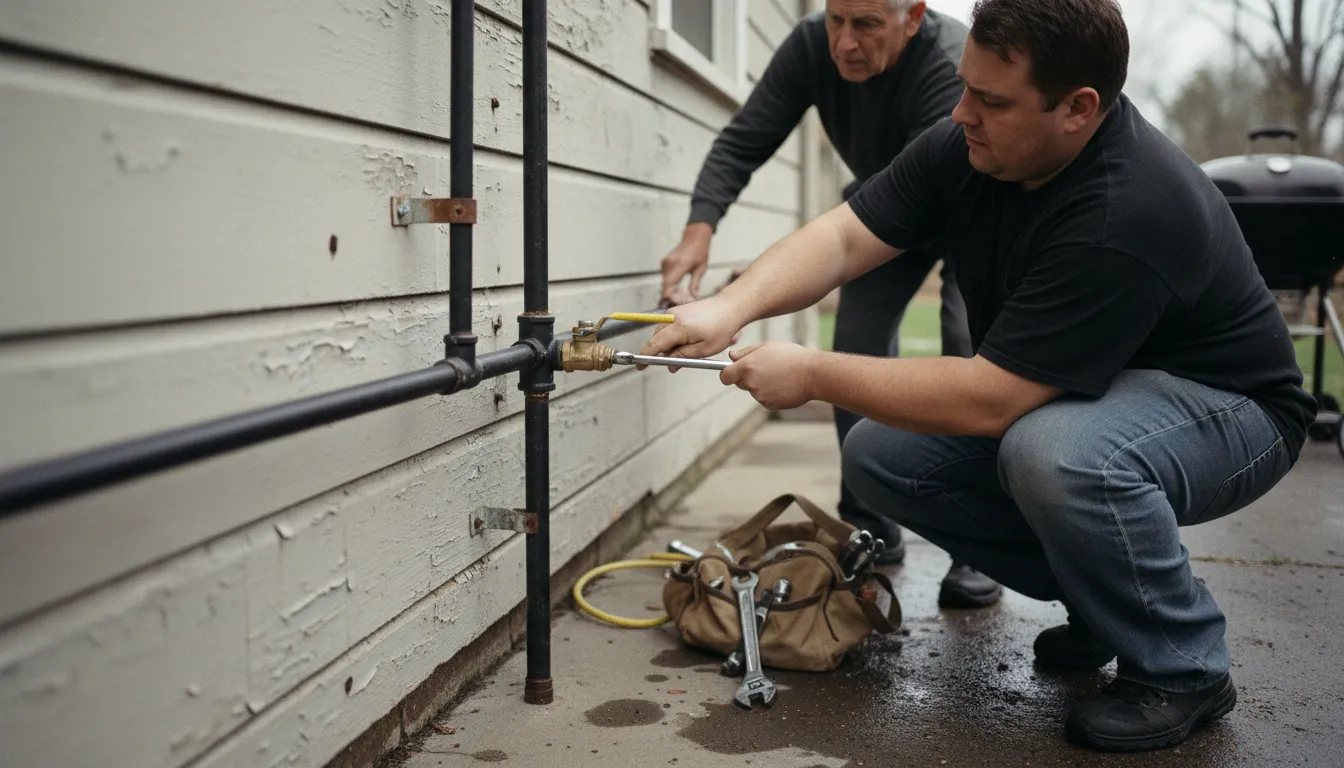
Find the Best Gas Line Plumbing Companies for Your Business
No obligation • Fast responses • Nationwide coverage

Why you can trust Search a Plumber
Search a Plumber is a leading United States resource for finding and evaluating professional plumbing services. Our team researches licensing, experience, and customer feedback to create unbiased, fact-driven overviews. Companies cannot pay to change ratings or placement, ensuring homeowners get trustworthy information.
Search providers near you
Best Gas Line Plumbing Companies in Nebraska Ranked
Installing or repairing a gas line is a critical home project that directly impacts safety and functionality. Proper gas line work ensures your appliances operate efficiently and, most importantly, prevents dangerous leaks. In Nebraska, this work is tightly regulated by local codes and requires professional expertise. This guide explains the process, regulations, and key considerations for Nebraska homeowners, helping you understand what to expect and how to connect with qualified local specialists.
SmithPro Plumbing
1217 Royal Dr, Papillion, NE 68046
SmithPro Plumbing is a locally owned plumbing contractor serving Omaha, NE, and the surrounding areas. With over 25 years of experience, they provide a wide range of plumbing services including water heater repair and replacement, sewer and drain cleaning, gas line installation and repair, leak detection, sump pump repair, and water softener installation. Their team uses advanced technology to ensure plumbing systems operate efficiently and safely. SmithPro Plumbing offers same-day appointments and completes service calls within 24 hours, backed by a one-year labor warranty.
Thermal Services
13330 I St, Omaha, NE 68137
Thermal Services has been providing heating, cooling, and plumbing solutions in Omaha, NE, and the surrounding metro area since 1968. They offer a range of plumbing services including water heater repair and installation, tankless water heater services, water softener installation, drain cleaning, and gas line installation. Their licensed technicians handle both residential and commercial needs, with emergency HVAC services available at consistent rates regardless of time or day. With over 55 years of experience, Thermal Services supports the Omaha community with reliable expertise and comprehensive care plans.
PlumbRite
4403 Florence Blvd, Omaha, NE 68110
PlumbRite is a licensed plumbing contractor serving Omaha, NE, offering a wide range of services including water heater repair and installation, water softener installation, sump pump repair, drain cleaning, sewer line repair, leak detection, repiping, and gas line installation. With over 20 years of experience, PlumbRite handles both residential and commercial plumbing needs, providing 24/7 emergency service to address urgent repairs. Their team includes skilled technicians who also teach at vocational schools, ensuring work is done accurately and up to code. The company also offers plumbing protection plans for ongoing maintenance and coverage.
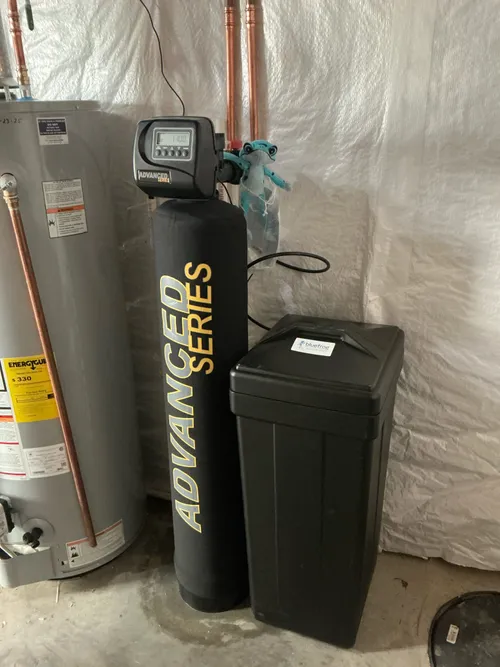
bluefrog Plumbing and Drain of West Omaha
9854 M St, Omaha, NE 68127
Bluefrog Plumbing and Drain of West Omaha provides plumbing services in Omaha, NE, including water heater repair and installation, drain cleaning, leak detection, and gas line installation. They specialize in hydro jetting to clear stubborn clogs and offer emergency plumbing services available 24/7. Their certified plumbers use advanced technology to identify and repair leaks, ensuring safe and effective solutions. Bluefrog also offers same-day service and proactive plumbing inspections to help prevent future issues.
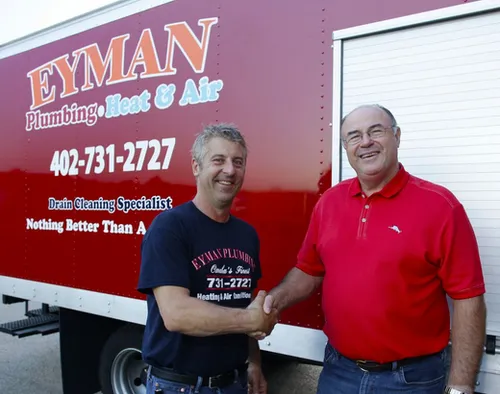
Eyman Plumbing Heating & Air
8506 S 117th St, La Vista, NE 68128
Eyman Plumbing Heating & Air is a family-owned plumbing and HVAC service provider based in Omaha, NE. Serving the Omaha area since 1957, they offer residential and commercial services including water heater repair and installation, drain cleaning, gas line installation, and HVAC system maintenance. Their fully equipped trucks and trained technicians provide same-day service within a 50-mile radius of Omaha. Eyman Plumbing Heating & Air also offers 24/7 emergency plumbing and HVAC services to address urgent issues promptly.
Understanding Nebraska's Regulatory Landscape
Gas line work in Nebraska is not a simple DIY project. The state has a structured regulatory framework designed to prioritize safety. While the Nebraska State Fire Marshal oversees the safety of natural gas pipelines on a statewide level 1, the day-to-day permitting, inspection, and enforcement for residential interior and service lines are managed by your local city or village building safety department. This means the specific rules you must follow depend on whether you live in Omaha, Lincoln, Grand Island, or a smaller municipality.
These local jurisdictions adopt strict safety codes, typically based on the International Fuel Gas Code or the Nebraska Residential Code 2. The core principle is that any installation, alteration, or repair of a gas piping system requires a permit and must be performed by or under the supervision of a registered professional, such as a master gas fitter 3 4. Some cities, like Lincoln, may allow homeowners to pull permits for work on their own single-family dwelling, but the work must still pass all required inspections conducted by city officials.
The Step-by-Step Process for Gas Line Projects
A successful gas line project follows a clear sequence to ensure code compliance and safety.
-
Planning and Design: Before any work begins, a professional will calculate the total BTU (British Thermal Unit) load of all appliances (furnace, water heater, stove, dryer, etc.) that the new line will supply. This determines the correct pipe size (diameter) to ensure adequate gas flow and pressure. They will also plan the route, select approved materials (like black iron pipe for interior work or approved plastic for underground), and identify locations for accessible shut-off valves 5.
-
Obtaining Permits: Your licensed professional will typically handle this step, submitting detailed plans to your local building department. The permit fee varies by city but is a mandatory cost of the project.
-
Calling 811: This is a critical and legally required step before any digging. You or your contractor must contact the Nebraska 811 call center at least 48 hours (two business days) before excavation. Utility companies will then come to your property to mark the location of existing underground lines (electric, water, communications) for free, preventing dangerous and costly strikes 6 7.
-
Professional Installation: The contractor will install the piping according to code, ensuring proper support, correct joint sealing, and the placement of shut-off valves. For underground lines, they must be installed at the correct depth-for example, steel pipe generally requires a minimum cover of 18 inches below grade.
-
Rough Inspection: After the piping is installed but before it is covered by drywall, soil, or concrete, a city inspector will conduct a "rough piping" inspection. They verify the materials, sizing, routing, and supports meet code.
-
Pressure Test and Final Inspection: This is the most important safety check. The system is pressurized with air (typically to at least 10 psi) and must hold that pressure without any drop for a minimum of 15 minutes 8. This test proves the system is leak-free. Once it passes and the piping is concealed, a final inspection is conducted before the gas utility reconnects the service or turns the gas on.
Find the perfect gas line plumbing companies for your needs
Get personalized recommendations and expert advice
Critical Safety Protocols and Best Practices
Working with natural gas demands respect for its potential hazards. Adhering to these protocols is non-negotiable.
- Professional Installation is Mandatory: Due to the extreme risks of fire and explosion, gas line installation and repair should only be performed by qualified, licensed professionals. They have the training, tools, and insurance to do the job safely 9.
- Shut Off the Gas: The main gas supply must be turned off at the meter before any work begins on existing lines 10.
- Pressure Testing is Essential: Never skip the pressure test. It is the definitive method to confirm the integrity of the entire system before gas is introduced.
- Correct Leak Detection: Never use an open flame to check for leaks. Always use a approved method like a soapy water solution (bubbles will form at a leak) or an electronic gas leak detector 11.
- Install Carbon Monoxide Detectors: For any home with gas appliances, installing UL-listed carbon monoxide detectors on every level and near sleeping areas is a vital, life-saving precaution.
Materials and Common Applications
The type of material used for gas lines depends on the location (interior vs. exterior) and local code approval.
- Black Iron Pipe: This is the standard for interior gas lines. It is durable, fire-resistant, and easily inspected. All connections are threaded and sealed with pipe compound 12.
- Corrugated Stainless Steel Tubing (CSST): This flexible, yellow-jacketed tubing is often used to run lines through walls and tight spaces. It requires special fittings and must be properly bonded to prevent electrical arcing 13.
- Polyethylene (PE) Plastic Pipe: This is the standard material for underground service lines from the street to the home and for buried yard lines. It is resistant to corrosion and approved for direct burial 14.
Common residential projects include running a new line for a gas fireplace, installing a hookup for a backup generator, extending a line for an outdoor kitchen or fire pit, or replacing old, corroded piping.
Understanding Costs and Getting Quotes
Pricing for gas line work in Nebraska is not uniform and varies based on several key factors 15 16. The complexity of the run (distance, obstacles), materials required, depth of excavation (for outdoor lines), and local labor rates all influence the final cost.
- Permit and Inspection Fees: These are set by your local city. For example, in Lincoln, minimum plumbing permit fees start around $35, with additional costs for re-inspections if work fails initial inspection 17.
- Installation Costs: A straightforward new line for a single appliance (like a stove or dryer) might range from $500 to $2,000. More complex projects, like a whole-home repipe or a long run to an outdoor living area, can cost substantially more 18 19.
- Repair Costs: Repairing a leak is typically billed as a service call plus hourly labor. The cost depends heavily on how accessible the leak is. A simple fix at an appliance valve is far less expensive than repairing a leak under a concrete slab 20 21.
The only way to get an accurate price for your specific project is to obtain detailed quotes from several licensed, insured professionals in your area. Reputable local plumbing and heating companies, or technicians registered with utilities like the Metropolitan Utilities District (MUD) in Omaha, can provide these estimates 22.
Frequently asked questions
Sources
Footnotes
-
General Information - Nebraska State Fire Marshal - https://sfm.nebraska.gov/fuels-safety/general-information-0 ↩
-
Chapter 24 Fuel Gas: Nebraska Residential Code 2012 - https://up.codes/viewer/nebraska/irc-2012/chapter/24/fuel-gas ↩
-
Chapter 24.05 LINCOLN GAS PIPING SYSTEMS CODE - https://online.encodeplus.com/regs/lincoln-ne/doc-viewer.aspx?secid=10661 ↩
-
View Statute 18-1915 - Nebraska Legislature - https://nebraskalegislature.gov/laws/statutes.php?statute=18-1915 ↩
-
Chapter 24.05 LINCOLN GAS PIPING SYSTEMS CODE - https://online.encodeplus.com/regs/lincoln-ne/doc-viewer.aspx?secid=10610 ↩
-
Gas Line Installation: What You Need to Know - https://www.pasoroblesheating.com/gas-line-installation-what-you-need-to-know-before-starting-your-project/ ↩
-
Omaha Gas Line Installation - PlumbRite - https://www.plumbriteomaha.com/gas-line-plumbing/gas-line-installation/ ↩
-
Chapter 24.05 LINCOLN GAS PIPING SYSTEMS CODE - enCodePlus - https://online.encodeplus.com/regs/lincoln-ne/doc-viewer.aspx?secid=10610 ↩
-
Gas Line Installation: What You Need to Know - https://www.pasoroblesheating.com/gas-line-installation-what-you-need-to-know-before-starting-your-project/ ↩
-
Frequently Asked Questions - CivicPlus.CMS.FAQ - https://www.rpvca.gov/faq.aspx?TID=40 ↩
-
Omaha Gas Line Installation - PlumbRite - https://www.plumbriteomaha.com/gas-line-plumbing/gas-line-installation/ ↩
-
Gas Line Installation - Quality Plumbing - https://qualityplumbing.cc/gas-line-installation-what-homeowners-need-to-know/ ↩
-
How to Install Natural Gas Lines Safely and Correctly - https://bluegasexpress.com/how-to-install-natural-gas-lines/ ↩
-
Gas Line Installation in Nebraska - Snell Services - https://www.snellservices.com/plumbing-services/gas-line-installation/ ↩
-
Foot by Foot: Understanding Gas Line Installation Costs - https://jollyplumbing.com/gas-line-installation-cost-per-foot/ ↩
-
Gas Piping in San Antonio, TX - https://www.lowpricegaspropane.com/gas-piping-san-antonio-tx ↩
-
Homeowner Plumbing Projects - Lincoln.ne.gov - https://www.lincoln.ne.gov/City/Departments/PDS/Building-Safety/Plumbing/Homeowner-Plumbing-Projects ↩
-
Understanding the Costs of Installing New Gas Lines - Browns Plumbing - HVAC, Plumbing Heating, and Cooling Experts - https://brownsplumbing.ca/understanding-the-costs-of-installing-new-gas-lines/ ↩
-
Gas Line Installation Cost: Factors, Estimates, And Comparisons - https://www.superbrothers.com/gas-line-installation-cost-factors-estimates-and-comparisons/ ↩
-
Gas Line Repair & Installation Services - https://shaferservices.com/gas-line-services/ ↩
-
Gas Line Resources | Earl's Plumbing, Heating & Air, Inc. - https://callearls.com/about-us/resources/gas-line-resources/ ↩
-
Expert Plumbing Services - Lincoln, NE - https://bryantlincoln.com/plumber-lincoln-ne ↩