Find the Best Gas Line Plumbing Companies for Your Business
No obligation • Fast responses • Nationwide coverage

Why you can trust Search a Plumber
Search a Plumber is a leading United States resource for finding and evaluating professional plumbing services. Our team researches licensing, experience, and customer feedback to create unbiased, fact-driven overviews. Companies cannot pay to change ratings or placement, ensuring homeowners get trustworthy information.
Search providers near you
Top Gas Line Plumbing Companies in Peabody, Massachusetts Ranked
Connecting your home or business to natural gas or propane requires specialized knowledge and strict adherence to safety codes. Gas line installation and repair is a critical service that ensures your appliances-like furnaces, water heaters, stoves, and dryers-operate safely and efficiently. For residents and business owners in Peabody, navigating the local permit process and finding a qualified professional is essential. This guide explains the key steps, local requirements, and safety considerations to help you make informed decisions about your gas piping needs.
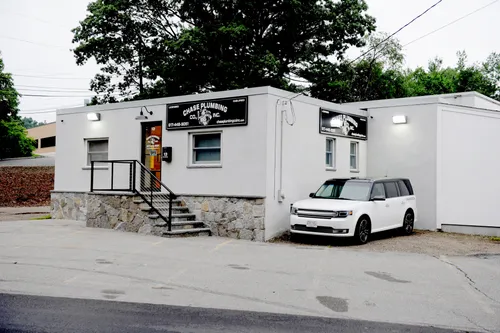
Chase Plumbing Co., Inc.
13 Adams St, Burlington, MA 01803
Chase Plumbing Co., Inc. is a licensed and insured plumbing company serving Boston, MA, and surrounding communities. They provide plumbing, heating, gas piping, and drain cleaning services for both residential and commercial properties. The company holds a Massachusetts Master Plumber license and offers expertise in gas line installation and drain cleaning. Chase Plumbing Co., Inc. serves a broad area including Lexington, Burlington, Winchester, and other nearby towns.
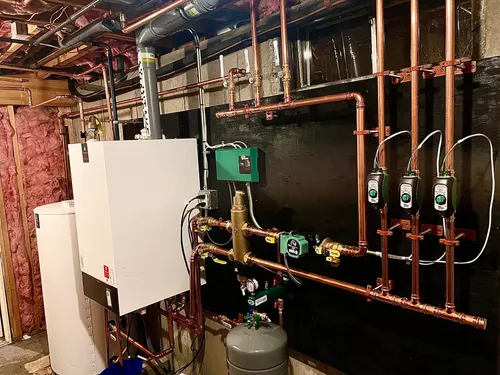
AJM Plumbing And Heating LLC
45 Exchange St, Rockland, MA 02370
AJM Plumbing And Heating LLC is a plumbing and heating service provider based near Boston, MA. They offer water heater installation, repair, and maintenance for both tank and tankless systems, along with leak detection, repiping, gas line installation, and toilet repair. The company installs high-efficiency heating systems and provides warranties on parts and labor, with tankless water heaters qualifying for Mass Save rebates. AJM Plumbing also handles gas appliance connections and plumbing winterization to protect systems from harsh New England winters. They serve a wide area including Rockland, Hull, Quincy, and other nearby communities.
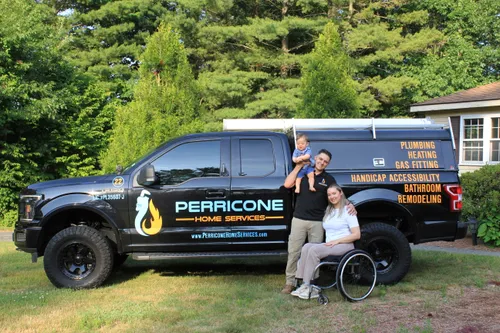
Perricone Home Services
111 Middlesex Turnpike #1103, Burlington, MA 01803
Perricone Home Services is a plumbing and gas service provider based in Boston, MA. They offer a range of services including water heater repair and installation, tankless water heater services, sump pump repair, leak detection, repiping, gas line installation, and garbage disposal repair. The company is known for thorough inspections, clear communication, and using quality materials. They have experience handling complex plumbing issues such as re-piping and interior gas leaks. Customers appreciate their detailed explanations and multiple repair options. Perricone Home Services responds promptly to emergencies, including after-hours and weekend calls, ensuring timely repairs and installations.
Plumbing Solutions
5 Business St, Dedham, MA 02026
Plumbing Solutions is a plumbing service provider located in Boston, MA, with over 20 years of experience. They specialize in drain cleaning, gas line installation, and toilet repair, serving the South Suburban and Metro West Boston areas. The company focuses on service, repair, and remodeling, emphasizing punctuality, cleanliness, and client satisfaction. Their capabilities include handling water and steam boilers, radiant heat systems, and gas appliance installations.
Vaughan Plumbing & Heating, LLC
Boston, MA
Vaughan Plumbing & Heating, LLC has been serving residential plumbing and heating needs in Boston, MA since 2008. The company addresses a wide range of services including water heater repair and installation, drain cleaning, leak detection, repiping, gas line installation, and toilet repair. They specialize in handling the unique plumbing challenges of Boston's older homes and harsh winters, offering expertise in winterization and emergency repairs. Vaughan Plumbing & Heating provides same-day or next-day emergency services and emphasizes clear communication and upfront pricing to keep customers informed throughout the process.
Understanding Gas Piping Systems
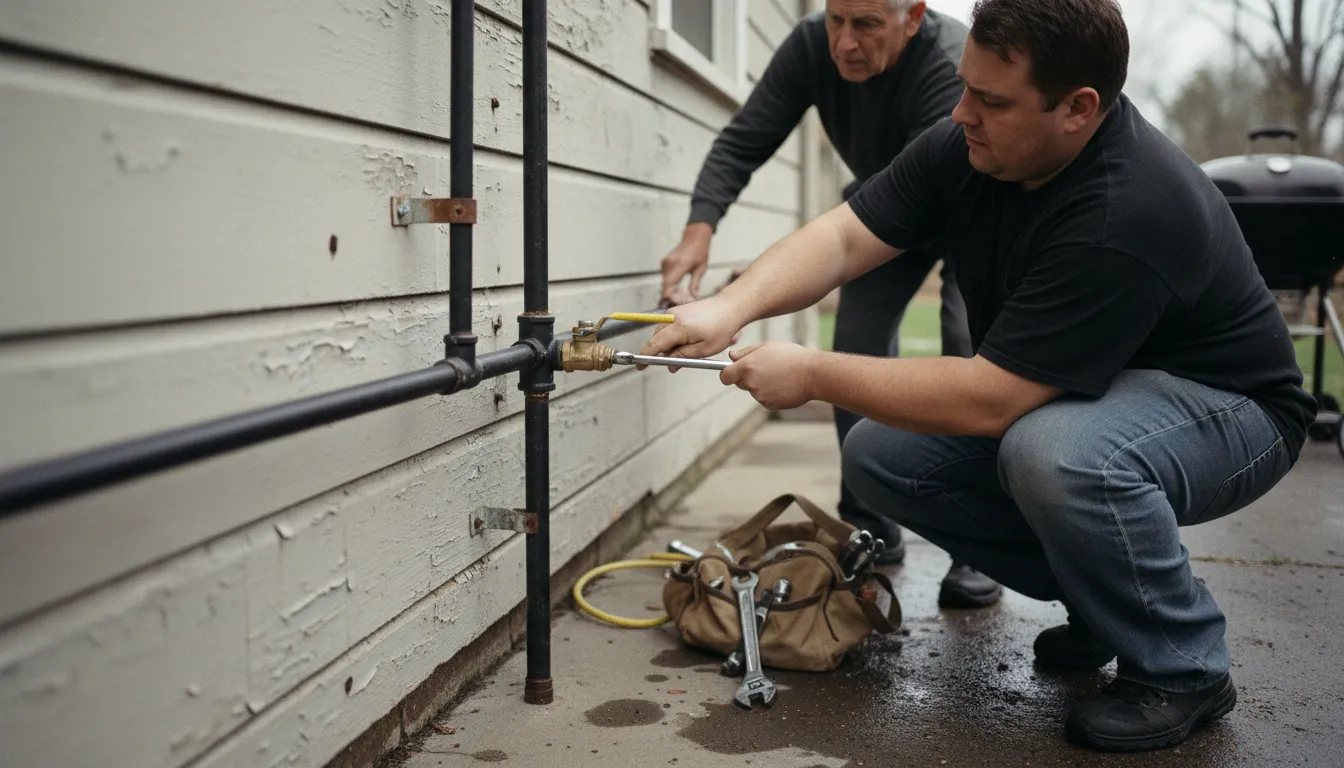
A gas piping system is the network of pipes that delivers fuel from your meter to various appliances. In Peabody, these systems are typically constructed from two primary materials: traditional black iron pipe (BIP) and modern Corrugated Stainless Steel Tubing (CSST). Black iron pipe is a rigid, threaded metal pipe known for its durability, often used for exposed runs in basements or utility rooms. CSST is a flexible, yellow-coated tubing that can be snaked through walls and around obstacles, making it popular for renovations and complex installations. The choice of material depends on the project's scope, local code preferences, and the installer's expertise. Regardless of the material, every joint, fitting, and section must be installed to precise standards to prevent the dangerous possibility of gas leaks.
The Peabody Permit and Inspection Process
Before any work begins, securing the proper permit from the City of Peabody is not just recommended-it's legally required for any new gas line installation or significant repair. The city mandates this to ensure all work meets the Massachusetts State Building Code, which is based on the International Plumbing Code (IPC) and International Mechanical Code (IMC) 1.
The process is handled online. You or your licensed contractor must apply through the City of Peabody's OpenGov portal, as walk-in applications are not accepted 2. After the installation is complete but before any pipes are concealed behind walls or under ground, you must schedule an inspection with the city's Building Inspector. This critical step involves a pressure test, where the sealed system is pressurized with air or nitrogen to verify there are no leaks. Passing this inspection is mandatory for the system to be approved and connected to the gas supply.
Step-by-Step: From Planning to Connection
A professional gas line project follows a meticulous sequence to guarantee safety and compliance.
- Planning and Route Mapping: A technician will assess the location of your gas meter and the appliances needing service. They plan the most efficient and code-compliant route, considering obstacles, required wall penetrations, and whether the line will run indoors or require exterior trenching.
- Trenching (For Exterior Lines): If the gas line must run outdoors to a detached garage, grill, or pool heater, trenching is necessary. Trenches must be dug to a specific depth as dictated by code to protect the pipe from damage and frost, and often require careful backfilling and compaction 3.
- Piping Installation: The chosen material (BIP or CSST) is cut, fitted, and secured. For black iron, this involves threading and wrench-tightening sections. For CSST, it involves cutting the tubing and attaching specialized sealed fittings. Proper support brackets are installed at regular intervals.
- Pressure Testing: This is the most crucial safety step before final connection. The entire installed system is sealed and pressurized. The technician monitors the pressure gauge for any drop, which would indicate a leak that must be found and repaired 4.
- Final Connection and Appliance Hookup: Only after passing the pressure test and the city inspection is the system connected to the main gas meter. The technician then makes the final connections to each appliance, checking for proper operation and ensuring venting requirements are met.
Find the perfect gas line plumbing companies for your needs
Get personalized recommendations and expert advice
Critical Safety Considerations for Peabody Homes
Gas line work is inherently high-risk. The primary dangers are gas leaks, which can lead to fire, explosion, or carbon monoxide poisoning. This is why hiring a licensed professional is non-negotiable. Licensed plumbers or gas fitters have the training to understand combustion, ventilation requirements, and the physical properties of gas. They use approved materials and know that CSST, for example, requires specific grounding and bonding to protect against electrical surge damage.
After any installation or repair, a professional will perform a final leak check on all fittings using a soapy water solution or an electronic gas detector. As a homeowner, knowing the smell of natural gas (a sulfuric, rotten egg odor) and having working carbon monoxide detectors on every floor are your last lines of defense.
Cost Factors for Gas Line Projects
Pricing for gas line services in Peabody varies significantly based on the project's complexity, length of pipe needed, accessibility, and the specific appliances involved. It's important to get detailed, written estimates from multiple licensed providers.
- Service Call/Diagnostic Fee: Many companies charge an initial fee to assess the problem, typically ranging from $99 to $150+.
- Minor Repairs or Short Extensions: Fixing a small leak or running a short new line for a kitchen stove might cost between $250 and $700+.
- New Appliance Line Installation: Running a dedicated line for a new water heater, dryer, or furnace can range from $500 to $1,500+, depending on the distance from the meter and wall complexities.
- Major Installations or System Reroutes: Completely repiping a home, adding multiple new lines, or installing a line for a large appliance like a boiler or generator is a major undertaking. Costs for these projects often start around $2,000 and can exceed $10,000 5.
Finding a Qualified Professional in Peabody
Your safety depends on the contractor's skill and adherence to code. Always verify that a professional holds the appropriate Massachusetts license for plumbing and gas fitting. They should also be fully insured. You can ask for proof of both. Reputable local companies will be familiar with the Peabody permit office and inspection process, often handling it on your behalf. Checking reviews on platforms like Yelp or Google for "Gas Line Services near Peabody, MA" can provide insights into past customer experiences with local providers such as Spencer Home Services, Callahan Mechanical Services, Distinct Plumbing Heating & Gas Fitting, and Jovel Inc 6 7.
Frequently asked questions
Sources
Footnotes
-
SCOPE AND ADMINISTRATION (Unique to Massachusetts ... - https://www.mass.gov/doc/ninth-edition-residential-code-amendments-0/download ↩
-
Building Inspectors - peabody-ma.gov - https://www.peabody-ma.gov/inspectors.html ↩
-
Natural Gas Line Installation: A Step-by-Step Guide - https://www.superbrothers.com/natural-gas-line-installation-a-step-by-step-guide/ ↩
-
How Long Does Gas Line Installation Take? - North Mead Plumbing Services - https://plumbernorthmead.com.au/blog/how-long-does-gas-line-installation-take ↩
-
Plumbing Gas Line Repair Peabody, MA - Jovel Inc - https://jovelinc.com/service/plumbing-gas-line-repair/ ↩
-
Gas Line Repair and Installation in Peabody, MA - https://spencerhomeservice.com/plumbing/gas-lines-piping/ ↩
-
TOP 10 BEST Gas Line Services near Peabody, MA - Yelp - https://m.yelp.com/search?find_desc=Gas+Line+Services&find_loc=Peabody%2C+MA ↩