Find the Best Gas Line Plumbing Companies for Your Business
No obligation • Fast responses • Nationwide coverage

Why you can trust Search a Plumber
Search a Plumber is a leading United States resource for finding and evaluating professional plumbing services. Our team researches licensing, experience, and customer feedback to create unbiased, fact-driven overviews. Companies cannot pay to change ratings or placement, ensuring homeowners get trustworthy information.
Search providers near you
Top Gas Line Plumbing Companies in Cambridge, Massachusetts Ranked
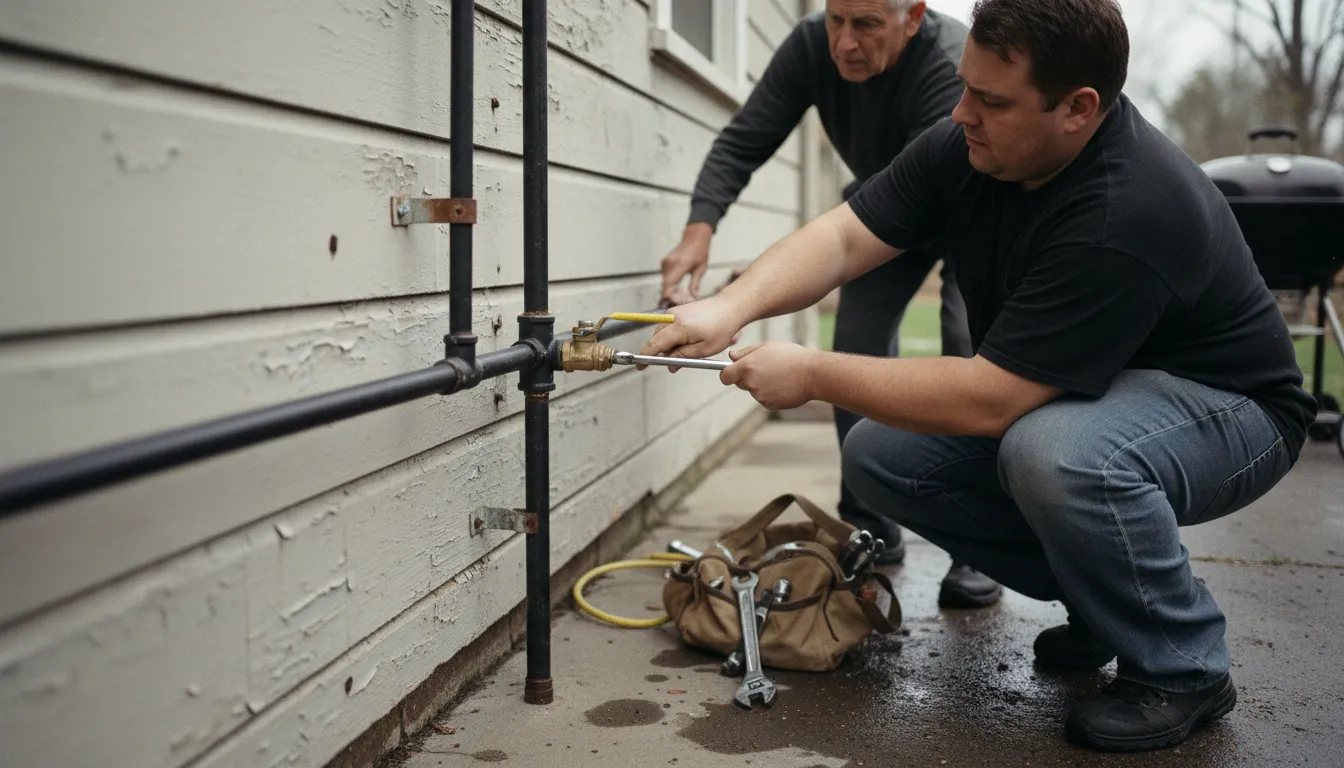
Installing or repairing a gas line is a critical home improvement project that directly impacts the safety and functionality of your property. This work involves running new piping for appliances like furnaces, water heaters, stoves, or fireplaces, or repairing existing lines that may be leaking or outdated. In Cambridge, this is not a DIY task; it requires a licensed professional to navigate strict state and local codes to ensure your system is safe, efficient, and legally compliant. This resource is designed to help you understand the process, regulations, and key considerations for gas line projects, empowering you to make informed decisions when selecting a qualified local specialist.
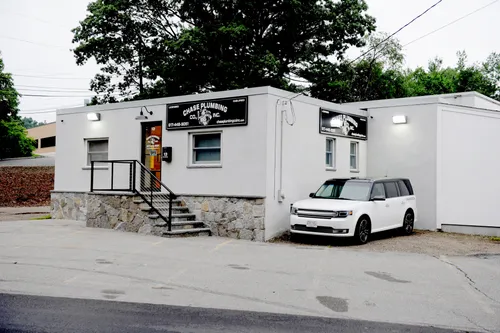
Chase Plumbing Co., Inc.
13 Adams St, Burlington, MA 01803
Chase Plumbing Co., Inc. is a licensed and insured plumbing company serving Boston, MA, and surrounding communities. They provide plumbing, heating, gas piping, and drain cleaning services for both residential and commercial properties. The company holds a Massachusetts Master Plumber license and offers expertise in gas line installation and drain cleaning. Chase Plumbing Co., Inc. serves a broad area including Lexington, Burlington, Winchester, and other nearby towns.
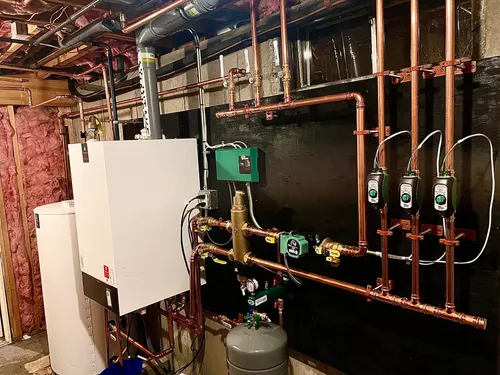
AJM Plumbing And Heating LLC
45 Exchange St, Rockland, MA 02370
AJM Plumbing And Heating LLC is a plumbing and heating service provider based near Boston, MA. They offer water heater installation, repair, and maintenance for both tank and tankless systems, along with leak detection, repiping, gas line installation, and toilet repair. The company installs high-efficiency heating systems and provides warranties on parts and labor, with tankless water heaters qualifying for Mass Save rebates. AJM Plumbing also handles gas appliance connections and plumbing winterization to protect systems from harsh New England winters. They serve a wide area including Rockland, Hull, Quincy, and other nearby communities.
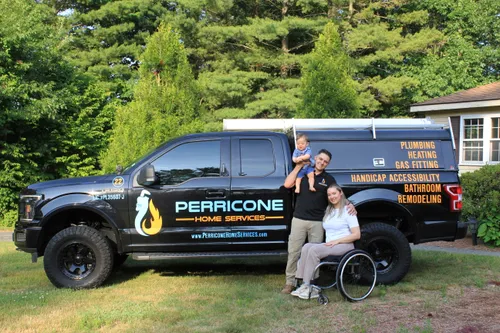
Perricone Home Services
111 Middlesex Turnpike #1103, Burlington, MA 01803
Perricone Home Services is a plumbing and gas service provider based in Boston, MA. They offer a range of services including water heater repair and installation, tankless water heater services, sump pump repair, leak detection, repiping, gas line installation, and garbage disposal repair. The company is known for thorough inspections, clear communication, and using quality materials. They have experience handling complex plumbing issues such as re-piping and interior gas leaks. Customers appreciate their detailed explanations and multiple repair options. Perricone Home Services responds promptly to emergencies, including after-hours and weekend calls, ensuring timely repairs and installations.
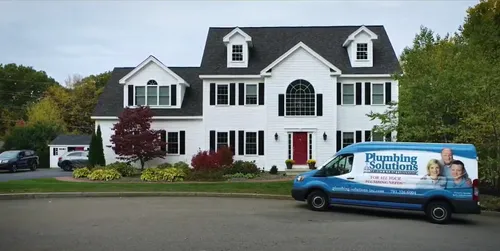
Plumbing Solutions
5 Business St, Dedham, MA 02026
Plumbing Solutions is a plumbing service provider located in Boston, MA, with over 20 years of experience. They specialize in drain cleaning, gas line installation, and toilet repair, serving the South Suburban and Metro West Boston areas. The company focuses on service, repair, and remodeling, emphasizing punctuality, cleanliness, and client satisfaction. Their capabilities include handling water and steam boilers, radiant heat systems, and gas appliance installations.
Vaughan Plumbing & Heating, LLC
Boston, MA
Vaughan Plumbing & Heating, LLC has been serving residential plumbing and heating needs in Boston, MA since 2008. The company addresses a wide range of services including water heater repair and installation, drain cleaning, leak detection, repiping, gas line installation, and toilet repair. They specialize in handling the unique plumbing challenges of Boston's older homes and harsh winters, offering expertise in winterization and emergency repairs. Vaughan Plumbing & Heating provides same-day or next-day emergency services and emphasizes clear communication and upfront pricing to keep customers informed throughout the process.
Understanding Cambridge's Permit and Inspection Process
All gas fitting work in Cambridge requires a permit and must be performed by a licensed plumber. The city's Inspectional Services Department (ISD) oversees this process to enforce the Massachusetts State Plumbing Code (248 CMR) and the National Fuel Gas Code (NFPA 54). Starting work without a permit can result in significant penalties and unsafe conditions.
The permit process typically involves:
- Application Submission: Your licensed plumber will submit a Gas Fitting Permit application to ISD, detailing the scope of work.
- Fee Payment: Permit fees are based on the project. For example, the fee for new gas piping is approximately $50 per floor.
- Mandatory Inspections: A city Plumbing/Gas Inspector will conduct at least two inspections:
- Rough Inspection: After the pipes are run but before they are concealed by walls or backfill.
- Final Inspection: After all appliances are connected and the system is ready for use.
- Final Sign-Off: Passing the final inspection is crucial. This official sign-off is often required for insurance purposes and is tied to the property's Certificate of Occupancy, confirming the work meets all safety standards.
Key Steps in a Gas Line Project
A professional gas piping project follows a meticulous sequence to ensure safety and durability.
1. Planning and Material Selection
The project begins with planning the route from the gas meter to the appliance(s). The licensed professional will determine the correct pipe size (based on BTU demand) and select approved materials. In Massachusetts, the primary options are traditional black iron pipe (BIP) and more flexible Corrugated Stainless Steel Tubing (CSST). The choice depends on the project's complexity, local code preferences, and budget.
2. Trenching and Pipe Installation
For exterior or underground lines, trenching is required. Trenches must be dug to a specific depth-often 12 to 18 inches below grade for residential lines-to protect the pipe from damage. The pipe is then laid, connected with proper fittings (threaded for BIP, specialized compression fittings for CSST), and supported securely along its entire run.
3. Pressure Testing
This is a non-negotiable safety step. Before any pipe is covered or enclosed, the system is pressurized with air (typically to 10-15 PSI) and monitored for a set period. A steady pressure reading confirms there are no leaks 1. This test is usually witnessed by the city inspector during the rough inspection.
4. Backfill and Appliance Connection
Once the pressure test passes inspection, trenches can be carefully backfilled. After the drywall or final surfaces are installed, the plumber returns to make the final connections to each gas appliance, ensuring proper seals and installing necessary shut-off valves.
5. Final Inspection and System Start-Up
The inspector verifies all connections, checks for proper appliance venting, and ensures the installation complies with all codes. Only after receiving this final sign-off should the gas be turned on and the appliances activated2 3.
Find the perfect gas line plumbing companies for your needs
Get personalized recommendations and expert advice
Safety and Code Compliance: Non-Negotiable Priorities
Working with natural gas or propane carries inherent risks, making adherence to safety protocols and codes paramount.
- Licensing is Law: In Massachusetts, only a licensed plumber can legally install or repair gas lines 4. This ensures the individual has the required training on codes, proper techniques, and leak detection.
- Code Adherence: The work must comply with the Massachusetts State Plumbing Code (248 CMR), which incorporates NFPA 54 standards5. These codes govern everything from pipe material and sizing to required clearances and support spacing.
- Ventilation and Detection: Proper ventilation for gas appliances is critical to prevent dangerous carbon monoxide (CO) buildup. Code requires the installation of CO detectors on every habitable level of the home, particularly near sleeping areas and gas appliances6.
- Leak Preparedness: Everyone in the home should know the smell of natural gas (a rotten egg odor) and know to evacuate immediately and call the gas company from outside if a leak is suspected.
Understanding Project Costs
The cost of gas line work in Cambridge varies widely based on scope, materials, and accessibility. It's best to get detailed estimates from several licensed professionals.
- Permit Fees: As noted, the city permit fee for new piping is a baseline cost, around $50 per floor7 8.
- Materials: Black iron pipe is generally less expensive for materials but more labor-intensive to install. CSST material costs more but can be faster to install, especially in complex retrofits9.
- Labor: This is the primary cost driver. Licensed plumbers in the area may charge between $100 and $200+ per hour. The total labor time depends on the length of the run, difficulty of trenching (e.g., through rocky soil or under driveways), and whether walls need to be opened.
- Typical Project Ranges:
- Simple Appliance Hookup: Running a short line for a new gas stove or dryer might cost $500 to $1,500 10.
Choosing a Qualified Professional in Cambridge
Given the safety and regulatory stakes, selecting the right contractor is essential. Look for a plumber who is:
- Licensed in Massachusetts: Verify their license is current and in good standing.
- Insured: They should carry both liability and worker's compensation insurance.
- Familiar with Cambridge ISD: Experience pulling Cambridge-specific gas permits and coordinating with local inspectors can streamline the process.
- Transparent in Estimates: Willing to provide a detailed, written estimate that breaks down materials, labor, and permit fees.
- Focused on Safety: They should readily discuss their pressure testing procedure, code compliance, and safety checks.
Frequently asked questions
Sources
Footnotes
-
Top-Rated Gas Pipings Experts in Cambridge, MA | HomeAdvisor ↩
-
Cambridge, MA: Permit Fees Guide 2026 - Building, Electrical ... ↩
-
Gas Line Installation in Massachusetts - Heritage Home Service ↩
-
Gas Line Services in Cambridge, MA - Merrimack Valley Plumbing ↩
-
How Much Does It Cost to Replace a Gas Line? | ConsumerAffairs® ↩