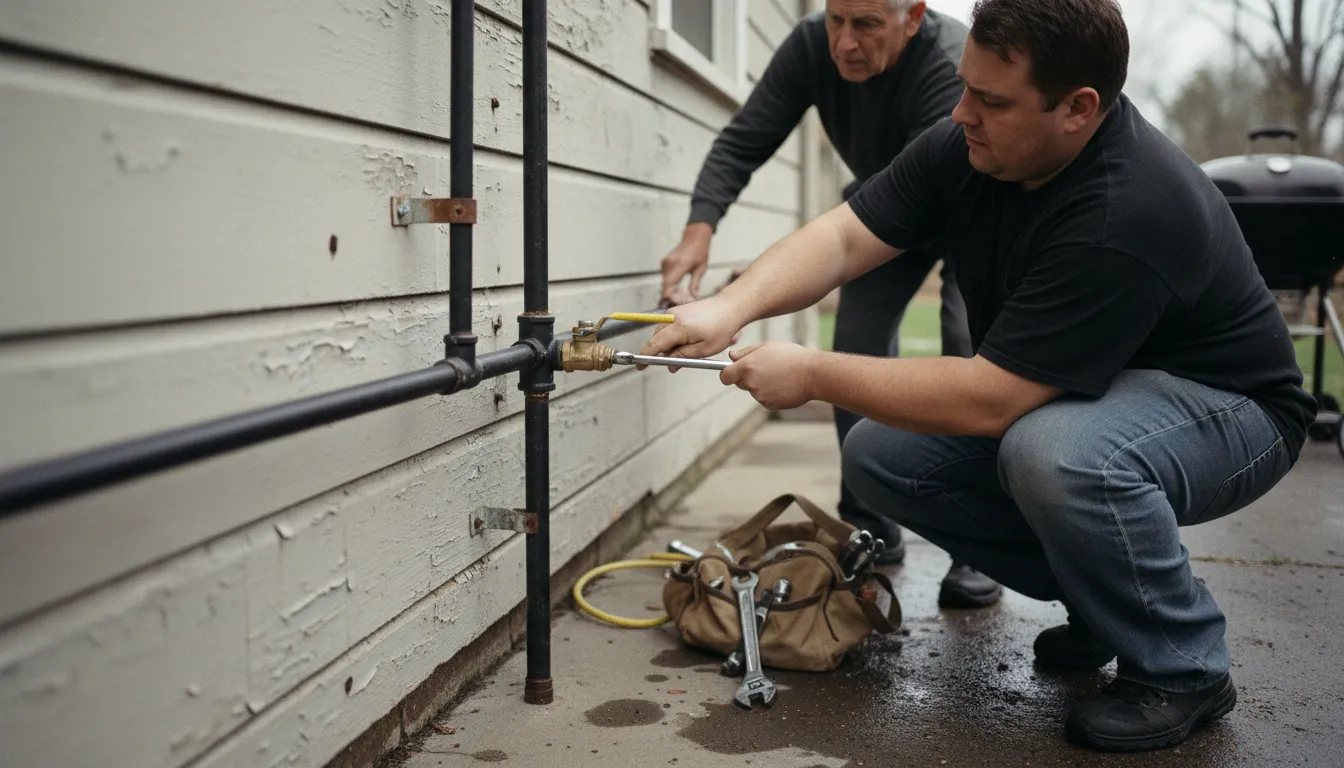
Find the Best Gas Line Plumbing Companies for Your Business
No obligation • Fast responses • Nationwide coverage

Why you can trust Search a Plumber
Search a Plumber is a leading United States resource for finding and evaluating professional plumbing services. Our team researches licensing, experience, and customer feedback to create unbiased, fact-driven overviews. Companies cannot pay to change ratings or placement, ensuring homeowners get trustworthy information.
Search providers near you
Best Gas Line Plumbing Companies in Kentucky Ranked
Installing or repairing a gas line is a critical home project that directly impacts your family's safety and your property's functionality. In Kentucky, this work is governed by strict state and local building codes designed to prevent leaks, fires, and explosions. This guide explains the essential requirements, processes, and safety considerations for gas line projects across the Commonwealth. You can use this information to understand what's involved, ask the right questions, and find qualified local professionals to ensure the job is done correctly and legally.
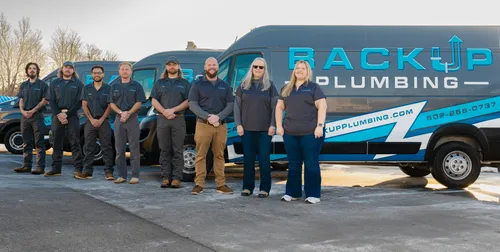
Backup Plumbing
2121 Spencer Ct Unit 5, La Grange, KY 40031
Backup Plumbing is a locally and family-owned plumbing company serving Louisville, KY, and the surrounding areas. Established in 2018, the company offers a wide range of residential and commercial plumbing services including sewer line repair, water heater installation and repair, leak detection, drain cleaning, and gas line installation. Their team holds OSHA and Rinnai certifications and brings over 30 years of combined experience to each project. Backup Plumbing uses advanced diagnostic tools such as sewer camera inspections to accurately identify issues and provide effective solutions. They also provide industry-leading warranties and free water testing as part of their service. The company is equipped to handle both routine maintenance and emergency plumbing situations, ensuring safety and compliance with local regulations. Their commercial plumbing services are designed to minimize downtime for businesses, and they emphasize thorough safety practices in all gas line work. Backup Plumbing is committed to building lasting relationships with clients through clear communication and professional service.

GRS Plumbing Heating and Air
104 Forbes Ct, Richmond, KY 40475
GRS Plumbing Heating and Air is a plumbing service provider located in Lexington, KY. They offer a range of services including water heater repair and installation, water softener installation, sump pump repair, drain cleaning, leak detection, repiping, gas line installation, toilet repair, and garbage disposal repair. The company also handles water line and drain line repair and replacement, bathroom and kitchen plumbing issues, and installation of appliances like dishwashers and washing machines. One notable capability is their work with gas line installation, testing, and repair. They provide comprehensive plumbing solutions for residential needs in the Lexington area.
Kentucky Plumbing (KYPD)
101 Virginia Ln, Nicholasville, KY 40356
Kentucky Plumbing (KYPD) offers comprehensive plumbing services in Lexington, KY, specializing in water heater installation and repair, sewer line repair, and gas line installation. They serve both residential and new construction clients, providing licensed and insured professionals to handle a wide range of plumbing needs. KYPD is experienced in installing tankless water heaters and radiant heating systems, ensuring efficient and reliable solutions for Lexington homes. The company also provides 24/7 emergency plumbing services, emphasizing safety and quality workmanship. Their service area includes Lexington and surrounding towns such as Winchester, Versailles, and Nicholasville.
Kentucky Plumbing (KYPD) of Lexington
2151 Christian Rd, Lexington, KY 40509
Kentucky Plumbing (KYPD) of Lexington offers a wide range of plumbing services in Lexington, KY, including water heater installation and repair, sewer line repair, and gas line installation. They serve both residential and new construction clients, providing licensed and insured professionals to handle projects of various sizes. KYPD specializes in tankless water heaters and radiant heating installation, ensuring energy-efficient solutions for homes. The company also provides 24/7 emergency plumbing services to address urgent needs promptly. With a commitment to quality workmanship and customer satisfaction, KYPD supports the Lexington community with comprehensive plumbing expertise and guarantees on their work.
Hubbard Mechanical - Georgetown
110 E Main St Suite 113, Georgetown, KY 40324
Hubbard Mechanical - Georgetown provides comprehensive plumbing and HVAC services in Louisville, KY. The company offers a wide range of plumbing solutions including water heater repair and installation, sump pump repair, drain cleaning, sewer line repair, leak detection, repiping, and gas line installation. Their team is licensed with Master HVAC, Master Plumbing, and Boiler Contractor credentials, ensuring skilled handling of heating, cooling, and plumbing needs. With over 25 years of experience in the industry, Hubbard Mechanical serves both residential and commercial customers, focusing on reliable repairs and installations. They also specialize in installing gas, electric, and tankless water heaters, tailoring solutions to customer needs.
Understanding Kentucky's Gas Line Regulations
Gas line work in Kentucky is not a typical do-it-yourself project. The Kentucky State Plumbing Code, which incorporates national fuel gas codes, mandates that most gas piping installation, extension, alteration, or repair must be performed by a licensed professional1. This is a critical safety measure, as improper installation can lead to dangerous gas leaks.
Local municipalities enforce these codes and have their own specific permitting and inspection processes. Whether you're in Louisville, Lexington, Bowling Green, or a rural county, you must comply with both state law and local ordinances. The work typically requires a permit, which must be pulled by a licensed plumber or HVAC technician. After installation, a city or county inspector must approve the system before it can be activated2.
When Do You Need a Permit and a Professional?
You will need to hire a licensed professional and obtain a permit for any significant gas line work, including:
- New Installations: Running a new gas line from your meter to a new appliance (e.g., furnace, water heater, stove, fireplace, or outdoor grill).
- Alterations: Extending an existing line to a new location or adding additional branches.
- Major Repairs: Replacing a section of corroded or damaged piping.
- Appliance Replacement: If the new appliance requires a different gas pressure or connection type than the old one.
For minor repairs, such as tightening a fitting, rules may vary. However, due to the inherent risks, it is always safest to consult a licensed professional. They understand the pressure requirements, proper materials, and local code nuances.
The Step-by-Step Process for Gas Line Work
Following the correct procedure is non-negotiable for safety and compliance. Here is the standard workflow for a gas line project in Kentucky:
- Plan and Call 811: Before any digging, you are legally required to call 811 or 1-800-DIG-SAFE at least two business days in advance. This free service will have all underground utility lines on your property marked, preventing accidental strikes that could cause injury or service interruptions.
- Apply for Permits: Your licensed contractor will apply for the necessary gas piping and mechanical permits from your local building or code enforcement office. This step ensures your project is reviewed for code compliance before work begins.
- Professional Installation: The licensed plumber or HVAC technician will install the new piping using approved materials and techniques. They will ensure proper sizing, secure connections, and correct support.
- Pressure Testing: This is a crucial safety check. The installer will pressurize the new line with air or an inert gas to a level typically 1.5 times its normal operating pressure and hold it for a minimum of 15 minutes to check for any drops that indicate a leak 3. This test is often witnessed by the inspector.
- Final Inspection: A local building inspector will visit to verify the installation meets all applicable codes, reviews the pressure test results, and ensures the work is safe.
- Gas Reconnection: Once the inspection is passed, your gas utility company (e.g., Columbia Gas, LG&E) will be notified or will perform the final connection or meter turn-on.
Material and Installation Requirements
Kentucky codes specify how gas lines must be installed to ensure long-term safety:
- Approved Materials: For underground yard lines, copper tubing is commonly required. Galvanized steel pipe is explicitly prohibited for buried gas lines in many Kentucky jurisdictions due to its susceptibility to corrosion. Inside your home, black iron pipe is standard.
- Burial Depth: Buried gas lines must be installed at a minimum depth of 12 inches below grade to protect them from surface damage. They must also maintain specific clearances from other utilities like water and sewer lines.
- Meter Location: Gas meters must be placed away from potential ignition sources, such as electrical service panels, dryer vents, or appliance flues, as per local ordinances4.
- Homeowner Responsibility: It's important to know that you own and are responsible for maintaining the gas piping that runs from the utility's meter to the appliances inside your home 5. The utility company owns the main line up to the meter.
Find the perfect gas line plumbing companies for your needs
Get personalized recommendations and expert advice
Recognizing and Responding to a Gas Leak
Knowing the signs of a leak can save lives. Natural gas is odorless, but utilities add a distinctive rotten egg smell (mercaptan) for detection.
- Smell: The primary sign is the persistent odor of rotten eggs or sulfur.
- Sound: Listen for a hissing or whistling sound near a gas line or appliance.
- Sight: Look for dead or discolored vegetation in an otherwise green area over a buried line, or dust blowing from a hole in the ground.
If you suspect a gas leak:
- Evacuate the building immediately. Do not use light switches, phones, or any electrical device that could create a spark.
- Call 911 or your gas utility's emergency line from a safe distance away from the building.
- Do not attempt to locate or repair the leak yourself6.
Cost Considerations for Gas Line Projects
While hiring a licensed professional is a required investment, costs can vary widely. You are paying for expertise, insurance, and compliance with life-safety codes. Several factors influence the final price:
- Project Scope: A simple hookup for a new stove is far less expensive than running a new line 50 feet to a detached garage or performing a whole-house re-pipe.
- Materials: The type and length of pipe needed (copper vs. black iron) affect material costs.
- Labor & Complexity: Labor rates vary by region, and difficult installations (through concrete, multiple floors) increase time and cost.
- Permit & Inspection Fees: These are set by your local jurisdiction and are a mandatory part of the project cost.
While online estimates can provide a ballpark, the only way to get an accurate price is to obtain quotes from licensed, insured professionals who can assess your specific situation7 8.
Local Variations and Final Checklist
Rules can differ between cities and counties. For example, the specific permit application in Louisville may differ from the process in Henderson or Middlesboro9 10 11. Always confirm requirements with your local Building Permit Office.
Before you start a gas line project in Kentucky, ensure you:
- Have called 811 for line marking.
- Hired a licensed plumber or HVAC technician.
- Secured all required local permits.
- Understand the materials and burial depth required.
- Have a plan for the mandatory pressure test and inspection.
- Know the emergency steps if you smell gas.
Frequently asked questions
Sources
Footnotes
-
Kentucky State Plumbing Law, Regulations and Code Book - https://dhbc.ky.gov/Documents/2017%20Kentucky%20State%20Plumbing%20Law%20Regulations%20and%20Code%20Book.pdf ↩
-
Permitting & Inspections plumbing_mechanical_gas_test - https://dallascityhall.com/departments/sustainabledevelopment/buildinginspection/Pages/plumbing_mechanical_gas_test.aspx ↩
-
Gas Line Installation: What You Need to Know - https://www.pasoroblesheating.com/gas-line-installation-what-you-need-to-know-before-starting-your-project/ ↩
-
ARTICLE III. - GAS SERVICE | Code of Ordinances | Henderson, KY - https://library.municode.com/ky/henderson/codes/code_of_ordinances?nodeId=COOR_CH23UT_ARTIIIGASE ↩
-
Know your gas lines | LG&E and KU - https://lge-ku.com/safety/gas/know-your-gas-lines ↩
-
Gas Line Installation | Quality Plumbing - https://qualityplumbing.cc/gas-line-installation-what-homeowners-need-to-know/ ↩
-
Gas Line Responsibilities - Columbia Gas of Kentucky - https://www.columbiagasky.com/safety/natural-gas-safety/gas-line-responsibilities ↩
-
Columbia Gas of Kentucky Booklet 2025 - https://www.columbiagasky.com/docs/librariesprovider12/safety/cky-know-your-home-brochure.pdf?sfvrsn=34b2f951_1 ↩
-
A QUICK GUIDE TO PERMITTING YOUR RESIDENTIAL ... - https://louisvilleky.gov/sites/default/files/2025-05/crelecrev2022.pdf ↩
-
Chapter 51: Natural Gas Service | Benton, KY - https://benton.ky.gov/Ordinances/Chapter%2051%20-%20Natural%20Gas%20Service.pdf ↩
-
§ 52.01 INSTALLATION OF GAS PIPING; GENERAL REQUIREMENTS. - https://codelibrary.amlegal.com/codes/middlesboroky/latest/middlesboro_ky/0-0-0-2537 ↩