Find the Best Gas Line Plumbing Companies for Your Business
No obligation • Fast responses • Nationwide coverage

Why you can trust Search a Plumber
Search a Plumber is a leading United States resource for finding and evaluating professional plumbing services. Our team researches licensing, experience, and customer feedback to create unbiased, fact-driven overviews. Companies cannot pay to change ratings or placement, ensuring homeowners get trustworthy information.
Search providers near you
Best Gas Line Plumbing Companies in Delaware Ranked
Installing or repairing a gas line is a critical home improvement project that directly impacts safety and functionality. Proper gas line work ensures your appliances-like furnaces, water heaters, stoves, and fireplaces-receive a reliable and safe fuel supply. In Delaware, this work is governed by strict state and local codes requiring permits, licensed professionals, and inspections. This guide provides essential information on the process, regulations, and safety considerations for gas line projects in Delaware, helping you connect with qualified local specialists.
Understanding Delaware's Gas Line Regulations
In Delaware, all gas line installation, replacement, and repair work must comply with the state-adopted plumbing code, which incorporates national safety standards. The primary goal of these regulations is to prevent gas leaks, fires, and explosions. The work is highly regulated, and a key requirement is that it must typically be performed by a licensed plumber or qualified contractor. Homeowners are strongly advised against attempting DIY gas line projects due to the extreme risks involved.
The regulatory framework involves multiple steps designed to ensure safety from planning through final use. Compliance is not optional; unpermitted work can result in fines, failed inspections, and the inability to obtain a certificate of occupancy for new construction. More importantly, it can create serious safety hazards in your home.
The Permit Process: A Step-by-Step Overview
Before any pipe is laid, a permit must be secured. This is a non-negotiable first step for any new gas line, alteration, or connection of a new gas appliance.
- When is a Permit Required? Permits are required for installing new gas piping systems, extending existing lines, replacing old pipes, and installing or relocating gas appliances like ranges, dryers, heaters, and fireplaces 1.
- Where to Apply: Permits are issued by your local municipal or county building department. For example, residents would apply in the City of Dover, New Castle County, Sussex County, or their specific town's office.
- The Application: A licensed professional will usually handle the permit application, submitting details about the project scope, materials to be used, and the route of the new piping.
- Permit Fees: Fees vary by locality but often include a minimum base fee plus a cost based on the job's valuation. In some Delaware jurisdictions, the minimum plumbing permit fee starts around $65.
The Gas Line Installation Process
A professional gas line installation follows a meticulous sequence to ensure code compliance and long-term safety.
- Planning and Design: A qualified installer will first assess your needs, calculating the total BTU (British Thermal Unit) load of all appliances the line will supply. This determines the required pipe diameter (e.g., 1/2" for a fireplace, 3/4" for a kitchen range) to ensure adequate gas flow. They will also plan the safest and most efficient route from the gas meter to the appliances.
- Permit Acquisition: As outlined above, the professional pulls the necessary local permit before work begins.
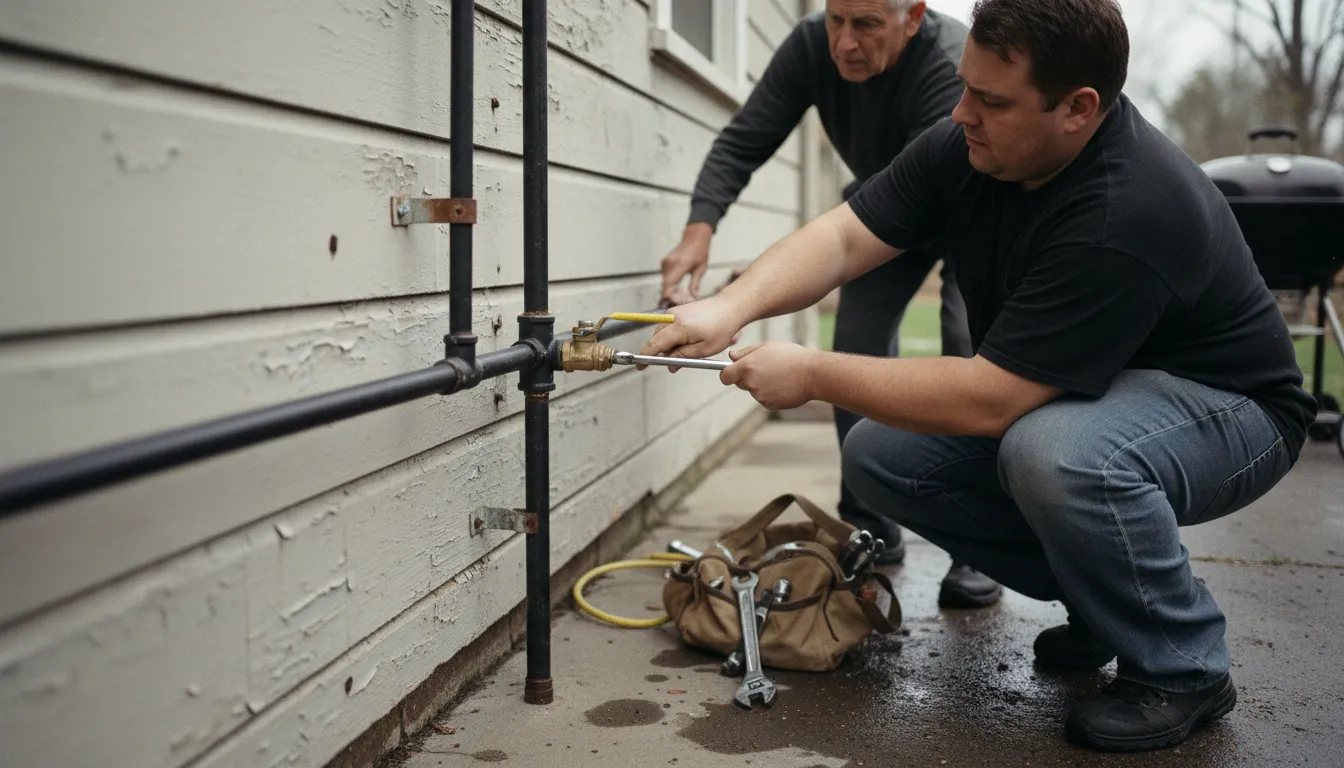
- Installation: Using approved materials like black iron pipe or corrugated stainless steel tubing (CSST), the installer runs the pipe along the planned route. Critical installation practices include:
- Gas-Specific Sealants: All threaded connections must use gas-rated (yellow) Teflon tape or pipe compound. Standard white plumbing tape is not suitable for gas and can cause leaks 4.
- Pressure Testing: After installation but before the pipe is concealed within walls or ceilings, a critical pressure test is performed. The system is pressurized to 1.5 times its normal operating pressure and must hold that pressure steadily for a specified period (often 15-30 minutes) to confirm there are no leaks 5.
- Inspections: Local building inspectors must approve the work at key stages. A "rough-in" inspection typically occurs after the pipe is installed and pressure-tested but before it's covered up. A "final" inspection happens after all appliances are connected 6 7.
- Final Connection: Only after passing all inspections should the gas utility meter be set or the line be connected to the source, and appliances be permanently hooked up and commissioned.
Find the perfect gas line plumbing companies for your needs
Get personalized recommendations and expert advice
Critical Safety Practices for Gas Lines
Safety is paramount when dealing with natural gas or propane. Adhering to these practices can prevent disasters.
- Leak Detection: Natural gas is odorized with mercaptan, which gives it a distinctive "rotten egg" smell. If you smell gas or hear a hissing sound near a gas line:
- Do not operate light switches, phones, or anything that could create a spark.
- Evacuate everyone from the house immediately.
- Call your gas company's emergency line or 911 from a safe distance outside 8.
- Use Qualified Professionals: Always hire a licensed plumber or gas fitter with experience in gas line work. They carry the necessary insurance, know the local codes, and have the tools to perform safe installations and leak checks.
- Material Awareness: Ensure only approved materials are used. This includes pipe, fittings, valves, and sealants specifically rated for fuel gas applications.
- Appliance Venting: Proper venting of gas appliances is as crucial as the gas line itself. Never block or alter appliance vents, as this can lead to carbon monoxide buildup.
Understanding Costs for Gas Line Work in Delaware
The cost of gas line projects in Delaware varies widely based on scope and complexity. It's essential to get detailed, written quotes from several licensed professionals.
- Permit Fees: As mentioned, these are typically separate from labor costs and are paid directly to the local authority. Budget for a minimum of approximately $65 and up, depending on your municipality and project value 9.
- Material and Labor Costs: This is the most significant variable. Factors include:
- Length and Route: Running a line 50 feet across an unfinished basement is far less expensive than tunneling under a slab or running pipe through finished walls and ceilings.
- Pipe Type and Diameter: Different materials (black iron vs. CSST) have different costs.
- Number of Appliances: Adding multiple branches and shut-off valves increases complexity.
- Appliance Hookups: The cost to disconnect old appliances and properly connect new ones.
- Sample Cost Ranges: While every job is unique, a simple extension of an existing line to add one appliance might range from several hundred to over a thousand dollars. A complete new gas line run from the meter to multiple appliances in a new addition or home can cost several thousand dollars 10.
The most reliable way to determine cost is to obtain multiple professional quotes. A reputable contractor will provide a free estimate after assessing your specific site and needs.
Maintaining Your Gas System
Once your gas line is installed, periodic checks can help maintain safety.
- Visual Inspection: Occasionally look at exposed gas piping for signs of corrosion, damage, or loose fittings.
- Appliance Checks: Have your gas furnace, water heater, and other appliances serviced annually by a qualified technician.
- Carbon Monoxide Detectors: Install UL-listed carbon monoxide detectors on every level of your home, especially near sleeping areas. Test them monthly.
- Know Your Shut-off Valve: Ensure everyone in the household knows the location of the main gas shut-off valve and how to operate it in an emergency.
Frequently asked questions
Sources
Footnotes
-
Permits Are Needed For - City of Dover - https://www.cityofdover.gov/media/Planning%20and%20Inspections/Forms%20and%20Brochures/Brochures/Permits%20Are%20Needed%20For ↩
-
How to Install Natural Gas Lines Safely and Correctly - https://bluegasexpress.com/how-to-install-natural-gas-lines/ ↩
-
Gas Line Installation: What You Need to Know - https://www.pasoroblesheating.com/gas-line-installation-what-you-need-to-know-before-starting-your-project/ ↩
-
DEPARTMENT OF STATE - Delaware Regulations - https://regulations.delaware.gov/api/register/november2008/b8030ada-242d-4c54-92d3-6ed36325d517 ↩
-
4455 Delaware Regulations Governing a Detailed Plumbing Code - https://regulations.delaware.gov/AdminCode/title16/4455 ↩
-
Inspection Description Residential - New Castle County Government - https://www.newcastlede.gov/DocumentCenter/View/10924/Residential-Inspection-Requirements?bidId= ↩
-
GAS PIPING REGULATIONS - American Legal Publishing - https://codelibrary.amlegal.com/codes/newcordellok/latest/newcordell_ok/0-0-0-4593 ↩
-
Gas Line Installation | Quality Plumbing - https://qualityplumbing.cc/gas-line-installation-what-homeowners-need-to-know/ ↩
-
Gas Pipe Requirements Guidelines_02172021 - https://www.newcastlede.gov/DocumentCenter/View/470/Gas-Pipe-Requirements-and-Guidelines-PDF ↩
-
Essential Guide to Gas Line Installation: Tips and Safety ... - https://gaeberly.com/gas-line-installation/ ↩