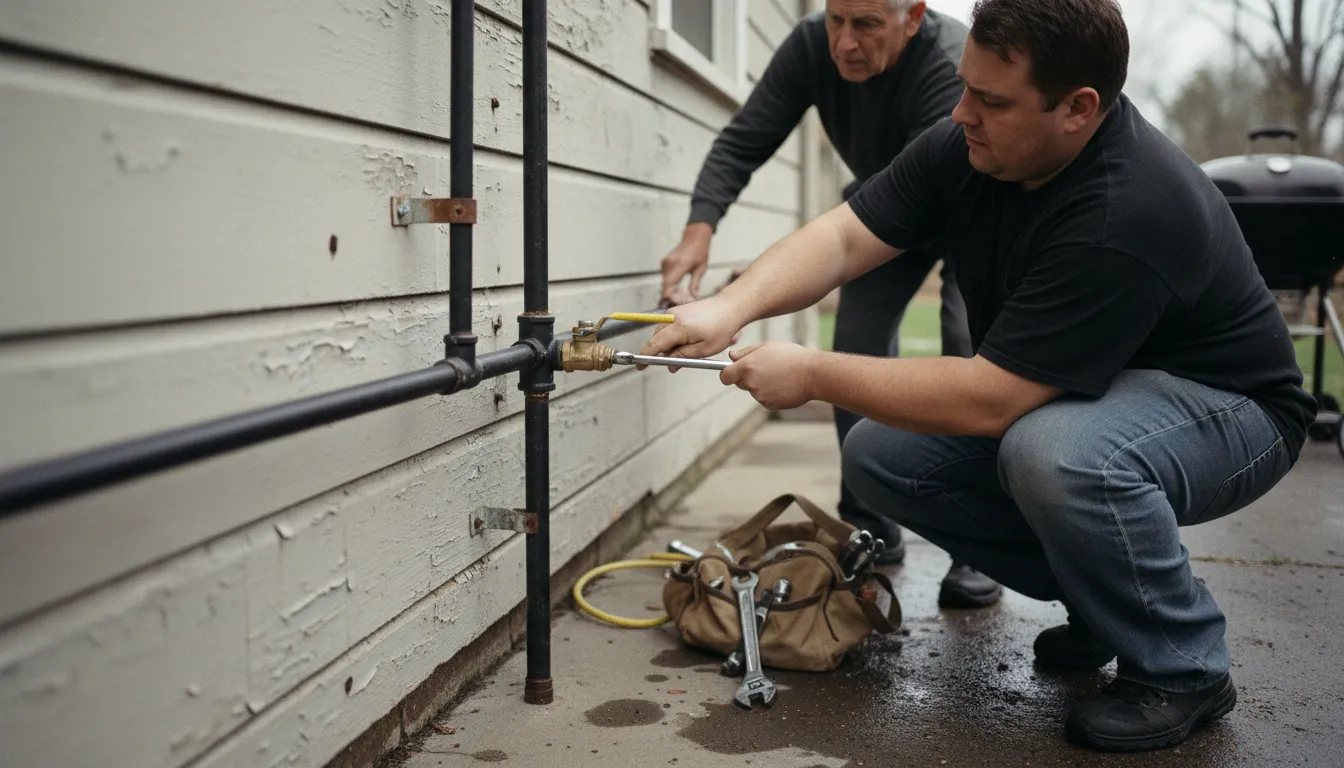
Find the Best Gas Line Plumbing Companies for Your Business
No obligation • Fast responses • Nationwide coverage

Why you can trust Search a Plumber
Search a Plumber is a leading United States resource for finding and evaluating professional plumbing services. Our team researches licensing, experience, and customer feedback to create unbiased, fact-driven overviews. Companies cannot pay to change ratings or placement, ensuring homeowners get trustworthy information.
Search providers near you
Best Gas Line Plumbing Companies in Alaska Ranked
Installing or repairing a gas line is a critical project that directly impacts the safety and functionality of your Alaska home. Whether you're adding a gas stove, furnace, or outdoor fire pit, proper gas line work requires strict adherence to state and local codes to prevent dangerous leaks and ensure reliable operation. This guide provides essential information on the process, regulations, and safety considerations for natural gas and propane projects in Alaska, helping you understand what's involved and how to connect with qualified local professionals.
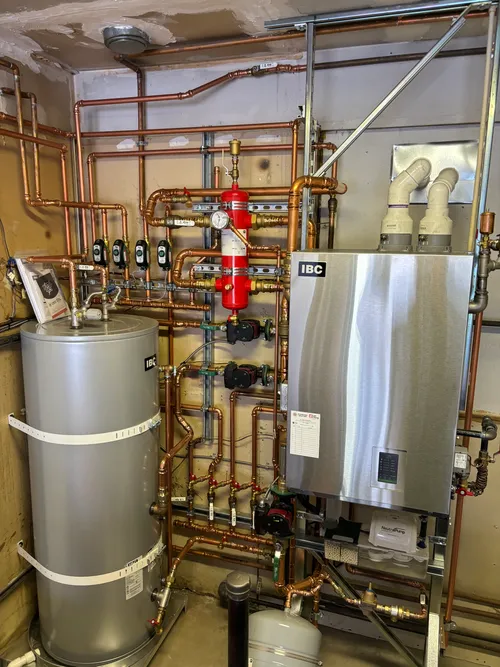
Diamond Heating & AirTemp Alaska
5406 Lake Otis Pkwy, Anchorage, AK 99507
Diamond Heating & AirTemp Alaska is a heating and plumbing service provider located in Anchorage, AK. They offer installation and repair services for water heaters, including tankless models, as well as gas line installation. With over 25 years of experience, the company serves residential and commercial clients, providing solutions such as furnaces, boilers, heat pumps, and indoor air quality products. Their team is trained to handle a variety of heating and plumbing needs to maintain comfort throughout the year.
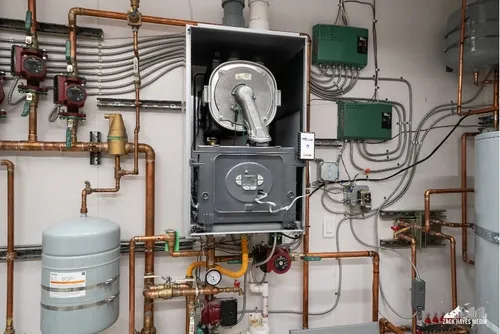
Extreme Heating and Air
16805 Farm Ave, Eagle River, AK 99577
Extreme Heating and Air provides plumbing and HVAC services in Anchorage, AK, and surrounding areas including Eagle River, Big Lake, Girdwood, Palmer, and Wasilla. Their services cover water heater repair and installation, water softener installation, sump pump repair, gas line installation, and toilet repair. The company is known for its certified technicians who stay updated with the latest industry advancements. They demonstrated strong community commitment during the 2018 Anchorage earthquake by working extended shifts to restore heat and hot water. Extreme Heating and Air also offers 24-hour emergency service for urgent needs.
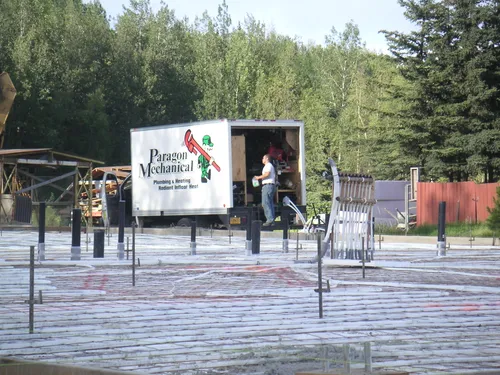
Paragon Mechanical Plumbing & Heating Palmer
1730 Wendy Ct, Palmer, AK 99645
Paragon Mechanical Plumbing & Heating Palmer is a family-owned plumbing and heating contractor serving Anchorage, AK, and the Greater Mat-Su Valley including Wasilla, Palmer, and Eagle River. They provide residential and commercial plumbing services such as water heater repair and installation, water softener installation, gas line installation, boiler installation, and radiant floor heating systems. The company holds an Unlimited Mechanical Administrators License, enabling them to design and install comprehensive plumbing and heating systems for new construction and renovation projects. Paragon Mechanical Plumbing & Heating Palmer has built long-term customer relationships through personalized service and local expertise.
Knik Heating, LLC
4051 Lamont Way, Wasilla, AK 99623
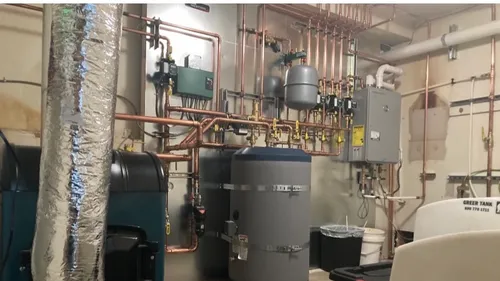
Knik Heating, LLC is a veteran-owned HVAC company based in Wasilla, Alaska, serving Anchorage and the broader Mat-Su Valley, including Eagle River and Talkeetna. They provide a range of services including furnace and air conditioning repair and installation, water heater installation and repair, water softener installation, gas line installation, and water filtration systems. With over 30 years of experience, Knik Heating offers comprehensive heating and cooling solutions, including hydronic heating and emergency 24/7 furnace repairs to ensure home comfort throughout Alaska's cold seasons.
Boiler Man Plumbing & Heating
9161 E Frontage Rd, Palmer, AK 99645
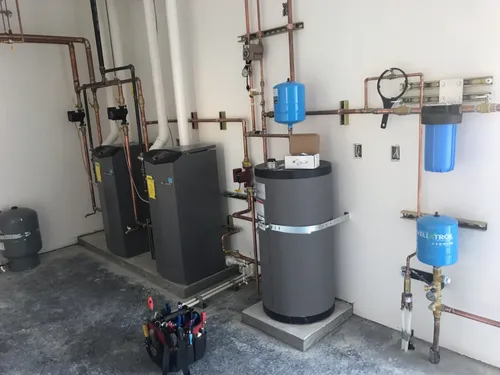
Boiler Man Plumbing & Heating is a family-owned business serving Anchorage, AK, since 2008. They provide a wide range of plumbing and heating services for both residential and commercial customers, including water heater installation and repair, gas line installation, sump pump repair, and boiler system services. The company is experienced in handling new construction, remodels, and additions, with capabilities such as hydronic in-floor heating and gas piping. Led by a team with over 28 years of industry experience, Boiler Man Plumbing & Heating has built a reputation based on quality work and customer referrals. They also offer maintenance plans and emergency heating services.
Understanding Alaska's Gas Line Permit Requirements
In Alaska, nearly all gas line installation and repair work requires a permit and subsequent inspection. This is a non-negotiable safety requirement enforced by local municipalities. The permit process ensures the work is planned and executed according to the Alaska State Plumbing Code and local amendments, which are designed to protect your home from the risks of gas leaks, fire, and carbon monoxide poisoning.
You will typically need a permit for:
- Adding, altering, or repairing any gas piping between the meter and an appliance.
- Installing a new gas piping system.
- Installing or altering gas venting systems 1.
Local Authority is Key: While the state provides a code framework, your local city or borough (e.g., Anchorage, Palmer, Fairbanks) has the final authority. They issue permits, conduct plan reviews, and perform the mandatory inspections. Always check with your local building department for their specific application forms, fees, and any unique requirements, such as needing a Mechanical Engineer's review for large commercial projects 2.
Who Can Perform Gas Line Work in Alaska?
The rules on who can legally perform gas line work are clear and safety-focused.
- Licensed Professionals: For guaranteed compliance and safety, hiring a licensed plumber or gas fitter is the standard and recommended path. These professionals are trained in code requirements, proper installation techniques, and safety testing.
- Homeowner Exemption: Alaska does allow homeowners to perform gas line work on their own primary residence without holding a professional license. However, this comes with significant caveats. If you sell the home within two years of completing the work, the state may investigate to ensure it was done to code. Furthermore, the work must still pass all permit and inspection requirements. For most homeowners, the complexity and risk involved make hiring a licensed professional the wisest choice.
The Step-by-Step Process for a Gas Line Project
A successful gas line installation follows a meticulous process from planning to final approval.
1. Planning and Design
This initial phase is crucial. It involves determining the route from the gas meter or propane tank to the new appliance, calculating the total gas demand (BTU/h) of all appliances on the line, and sizing the pipe diameter accordingly (common sizes are 1/2" or 3/4" for residential lines). The plan must account for proper clearances from electrical lines, sewer pipes, and other utilities 3.
2. Securing Permits and Utility Locates
Before any digging, you must submit your plans to the local building department and pay the permit fee. If your project involves work in a public right-of-way (like crossing a sidewalk or driveway to reach a detached garage), you may also need a permit from the Alaska Department of Transportation 4 5. Always call 811 to have all public underground utilities marked before excavation begins.
3. Installation
The installation involves trenching (for underground lines) or securing pipes along joists and walls (for indoor lines). Pipes must be properly supported-typically every 6 to 10 feet-to prevent stress and sagging. All connections use approved pipe thread sealant or fittings designed for gas. Special attention is paid to burial depth; for example, steel pipe generally must be buried at least 18 inches deep to protect it from damage and frost 6.
4. Pressure Testing and Leak Checking
This is the most critical safety step. The installed line is pressurized with air or an inert gas to a specified test pressure (e.g., 10 psi for 15 minutes for underground steel pipe) and monitored for any pressure drop, which indicates a leak 7. After passing the pressure test, a final leak check is performed on all joints using a soapy water solution-never an open flame. Bubbles forming indicate a leak that must be repaired 8.
5. Final Inspection
Once the work is complete and has passed the installer's tests, you must schedule a final inspection with the local building department. The inspector will verify the installation against the permitted plans and code requirements. Only after receiving this final sign-off should the gas utility or propane company be contacted to activate the line 9.
Find the perfect gas line plumbing companies for your needs
Get personalized recommendations and expert advice
Safety Considerations: Non-Negotiables for Alaska Homes
Gas line work is inherently hazardous. Adhering to these safety rules is paramount:
- Carbon Monoxide Detectors are Essential: Alaska code requires the installation of carbon monoxide (CO) detectors in homes with fuel-burning appliances or attached garages. This is a lifesaving device that should be installed on every level of your home.
- No Open Flame Testing: Using a match or candle to check for gas leaks is extremely dangerous and can cause an explosion. Always use the approved soapy water bubble test 10.
- Propane (LP Gas) Specifics: Liquid propane is heavier than air and can pool in low areas. For this reason, Alaska code specifically prohibits the installation of propane appliances in pits or basements where the gas could accumulate to dangerous levels 11.
- Use Licensed Professionals: The safest way to ensure all these safety protocols are followed is to hire a licensed, experienced professional familiar with Alaska's unique conditions and codes.
Cost Factors for Gas Line Projects in Alaska
Costs can vary widely based on the project's scope and local conditions. Key factors include:
- Length of Run: The primary cost driver is the linear footage of pipe needed.
- Installation Complexity: Trenching through rocky soil, permafrost, or under concrete driveways significantly increases labor and equipment costs.
- Materials: The type of pipe (e.g., corrugated stainless steel tubing (CSST), black iron, or polyethylene for underground) and the number of fittings and shut-off valves required.
- Permits and Inspections: Local municipality fees for plan review, permits, and inspections add to the total project cost.
As a rough estimate, material and labor costs for a new gas line installation in Alaska can range from $15 to $25 or more per linear foot, with simpler, shorter runs on the lower end and complex, long trenches on the higher end 12. This estimate does not include appliance hookup fees or any landscaping repair needed after trenching. Always obtain detailed, written estimates from several licensed contractors.
Frequently asked questions
Sources
Footnotes
-
WHEN DO I NEED A PERMIT? A HOMEOWNER'S GUIDE - https://www.palmerak.org/media/21576 ↩
-
Permit requirements. | Code of Ordinances | Anchorage, AK - https://library.municode.com/ak/anchorage/codes/code_of_ordinances?nodeId=TIT23BUCO_CH23.10ANADCO2018ED_S104PERE_23.10.104.14.9SURE&showChanges=true ↩
-
Natural Gas Line Installation: A Step-by-Step Guide - Super Brothers - https://www.superbrothers.com/natural-gas-line-installation-a-step-by-step-guide/ ↩
-
- Accommodation and Utility Permits - https://dot.alaska.gov/stwddes/dcsrow/assets/pdf/utility/22/ch3.pdf
-
- Accommodation and Utility Permits - https://dot.alaska.gov/stwddes/dcsrow/assets/pdf/utility/ch3.pdf
-
Gas Line Installation: What You Need to Know - https://www.pasoroblesheating.com/gas-line-installation-what-you-need-to-know-before-starting-your-project/ ↩
-
ENSTAR Natural Gas Company - https://www.enstarnaturalgas.com/wp-content/uploads/2023/03/SL-APP-2023.pdf ↩
-
Frequently Asked Questions - CivicPlus.CMS.FAQ - https://www.rpvca.gov/faq.aspx?TID=40 ↩
-
WHEN DO I NEED A PERMIT? A HOMEOWNER'S GUIDE - Palmer AK - https://www.palmerak.org/media/21316 ↩
-
Things to Know About Gas Line Installation for Appliances - https://azerplumb.com/things-to-know-about-gas-line-installation-for-appliances/ ↩
-
Plumbing Code - https://labor.alaska.gov/lss/forms/plumbing-stats-regs.pdf ↩
-
How to Install Natural Gas Lines Safely and Correctly - https://bluegasexpress.com/how-to-install-natural-gas-lines/ ↩