Find the Best Drain Cleaning Companies for Your Business
No obligation • Fast responses • Nationwide coverage

Why you can trust Search a Plumber
Search a Plumber is a leading United States resource for finding and evaluating professional plumbing services. Our team researches licensing, experience, and customer feedback to create unbiased, fact-driven overviews. Companies cannot pay to change ratings or placement, ensuring homeowners get trustworthy information.
Search providers near you
Find Drain Cleaning Companies near you
A slow-draining sink, a backed-up toilet, or a foul odor from a floor drain are clear signs it's time for professional drain cleaning. This essential plumbing service goes beyond a simple plunger fix, using specialized tools and techniques to clear stubborn blockages deep within your pipes and restore proper flow. Whether you're a homeowner dealing with a clogged kitchen sink or a business manager facing a sewer line issue, understanding the methods, causes, and costs involved helps you make an informed decision and find the right local professional to solve your drainage problems effectively.
Search providers near you
What is Professional Drain Cleaning?
Professional drain and sewer cleaning is a systematic approach to diagnosing and removing obstructions from your plumbing system. Unlike store-bought chemical cleaners that can damage pipes, licensed plumbers use mechanical and high-pressure water methods to safely clear blockages in everything from individual fixture drains to the main sewer line exiting your property 1. This service is crucial for maintaining the hygiene and functionality of any building, preventing water damage, and avoiding more costly repairs down the line.
The goal is not just to remove the immediate clog but to ensure the entire pipe diameter is clear, allowing wastewater to flow freely to the municipal sewer or your septic system. For complex or recurring issues, professionals often employ video inspection technology to see inside the pipes, providing a definitive diagnosis and targeted solution.
Common Causes of Drain and Sewer Blockages
Understanding what causes clogs is the first step in preventing them. Blockages can occur in any part of the system and vary between residential homes and commercial properties.
In Residential Homes:
- Hair and Soap Scum: The primary culprit in bathroom sinks, showers, and tubs. Hair binds with soap residue, creating a sticky mass that catches other debris.
- Fat, Oil, and Grease (FOG): When poured down a kitchen sink, these liquids solidify inside cool pipes, gradually narrowing the passage until it's completely blocked 2.
- Food Waste: Even with a garbage disposal, items like coffee grounds, eggshells, starchy pasta, and cooking oils can accumulate and cause major kitchen sink clogs.
- Foreign Objects: Flushing "flushable" wipes, paper towels, feminine hygiene products, or excessive toilet paper is a leading cause of toilet and main line blockages.
- Mineral Buildup: In areas with hard water, mineral deposits (scale) can accumulate on pipe walls, reducing diameter and water flow over time.
In Commercial Properties:
- High-Volume FOG: Restaurant kitchens produce significant amounts of cooking grease and food solids, which require regular, professional-grade grease trap and line cleaning to prevent sewer backups 3.
- Debris in Floor Drains: Drains in garages, laundry rooms, or industrial settings can collect dirt, sand, and other particulates that settle and compact.
- Scale and Corrosion: Large buildings with extensive, older piping systems are susceptible to buildup and corrosion that impedes flow.
For Both Home and Business:
- Tree Root Intrusion: This is a major cause of sewer line blockages. Small roots seek out moisture and can infiltrate tiny cracks or loose joints in underground pipes. Once inside, they expand, creating a dense network that catches all waste and can eventually crush the pipe 4.
- Structural Pipe Damage: Shifting soil, age, or poor installation can cause pipes to crack, collapse, or become offset (bellied). These damaged sections naturally collect waste and cause repeated clogs.
Professional Drain Cleaning Methods Explained
Plumbers choose a cleaning technique based on the clog's location, severity, and cause. Here are the primary methods used across the United States.
Drain Snaking (Augering)
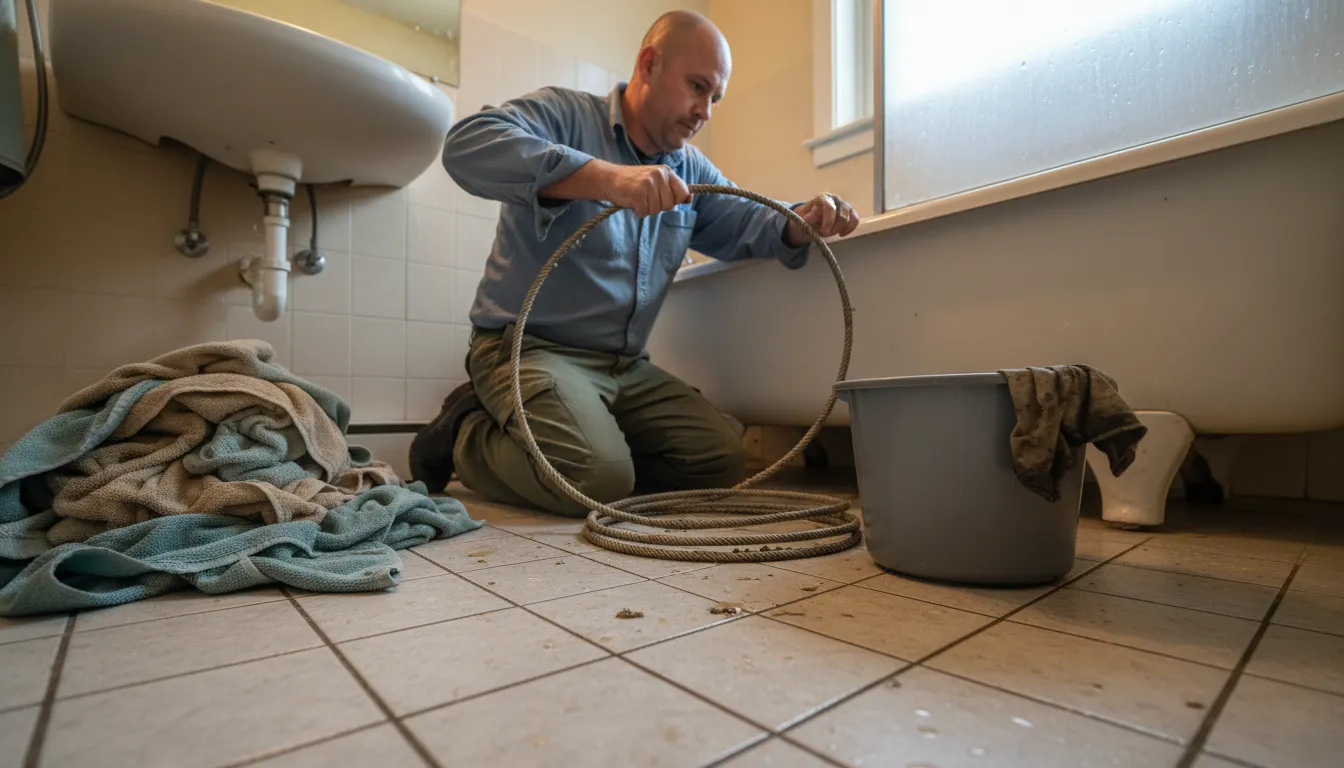
This is the most common and versatile method for tackling household clogs. A plumber inserts a long, flexible metal cable (a "snake" or "auger") into the drain. The cable has a specialized cutting head at the end that breaks apart or hooks the blockage as the plumber manually or mechanically rotates it. Hand-cranked snakes are used for smaller, shallow clogs (like in a sink P-trap), while motorized drain cleaners provide more power and reach for deeper blockages in toilet lines or branch drains.
Best for: Hair and soap clogs in bathroom fixtures, food waste in kitchen sinks, and accessible clogs located close to the drain opening.
Hydro-Jetting (Water Jetting)
Considered the most thorough cleaning method, hydro-jetting uses a specialized machine to pump water through a hose and nozzle at extremely high pressure-often between 1,500 to 4,000 PSI 5. The nozzle is designed to spray jets of water backward and sideways, scouring the entire interior circumference of the pipe. This blasts away grease, sludge, mineral scale, and even tree roots, leaving the pipe clean and restoring its original flow capacity. A professional will typically recommend a video inspection first to ensure the pipes are structurally sound enough to handle the high pressure.
Best for: Severe grease blockages, complete sewer line stoppages, clearing tree roots (as a temporary solution), and preventative maintenance for both residential and commercial lines 6 7.
Video Camera Pipe Inspection
While not a cleaning method itself, video inspection is a critical diagnostic tool. A plumber feeds a high-resolution, waterproof camera attached to a flexible rod into the pipes. The live feed is displayed on a monitor, allowing the technician to see the exact nature, location, and cause of the problem-be it a clog, root intrusion, or a broken pipe 8 9. This technology prevents guesswork, ensures the correct cleaning method is chosen, and provides visual proof of the pipe's condition before and after service.
Best for: Diagnosing mysterious recurring clogs, locating the precise spot of a blockage before excavation, and inspecting the condition of pipes during a home purchase or for preventative maintenance.
Find the perfect drain cleaning companies for your needs
Get personalized recommendations and expert advice
Drain Cleaning Costs: Residential vs. Commercial
The price for professional drain clearing services in the U.S. varies widely based on the job's complexity, the method required, your location, and whether the property is residential or commercial. Commercial services often start at a higher baseline due to larger, more complex plumbing systems and the potential need for after-hours service to avoid disrupting business operations 10 11.
The following table provides estimated cost ranges for common drain and sewer cleaning services as of 2025/2026. These are national averages, and your final price will depend on local rates and the specific details of your situation 12.
| Service Type | Estimated Residential Cost | Estimated Commercial Cost |
|---|---|---|
| Basic Drain Snaking (per fixture) | $100 - $275 | Starts around $300+ |
| Hydro-Jetting | $300 - $800+ | $300 - $800+ (often higher due to larger scale) |
| Video Camera Inspection | $100 - $300 | Often included in complex jobs; standalone service can be higher |
| Main Sewer Line Cleaning | $200 - $600+ | Varies widely based on scope, access, and pipe diameter |
| Emergency/After-Hours Service Fee | Additional $75 - $150+ | Higher additional fees are common for business calls |
Factors Influencing Cost:
- Severity and Location: A simple sink clog is less expensive than a completely blocked main sewer line located 10 feet underground.
- Accessibility: Easy access to a cleanout port saves time and money. If a plumber has to remove a toilet or excavate to reach the line, costs increase.
- Time of Service: Standard business hour appointments are most affordable. Emergency calls on nights, weekends, or holidays incur premium service fees 13 14.
- Geographic Region: Labor and operational costs differ between urban, suburban, and rural areas.
Maintaining Clear Drains: Prevention Tips
Prevention is always more affordable than emergency cleaning. Here are practical steps to keep your drains flowing freely:
- Use Drain Guards: Install strainers in all sink and shower drains to catch hair and food particles.
- Dispose of Grease Properly: Never pour cooking oil or grease down the drain. Let it cool and solidify, then scrape it into the trash.
- Be Mindful of What You Flush: Only human waste and toilet paper should go in the toilet. Even products marketed as "flushable" wipes do not break down like toilet paper and are a major cause of blockages 15.
- Run Hot Water Regularly: After using the garbage disposal or washing greasy pans, run hot water for a minute to help move residues through the pipes.
- Schedule Preventative Maintenance: For older homes or properties with large trees near sewer lines, consider scheduling a professional video inspection and cleaning every 18-24 months as preventative maintenance.
Frequently asked questions
Sources
Footnotes
-
8 Common Drain Cleaning Myths Debunked - https://www.brothersplumbing.ca/blog/general-category/8-common-drain-cleaning-myths-debunked/ ↩
-
Top 10 Causes of Home Plumbing Blockages & How to Fix Them - https://total-uc.com/causes-of-home-plumbing-blockages/ ↩
-
Drain Cleaning for Different Types of Properties - https://peerlessplumbingrepipes.com/blog/drain-cleaning-for-different-types-of-properties/ ↩
-
Understanding Drain Blockages: Causes and Solutions - https://www.freedom-plumbing.com/blog/understanding-drain-blockages-causes-and-solutions ↩
-
Proven Sewer Pipe Cleaning Methods in Independence - Wilson Plumbing - https://www.wilsonplumbingandheating.com/post/sewer-pipe-cleaning-methods ↩
-
Understanding the Different Types of Drain Cleaning - Zeek Plumbing - https://zeekplumbing.com/understanding-the-different-types-of-drain-cleaning/ ↩
-
Which Methods Are Most Effective For Drain Cleaning? - https://www.benjaminfranklinplumbing.com/ann-arbor/blog/2025/november/which-methods-are-most-effective-for-drain-cleaning/ ↩
-
How Professional Plumbers Clean Your Drain: A Step-by-Step Guide - https://www.poolesplumbing.com/blog/how-professional-plumbers-clean-your-drain/ ↩
-
Common Drain Cleaning Techniques and Their Benefits - https://www.apollosewerandplumbing.com/drain-cleaning-techniques-and-benefits ↩
-
Average Cost of Drain Cleaning: What to Expect? - https://americanhomewater.com/average-cost-of-drain-cleaning/ ↩
-
How Much Does Drain Cleaning Cost? A Guide - https://cottrellplumbingheatingandair.com/how-much-does-drain-cleaning-cost-a-guide/ ↩
-
How Much Does Drain Cleaning Cost? - https://www.powerplumbingtx.com/how-much-does-drain-cleaning-cost/ ↩
-
How Much Does Drain Cleaning Cost? (2025 Prices) - https://stellarplumbingaz.com/blog/drain-cleaning-service-price/ ↩
-
How Much Does Drain Cleaning Cost? - CMW Plumbing - https://cmwplumbingbg.com/drain-cleaning-cost/ ↩
-
4 reasons why your drains may become blocked - Plumbcare.com - https://www.plumbcare.com/blog/2018/06/4-reasons-why-your-drains-may-become-blocked ↩