Find the Best Water Heater Repair Companies for Your Business
No obligation • Fast responses • Nationwide coverage

Why you can trust Search a Plumber
Search a Plumber is a leading United States resource for finding and evaluating professional plumbing services. Our team researches licensing, experience, and customer feedback to create unbiased, fact-driven overviews. Companies cannot pay to change ratings or placement, ensuring homeowners get trustworthy information.
Search providers near you
Best Water Heater Repair Companies in Rhode Island Ranked
A malfunctioning water heater disrupts daily life, leaving you without hot showers, clean dishes, or sanitized laundry. In Rhode Island, where hard water and seasonal temperature swings can strain your system, timely and professional repair is essential for comfort, safety, and preventing costly water damage. This guide provides Rhode Island homeowners with clear, practical information on common water heater problems, repair processes, and costs, helping you make informed decisions and connect with qualified local specialists.
Common Water Heater Problems in Rhode Island Homes
Water heater issues in Rhode Island typically fall into two main categories based on the unit's fuel source: gas or electric. Understanding the common symptoms for each type is the first step in diagnosing a problem.
Gas Water Heaters: These units often signal trouble through a lack of hot water, discolored or smelly water, strange noises (like rumbling or popping), or visible signs like a pilot light that won't stay lit or soot around the burner assembly. A frequent culprit is a faulty thermocouple, a safety device that shuts off the gas if the pilot light goes out. Other common issues include a clogged burner orifice, a failing gas control valve, or problems with the venting system, which are critical to address due to the risk of carbon monoxide.
Electric Water Heaters: Problems with electric models usually manifest as no hot water, lukewarm water, or water that runs hot but quickly turns cold. These symptoms often point to failed heating elements (upper or lower), malfunctioning thermostats, or a tripped high-temperature cutoff switch. Sediment buildup, common in areas with hard water, can also cause rumbling noises and reduce heating efficiency by insulating the elements from the water.
The Professional Repair Process: What to Expect
When you hire a licensed Rhode Island plumber for water heater service, they follow a systematic process to ensure a safe, effective, and lasting repair. Here's a typical sequence:
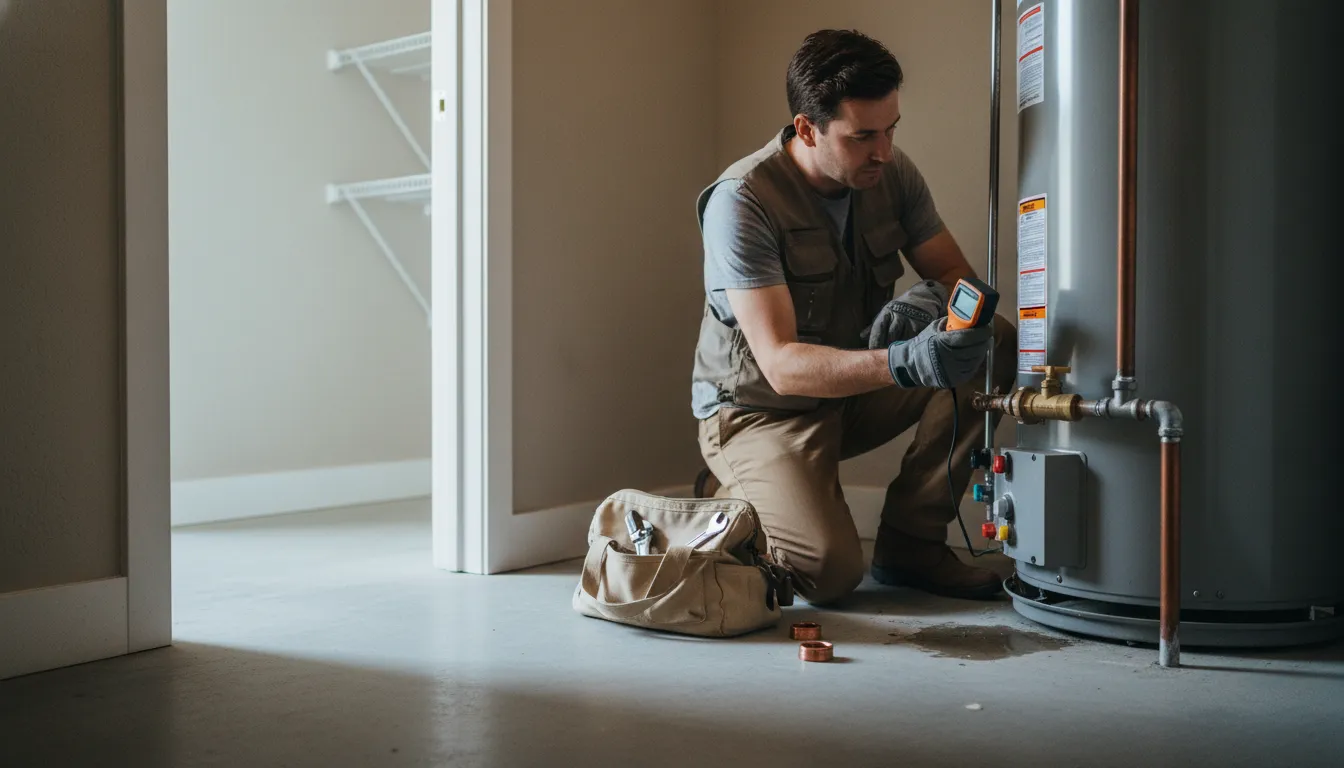
- Diagnosis & Safety Check: The technician will first discuss the symptoms with you, then perform a visual inspection. They will check for leaks, listen for unusual sounds, and test the water temperature. Crucially, they will shut off the gas supply or the dedicated electrical circuit breaker to the unit before any hands-on work begins.
- Component Testing & Access: Using specialized tools like a multimeter, the plumber will test components such as thermostats, heating elements, or the gas valve to pinpoint the exact faulty part. For electric heaters, this involves removing access panels and insulating blankets. For gas units, it may involve inspecting the burner assembly and pilot assembly.
- Repair or Replacement: Once the problem is identified, the technician will replace the defective part. This could involve installing a new heating element, thermostat, thermocouple, gas control valve, or pressure relief valve. All work is performed according to local Rhode Island plumbing codes and manufacturer specifications.
- System Testing & Verification: After the repair, the power or gas is restored, and the unit is powered on. The plumber will verify that the water heats correctly, check for any leaks at new connections, and ensure all safety features are operational. For gas units, this includes verifying proper combustion and venting.
- Cleanup & Explanation: The work area will be cleaned up, and the old parts are typically removed. A reputable professional will explain what was done, offer maintenance tips, and provide you with documentation for the service.
Find the perfect water heater repair companies for your needs
Get personalized recommendations and expert advice
Understanding Repair Costs in Rhode Island
Repair costs in Rhode Island generally align with national averages, with the final price depending on the specific issue, the cost of the replacement part, and the labor rates of the plumbing professional. Minor repairs often cost less than $400, while more complex fixes can range higher. 1 2
Here is a breakdown of typical cost ranges for common water heater repairs in Rhode Island, including parts and labor:
| Repair Type | Typical Cost Range (Parts & Labor) |
|---|---|
| Thermostat replacement | $150 - $350 |
| Heating element replacement (electric) | $150 - $350 |
| Gas control valve replacement | $300 - $550 |
| Pilot light or thermocouple fix (gas) | $120 - $325 |
| Anode rod replacement | $150 - $500 |
| Tank flushing (maintenance) | $75 - $275 |
| Minor leak repair (valve/fittings) | $150 - $600 |
Source: Compiled from industry cost guides and local provider estimates. 3
It's important to note that if your water heater is leaking from the tank itself (not from a valve or pipe connection), the tank is likely corroded and cannot be reliably repaired. In this case, a full replacement is necessary. The cost for a new water heater installed in Rhode Island typically ranges from $800 to $2,500, depending on the unit's type, capacity, and efficiency. 4 5
When to Repair vs. Replace Your Water Heater
Making the decision between a repair and a full replacement involves considering the age of your unit, the cost of the repair, and its overall condition.
- Consider Repair If: The unit is less than 10 years old, the repair is minor (like a thermostat or element), and the cost is reasonable (often cited as less than 50% of the cost of a new installation). Regular maintenance, like annual flushing, can extend the life of a relatively young unit. 6 7
- Consider Replacement If: The water heater is over 10-12 years old, the tank itself is leaking (indicating internal corrosion), the repair is major and costly (like replacing the tank or a major internal component), or you are experiencing recurring problems. Upgrading to a newer, more energy-efficient model can also provide long-term savings on utility bills.
Maintaining Your Water Heater for Longevity
Proactive maintenance is the best way to avoid unexpected breakdowns and extend the service life of your water heater, whether it's gas or electric.
- Annual Flushing: Draining a few gallons from the tank once a year helps remove sediment buildup, which improves efficiency, reduces noise, and prolongs the life of heating elements and the tank lining.
- Temperature & Pressure Relief Valve Test: Lift the test lever on the T&P valve briefly once a year to ensure it operates freely and allows water to discharge. This is a critical safety device.
- Anode Rod Inspection: The sacrificial anode rod protects the tank from corrosion. Have a professional inspect it every 3-5 years and replace it if it's heavily corroded.
- Visual Checks: Periodically look for signs of moisture, rust, or corrosion on the tank, pipes, and fittings. For gas units, ensure the area around the burner is free of dust and debris, and check that the vent pipe is securely attached.
Safety First: Gas vs. Electric Considerations
Safety is paramount when dealing with water heaters.
- Gas Water Heater Safety: Be aware of the smell of natural gas (like rotten eggs) or signs of improper combustion, such as soot or a yellow, lazy flame instead of a crisp blue one. These can indicate a gas leak or carbon monoxide risk. Always ensure the unit is in a well-ventilated area and that the exterior vent pipe is clear. Installing a carbon monoxide detector near the unit is highly recommended. 8 9
- Electric Water Heater Safety: Never attempt to work on an electric water heater without first shutting off power at the circuit breaker. Water and electricity are a dangerous combination. Be aware that even with the power off, components inside the unit can retain a charge. 10
Frequently asked questions
Sources
Footnotes
-
Water Heater Repair Cost 2026: Prices, Fix Types & Tips - Modernize - https://modernize.com/plumbing/water-heaters/repair-cost ↩
-
How much does water heater repair cost in 2024? - Yelp - https://www.yelp.com/costs/water_heater_repair ↩
-
Cost to Repair a Hot Water Heater [2026 Data] | Angi - https://www.angi.com/articles/how-much-does-it-cost-repair-water-heater.htm ↩
-
Gas vs. Electric Water Heaters: Repair or Replace? - https://kriseservices.com/hot-water-heaters-service-replacement-installations/gas-vs-electric-water-heaters-common-issues-when-to-replace/ ↩
-
How Much Does Water Heater Replacement Cost? [2026 Data] - https://www.angi.com/articles/how-much-does-water-heater-installation-cost.htm ↩
-
Water Heater Replacement vs Repair: Which One Is Right for ... - https://www.trianglerepairgroupnc.com/water-heater-replacement-vs-repair-which-one-is-right-for-you ↩
-
How Much Does It Cost to Repair a Water Heater in Phoenix? - https://phoenixplumbanddrain.com/how-much-does-it-cost-to-repair-a-water-heater/ ↩
-
Water Heater Repair: Gas vs. Electric - McQuillan Bros - https://mcquillanbros.com/blog/twin-cities-water-heater-woes-solved-gas-vs-electric-repair-differences/ ↩
-
Gas vs Electric Water Heaters | A. O. Smith - https://www.hotwater.com/info-center/gas-vs-electric-water-heater.html ↩
-
Diagnose and Fix Your Electric Water Heater - https://www.youtube.com/watch?v=fpjydoe6sIg ↩