Find the Best Water Heater Repair Companies for Your Business
No obligation • Fast responses • Nationwide coverage

Why you can trust Search a Plumber
Search a Plumber is a leading United States resource for finding and evaluating professional plumbing services. Our team researches licensing, experience, and customer feedback to create unbiased, fact-driven overviews. Companies cannot pay to change ratings or placement, ensuring homeowners get trustworthy information.
Search providers near you
Best Water Heater Repair Companies in Connecticut Ranked
A malfunctioning water heater disrupts daily life, turning simple tasks like showering or washing dishes into frustrating chores. In Connecticut, where winters can be harsh, a reliable hot water supply is essential for comfort and sanitation. Professional water heater repair addresses common issues like no hot water, strange noises, or leaks, ensuring your system operates safely and efficiently. This guide provides Connecticut homeowners with practical information on common problems, repair processes, and cost considerations to help you make informed decisions and connect with qualified local specialists.
Common Water Heater Problems and Their Causes
When your water heater fails, it typically presents one of a few clear symptoms. Understanding the likely cause behind these issues is the first step toward a solution.
- No Hot Water: This is the most urgent problem. In gas units, the culprit is often a faulty pilot light, a worn-out thermocouple, or a malfunctioning gas control valve. For electric models, a tripped circuit breaker, a failed heating element (upper or lower), or a bad thermostat are common causes.
- Insufficient Hot Water: If you're running out of hot water faster than usual, sediment buildup is a frequent offender. Over time, minerals settle at the bottom of the tank, insulating the water from the heat source and reducing capacity. A broken dip tube in gas units or a failing lower heating element in electric units can also cause this issue.
- Strange Noises: Rumbling, popping, or hissing sounds are almost always a cry for help from a sediment-filled tank. The sediment overheats and hardens, creating noise and reducing efficiency. In electric units, hissing can also indicate mineral deposits calcifying directly on the heating elements.
- Leaking Water: Not all leaks are created equal. Leaks from pressure relief valves, drain valves, or pipe connections are often repairable. However, water leaking from the tank itself usually signals internal corrosion and means the entire unit needs to be replaced.
Gas vs. Electric Water Heaters: Key Repair Differences
The type of water heater in your Connecticut home significantly impacts the repair approach, safety considerations, and cost.
| Feature | Gas Water Heater | Electric Water Heater |
|---|---|---|
| Common Failures | Pilot light, thermocouple, burner assembly, gas control valve. | Heating elements, thermostat, high-limit switch, circuit breaker. |
| Repair Complexity | More complex. Involves gas lines, combustion, ventilation, and rigorous safety checks. Always requires a licensed professional. | Generally simpler. Involves electrical components and can often be completed faster with standardized parts. |
| Primary Safety Risks | Gas leaks, improper ventilation leading to carbon monoxide poisoning, combustion issues. | High-voltage electrical shock during diagnosis or repair. |
| Typical Lifespan | 8 to 12 years with proper maintenance 1. | 10 to 15 years with proper maintenance 1. |
Gas Unit Repairs: These are inherently more complex due to the involvement of natural gas or propane. A professional will not only fix the immediate issue-like relighting a pilot or replacing a thermocouple-but must also perform comprehensive safety inspections to check for gas leaks and ensure proper exhaust venting to prevent carbon monoxide hazards 2 3. This added complexity often influences the repair cost and timeline.
Electric Unit Repairs: While still a job for a professional, electric water heater fixes are often more straightforward. The components, like heating elements and thermostats, are typically inexpensive and easy to access. The critical risk here is electrical, requiring the technician to safely disconnect power and diagnose the high-voltage circuit 4.
The Professional Repair Process: What to Expect
When you contact a specialist for water heater service in Connecticut, a standard process ensures a thorough and safe resolution.
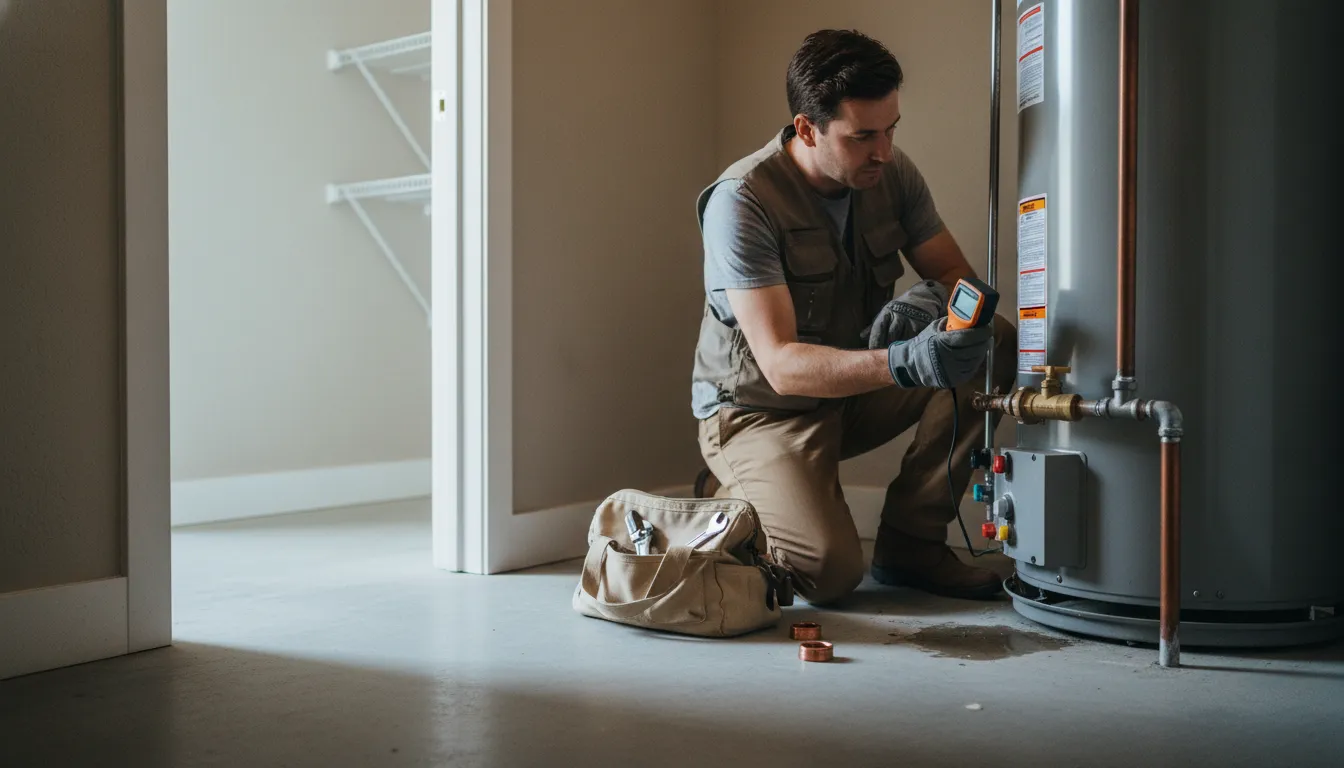
- Diagnosis: The technician will start by asking about the symptoms. They will then perform a series of tests, which may include checking the unit's power source (gas valve or circuit breaker), testing components with a multimeter, inspecting for leaks, and assessing the age and condition of the tank.
- Recommendation & Quote: After identifying the problem, the professional will explain the necessary repairs, provide a clear cost estimate for parts and labor, and discuss your options. They should advise if a repair is cost-effective or if replacement is a smarter long-term investment based on the unit's age and condition.
- Repair Execution: For repairs, the technician will obtain any necessary parts and complete the work. This could involve draining the tank to replace a heating element or dip tube, swapping out a gas control valve, or flushing sediment from the tank. All work will comply with Connecticut building and safety codes.
- Testing & Safety Check: Once repaired, the system will be restored to operation and thoroughly tested. For gas units, this includes checking for gas leaks and verifying proper combustion and ventilation. The technician will ensure you have a full recovery of hot water and that all safety devices are functioning correctly.
Find the perfect water heater repair companies for your needs
Get personalized recommendations and expert advice
Understanding Repair Costs in Connecticut
The cost to fix a water heater in Connecticut depends on the specific problem, the type of unit (gas or electric), the cost of replacement parts, and local labor rates. Below is a general overview of common repair costs, which align with both state and national averages 5 6 7.
| Repair Type | Typical Cost Range |
|---|---|
| Thermostat Replacement | $150 - $200 |
| Heating Element Replacement (Electric) | $200 - $300 |
| Pilot Light/Thermocouple Repair (Gas) | $120 - $200 |
| Gas Control Valve Replacement (Gas) | $300 - $500 |
| Tank Flush (Sediment Removal) | $110 - $200 |
| Minor Leak Repair (Valves, Connections) | $150 - $400 |
When to Repair vs. Replace: A common rule of thumb is to consider replacement if the repair cost exceeds half the price of a new unit, or if your water heater is near or beyond its typical lifespan (8-12 years for gas, 10-15 years for electric) 8 9. An older unit with one major failure is likely to experience another soon, making replacement a more reliable and cost-effective choice.
Maintaining Your Water Heater for Longevity
Proactive maintenance can prevent many common repairs, improve efficiency, and extend the life of your unit.
- Annual Tank Flushing: Draining a few gallons from the tank once a year helps remove sediment buildup, which is a leading cause of inefficiency, noise, and failure 10.
- Temperature Setting: Keep your thermostat set to 120°F. This is hot enough for household needs, reduces energy use, and minimizes mineral buildup and scalding risk.
- Anode Rod Inspection: The anode rod sacrifices itself to protect your tank from corrosion. Have a professional inspect it every 3-5 years and replace it if it's heavily corroded.
- Visual Checks: Periodically look for signs of moisture, rust, or corrosion on the tank, valves, and connections. Listen for unusual noises during operation.
Choosing a Qualified Repair Specialist in Connecticut
For your safety and the quality of the repair, it's crucial to hire a qualified professional. Look for a licensed plumber who is insured and has specific experience with water heater systems. They should be able to clearly explain the problem, provide a written estimate, and offer a warranty on their workmanship. Checking local reviews and asking for references can also provide peace of mind.
Frequently asked questions
Sources
Footnotes
-
Gas Vs Electric Water Heaters: Which Is Better? - Mammoth Plumbing - https://mammothplumbing.com/blog/gas-vs-electric-water-heaters/ ↩ ↩2
-
Water Heater Repair: Gas vs. Electric - McQuillan Bros - https://mcquillanbros.com/blog/twin-cities-water-heater-woes-solved-gas-vs-electric-repair-differences/ ↩
-
Gas Water Heater Repair - How to Spot Issues Early and Get help ... - https://crawfordmech.com/blog/gas-water-heater-repair ↩
-
Electric Water Heater Problems & Fixes | Johnsons HVAC - https://johnsonsheating.com/troubleshoot-your-electric-water-heater/ ↩
-
How Much Does It Cost to Repair a Water Heater? [2025 Data] - https://www.homeadvisor.com/cost/plumbing/repair-a-water-heater/ ↩
-
What Does a Water Heater Repair Cost in Connecticut? - https://thehopecos.com/what-does-a-water-heater-repair-cost-in-connecticut/ ↩
-
What Does a Water Heater Repair Cost in Connecticut? - https://thehopecos.com/what-does-a-water-heater-repair-cost-in-connecticut/ ↩
-
Gas vs. Electric Water Heaters: Repair or Replace? - https://kriseservices.com/hot-water-heaters-service-replacement-installations/gas-vs-electric-water-heaters-common-issues-when-to-replace/ ↩
-
Average Water Heater Repair Costs- Here's the Breakdown - https://dayandnightplumb.com/average-hot-water-heater-repair-costs-heres-the-breakdown/ ↩
-
Water Heater Repair: Common Issues and Solutions - https://sewellplumbingtx.com/2026/01/04/water-heater-repair-common-issues-and-solutions/ ↩