Find the Best Water Heater Installation Companies for Your Business
No obligation • Fast responses • Nationwide coverage

Why you can trust Search a Plumber
Search a Plumber is a leading United States resource for finding and evaluating professional plumbing services. Our team researches licensing, experience, and customer feedback to create unbiased, fact-driven overviews. Companies cannot pay to change ratings or placement, ensuring homeowners get trustworthy information.
Search providers near you
Best Water Heater Installation Companies in Wyoming Ranked
A properly functioning water heater is essential for daily comfort in any Wyoming home. When your unit fails or becomes inefficient, a professional installation or replacement ensures reliable hot water, improved energy efficiency, and compliance with state and local safety codes. This guide provides a detailed overview of what Wyoming homeowners need to know about water heater services, from understanding local regulations and sizing requirements to evaluating fuel types and costs. Use this information to make an informed decision and connect with qualified local professionals for your project.
Understanding Wyoming's Plumbing Codes and Permits
In Wyoming, all water heater installations and replacements must adhere to adopted building codes, which are primarily based on versions of the International Plumbing Code (IPC) and International Mechanical Code (IMC) 1 2. Local jurisdictions, such as counties and cities, adopt and enforce these codes, so requirements can vary slightly. A fundamental rule across the state is that a permit is required for any water heater replacement. In emergency situations where work must be done immediately, the permit application is typically required to be submitted by the next business day.
Key statewide code requirements include:
- Manufacturer Instructions: All units must be listed, labeled, and installed strictly according to the manufacturer's instructions.
- Accessibility: The appliance must be positioned so it can be removed without dismantling permanent parts of the building. If located in an attic, an unobstructed passageway is required.
- Safety Strapping: In areas subject to earthquake loads, water heaters must be securely anchored or strapped to resist movement.
- Expansion Tanks: Modern codes require the installation of an expansion tank on all closed hot water systems to manage thermal expansion and protect the plumbing system 3.
- Drip Pans: Where a leak could cause damage to the structure, a properly drained drip pan is mandatory under the appliance 4.
For gas-fired units, specific requirements for combustion air ventilation and clearance from combustible materials are strictly enforced. In mobile homes, only sealed-combustion or direct-vent gas water heaters are approved for use 5 6.
How to Size Your Water Heater Correctly
Choosing the right size water heater is critical for ensuring you have enough hot water without paying for excess capacity. Sizing is based on peak hour demand, which correlates directly to the number of people in your household 7.
For Traditional Tank Water Heaters:
- 1-2 people: A 30 to 40-gallon tank is typically sufficient.
- 3-4 people: A 40 to 50-gallon tank is the most common size for Wyoming families.
- 5 or more people: Consider a 50 to 80-gallon tank or larger 8.
For Tankless (On-Demand) Water Heaters: Sizing is more complex and is based on the required flow rate in gallons per minute (GPM) and the necessary temperature rise (the difference between incoming groundwater temperature and your desired hot water temperature). A professional will calculate the simultaneous use of fixtures (e.g., shower + dishwasher) to determine the correct unit size for your home 9.
Comparing Fuel Types and Water Heater Technologies
The most common fuel sources for residential water heaters in Wyoming are natural gas and electricity, with availability depending on your location 10. Each option has distinct advantages.
Natural Gas:
- Pros: Generally lower operating costs than standard electric resistance heaters, faster recovery times (heats water more quickly), and often preferred for whole-house heating demands.
- Cons: Higher upfront equipment cost, requires gas line and proper venting, and is not available in all rural areas 11 12.
Electric (Resistance):
- Pros: Lower initial equipment cost, widespread availability, and simpler venting requirements (none required).
- Cons: Higher ongoing energy costs in many areas and slower recovery rates compared to gas 13.
Heat Pump (Hybrid) Water Heaters:
- Pros: These are highly efficient electric units that move heat from the surrounding air into the water, using significantly less electricity than traditional resistance models. They are an excellent choice for spaces with adequate ambient heat.
- Cons: Higher purchase price, require installation in a location that remains in a 40-90°F temperature range year-round, and may need a condensate drain 14.
Propane and Fuel Oil:
- Pros: Viable alternatives in areas without natural gas service. Propane performance is similar to natural gas.
- Cons: Requires on-site fuel storage tank and delivery, with fuel costs subject to market fluctuations 15 16.
Solar Water Heating:
- Pros: Utilizes renewable energy, leading to very low operating costs.
- Cons: High initial investment, dependent on climate and sunlight, and usually requires a conventional backup system.
Federal Energy Efficiency Standards
All new water heaters sold in the U.S. must meet the U.S. Department of Energy's (DOE) updated energy conservation standards. These standards are based on Uniform Energy Factor (UEF) ratings, which measure efficiency more accurately than the old Energy Factor (EF) 17. Higher UEF numbers indicate greater efficiency. The standards have pushed manufacturers to incorporate more efficient technologies. For example, most electric storage water heaters over 55 gallons now utilize heat pump technology to meet the requirements, while gas models often employ more efficient condensing technology 18. When selecting a new unit, comparing the UEF rating is the best way to gauge its operating cost.
Find the perfect water heater installation companies for your needs
Get personalized recommendations and expert advice
Breakdown of Installation and Replacement Costs
The total cost for water heater installation in Wyoming aligns with national averages, varying based on the unit type, size, fuel source, labor, and any necessary upgrades to plumbing, gas lines, or electrical systems. The following ranges include both the equipment and professional installation labor for a standard replacement scenario.
Standard Tank Water Heaters:
- Average Total Cost: $600 - $3,100
- Low-End Simple Replacement: A straightforward swap of an existing electric tank can start around $600.
- Typical 40-Gallon Gas Replacement: A common project often costs approximately $1,650 19 20.
Tankless Water Heaters:
- Average Total Cost: $1,400 - $5,600
- The higher cost is due to more expensive equipment and often more complex installation, which may require upgrading gas lines or electrical service.
Labor Costs: Labor for installing a standard tank-style unit typically ranges from $150 to $450, though this is usually bundled into the total project quote. Complex installations, such as moving the location of the heater or addressing code violations, will increase labor time and cost 21.
Important Note: Always obtain detailed written estimates from multiple licensed, insured, and locally experienced plumbing contractors. A reputable professional will assess your specific situation, account for all local code requirements, and provide a clear breakdown of costs.
The Professional Installation Process
A proper installation by a licensed professional involves several key steps:
- Assessment and Removal: The technician will assess your home's needs, shut off the water and power/gas, drain the old unit, and disconnect it.
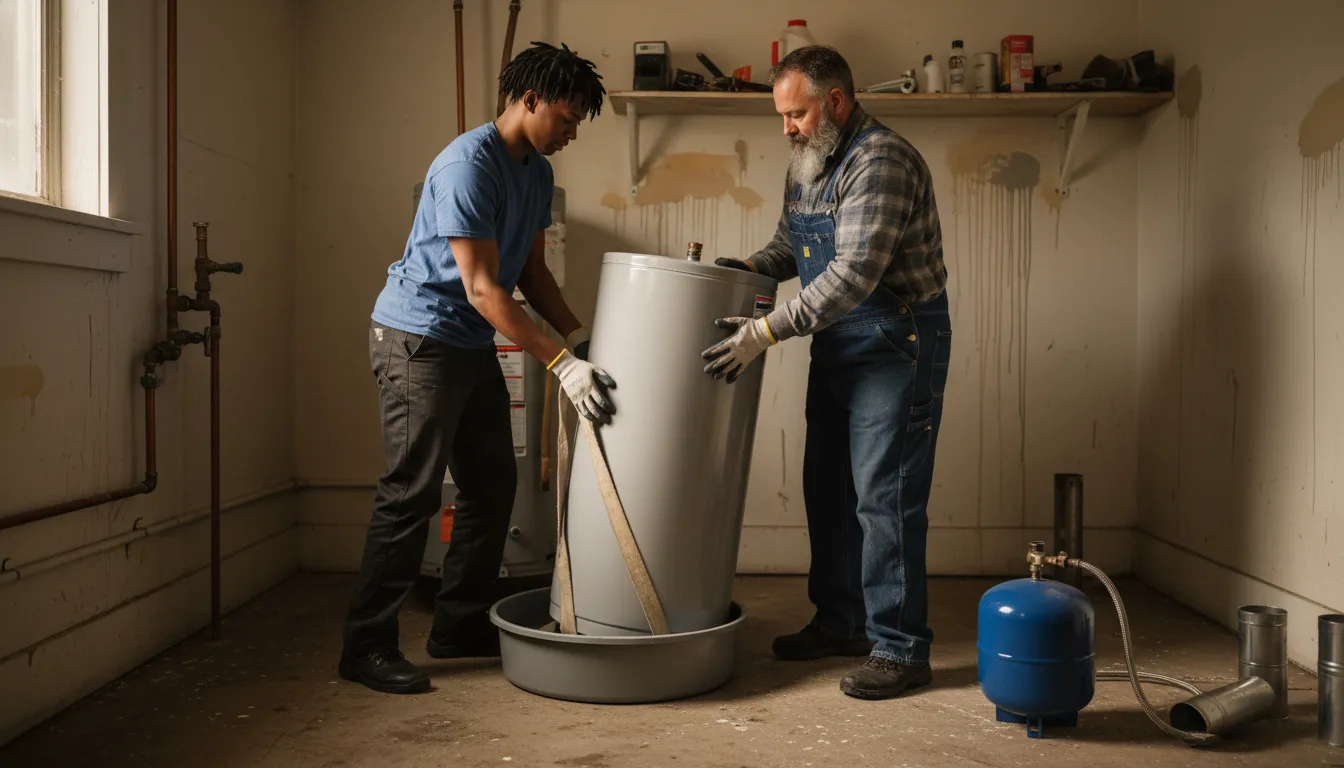
- Code Compliance Preparation: They will prepare the new location, which may involve installing a new drip pan, expansion tank, seismic straps, or updating venting for gas units.
- Installation and Connection: The new water heater is positioned, leveled, and connected to the water supply, fuel source, and venting system per code and manufacturer specs.
- Testing and Inspection: The system is filled, purged of air, and tested for leaks. The burner or elements are activated, and temperature/pressure relief valve operation is verified. The installer will ensure the unit is operating safely and efficiently before cleaning up.
Signs You Need a Replacement
Consider replacing your water heater if you notice:
- Age: Most tank units last 8-12 years. If yours is within or beyond this range, start planning.
- Rusty Water or Tank Corrosion: Discolored hot water or visible rust on the tank or pipes is a major red flag.
- Insufficient Hot Water: Running out of hot water faster than usual indicates a failing heating element or sediment buildup.
- Rumbling Noises: Loud sounds from the tank are caused by sediment hardening on the bottom.
- Leaks: Any moisture or pooling around the base of the tank signifies a failure that requires immediate attention.
- Consistently High Energy Bills: A decline in efficiency will show up as increased heating costs.
Frequently asked questions
Sources
Footnotes
-
Pages - Natrona County - https://www.natronacounty-wy.gov/DocumentCenter/View/9536/Resolution-Adopting-2021-International-Plumbing-Code ↩
-
Wyoming Building Codes- BCAP - https://bcapcodes.org/code-status/state/wyoming/ ↩
-
CHAPTER 5 WATER HEATERS - 2025 PLUMBING CODE OF ... - https://codes.iccsafe.org/content/NYSPC2025P1/chapter-5-water-heaters ↩
-
Chapter 10 Boilers, Water Heaters and Pressure Vessels - https://up.codes/viewer/wyoming/imc-2024/chapter/10/boilers-water-heaters-and-pressure-vessels ↩
-
Furnaces and Hot Water Heaters - Wyoming Renewables - https://wyomingrenewables.org/your-energy/residential-energy/mobile-home-energy/furnaces-and-hot-water-heaters/ ↩
-
010-3 Wyo. Code R. §§ 3-21 - Heaters and Boilers, Installation ... - https://www.law.cornell.edu/regulations/wyoming/010-3-Wyo-Code-R-SSSS-3-21 ↩
-
Guidelines for Sizing a Hot Water Heating System - https://reco-cs.com/guidelines-for-sizing-a-hot-water-heating-system/ ↩
-
What Size Water Heater Do I Need? - Total Home Supply - https://www.totalhomesupply.com/water-heater-sizes ↩
-
What Size Water Heater Do I Need? - Solace Enterprises - https://solace-ent.com/blog/what-size-water-heater-do-i-need/ ↩
-
Understanding Your Energy Consumption and Expenses - https://wyomingrenewables.org/understanding-energy/understanding-your-energy-consumption-and-expenses/ ↩
-
Gas Water Heaters: Natural Gas V. Propane - https://www.uswhpro.com/natural-gas-water-heater-vs-propane-water-heater ↩
-
The Best Fuel Type For Your Water Heater - Brian Wear Plumbing - https://brianwearplumbing.com/the-best-fuel-type-for-your-water-heater/ ↩
-
How to Choose a Water Heater: A Buying Guide - https://www.statewaterheaters.com/info-center/water-heater-buying-guide.html ↩
-
Storage Water Heaters | Department of Energy - https://www.energy.gov/energysaver/storage-water-heaters ↩
-
Water Heater Basics, Part 2: Fueling Options - https://www.browardfactory.com/water-heater-basics-part-2-fueling-options/ ↩
-
Types Of Water Heaters By Power Or Fuel Source - https://www.4fastplumber.com/types-of-water-heaters-by-power-or-fuel-source ↩
-
Consumer Water Heaters - Department of Energy - https://www.energy.gov/eere/buildings/consumer-water-heaters ↩
-
DOE NAECA4 Residential Regulations for Water Heaters - https://www.hotwater.com/info-center/doe-regulations/doe-residential-regulations.html ↩
-
How Much Does Water Heater Replacement Cost? [2026 Data] - https://www.angi.com/articles/how-much-does-water-heater-installation-cost.htm ↩
-
Cost to Replace a 40-Gallon Water Heater in 2025 | Fixr.com - https://www.fixr.com/costs/40-gallon-water-heater ↩
-
How much does water heater installation or replacement cost? - https://homeguide.com/costs/water-heater-installation-cost ↩