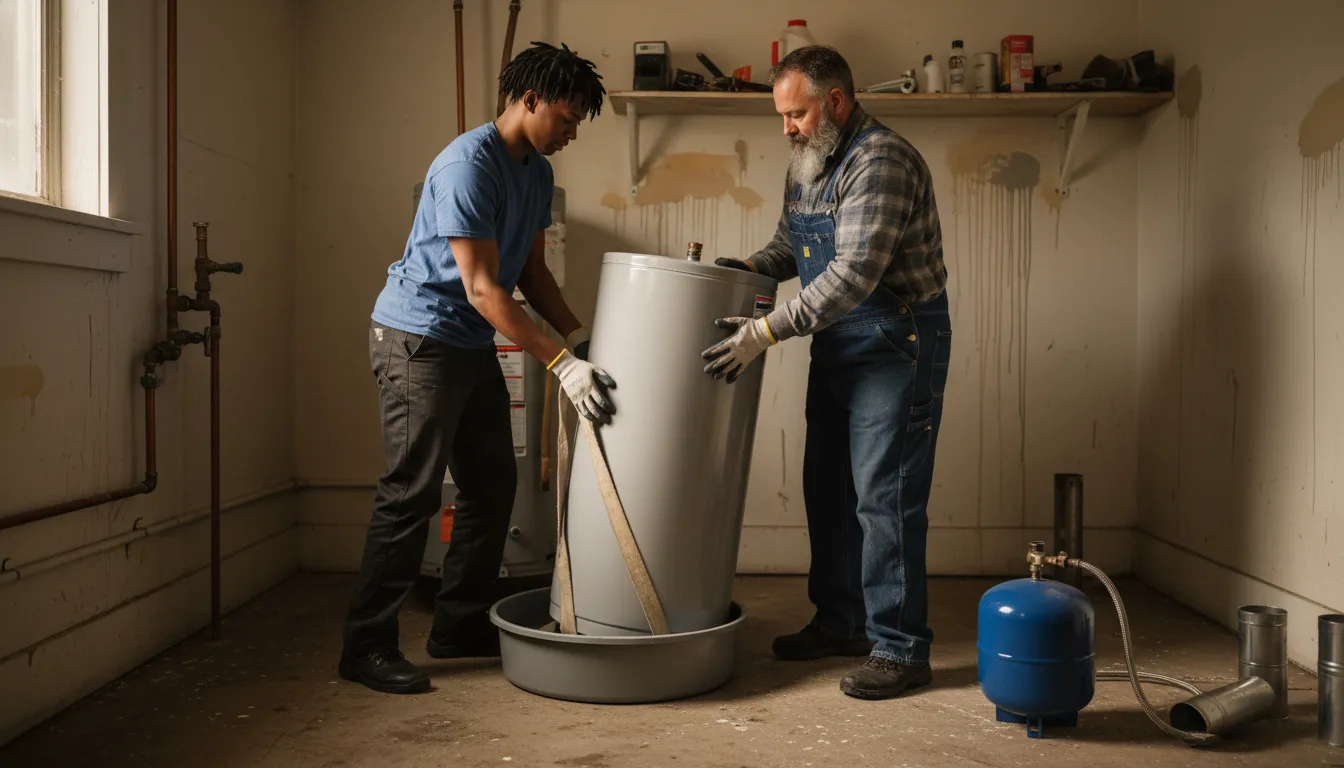
Find the Best Water Heater Installation Companies for Your Business
No obligation • Fast responses • Nationwide coverage

Why you can trust Search a Plumber
Search a Plumber is a leading United States resource for finding and evaluating professional plumbing services. Our team researches licensing, experience, and customer feedback to create unbiased, fact-driven overviews. Companies cannot pay to change ratings or placement, ensuring homeowners get trustworthy information.
Search providers near you
Best Water Heater Installation Companies in Washington Ranked
Choosing a new water heater for your Washington home is a significant decision that impacts your daily comfort, energy bills, and home's safety. Whether you're facing an unexpected failure or planning an upgrade for efficiency, understanding the types of systems available, state-specific codes, and installation requirements is crucial. This guide provides clear, practical information to help you navigate the process, from selecting the right fuel type and size to understanding costs and finding a qualified local professional for the job.
Washington Rooter Sewer & Drain Service LLC
2018 156th Ave NE Suite 100 Bldg. F, Bellevue, WA 98007
Washington Rooter Sewer & Drain Service LLC provides a wide range of plumbing services in Seattle, WA, including drain cleaning, sewer line repair, water heater installation, and hydro jetting. They serve both residential and commercial customers in the Seattle area and surrounding communities such as Kirkland, Woodinville, Redmond, Bellevue, and Kenmore. The company specializes in sewer line repair and replacement using camera-guided inspection technology to diagnose issues accurately. With over 25 years of experience, Washington Rooter is licensed, bonded, and insured, offering professional plumbing solutions for various needs.
Ben’s Plumbing & Drain Cleaning
1141 NW 53rd St, Seattle, WA 98107
Ben's Plumbing & Drain Cleaning is a licensed plumbing and HVAC company serving Seattle, WA. The company offers a wide range of services including plumbing repairs, water heater installation and repair, drain cleaning, sewer line repair with trenchless options, leak detection, and repiping. They use advanced equipment such as drain inspection cameras and video inspection for sewer lines to accurately diagnose and resolve issues. Founded by industry veteran Ben Foster, Ben's Plumbing has over 25 years of experience providing personalized plumbing and HVAC services to both residential and commercial clients in the Seattle area.

Action Craft Experts, Plumbing, Drains, & Water Heaters
Spokane, WA
Action Craft Experts, Plumbing, Drains, & Water Heaters is a locally owned plumbing company serving Spokane, WA, and surrounding areas including Northern Idaho. They provide a wide range of plumbing services for residential, commercial, new construction, and remodeling projects. Their licensed team handles water heater repair and installation, drain cleaning, sewer line repair, leak detection, and gas line installation, ensuring compliance with local codes and safety standards. With over 25 years of experience, they offer expertise in both traditional and tankless water heater systems and maintain an A+ rating with the Better Business Bureau. Action Craft Experts is licensed in Washington and Idaho and supports public works projects as well.
Pioneer Plumbing CDA
Spokane, WA
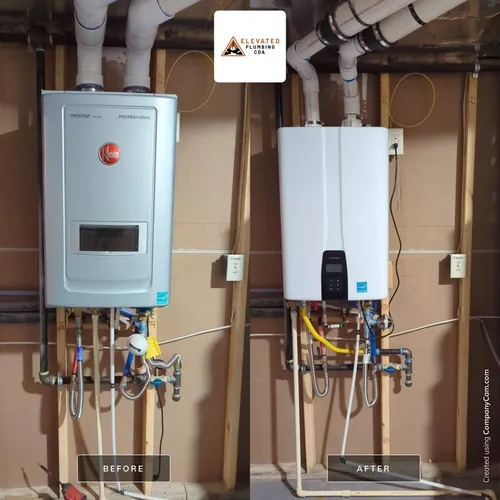
Pioneer Plumbing CDA is a locally run plumbing service operating in Spokane, WA, and the surrounding Coeur d'Alene area. They offer a range of plumbing services including water heater repair and installation, water softener installation, sump pump repair, drain cleaning, leak detection, toilet repair, and garbage disposal repair. The company emphasizes expert diagnostics and solutions aimed at protecting home plumbing systems, with capabilities such as whole home plumbing inspections to identify issues early and improve water quality. Pioneer Plumbing CDA provides transparent pricing and flexible financing options to support customers in managing essential plumbing repairs.
Comfort Heating, Cooling, Electrical & Plumbing
11711 E Trent Ave, Spokane Valley, WA 99206
Comfort Heating, Cooling, Electrical & Plumbing offers plumbing, HVAC, electrical, and water treatment services in Spokane, WA, and nearby areas. They provide water heater repair and installation, as well as water softener installation. With over 30 years of experience serving the region, Comfort Heating, Cooling, Electrical & Plumbing is known for its comprehensive home services and skilled technicians. The company also offers 24/7 emergency service without extra charges for nights or weekends.
Understanding Washington State Energy Code Requirements
Washington has specific regulations governing water heater installations, primarily through the Washington State Energy Code (WSEC). These rules are designed to promote energy efficiency and safety, and they differ based on whether your home is newly constructed or an existing residence.
For new construction projects permitted on or after July 1, 2023, the primary water heating source must be a heat pump system. This means installing either an integrated heat pump water heater (HPWH) or a split-system heat pump 1 2. This code is a forward-looking step to reduce overall energy consumption in the state.
For existing homes, the rules are more flexible. You are generally permitted to replace an existing water heater with a new unit of the same fuel type (e.g., replacing a natural gas tank with a new natural gas tank), provided the new unit's capacity is not greater than the original. However, if the water heater is installed outside the home's conditioned space-such as in an unheated garage, crawlspace, or shed-it must have a system efficiency of 2.0 Uniform Energy Factor (UEF) or better.
Key Installation and Safety Mandates
Beyond energy codes, several universal safety and installation standards apply to all water heater replacements in Washington.
- Seismic Bracing: Due to seismic activity in the region, all water heaters must be anchored with approved seismic bracing. This typically involves two 20-gauge metal straps, one placed on the upper third and one on the lower third of the tank, securely fastened to wall studs to resist earthquake motion.
- Permits: A plumbing permit is almost always required for water heater installation or replacement, especially if the work involves changes to gas lines, electrical connections, or relocation of plumbing vents and supplies 3 4. Your licensed professional will usually handle pulling this permit, which ensures the installation is inspected and meets all code requirements.
- Expansion Tanks and Pressure Relief: On closed water systems (where a check valve, pressure reducer, or backflow preventer is present), a thermal expansion tank is required to accommodate the increased water pressure caused by heating. The temperature and pressure relief (T&P) valve, a critical safety device, must be properly installed and have a discharge pipe directed to within 6-24 inches of the floor 5.
Choosing the Right Fuel Source
The most common fuel sources for residential water heaters in Washington are electricity and natural gas, with propane used in areas without gas mains 6 7.
- Electric Resistance: These are common, straightforward tank-style heaters. They are relatively inexpensive to purchase but often have higher operating costs because they directly convert electricity to heat.
- Natural Gas/Propane: Gas-fired water heaters are popular where gas lines are available. They typically heat water faster and have lower operating costs than standard electric resistance models, though they require proper venting 8 9.
- Heat Pump (Hybrid): This is the most energy-efficient electric option. Instead of generating heat directly, it uses a compressor to move heat from the surrounding air into the water. It can be two to three times more efficient than conventional electric models, leading to significant energy savings, though it has a higher upfront cost and may require installation in a space with adequate air volume and warmer ambient temperatures 10.
- Tankless (Gas or Electric): These units heat water on-demand, eliminating standby energy loss. They provide endless hot water and have a long lifespan but require proper sizing for flow rate and may need upgrades to gas lines or electrical service 11 12.
Find the perfect water heater installation companies for your needs
Get personalized recommendations and expert advice
Sizing Your Water Heater Correctly
Choosing the correct size is essential for ensuring an adequate hot water supply without wasting energy.
For storage tank water heaters, size is measured in gallon capacity. A general guideline is:
- 1-2 people: 30-40 gallon tank
- 3-4 people: 40-50 gallon tank
- 5 or more people: 50-80 gallon tank or a tankless system 13 14 15
Your actual needs depend on peak usage (e.g., multiple showers running simultaneously) and the First Hour Rating (FHR) of the tank, which indicates how many gallons of hot water it can deliver in the first hour of use.
Tankless water heaters are sized by their flow rate (gallons per minute, or GPM). You must calculate the total GPM required if multiple fixtures (shower, dishwasher, sink) could be used at once. For example, a standard shower may use 2.5 GPM, while a kitchen faucet uses 1.5 GPM. A professional can perform a detailed load calculation to recommend the proper unit 16 17 18.
Understanding Installation Costs in Washington
The total cost for a water heater replacement includes the unit itself, labor, materials (piping, valves, strapping), and any permit fees. Costs in Washington can vary based on system type, home accessibility, and necessary upgrades (like electrical or gas line work). The following ranges reflect typical professional installation costs for the unit and labor as of 2025-2026 19.
| Water Heater Type | Typical Installed Cost Range |
|---|---|
| Traditional Tank (Gas or Electric) | $1,200 - $2,500 |
| Heat Pump (Hybrid) | $2,500 - $4,500 |
| Tankless | $2,500 - $5,500 |
Factors influencing cost:
- Unit Efficiency: Higher-efficiency models (higher UEF) cost more upfront but save on utility bills.
- Installation Complexity: Relocating the unit, upgrading electrical service (common for heat pumps or electric tankless), or running new gas lines adds to the cost.
- Disposal: Fees for removing and disposing of the old unit.
- Rebates and Incentives: Always check for available rebates from local utilities, state programs, or federal tax credits for energy-efficient models like heat pump water heaters, which can significantly offset the initial investment 20 21.
The Professional Installation Process
Working with a licensed, bonded, and insured plumbing professional is non-negotiable for safety and compliance. A typical replacement process involves:
- Assessment and Quote: A technician assesses your current setup, discusses your needs, and provides a detailed written estimate.
- Permit Pulling: The professional obtains the necessary permit from your local building department.
- Preparation: The old unit is drained and disconnected. The area is prepared for the new installation.
- Installation: The new water heater is positioned, connected to water, fuel, and venting systems, and secured with seismic straps. Expansion tanks and pressure relief valves are installed as needed.
- Inspection: Once work is complete, the installing contractor will schedule an inspection with the local building official to verify code compliance.
- Final Setup: After passing inspection, the system is activated, and the technician will check for leaks, ensure proper operation, and explain the new system's features to you.
Maintaining Your New Water Heater
Protect your investment and ensure efficiency with simple maintenance:
- Annual Flushing: Sediment buildup in tank-style heaters reduces efficiency and can cause damage. Draining a few gallons from the tank once a year helps clear this out.
- Anode Rod Inspection: The sacrificial anode rod protects the tank from corrosion. Have it checked every 3-5 years and replaced if heavily corroded.
- Temperature Setting: The U.S. Department of Energy recommends a setting of 120°F for optimal efficiency and safety (to prevent scalding).
- Check the T&P Valve: Periodually lift the lever on the temperature and pressure relief valve to ensure it operates freely and water discharges, then let it snap back.
Frequently asked questions
Sources
Footnotes
-
Washington State Energy Code FAQs - https://www.cngc.com/wp-content/uploads/PDFs/energy_choice/washington/Washington-State-Energy-Code-FAQs-V2.pdf ↩
-
Unpacking the New Washington State Energy Code Updates - https://inspirehomes.com/unpacking-the-new-washington-state-energy-code-updates/ ↩
-
WAC 51-56-0500: - | WA.gov - https://app.leg.wa.gov/wac/default.aspx?cite=51-56-0500 ↩
-
Installing a new water heater - King County, Washington - https://kingcounty.gov/en/dept/dph/health-safety/environmental-health/plumbing-gas-piping/installations/installing-new-water-heater ↩
-
Water Heaters - MyBuildingPermit.com - https://mybuildingpermit.com/sites/default/files/TS_07_Water%20Heaters_2021_Final.pdf ↩
-
Washington: house heating fuel share by type - Statista - https://www.statista.com/statistics/1231931/residential-heating-fuel-distribution-in-washington/?srsltid=AfmBOooSC21mg2gHVq-WIbpFGTSgsz_Um4jB4H0OZdpMhhJY7XRKzcYR ↩
-
Washington: house heating fuel share by type - https://www.statista.com/statistics/1231931/residential-heating-fuel-distribution-in-washington/ ↩
-
Olympia Water Heater: Conventional, Electric, Natural Gas, & Propane - https://www.olympiawaterheater.com/common-types-of-water-heaters-in-olympia-wa ↩
-
The Best Fuel Type For Your Water Heater - Brian Wear Plumbing - https://brianwearplumbing.com/the-best-fuel-type-for-your-water-heater/ ↩
-
Types Of Water Heaters By Power Or Fuel Source - https://www.4fastplumber.com/types-of-water-heaters-by-power-or-fuel-source ↩
-
4 Factors to Consider When Getting a Water Heater - https://www.comforttech.ca/blog/water-heater-service/4-factors-to-consider-when-getting-a-water-heater/ ↩
-
Tankless or Demand-Type Water Heaters | Department of Energy - https://www.energy.gov/energysaver/tankless-or-demand-type-water-heaters ↩
-
Water Heaters at Lowes.com - https://www.lowes.com/c/Water-heaters-Plumbing ↩
-
Choose the Right Water Heater Size for Your West Coast Home - https://fastwaterheater.com/blog/choose-the-right-water-heater-size-for-your-west-coast-home/ ↩
-
Tank Water Heater Costs by Type, Capacity, and Installation - https://modernize.com/plumbing/water-heaters/tank ↩
-
Understanding Water Heater Replacement Costs - https://www.swiftplumb.com/blog/water-heater-service/understanding-water-heater-replacement-costs/ ↩
-
What Size Tankless Water Heater Needed for Whole House: Expert ... - https://www.stiebel-eltron-usa.com/what-size-tankless-water-heater-needed-whole-house ↩
-
Water Heater Buying Guide for Massachusetts Homeowners - https://nicholson-hvac.com/expert-tips/water-heater-buying-guide-for-massachusetts-homeowners/ ↩
-
Water Heater Cost in 2026: DIY or Professional Installation? - https://www.nerdwallet.com/home-ownership/home-improvement/learn/water-heater-cost ↩
-
Water Heater Installation Guide Olympia, WA | Sun Set Air - https://residential.sunsetair.com/blog/water-heater-installation-guide-olympia-wa/ ↩
-
How Much Does It Cost to Replace a 50-Gallon Water Heater in 2026? - https://www.searshomeservices.com/blog/how-much-does-it-cost-to-replace-a-50-gallon-water-heater ↩