Find the Best Water Heater Installation Companies for Your Business
No obligation • Fast responses • Nationwide coverage

Why you can trust Search a Plumber
Search a Plumber is a leading United States resource for finding and evaluating professional plumbing services. Our team researches licensing, experience, and customer feedback to create unbiased, fact-driven overviews. Companies cannot pay to change ratings or placement, ensuring homeowners get trustworthy information.
Search providers near you
Best Water Heater Installation Companies in Utah Ranked
A properly functioning water heater is essential for daily comfort in any Utah home. Whether you're facing an unexpected failure or planning an upgrade for better efficiency, understanding your options for water heater installation and replacement is key. This guide provides clear, practical information on Utah's specific regulations, the types of systems available, and the factors that influence cost, helping you make an informed decision and connect with qualified local professionals for your project.
Understanding Utah's Water Heater Codes and Regulations
Installing or replacing a residential water heater in Utah is not a simple DIY project; it requires strict adherence to state and local plumbing and energy codes designed for safety and efficiency 1. These regulations are complex, and professional installation by a licensed plumber holding an S210 classification is not just recommended-it's essential to ensure compliance, maintain your home's safety, and protect manufacturer warranties 2.
Utah has adopted stringent energy codes that mandate higher efficiency for modern water heaters to reduce overall energy consumption 3. This means new installations must meet updated efficiency standards. For larger units (over 55 gallons), gas models often require a condensing design, while electric units typically must utilize heat pump technology 4.
Key installation requirements in Utah include:
- Venting and Drainage: High-efficiency condensing gas units usually need a dedicated electrical outlet for a power exhaust fan and a proper means for condensate disposal, which can influence where the unit can be placed.
- Location and Safety: Water heaters generally cannot be installed in storage closets. If placed in a bedroom or bathroom, they must be in a sealed, airtight enclosure unless they are direct-vent models. A drain pan is required for any installation where a leak could cause property damage 5 6.
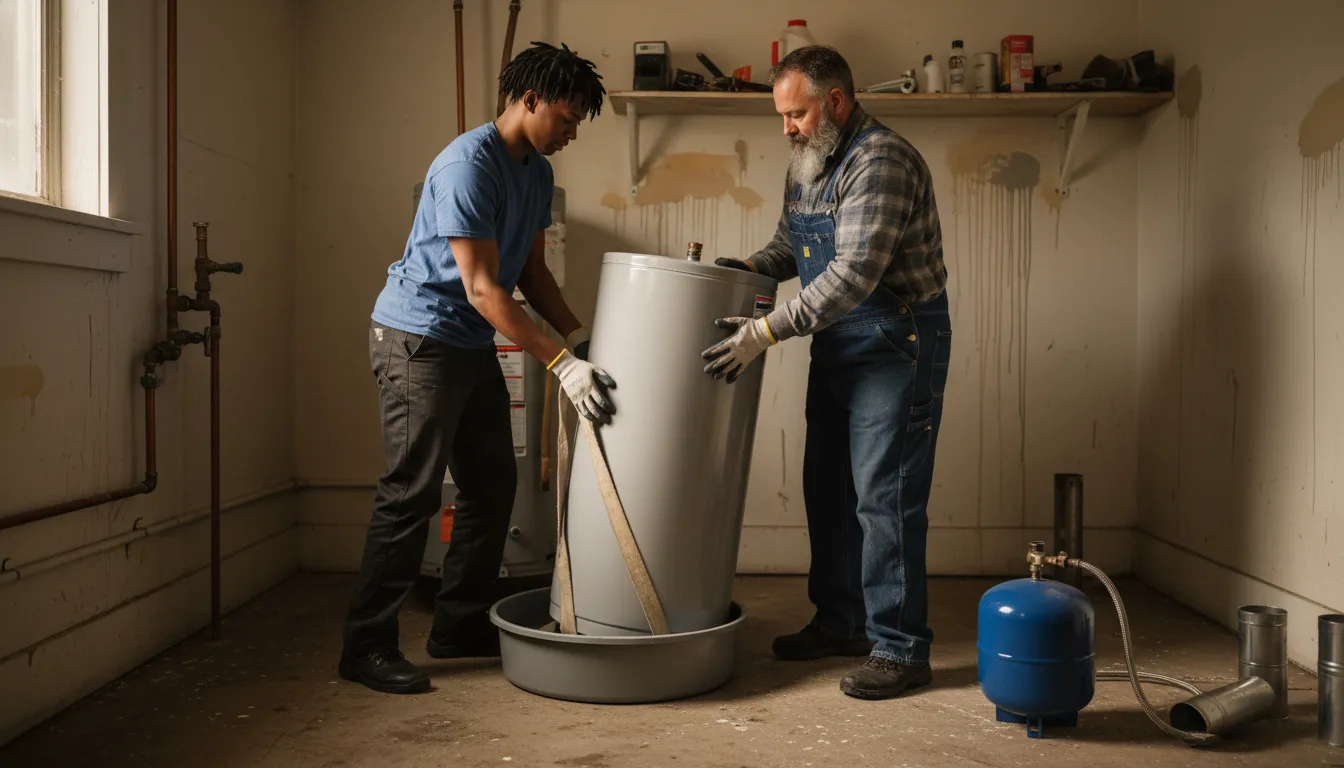
- Seismic Strapping: Due to Utah's seismic activity, all water heaters must be anchored or strapped to resist horizontal displacement during an earthquake. Strapping is required at both the upper and lower thirds of the tank 7.
Choosing the Right Type of Water Heater for Your Utah Home
The ideal water heater for your home depends on your household size, hot water demand, existing infrastructure, and budget. The primary fuel sources in Utah are natural gas/propane and electricity, each with different system types.
Conventional Storage Tank Water Heaters These are the most common type, featuring an insulated tank that heats and stores water. They have a lower upfront cost but continuously consume energy to keep the water hot (standby heat loss).
- Natural Gas/Propane: A prevalent choice in Utah due to typically lower operating costs compared to standard electric models. They recover hot water faster than electric tanks.
- Electric: Often have the lowest purchase price but can lead to higher monthly utility bills. They are a straightforward replacement if you already have an electric model.
Tankless (On-Demand) Water Heaters These units heat water directly as it flows through the device, providing an endless supply of hot water and eliminating standby energy loss. They are compact and can last longer than tank models, but have a higher initial installation cost.
- Gas Tankless: Requires adequate gas line capacity and proper venting. Ideal for homes with high simultaneous hot water use.
- Electric Tankless: Needs a significant electrical upgrade, often requiring new, high-amperage circuits. Best for point-of-use applications or smaller homes.
Heat Pump Water Heaters (Hybrid) These are highly efficient electric units that move heat from the surrounding air into the water, using significantly less electricity than a standard electric resistance model. They work best in spaces that remain between 40°-90°F year-round (like a garage or basement) and have at least 1,000 cubic feet of air space. While the upfront cost is higher, they can save substantial money on energy bills and often qualify for utility rebates 8 9.
Other Considerations
- Solar Water Heaters: Given Utah's sunny climate, solar thermal systems are a feasible, eco-friendly option, though they require a significant investment and a backup system for cloudy days.
- Point-of-Use Heaters: Small electric tanks installed near a single faucet (like a kitchen sink) to provide instant hot water and reduce pipe-run waste.
Sizing Your Water Heater Correctly
Choosing the correct capacity is crucial for balancing comfort and efficiency. An undersized unit will run out of hot water quickly, while an oversized one wastes energy. Sizing is based on your household's "peak hour demand"-the amount of hot water needed during your busiest hour (e.g., morning routines) 10.
Here is a general sizing guide:
- Small Households (1-2 people): 30-40 gallon storage tank or a tankless system rated at 4-5 gallons per minute (GPM).
- Medium Households (3-4 people): 50-75 gallon storage tank or a tankless system rated at 6-8 GPM.
- Large Households (5+ people): 75+ gallon storage tank or a tankless system rated at 8+ GPM 11.
A professional plumber will perform a more precise calculation considering the number of bathrooms, appliances (like dishwashers and washing machines), and your family's specific usage patterns.
Find the perfect water heater installation companies for your needs
Get personalized recommendations and expert advice
Cost of Water Heater Installation & Replacement in Utah
The total cost for water heater installation in Utah is typically higher than the national average due to factors like local labor rates, permit fees, and the need for durable materials suited to the region's hard water 12 13. The final price includes the unit itself, basic installation labor, permits, and disposal of the old heater.
Based on current market data, here are the average installed cost ranges for Utah 14 15:
| System Type | Average Cost Range (Installed) |
|---|---|
| Tank-Style (Gas or Electric) | $2,200 - $2,900 |
| Tankless Systems (Gas or Electric) | $5,000 - $9,000 |
| Hybrid (Heat Pump) | $3,000 and up |
Key Factors That Influence Total Cost:
- Fuel Conversion: Switching from gas to electric (or vice versa) requires new gas lines or electrical circuits, adding $500-$2,000+ to the project.
- Code-Mandated Upgrades: Replacing an old unit often reveals outdated plumbing or venting that must be brought up to current Utah Plumbing Code standards, increasing the final price 16 17.
- Water Quality: Utah's hard water can accelerate mineral buildup and corrosion. Your plumber may recommend a corrosion-resistant anode rod, a water softener, or a scale inhibition system, which adds to the initial cost but reduces long-term maintenance needs 18 19.
- Unit Efficiency and Features: Higher efficiency models (like condensing gas or heat pump units) cost more upfront but offer lower operating costs.
- Location Accessibility: Installations in tight spaces, attics, or requiring significant retrofitting will take more time and labor.
For the most accurate estimate and to explore potential rebates from programs like ENERGY STAR, it's best to consult with local Utah plumbing professionals 20.
The Professional Installation Process
Working with a licensed Utah plumber ensures the job is done safely and correctly. A typical professional installation includes:
- Assessment and Quote: The plumber will assess your home's needs, recommend a properly sized unit, and provide a detailed written estimate.
- Permitting: They will pull the required local building permits, which ensures the installation will be inspected.
- Preparation: The old unit is drained, disconnected, and removed. The new location is prepared, which may involve updating water lines, gas connections, electrical wiring, or venting.
- Installation: The new water heater is placed, connected, and sealed according to code. This includes seismic strapping, pressure relief valve installation, and setting the thermostat.
- Inspection and Activation: The system is filled, checked for leaks, and activated. The plumber will ensure it's operating correctly and explain its basic operation to you.
- Final Inspection: In many jurisdictions, a city inspector will visit to verify the installation meets all Utah codes before the job is officially closed.
Maintaining Your New Water Heater
To extend the life of your investment, especially in Utah's hard water conditions, regular maintenance is key:
- Annual Flushing: Draining a few gallons from the tank to remove sediment buildup can improve efficiency and longevity.
- Anode Rod Inspection: The sacrificial anode rod protects the tank from corrosion. Have a plumber check it every 3-5 years and replace it if it's heavily corroded.
- Temperature Setting: The U.S. Department of Energy recommends a setting of 120°F for optimal efficiency and safety (to prevent scalding).
- Pressure Relief Valve Test: Periodically test the valve by lifting its lever to ensure it operates freely.
Frequently asked questions
Sources
Footnotes
-
CHAPTER 5 WATER HEATERS - ICC Digital Codes - https://codes.iccsafe.org/content/UTPC2021P1/chapter-5-water-heaters ↩
-
DAR File No. 36687 (Rule R156-55a) UT Bull 2012-18 (09/15/2012) - https://rules.utah.gov/publicat/bulletin/2012/20120915/36687.htm ↩
-
Utah Water Heater Regulations - https://anyhourservices.com/blog/2018-utah-water-heater-regulation/ ↩
-
Big Changes Coming for Water Heater Efficiency. Ready? - https://utahenergy.org/big-changes-coming-for-water-heater-efficiency-ready/ ↩
-
Chapter 28 Water Heaters: Utah Residential Code 2021 - https://up.codes/viewer/utah/irc-2021/chapter/28/water-heaters ↩
-
Section 305 - Utah Legislature - https://le.utah.gov/xcode/Title15A/Chapter3/15A-3-S305.html ↩
-
2021 Utah State Residential Code Based on the ... - https://codes.iccsafe.org/s/UTRC2021P1/part-v-mechanical/UTRC2021P1-Ch20-SecM2005.2 ↩
-
How Much Does It Cost to Replace a 50-Gallon Water Heater? (2026) - https://homeguide.com/costs/50-gallon-water-heater-cost ↩
-
How to Choose a Water Heater That's Right For You - https://www.beehiveplumbing.com/how-to-choose-a-water-heater-thats-right-for-you/ ↩
-
Sizing a New Water Heater - Department of Energy - https://www.energy.gov/energysaver/sizing-new-water-heater ↩
-
How Much Does Water Heater Replacement Cost? [2026 Data] - https://www.angi.com/articles/how-much-does-water-heater-installation-cost.htm ↩
-
Water Heater Market Size, Share, Types and Opportunities to 2032 - https://straitsresearch.com/report/water-heater-market ↩
-
Price Calculator - https://stanleyplumbing.net/price-calculator/ ↩
-
The Cost Of A Water Heater with Installation in Utah - https://sunsetplumbingutah.com/the-cost-of-a-water-heater-with-installation-in-utah/ ↩
-
2025 Water Heater Pricing Guide (Utah's Pricing) - https://www.allutahplumbing.com/water-heater-pricing/ ↩
-
How Much Does a Hot Water Heater Replacement Cost in 2026? - https://callkeepsmiling.com/how-much-does-it-cost-to-replace-a-hot-water-heater-a-comprehensive-guide/ ↩
-
Water Heater Cost in 2026: DIY or Professional Installation? - https://www.nerdwallet.com/home-ownership/home-improvement/learn/water-heater-cost ↩
-
75-Gallon Water Heater Installation Cost in 2025 - https://www.fixr.com/costs/75-gallon-water-heater ↩
-
Water heater installation time and cost explained - https://www.splashplumbing.com/how-long-does-water-heater-installation-take-heres-what-to-expect-and-how-much-it-costs/ ↩
-
How Much Does It Cost to Replace a 50-Gallon Water Heater in 2026? - https://www.searshomeservices.com/blog/how-much-does-it-cost-to-replace-a-50-gallon-water-heater ↩