Find the Best Water Heater Installation Companies for Your Business
No obligation • Fast responses • Nationwide coverage

Why you can trust Search a Plumber
Search a Plumber is a leading United States resource for finding and evaluating professional plumbing services. Our team researches licensing, experience, and customer feedback to create unbiased, fact-driven overviews. Companies cannot pay to change ratings or placement, ensuring homeowners get trustworthy information.
Search providers near you
Best Water Heater Installation Companies in South Dakota Ranked
A reliable water heater is essential for daily comfort in any South Dakota home, providing hot water for showers, cleaning, and appliances. When your unit fails or becomes inefficient, professional installation or replacement ensures safety, compliance with state and local codes, and optimal performance. This guide provides the key information you need to understand your options, from system types and sizing to costs and regulations, helping you make an informed decision for your household.
Understanding South Dakota's Plumbing and Energy Guidelines
In South Dakota, water heater work falls under the oversight of the State Plumbing Commission, and installations must adhere to both state and local municipal codes. For energy efficiency, the state has adopted the 2009 International Energy Conservation Code (IECC) as a voluntary standard for new residential construction 1 2. This means builders are encouraged, but not always strictly required, to follow these guidelines, though some cities like Sioux Falls may enforce stricter local amendments.
Key regulatory points for homeowners include:
- Federal Standards: All new water heaters installed in the U.S. must meet the Department of Energy's (DOE) energy conservation standards, which specify minimum Uniform Energy Factor (UEF) ratings based on the type and size of the unit 3 4.
- Disclosure Requirements: Builders selling new, previously unoccupied homes must provide prospective buyers with information about the building's energy efficiency features 5.
- Local Safety Codes: In jurisdictions with enforced codes, specific rules apply. For example, fuel-fired water heaters (like gas or propane) often cannot be installed in storage closets, and units placed in bedrooms or bathrooms must be in sealed enclosures to prevent drawing combustion air from living spaces 6 7.
Choosing the Right Water Heater Type
Selecting a new water heater involves comparing different technologies, each with its own advantages in efficiency, cost, and suitability for your home.
Conventional Storage Tank Water Heaters
These are the most common systems, featuring an insulated tank that heats and stores a ready supply of water.
- How They Work: Water is heated by either a gas burner or electric heating elements and maintained at a set temperature until needed.
- Pros: Lower upfront purchase and installation costs, simplicity, and widespread familiarity among technicians.
- Cons: Standby heat loss (energy used to keep water hot in the tank) and a finite supply of hot water that can run out during high-demand periods.
Tankless (On-Demand) Water Heaters
Tankless units heat water directly as it flows through the device, eliminating the storage tank.
- How They Work: When a hot water tap is turned on, cold water travels through a heat exchanger where it is instantly heated by a high-powered gas burner or electric element.
- Pros: Virtually unlimited hot water, higher energy efficiency due to no standby losses, and a longer typical lifespan. They also save space due to their compact, wall-mounted design.
- Cons: Higher initial cost and may require upgrades to home gas lines or electrical service to support the high demand 8. Performance depends on correctly sizing the unit for your desired flow rate and temperature rise, especially during South Dakota's cold winters 9 10.
Heat Pump Water Heaters (HPWHs)
These are highly efficient electric units that move heat from the surrounding air into the water, rather than generating heat directly.
- How They Work: Operating like a refrigerator in reverse, a HPWH uses a compressor and refrigerant to capture ambient heat from the air and transfer it to the water in the tank.
- Pros: Can be two to three times more energy-efficient than conventional electric resistance water heaters, leading to significant utility bill savings 11 12.
- Cons: Higher purchase price. They work best in installed locations that remain in a 40º-90ºF temperature range year-round (like a conditioned or semi-conditioned space) and require adequate air space around them (typically at least 750 cubic feet) 13 14.
Solar Water Heaters
These systems use rooftop solar thermal collectors to absorb the sun's heat and transfer it to a water storage tank.
- How They Work: A fluid (often an antifreeze solution) is heated in the solar collectors and then circulates through a heat exchanger in a storage tank.
- Pros: Can dramatically reduce energy costs for water heating and have low operating emissions.
- Cons: High installation cost, dependence on sunlight (often requiring a conventional backup system), and complexity that requires specialized installers.
Fuel Source Options in South Dakota
The energy source for your water heater impacts operating costs, installation requirements, and availability.
- Natural Gas: A popular and efficient choice for quickly heating water, often resulting in lower operating costs than electric models where gas service is available 15.
- Electric: Widely available and often involves simpler venting requirements. Standard electric tank models may need larger capacities (e.g., 80-120 gallons) to meet high demand effectively compared to gas units.
- Propane: A common alternative in rural areas of South Dakota not served by natural gas mains. It offers efficiency similar to natural gas but requires on-site storage in a tank.
- Fuel Oil: Less common for water heating alone but may be used in homes with oil-fired boiler systems for combined heat and hot water.
Sizing Your New Water Heater Correctly
Proper sizing is critical to ensure an adequate supply of hot water without wasting energy on an oversized unit. Sizing is based on your household's peak hour demand-the amount of hot water needed during your busiest usage period 16.
Sizing Storage Tank Water Heaters
For traditional tank systems, capacity is measured in gallons. Use the following as a general guideline, but consult a professional for an accurate assessment based on your specific fixtures and habits 17:
| Household Size | Recommended Tank Capacity |
|---|---|
| 1-2 people | 30-40 gallons |
| 3-4 people | 40-50 gallons |
| 5 or more people | 50-80+ gallons |
Sizing Tankless Water Heaters
Tankless units are sized by their flow rate (gallons per minute, or GPM) and their ability to achieve the necessary temperature rise (the difference between incoming groundwater temperature and your desired hot water temperature). South Dakota's cold inlet water means a greater temperature rise is required, which can affect the model you need 18. A professional will calculate your total GPM demand from all simultaneous hot water uses (e.g., shower + dishwasher) and select a unit that can meet it.
Find the perfect water heater installation companies for your needs
Get personalized recommendations and expert advice
Cost Factors for Installation and Replacement
The total cost for a new water heater in South Dakota varies significantly based on the unit type, size, fuel source, and complexity of the installation. The figures below represent typical installed costs, including the equipment and professional labor, but are estimates that can fluctuate with local market conditions 19 20 21.
| Water Heater Type | Typical Installed Price Range in South Dakota |
|---|---|
| Standard Tank-Style (Gas or Electric) | $1,000 - $2,500 |
| Tankless Water Heater | $2,400 - $5,400+ |
| Heat Pump Water Heater (HPWH) | Higher initial cost, with potential for long-term energy savings |
Additional cost factors include:
- Labor Complexity: A simple, "like-for-like" tank replacement in an accessible location may have labor costs in the range of $500-$1,500 if no modifications are needed 22. Costs rise if the job requires relocating the unit, upgrading gas lines or electrical circuits, modifying venting, or addressing plumbing complications like corroded pipes.
- Permits: In South Dakota, homeowners are allowed to pull their own plumbing permits for work on their primary residence 23. A professional installer will typically handle this process, and the permit fee is usually included in the project quote.
- Disposal: Most installers will include removal and disposal of your old water heater in their service.
The Professional Installation Process
A proper installation by a licensed professional is crucial for safety, efficiency, and warranty protection. Here's what a typical installation involves:
- Assessment and Quote: A technician will visit your home to assess your needs, evaluate the existing setup (location, fuel lines, venting, electrical), discuss options, and provide a detailed written estimate.
- Preparation: The installer will secure any necessary permits from the local building department. They will also shut off the water and power or gas to the existing unit.
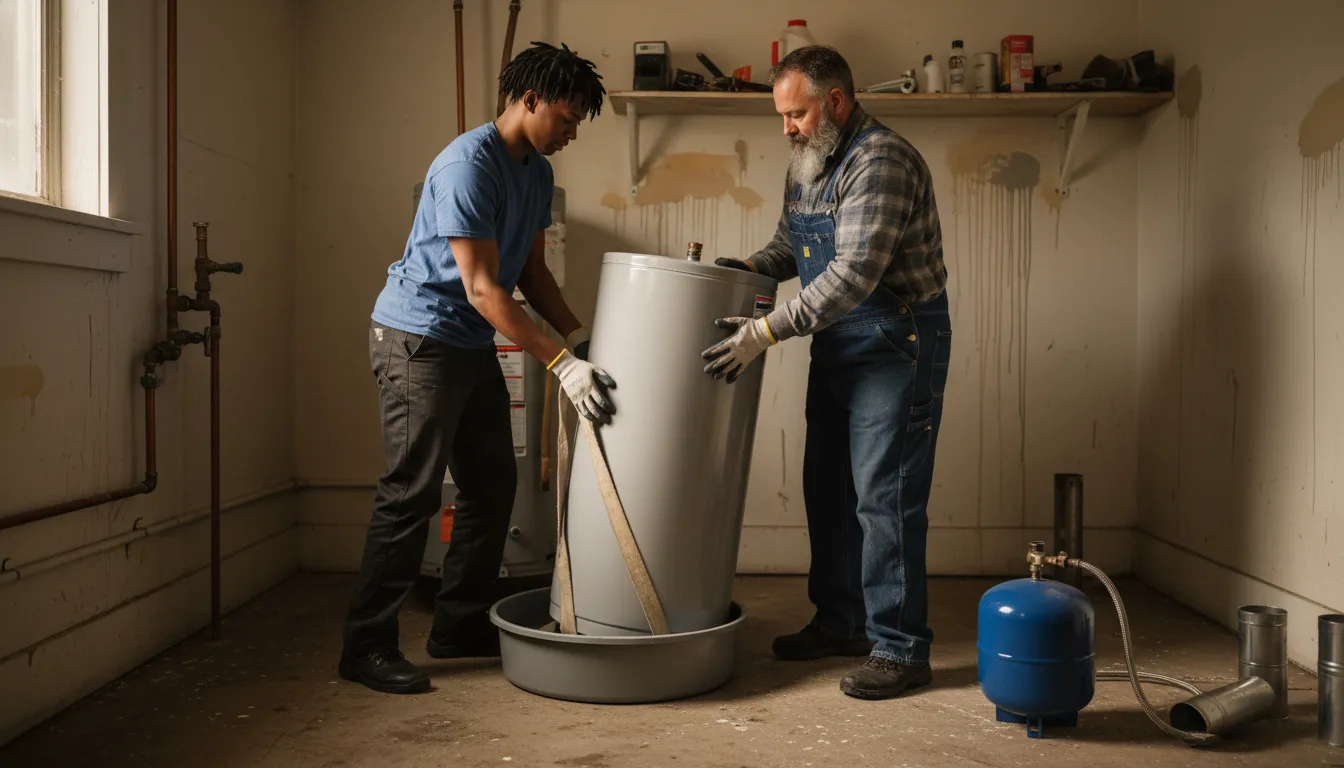
- Removal and Disposal: The old water heater is drained, disconnected, and removed from your home for proper disposal or recycling.
- Installation: The new unit is positioned, connected to the water supply lines, fuel source or electrical supply, and pressure relief valve. For combustion units, venting is meticulously installed to safely exhaust gases.
- Testing and Inspection: The system is filled with water, purged of air, and fired up. The installer will check for leaks, verify proper venting and combustion (for gas units), test the temperature and pressure relief valve, and ensure the unit is operating correctly. They will also review the owner's manual and basic maintenance with you.
- Final Approval: The installer will ensure the work passes any required inspections and leave you with documentation for your records and warranty.
Maintenance for Longevity and Efficiency
Regular maintenance can extend your water heater's life and keep it running efficiently.
- Storage Tanks: Annually drain a few gallons from the tank to remove sediment buildup, which can reduce efficiency and damage the tank. Check the pressure relief valve yearly by lifting the lever to ensure it operates freely.
- Tankless Units: Descale the heat exchanger annually (or as recommended by the manufacturer) to prevent mineral buildup, especially if you have hard water.
- All Types: Periodically inspect for signs of leaks, corrosion, or unusual noises. Insulating hot water pipes and setting the thermostat to 120°F (49°C) can also improve efficiency and safety.
Signs You Need a Replacement
Be aware of these indicators that your water heater may be failing:
- Age: Most traditional tank water heaters last 8-12 years. If yours is within or beyond this range and showing other issues, replacement should be considered.
- Rusty Water: Discolored hot water can signal internal tank corrosion.
- Insufficient Hot Water: Running out of hot water faster than usual often points to a failing heating element, sediment buildup, or a tank that is too small for current demand.
- Leaks: Any moisture or pooling around the base of the tank is a serious concern.
- Unusual Noises: Loud popping, rumbling, or banging sounds are typically caused by excessive sediment hardening at the bottom of the tank.
- Consistently Higher Energy Bills: A gradual increase in costs for heating water can indicate declining efficiency.
Frequently asked questions
Sources
Footnotes
-
Codified Law 11-10 | South Dakota Legislature - https://sdlegislature.gov/Statutes/11-10 ↩
-
Buildings Summary | ACEEE - https://database.aceee.org/state/buildings-summary ↩
-
Consumer Water Heaters - Department of Energy - https://www.energy.gov/eere/buildings/consumer-water-heaters ↩
-
DOE NAECA4 Residential Regulations for Water Heaters | A. O. Smith - https://www.hotwater.com/info-center/doe-regulations/doe-residential-regulations.html ↩
-
Energy Efficiency Disclosure for New Homes FAQ - https://dlr.sd.gov/realestate/forms/builders_energy_efficiency_disclosure_faq.pdf ↩
-
Chapter 20 Boilers and Water Heaters: Sioux Falls Residential Code ... - https://up.codes/viewer/sioux-falls/irc-2021/chapter/20/boilers-and-water-heaters ↩
-
Residential Water Heater Requirements - https://www.weknowcodes.com/wp-content/uploads/2021/07/Residential-Water-Heater-Requirements-1.pdf ↩
-
How Much Does a Tankless Water Heater Cost? - https://www.solarreviews.com/blog/how-much-does-a-tankless-water-heater-cost ↩
-
Understanding Flow Rates in Tankless Water Heaters - https://www.prowestheating.com/blog/understanding-flow-rates/ ↩
-
Sizing a New Water Heater - https://www.energy.gov/energysaver/sizing-new-water-heater ↩
-
Residential Water Heating in the 2022 Energy Code - 3C-REN - https://www.3c-ren.org/residential-water-heating/ ↩
-
Residential Water Heating in the 2022 Energy Code - 3C-REN - https://www.3c-ren.org/residential-water-heating/ ↩
-
Water Heater Cost Explained | Chaffee HVAC, Plumbing, Electrical - https://coolingheatingplumbing.com/blog/hvac/how-much-does-a-water-heater-cost/ ↩
-
Understanding Water Heater Size: Your Expert Guide - Just Plumbing - https://justplumbingaz.com/blog/understanding-water-heater-size-finding-the-right-capacity-for-your-household/ ↩
-
What Size Water Heater Do I Need? - Total Home Supply - https://www.totalhomesupply.com/water-heater-sizes ↩
-
What Size Water Heater Do You Need? - https://enduricplumbing.com/resources/what-size-water-heater/ ↩
-
What Size Water Heater Do I Need? (Standards, Options...) - https://smockhvac.com/blog/what-size-water-heater-do-i-need/ ↩
-
How To Choose A Water Heater: A Money-Saving Guide For Homeowners - https://westernrooter.com/how-to-choose-a-water-heater-a-money-saving-guide-for-homeowners/ ↩
-
Water Heater Installation Cost Guide - Affordable Heating & AC - https://www.affordablehvac.com/blog/water-heater-service/how-much-does-professional-water-heater-installation-cost/ ↩
-
Cost to Replace a Water Heater - The Home Depot - https://www.homedepot.com/services/c/cost-install-water-heater/9058c024e ↩
-
Cost to Replace a Water Heater - The Home Depot - https://www.homedepot.com/services/c/cost-install-water-heater/9058c024e ↩
-
Essential Guide to Water Heater Replacement - https://gaeberly.com/water-heater-replacement/ ↩
-
South Dakota Plumbing Commission - Homeowner Plumbing - https://dlr.sd.gov/plumbing/homeowner_plumbing.aspx ↩