Find the Best Water Heater Installation Companies for Your Business
No obligation • Fast responses • Nationwide coverage

Why you can trust Search a Plumber
Search a Plumber is a leading United States resource for finding and evaluating professional plumbing services. Our team researches licensing, experience, and customer feedback to create unbiased, fact-driven overviews. Companies cannot pay to change ratings or placement, ensuring homeowners get trustworthy information.
Search providers near you
Best Water Heater Installation Companies in Oregon Ranked
Choosing a new water heater is a significant decision for any Oregon homeowner. It impacts your daily comfort, energy bills, and home safety. This guide provides clear, practical information on selecting, installing, and maintaining a water heater in compliance with Oregon's specific codes and climate. Whether you're facing an emergency replacement or planning an upgrade, understanding your options will help you find a qualified local professional for a successful installation.
Central Air Heating, Cooling & Plumbing
11640 SW Corby Dr #5, Portland, OR 97225
Central Air Heating, Cooling & Plumbing provides heating, cooling, and plumbing services in Portland, OR. Established in 2001, the company offers a wide range of home comfort solutions including water heater and tankless water heater installation and repair, leak detection, toilet repair, and garbage disposal services. Their technicians are trained to handle various HVAC systems and plumbing needs, with a focus on maintaining and repairing equipment to ensure efficient operation. They also offer HVAC maintenance plans and guarantee repairs for at least three years.

Cornel's Plumbing, Heating & Air Conditioning
4015 SE 56th Ave, Portland, OR 97206
Cornel's Plumbing, Heating & Air Conditioning is a licensed plumbing and HVAC company serving Portland, OR. With over 20 years of experience, they provide a range of services including water heater installation, drain cleaning, leak detection, repiping, and gas line installation. The company is known for addressing plumbing and HVAC issues efficiently, offering same-day responses for emergency repairs. One notable capability is their expertise in water heater installation and repair. Cornel's Plumbing, Heating & Air Conditioning operates with a focus on residential customers in the Portland metro area.

Diligent Plumbing LLC
1023 SE 223rd Ave, Gresham, OR 97030
Diligent Plumbing LLC is a plumbing contractor serving Portland, OR, specializing in residential plumbing repairs, drain cleaning, and emergency plumbing services. Their team offers a range of services including water heater installation, leak detection, toilet repair, and garbage disposal replacement. With over 12 years of experience, they handle various plumbing issues such as clogged drains, leaky pipes, and faucet replacements. The company provides 24/7 emergency service to address urgent plumbing needs.

Drain Hound (Owner - Operator)
7202 NE Hwy 99 Ste 106, Vancouver, WA 98665
Drain Hound (Owner - Operator) is a plumbing service based near Portland, OR, offering a wide range of plumbing solutions including sewer camera inspections, water heater repair and installation, water softener installation, drain cleaning, hydro jetting, sewer line repair, trenchless sewer repair, leak detection, repiping, and garbage disposal repair. The company uses advanced technology such as high-definition sewer cameras and hydro jetting equipment to diagnose and clear blockages efficiently. Drain Hound specializes in trenchless water main replacement, which reduces landscape disruption and preserves property aesthetics. Owner-operated by Taylor Prouty, the business serves the greater Vancouver, WA area and provides 24/7 emergency plumbing services.
P1 Plumbing - Vancouver & Portland
6500 NE 45th Way, Vancouver, WA 98661
P1 Plumbing - Vancouver & Portland offers a wide range of plumbing services in Portland, OR, and surrounding areas including Vancouver, WA. Their expertise covers water heater repair and installation, including tankless and heat pump water heaters, leak detection, pipe repair and repiping, toilet repair, and water filtration system installation. The company has over 13 years of experience and employs licensed journeymen plumbers equipped with the latest tools to handle plumbing upgrades, remodels, and emergency repairs. P1 Plumbing serves both residential and commercial clients across the Portland metro area and nearby communities.
Understanding Oregon's Water Heater Codes and Permits
In Oregon, all residential water heater installations and replacements are regulated by state codes to ensure safety and efficiency. The primary governing rules are the Oregon Plumbing Specialty Code and the Oregon Energy Efficiency Specialty Code 1 2. A fundamental requirement is that all work must be performed by a licensed plumbing professional, and a permit is almost always required 3. This permit process ensures the installation is inspected and complies with all local and state standards, protecting your home and investment.
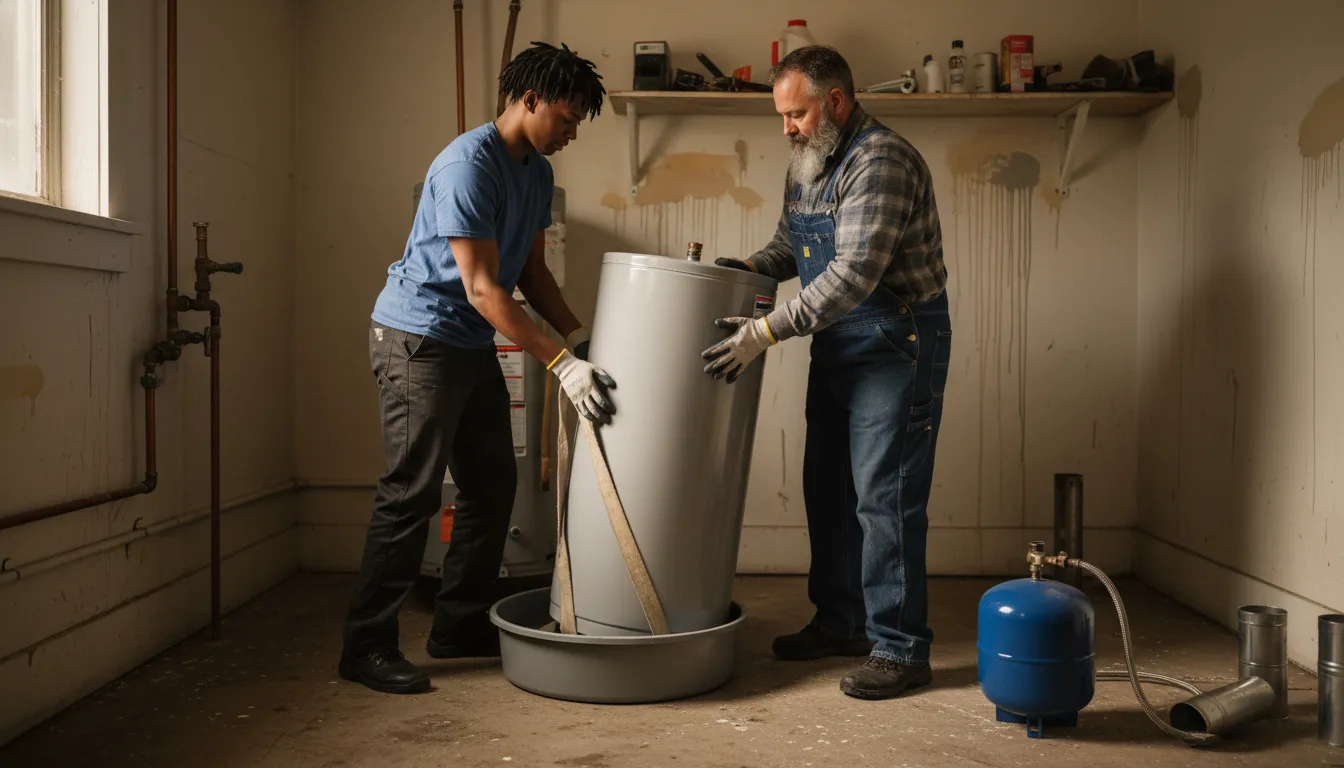
Two critical safety features mandated by code are seismic strapping and proper venting. Oregon requires water heaters to be secured with approved seismic straps (often called earthquake straps) to prevent tipping and gas line ruptures during seismic activity 4. Proper venting for gas models is equally crucial to prevent the dangerous buildup of carbon monoxide inside your home 5. A licensed professional will ensure these and all other code requirements are met.
Key Efficiency Standards and Incentives
The Oregon Energy Efficiency Specialty Code sets high standards for water heating performance to reduce energy consumption statewide. When selecting a unit, pay attention to its Energy Factor (EF) or Uniform Energy Factor (UEF)-a higher number indicates greater efficiency.
For natural gas or propane units, the state recommends a minimum UEF of 0.90 or higher to qualify as high-efficiency 6 7. Electric heat pump water heaters, which are exceptionally efficient, should have a minimum UEF of 3.45 (equivalent to an EF of at least 1.8 to 2.0) 6 8. An innovative "electric ready" rule applies to new construction: if a gas water heater is installed, a dedicated electrical circuit must be placed nearby to make a future switch to a heat pump model simpler and less costly 9.
Investing in a high-efficiency model can pay off through utility rebates and tax credits. Organizations like the Energy Trust of Oregon offer financial incentives for qualifying high-efficiency gas and electric heat pump water heaters 10. Checking with your local utility provider for available rebates is a smart step before making a purchase.
Find the perfect water heater installation companies for your needs
Get personalized recommendations and expert advice
Choosing the Right Type of Water Heater for Your Oregon Home
The climate, energy costs, and your household's needs all influence the best choice. Here's a breakdown of the common systems available.
Standard Storage Tank Heaters These are the most common, consisting of an insulated tank that stores and heats a set amount of water. They are available in gas and electric models.
- Gas Models: Typically have lower operating costs in Oregon due to historically lower natural gas prices compared to electricity, though standard efficiency models (60-70% efficient) are less efficient than electric resistance heaters 11.
- Electric Models: Are very efficient at converting energy to heat (90-95%) but can be more expensive to operate due to higher electricity rates 12. They are often simpler to install where gas is not available.
High-Efficiency and Hybrid Models
- High-Efficiency Gas Tanks: These condensing models can achieve efficiency ratings of 80% or higher by capturing more heat from the combustion gases 13. They cost more upfront but save on gas bills.
- Heat Pump Water Heaters (Hybrid): These are the most efficient electric option. Instead of generating heat directly, they move heat from the surrounding air into the water, using significantly less electricity. They work best in installed spaces that remain between 40°F and 90°F year-round, such as a garage or basement, and can offer substantial long-term savings.
Tankless (On-Demand) Water Heaters These units heat water instantly as it flows through the device, providing an endless supply of hot water. They are compact and have a longer lifespan than tank models.
- Gas Tankless: A popular choice in Oregon for their performance and efficiency. They are eligible for various rebates but require proper gas line sizing and venting.
- Electric Tankless: Require a substantial electrical upgrade (often 200-amp service) to handle the high amperage draw, which can increase installation costs 14.
Sizing Your Water Heater Correctly
Choosing the correct capacity is essential for meeting your household's demand without wasting energy. Sizing is based on the number of occupants and peak usage times (like multiple showers in the morning). Generally, gas units can be slightly smaller than electric ones due to their faster recovery rate (ability to reheat water) 15 16.
Here is a general sizing guide:
| Family Size | Recommended Capacity (Gallons) |
|---|---|
| 1-2 people | 30-40 gallons |
| 3-4 people | 50-75 gallons (A 50-gallon electric or 40-gallon gas is often sufficient) |
| 5+ people | 75+ gallons or a tankless system |
A professional installer will perform a more detailed calculation considering your home's specifics, such as the number of bathrooms and appliance demands.
Understanding Installation Costs in Oregon
The total cost for water heater installation & replacement in Oregon varies widely based on the unit type, your home's existing plumbing and electrical setup, and local labor rates. The figures below are estimates that include both the equipment and professional installation 17.
- Standard Tank Water Heater (40-50 gallon): $1,500 - $2,500
- High-Efficiency Tank Model: $2,000 - $3,000
- Tankless Water Heater: $3,000 - $5,500+
- Hybrid or Heat Pump Water Heater: $3,500 - $6,000
Labor alone for a straightforward, like-for-like replacement typically ranges from $400 to $1,200 18. Costs can increase significantly if the job requires moving the unit, upgrading gas lines or electrical circuits, installing new venting, or addressing code compliance issues like adding seismic strapping to an older installation 18 19. Always get detailed, written estimates from licensed professionals.
The Importance of Professional Installation
Given Oregon's strict codes covering plumbing, energy efficiency, and seismic safety, professional installation is not just recommended-it's a legal and practical necessity. A licensed plumber will:
- Ensure Code Compliance: Handle permits, inspections, and install all required safety devices.
- Provide Proper Sizing: Recommend the right type and size of unit for your home.
- Guarantee Safe Operation: Correctly connect gas, water, and electrical lines and ensure safe venting.
- Validate Warranties: Most manufacturer warranties require professional installation to remain valid.
- Address Hidden Issues: Identify potential problems with existing pipes, valves, or connections.
Maintenance for Longevity and Efficiency
To extend the life of your new water heater and maintain its efficiency, follow these basic maintenance tips:
- Annual Flushing: Sediment buildup in tank models reduces efficiency and can cause damage. Draining a few gallons from the tank once a year helps clear this out.
- Temperature Setting: The U.S. Department of Energy recommends a setting of 120°F for optimal efficiency and safety (to prevent scalding).
- Anode Rod Inspection: The sacrificial anode rod inside tank models protects the tank from corrosion. Have a professional inspect it every 3-5 years.
- Pressure Relief Valve Check: Test the temperature and pressure (T&P) relief valve annually to ensure it is operating correctly.
Frequently asked questions
Sources
Footnotes
-
Building Codes Division : Plumbing Code Program - Oregon.gov - https://www.oregon.gov/bcd/codes-stand/pages/plumbing.aspx ↩
-
CHAPTER 20 BOILERS AND WATER HEATERS - https://codes.iccsafe.org/content/ORRSC2021P1/chapter-20-boilers-and-water-heaters ↩
-
Portland Water Heater Service - https://www.eworksnw.com/plumbing/water-heaters/ ↩
-
Water Heater Seismic Strapping - Oregon.gov - https://www.oregon.gov/bcd/codes-stand/Documents/interp-15-02-waterheater-seismicstrap.pdf ↩
-
Water Heater Installation in Portland - Environmental Works - https://www.eworksnw.com/plumbing/water-heater-replacement/ ↩
-
Choosing a New Water Heater: Don't Wait for an ... - Energy Info - https://energyinfo.oregon.gov/blog/2016/08/24/choosing-a-new-water-heater-dont-wait-for-an-emergency-to-get-the-best-fit ↩ ↩2
-
Residential energy additional measure selection - Oregon.gov - https://www.oregon.gov/bcd/Formslibrary/4854pen.pdf ↩
-
Residential Energy Efficiency Measures Selection Form - https://www.venetaoregon.gov/DocumentCenter/View/1294/2021-ORSC-Energy-Measure-Selection ↩
-
Residential Water Heating in the 2022 Energy Code - 3C-REN - https://www.3c-ren.org/residential-water-heating/ ↩
-
What to consider when buying a new water heater - https://www.energytrust.org/tips/what-to-consider-when-buying-a-new-water-heater/ ↩
-
How Much Does Water Heater Replacement Cost in Portland? - https://davincisbestplumbing.com/how-much-does-water-heater-replacement-cost-in-portland/ ↩
-
Gas or Electric Water Heaters: Best Choice for Oregon Homes - https://www.hencoplumbing.com/gas-vs-electric-water-heaters-which-is-better-for-oregon-homes/ ↩
-
OAR 330-070-0073 - Energy-Efficient Appliances - Oregon Law - https://oregon.public.law/rules/oar_330-070-0073 ↩
-
Tankless vs. Traditional Water Heaters: Portland Home Guide - https://www.centralairpdx.com/blog/tankless-vs-traditional-water-heaters/ ↩
-
Choosing a New Water Heater: Don't Wait for an ... - Energy Info - https://energyinfo.oregon.gov/blog/2016/08/24/choosing-a-new-water-heater-dont-wait-for-an-emergency-to-get-the-best-fit ↩
-
Residential Water Heater Sizing Guide - CenterPoint Energy - https://www.centerpointenergy.com/en-us/HSP/Pages/water-heating-sizing-guide.aspx?sa=mn&au=res ↩
-
Heat Pump Water Heater Guide for 2025 - https://www.heatpumpsource.co.uk/blog/heat-pump-water-heater-guide/ ↩
-
cost of water heater replacement in Redmond Oregon - https://www.centralpipemechanix.com/post/the-true-cost-of-water-heater-replacement-unveiling-hidden-expenses ↩ ↩2
-
How Much Do Gas Logs Cost? Compare Types & Prices - https://thetorchguys.com/blogs/news/how-much-do-gas-logs-cost ↩