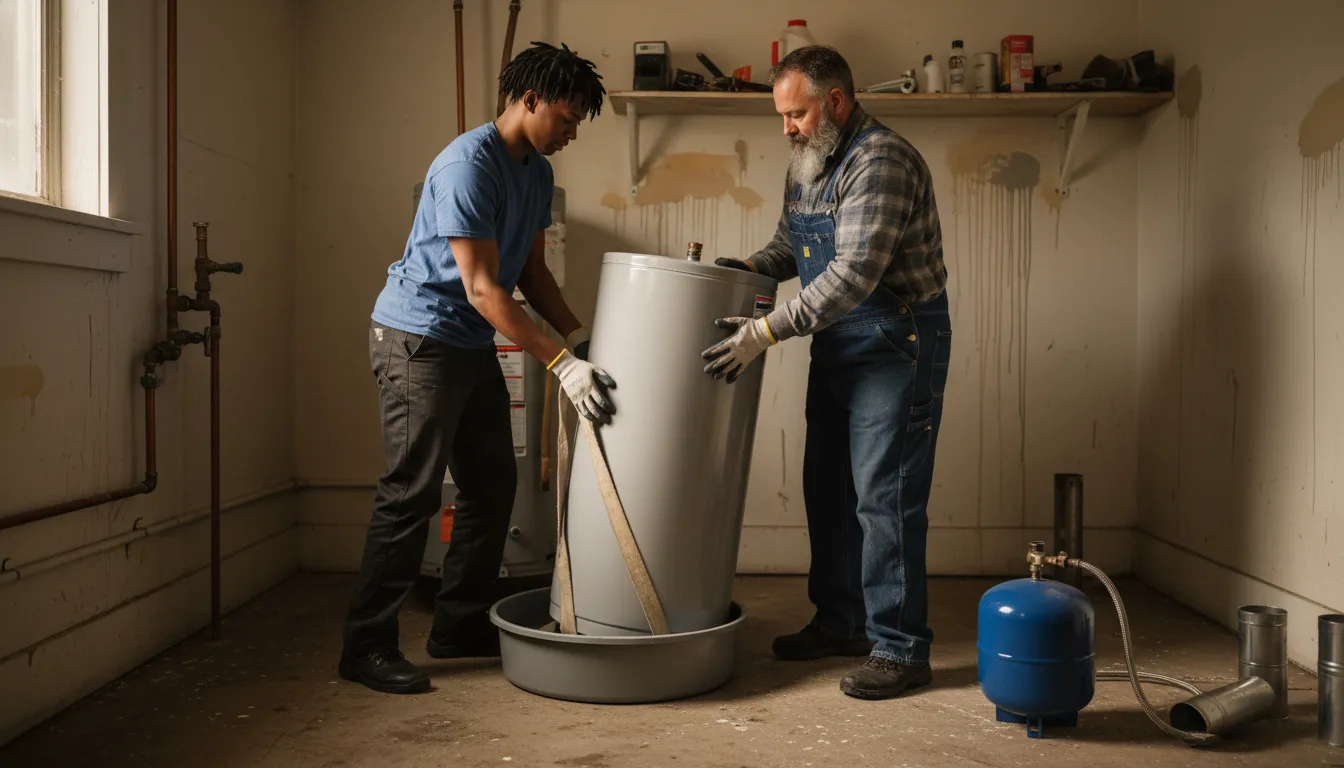
Find the Best Water Heater Installation Companies for Your Business
No obligation • Fast responses • Nationwide coverage

Why you can trust Search a Plumber
Search a Plumber is a leading United States resource for finding and evaluating professional plumbing services. Our team researches licensing, experience, and customer feedback to create unbiased, fact-driven overviews. Companies cannot pay to change ratings or placement, ensuring homeowners get trustworthy information.
Search providers near you
Best Water Heater Installation Companies in Georgia Ranked
A properly functioning water heater is essential for daily comfort in any Georgia home, providing hot water for showers, cleaning, and appliances. When your unit fails or becomes inefficient, professional installation or replacement ensures safety, reliability, and compliance with state codes. This guide covers key considerations for Georgia homeowners, from understanding local regulations and sizing your system to choosing the right energy source and budgeting for the project. Use the information here to make an informed decision and connect with qualified local specialists for your needs.
SLAM Plumbing
Atlanta, GA
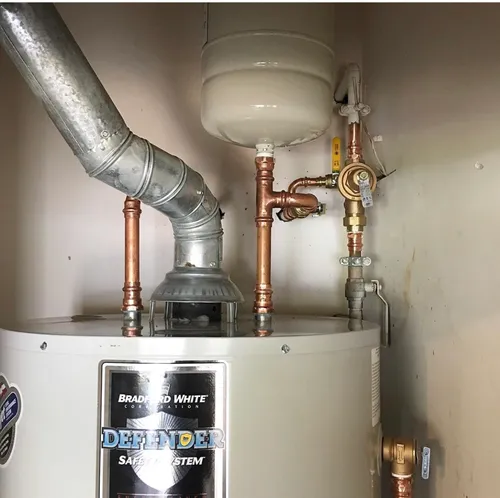
SLAM Plumbing provides plumbing services including water heater repair, installation, and leak detection in Atlanta, GA. They serve both residential and commercial clients in Atlanta and nearby areas. The company is known for experienced technicians who handle projects of various sizes and respond quickly to urgent plumbing issues. SLAM Plumbing offers knowledgeable and honest service with a focus on quality workmanship.
True Plumbing
2650 Pleasantdale Rd, Doraville, GA 30340
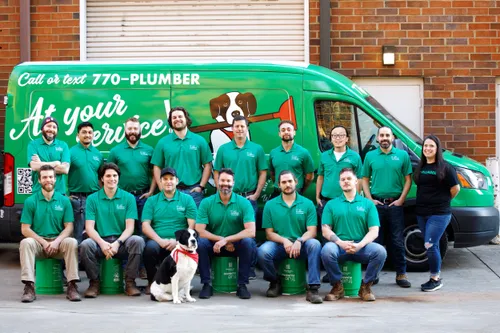
True Plumbing is a plumbing service provider based in Atlanta, GA, offering a wide range of services including sewer camera inspections, water heater repair and installation, drain cleaning, sewer line repair, trenchless sewer repair, leak detection, repiping, gas line installation, and toilet repair. They use advanced tools for leak detection and provide trenchless methods for sewer repairs, helping maintain efficient plumbing systems. Established in 2014, True Plumbing focuses on building lasting customer relationships by educating clients and ensuring peace of mind with their work.
Blue Skies Atlanta Plumbing
5520 Lilburn Stone Mountain Rd Ste B, Stone Mountain, GA 30087
Blue Skies Atlanta Plumbing offers residential and commercial plumbing services in Atlanta, GA, including DeKalb and Gwinnett counties. Their licensed plumbers handle water heater installation and repair, drain cleaning, sewer line repair, and toilet repairs. The company provides solutions for both small repairs and major plumbing projects, serving homes and businesses throughout the area.

Roto-Rooter Plumbing & Water Cleanup
3606 McCall Pl, Doraville, GA 30340
Roto-Rooter Plumbing & Water Cleanup provides a wide range of plumbing services in Atlanta, GA, including sewer camera inspections, water heater repairs and installations, drain cleaning, hydro jetting, sewer line repair, trenchless sewer repair, leak detection, and water softener installation. They offer 24/7 emergency plumbing services with same-day response to address urgent plumbing issues. Their capabilities include video camera inspections for sewer lines and the use of trenchless repair methods to minimize disruption during sewer line repairs. Serving the Atlanta area, Roto-Rooter also installs and services various water softener and filtration systems to improve water quality. The company is fully licensed and insured, offering continuous availability throughout the year.
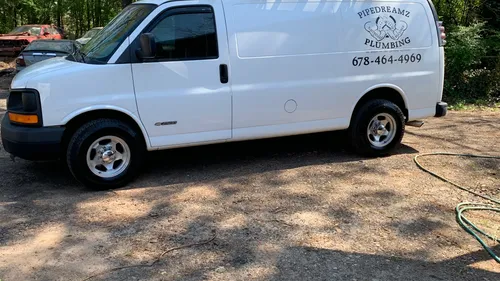
Pipedreamz Plumbing
1730 Cherry Valley Cir SE, Atlanta, GA 30316
Pipedreamz Plumbing is a plumbing service provider located in Atlanta, GA. They offer a range of services including water heater repair and installation, toilet repair, and garbage disposal repair. The company has experience handling various plumbing needs with a focus on professionalism and efficiency. Pipedreamz Plumbing is known for its expertise in water heater services and has built a reputation as a trusted name in the industry since its founding.
Understanding Georgia's Plumbing Codes and Regulations
Installing a new water heater in Georgia is not a simple DIY project; it is governed by a set of state and local codes designed to ensure safety and proper function. Adherence to these regulations is mandatory and typically verified through a permitting and inspection process.
The primary guideline is the Georgia State Minimum Standard Plumbing, Mechanical, Fuel Gas, and Energy Codes, which are based on the International Codes with specific state amendments 1. A fundamental rule is that all water heaters must be installed strictly according to the manufacturer's instructions 2. Beyond that, several key safety and placement rules apply:
- Permits and Inspections: The installation of a new water heater typically requires a permit from your local building department, followed by an inspection to verify code compliance. This step protects your home investment and ensures the installation is safe.
- Safety Devices: Proper installation of a temperature and pressure relief (TPR) valve with appropriate discharge piping is mandatory to prevent dangerous pressure buildup 3.
- Location Restrictions: Fuel-fired water heaters (natural gas or propane) cannot be installed in storage closets. If located in a bedroom or bathroom, they must be in a sealed, dedicated enclosure unless they are a direct-vent model 4 5.
- Garage Installations: Special rules exist for garages to prevent ignition of flammable vapors. The ignition source of a fuel-fired heater must be at least 18 inches above the floor, or the appliance must be a listed flammable vapor ignition-resistant (FVIR) model 6.
- Future-Proofing for New Construction: Georgia's energy codes are looking ahead. For new construction projects, even if a gas water heater is initially installed, the code may require that the electrical infrastructure be put in place to accommodate a future high-efficiency heat pump water heater 7.
Working with a licensed professional is the best way to ensure all these complex requirements are met.
How to Size Your Water Heater Correctly
Choosing the correct size is critical for performance and efficiency. An undersized unit will run out of hot water quickly, while an oversized one wastes energy and money. Sizing is based on your household's number of occupants and peak hot water demand (when multiple fixtures are used at once) 8.
For Traditional Tank Water Heaters
These are sized by their storage capacity in gallons and their First Hour Rating (FHR), which estimates how many gallons of hot water the unit can deliver in one hour starting with a full tank.
- 1-2 people: A 30-40 gallon tank is often sufficient 9.
- 3-4 people: Look for a 50-60 gallon capacity to meet typical demand 10 11.
- 5 or more people: You will likely need a 60-80 gallon tank or larger 12.
For Tankless (On-Demand) Water Heaters
Tankless models are sized by their flow rate, measured in gallons per minute (GPM), and the required temperature rise (the difference between incoming groundwater temperature and your desired hot water temperature). Georgia's groundwater temperature varies, so this is an important factor.
- General Need: Most homes require a system that can deliver a flow rate of 5-10 GPM.
- Simultaneous Use Example: If you want to run a shower (2.5 GPM) and a dishwasher (3 GPM) at the same time, you would need a unit capable of at least 5.5 GPM at your needed temperature rise 13.
A professional installer will perform a detailed calculation considering all fixtures to recommend the perfectly sized unit for your home.
Find the perfect water heater installation companies for your needs
Get personalized recommendations and expert advice
Energy Source Options in Georgia
The choice of fuel source significantly impacts upfront cost, operating expenses, and installation requirements. Georgia homeowners have several options.
- Natural Gas: Widely available in many parts of the state, natural gas is a popular choice for water heating. Gas units typically heat water faster than standard electric models and can offer lower operating costs, depending on local utility rates 14. They do require proper gas line sizing and venting.
- Electricity: The most common energy source for water heaters in the U.S. due to its universal availability 15. Options include traditional electric resistance tanks and highly efficient Heat Pump Water Heaters (HPWH). Standard electric units are often less expensive to purchase but can be more costly to operate than gas in some areas.
- Heat Pump Water Heaters (HPWH): This is a specialized type of electric water heater that works like a reverse air conditioner, extracting heat from the surrounding air and transferring it to the water. While they have a higher initial cost, they can be two to three times more energy-efficient than conventional electric resistance models, leading to significant utility savings over time 16. They work best in installed spaces that remain between 40°F and 90°F year-round and have at least 1,000 cubic feet of air space around them.
- Propane: A common alternative in rural areas where natural gas lines are not accessible. Installation requires a propane tank and specific fuel line considerations.
- Solar: While less common, solar water heating systems can be very effective in Georgia due to the state's abundant sunlight. These systems use solar collectors and usually require a backup system (electric or gas) for cloudy days.
Cost Guide for Professional Installation
The total cost for water heater replacement in Georgia includes both the unit and professional labor. Prices vary based on the type of heater, your home's existing infrastructure, and local labor rates. The figures below are general ranges for a full professional installation 17 18.
- Standard Tank Water Heater (Electric or Gas): $600 - $2,500. This is the most common replacement. Cost depends on unit capacity, brand, and efficiency rating. A straightforward "like-for-like" swap is typically on the lower end, while upgrading to a higher efficiency model or dealing with difficult access may increase the price 19.
- Tankless Water Heater (Electric or Gas): $1,400 - $3,900+. Tankless systems have a higher equipment cost and often require upgrades to gas lines or electrical service (e.g., adding a new 240-volt circuit). Modifications to venting can also add to the cost 20 21.
- Heat Pump Water Heater (HPWH): The unit alone for a heat pump water heater can range from approximately $1,200 to $3,500 22. Total installation cost depends on the complexity of the setup, including electrical requirements and condensate drainage. It's important to factor in potential long-term energy savings and available rebates.
Financial Incentives: Homeowners should investigate potential federal tax credits. For qualifying energy-efficient models, such as certain Heat Pump Water Heaters, you may be eligible for a credit of up to $2,000 23. Always check the latest IRS guidelines and manufacturer specifications for eligibility.
Signs You Need a Replacement
How do you know it's time for a new water heater? Watch for these common indicators:
- Age: Most traditional tank water heaters have a lifespan of 8-12 years. If yours is within or past this range, start planning for a replacement.
- Rusty Water: If you notice discolored hot water coming from your taps, it could mean the inside of the tank is corroding.
- Rumbling Noises: Sediment buildup at the bottom of the tank can harden and cause overheating and rumbling sounds, reducing efficiency and damaging the tank.
- Leaks: Any moisture or pooling water around the base of the tank is a serious sign of failure. A leaking tank cannot be repaired and must be replaced immediately.
- Insufficient Hot Water: If you're running out of hot water faster than before, it could indicate a failing heating element or excessive sediment buildup.
The Professional Installation Process
When you hire a qualified Georgia plumber, you can expect a process that prioritizes safety and code compliance:
- Assessment and Quote: The professional will assess your current setup, discuss your household's needs, and provide a detailed written estimate covering the unit, labor, permits, and any necessary upgrades.
- Permit Acquisition: Your contractor will typically pull the required local building permit.
- Preparation and Removal: The old unit is safely disconnected, drained, and removed from the premises.
- Installation: The new unit is positioned, connected to water, fuel (gas or electric), and venting systems. All safety devices, like the TPR valve and expansion tank (if required), are installed.
- Inspection: Once installation is complete, the local building inspector will visit to verify the work meets all Georgia codes.
- Cleanup and Demonstration: The area is cleaned up, and the installer will show you how to operate the new unit and set the temperature.
Investing in a professional installation ensures your system is safe, efficient, and reliable for years to come.
Frequently asked questions
Sources
Footnotes
-
GAC - Rule 120-2-26-.08. Underwriting Principles - GA R&R - https://rules.sos.state.ga.us/GAC/120-2-26-.08 ↩
-
CHAPTER 28 WATER HEATERS - ICC Digital Codes - https://codes.iccsafe.org/content/GAIRC2018P1/chapter-28-water-heaters ↩
-
CHAPTER 28 WATER HEATERS - ICC Digital Codes - https://codes.iccsafe.org/content/GAIRC2018P1/chapter-28-water-heaters ↩
-
Chapter 5 Water Heaters: Georgia State Minimum ... - UpCodes - https://up.codes/viewer/georgia/ipc-2018/chapter/5/water-heaters ↩
-
CHAPTER 20 BOILERS AND WATER HEATERS - https://codes.iccsafe.org/content/GAIRC2018P1/chapter-20-boilers-and-water-heaters ↩
-
Chapter 20 Boilers and Water Heaters: Georgia State Minimum Standard One and Two Family Dwelling Code 2018 - https://up.codes/viewer/georgia/irc-2018/chapter/20/boilers-and-water-heaters ↩
-
2025 Updates: Hot Water in Mixed Fuel Projects - 3C-REN - https://www.3c-ren.org/2025-updates-hot-water-in-mixed-fuel-projects/ ↩
-
Replacing your Water Heater - https://smarterhouse.org/water-heating/replacing-your-water-heater ↩
-
What Size Water Heater Do I Need? - Solace Enterprises - https://solace-ent.com/blog/what-size-water-heater-do-i-need/ ↩
-
Residential Water Heater Sizing Guide - CenterPoint Energy - https://www.centerpointenergy.com/en-us/HSP/Pages/water-heating-sizing-guide.aspx?sa=mn&au=res ↩
-
What Size Water Heater Do I Need? - https://www.cooltoday.com/blog/what-size-water-heater-do-i-need ↩
-
Section 506 Minimum Capacities for Residential Water Heaters - https://up.codes/s/minimum-capacities-for-residential-water-heaters ↩
-
What Size Tankless Water Heater Do I Need? Expert Guide to Perfect ... - https://justplumbingaz.com/blog/what-size-tankless-water-heater-do-i-need-expert-guide-to-perfect-sizing-calculator-inside/ ↩
-
Residential - Natural Gas Association of GA - https://ngaofgeorgia.org/residential/ ↩
-
Types Of Water Heaters By Power Or Fuel Source - https://www.4fastplumber.com/types-of-water-heaters-by-power-or-fuel-source ↩
-
Why Natural Gas - Natural Gas Association of GA - https://ngaofgeorgia.org/education-info/why-natural-gas/ ↩
-
Cost to Install a Gas Water Heater - Trailblazer Plumbing - https://www.trailblazerplumbing.com/blog/cost-to-install-a-gas-water-heater/ ↩
-
Tankless Water Heater Installation & Repair in Allentown - https://www.masteryplumbing.com/plumbing-services/tankless-water-heaters/ ↩
-
Essential Guide to Water Heater Replacement - https://gaeberly.com/water-heater-replacement/ ↩
-
Water Heater Cost in 2026: DIY or Professional Installation? - https://www.nerdwallet.com/home-ownership/home-improvement/learn/water-heater-cost ↩
-
CHOOSING A NEW WATER HEATER - https://www.fcs.uga.edu/docs/Energy_Water_Heater_HACE-E-60-06.pdf ↩
-
Types of Water Heaters: Electric vs. Gas - The Home Depot - https://www.homedepot.com/c/ab/types-of-water-heaters/9ba683603be9fa5395fab908649bc7f ↩
-
Latest Newsletter | Georgia Association of Accountants & Tax ... - https://gaatp.org/newsletter/new-requirements-for-energy-efficiency-credits-take-effect-in-2025/ ↩