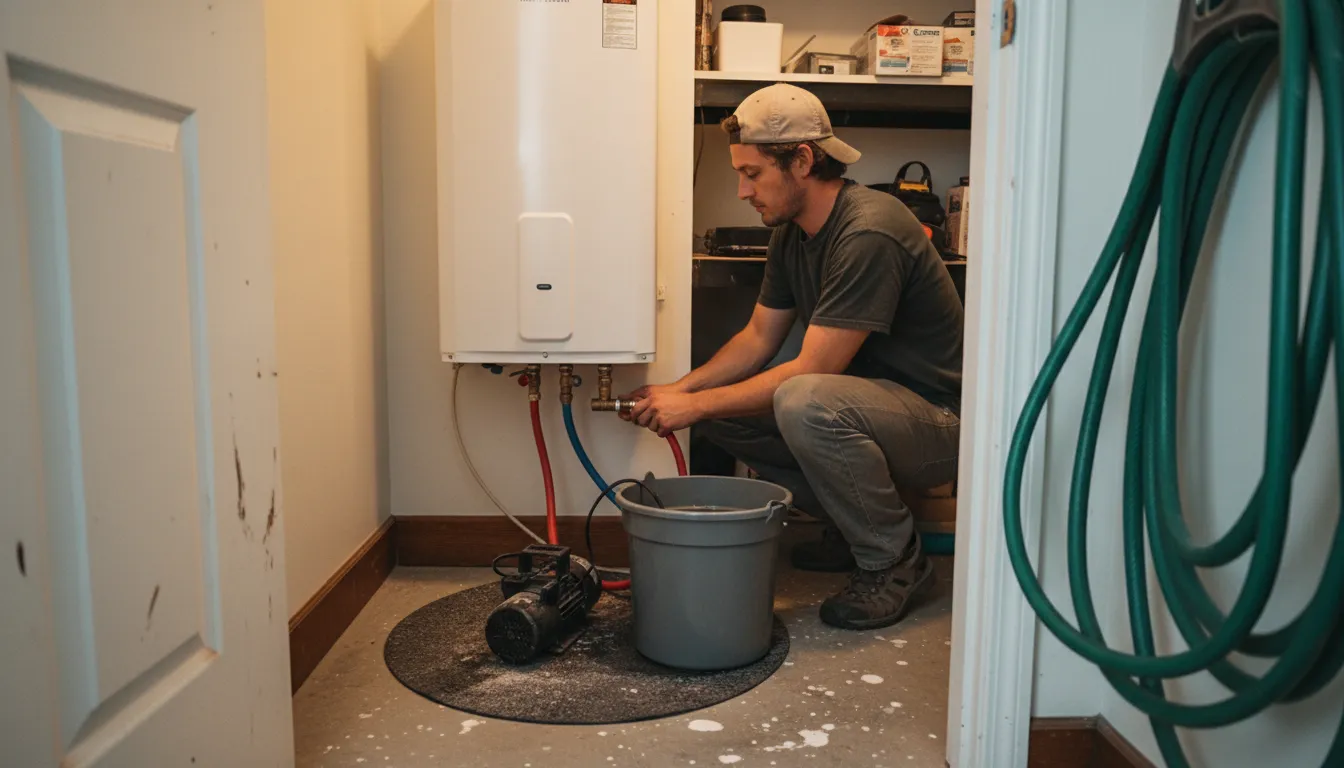
Find the Best Tankless Water Heater Service Companies for Your Business
No obligation • Fast responses • Nationwide coverage

Why you can trust Search a Plumber
Search a Plumber is a leading United States resource for finding and evaluating professional plumbing services. Our team researches licensing, experience, and customer feedback to create unbiased, fact-driven overviews. Companies cannot pay to change ratings or placement, ensuring homeowners get trustworthy information.
Search providers near you
Best Tankless Water Heater Service Companies in Virginia Ranked
Upgrading to a tankless water heater in Virginia can provide endless hot water, reduce energy bills, and free up valuable space in your home. These on-demand systems heat water only when you need it, offering a modern and efficient alternative to traditional storage tank models. Finding a qualified local professional is essential for a successful installation, as the process involves specific electrical, plumbing, and gas work that must comply with Virginia's building codes. This guide will help you understand the key considerations, costs, and steps involved in installing or repairing a tankless system in the Commonwealth.
Blair's Plumbing Repair & Drains
337 Thalia Dr, Newport News, VA 23608
Blair's Plumbing Repair & Drains is a family-run plumbing company serving Virginia Beach, VA, and the Hampton Roads Peninsula communities. They provide a wide range of plumbing services including water heater repair and installation, tankless water heater service for Rinnai and Navien models, sump pump and sewage pump repair, drain cleaning, sewer line repair, leak detection, repiping, and toilet and garbage disposal repairs. The company emphasizes thorough whole home plumbing inspections and detailed explanations to help customers understand their plumbing systems. Founded in 2020 by Army veteran Justan Blair, the business combines skilled plumbing work with a focus on customer education and service.
Richardson Plumbing Co
1469 Butts Station Rd, Chesapeake, VA 23320
Richardson Plumbing Co is a family owned and operated plumbing business serving Virginia Beach, VA, and the Tidewater area since 1988. They provide a wide range of residential and commercial plumbing services including water heater installation and repair, tankless water heater services, drain cleaning, sewer line repair, and gas line installation. The company is licensed and insured, with a Master Plumber and Master Gas Piper on staff, and offers backflow testing and plumbing inspections as part of their expertise.
A1 Sewer & Drain Plumbing & Water Heaters
545 S Birdneck Rd Suite 202-E, Virginia Beach, VA 23451
A1 Sewer & Drain Plumbing & Water Heaters provides a wide range of plumbing, sewer, and gas line services in Virginia Beach, VA. Their offerings include sewer camera inspections, water heater installation and repair, drain cleaning, leak detection, repiping, and gas line installation. The company uses advanced diagnostic tools to accurately identify issues and delivers customized solutions for homes and businesses. With nearly four decades of experience since 1987, A1 Sewer & Drain is equipped to handle complex plumbing challenges and offers 24/7 emergency services to the local community.
Roto-Rooter Plumbing & Water Cleanup
2428 Almeda Ave Ste 144, Norfolk, VA 23513
Roto-Rooter Plumbing & Water Cleanup provides a wide range of plumbing services in Virginia Beach, VA, including sewer camera inspections, water heater repairs and installations, drain cleaning, and sewer line repairs. They use advanced equipment such as hydro jetting and video camera inspections to diagnose and resolve plumbing issues efficiently. The company offers 24/7 emergency plumbing services to address urgent problems at any time. Their expertise also extends to water softener installation and water filtration systems to improve water quality. Roto-Rooter serves Norfolk and nearby areas with licensed and insured professionals.

Get Lit Electrical, Plumbing & Water Heater Repair
1720 Lambert Ct Suite B, Chesapeake, VA 23320
Get Lit Electrical, Plumbing & Water Heater Repair offers a wide range of plumbing services in Virginia Beach, VA. Their licensed plumbers handle everything from water heater installation and repair to sewer line repair and hydro jetting. They specialize in trenchless sewer repair and provide advanced leak detection and repiping services. With years of experience, they focus on honest communication and quality workmanship to ensure lasting results. The company also offers modern plumbing upgrades, including tankless water heaters and water softener installations.
How Tankless Water Heaters Work
Unlike traditional water heaters that constantly heat and store 40-80 gallons of water, tankless models (also called on-demand or instantaneous water heaters) activate only when a hot water tap is turned on. Cold water travels through a pipe into the unit, where it is heated instantaneously by either a powerful gas burner or an electric heating element. This means you receive a continuous supply of hot water, eliminating the "cold water sandwich" or the risk of running out during a long shower. For Virginia households, this efficiency can translate to significant energy savings, as you're not paying to keep a large tank of water hot 24/7.
Choosing the Right System: Gas vs. Electric
The first major decision is selecting your unit's fuel source, which significantly impacts installation requirements, performance, and cost.
Natural Gas or Propane Models Gas-fired tankless water heaters are the most common choice for whole-home applications in Virginia due to their high flow rate capacity, which can typically handle multiple simultaneous uses like a shower and a dishwasher. They require a dedicated gas line of sufficient size to deliver the required volume (measured in BTU), which often means upgrading your existing line. Crucially, gas units must be properly vented to the outdoors using sealed combustion venting, usually made of PVC or stainless steel, to safely exhaust combustion gases 1 2. While the upfront equipment and installation costs are higher, gas models generally have lower operating costs, especially in areas with affordable natural gas.
Electric Models Electric on-demand heaters have a simpler installation process because they don't require gas lines or complex venting. This makes them ideal for point-of-use applications (like a single bathroom or kitchen) or homes without gas service. However, they demand a substantial electrical commitment. Most whole-home electric models require a 240-volt circuit and dedicated breakers, and your home's electrical service panel may need an upgrade to handle the increased load. Their flow rates are generally lower than gas models, making them better suited for smaller households or as supplemental units.
The Installation Process: A Step-by-Step Overview
Professional installation of a tankless water heater is a multi-step process that ensures safety, efficiency, and code compliance. Here's what a typical installation entails:
- Assessment and Permitting: A licensed professional will assess your home's existing plumbing, gas, or electrical capacity and discuss your hot water needs. In Virginia, a permit is typically required for this work, and your contractor will handle pulling it from your local city or county building department.
- Shut-Offs and Removal: The installer will shut off the water supply, gas, or electricity to the old unit. The old water heater is drained, disconnected, and safely removed from the premises.
- Mounting and Connections: The new tankless unit is securely mounted on an interior or exterior wall. New water line connections (cold water in, hot water out) are made, often using flexible lines for easier serviceability 3 4.
- Fuel Source Hookup: For gas units, the new or upgraded gas line is connected. For electric units, the proper heavy-gauge wiring is run from the electrical panel to the unit.
- Venting (Gas Models): The proper venting system is installed, terminating safely outdoors away from windows or intake vents.
- Startup and Inspection: The system is activated, tested for leaks and proper operation, and adjusted for performance. A final inspection by the local authority may be required to close the permit.
Find the perfect tankless water heater service companies for your needs
Get personalized recommendations and expert advice
Key Installation Considerations and Virginia Codes
A successful tankless water heater installation in Virginia hinges on more than just swapping an old unit for a new one. Several critical infrastructure upgrades are often necessary.
- Permits and Codes: Compliance with the Virginia Uniform Statewide Building Code (USBC) is mandatory. Your contractor must obtain the proper permits, and the installation will be subject to inspection to ensure it meets all safety standards for plumbing, fuel gas, and electrical work.
- Gas Line Upgrades: Gas tankless heaters have a high instantaneous demand. Your existing ½-inch gas line may be insufficient; an upgrade to a ¾-inch or 1-inch line is common to ensure the unit receives enough gas flow to operate correctly.
- Venting Requirements: Gas units cannot use the same large, draft-inducing chimney flue as an old tank heater. They require smaller, dedicated, sealed venting (often PVC) that terminates horizontally through a sidewall. The venting material and installation must be precisely per the manufacturer's instructions and code.
- Electrical Service Upgrades: For electric models, the high amperage draw may necessitate upgrading your home's electrical service panel or adding a sub-panel. Proper wire gauge and dedicated circuit breakers are non-negotiable for safety and performance.
Understanding Costs in Virginia
The total cost for a tankless water heater project in Virginia varies widely based on the unit type, your home's readiness, and labor. Here's a general breakdown:
- Equipment Cost: The unit itself ranges from $250 for a small, point-of-use electric model to $4,500 or more for a high-capacity, whole-home gas model with advanced features 5 6.
- Labor and Installation: Professional installation labor typically falls between $700 and $2,000+. A complex gas installation with significant venting and gas line work will be at the higher end of this range.
- Infrastructure Upgrades: These are often the variable that most impacts total cost. Upgrading a gas line can cost several hundred dollars. Installing new venting for a gas unit adds cost. Upgrading an electrical panel to support an electric unit can cost $1,500 to $4,000 on its own 7 8.
- Total Project Cost: Considering all factors, a complete tankless water heater installation in Virginia can range from $1,000 for a simple electric retrofit to $7,500 or more for a whole-home gas system requiring extensive gas, venting, or plumbing modifications 9 10 11.
Common Repair Issues for Tankless Systems
While known for their longevity, tankless water heaters can experience issues that require professional repair. Common problems in Virginia include:
- Scale and Mineral Buildup: This is the most frequent issue, especially in areas with hard water. Limescale can coat the internal heat exchanger, reducing efficiency and eventually causing error codes or a lack of hot water. Annual flushing with a vinegar or descaling solution is recommended preventive maintenance.
- Ignition or Gas Supply Failure: In gas units, a failure to ignite can be caused by a faulty igniter, a gas valve issue, or an inadequate gas supply (often related to an undersized gas line) 12.
- Electrical Faults: For electric units, tripped breakers, failed heating elements, or issues with the control board can stop hot water production.
- Freeze Protection Failures: Units installed in unheated spaces like garages or crawlspaces are susceptible to freezing during Virginia winters. Internal freeze protection components can fail, leading to cracked pipes or heat exchangers 13.
Benefits for Virginia Homeowners
Choosing a tankless system offers several advantages tailored to Virginia residents:
- Endless Hot Water: Never run out during back-to-back showers or while running multiple appliances.
- Energy Efficiency: By eliminating standby heat loss from a storage tank, you can save on monthly energy bills. The U.S. Department of Energy estimates that homes using 41 gallons or less of hot water daily can see 24%-34% higher efficiency with tankless models.
- Space Savings: Wall-mounted units are compact, freeing up floor space traditionally taken by a bulky tank.
- Longer Lifespan: With proper maintenance, tankless water heaters often last 20 years or more, significantly longer than the 10-15 year average for tank-style heaters.
- Reduced Risk of Water Damage: Without a large storage tank, the risk of catastrophic leakage and property damage is minimized.
Frequently asked questions
Sources
Footnotes
-
Tankless Water Heater Repair - Service Specialties - https://www.ssihvac.com/plumbing/tankless-water-heater-repair/ ↩
-
Go Tankless...and Stay in Hot Water - IAEI Magazine - https://iaeimagazine.org/2004/may2004/go-tanklessand-stay-in-hot-water/ ↩
-
Tankless Water Heater Installation Guide - A. O. Smith - https://www.hotwater.com/info-center/tankless-water-heater-installation-guide.html ↩
-
Tankless Water Heater Install: A Step-by-Step Guide - Just Plumbing - https://justplumbingaz.com/blog/tankless-water-heater-install-a-step-by-step-guide/ ↩
-
How Much Does a Tankless Water Heater Cost? - SolarReviews - https://www.solarreviews.com/blog/how-much-does-a-tankless-water-heater-cost ↩
-
Lowes Hot Water Heater Prices, Installation, Reviews (2024) - https://www.hvaccalc.org/lowes-water-heater/ ↩
-
Tankless Water Heater | Temprite Climate Solutions - https://www.tempriteclimatesolutions.com/blog/water-heater-service/do-i-need-to-make-any-plumbing-or-heating-changes-for-a-tankless-water-heater-installation ↩
-
Commercial Gas Line Installation: Cost, Process & Safety - https://www.superbrothers.com/commercial-gas-line-installation-cost-process-safety/ ↩
-
NoVa Homeowner's Guide to Tankless Water Heaters - https://www.veteranplumbing.us/the-northern-virginia-homeowners-guide-to-tankless-water-heaters/ ↩
-
Tankless Water Heater Installation Cost: Ultimate Guide - https://richmondair.us/tankless-water-heater-installation-cost/ ↩
-
Cost to Replace a Water Heater - The Home Depot - https://www.homedepot.com/services/c/cost-install-water-heater/9058c024e ↩
-
Why Your Tankless Water Heater Has No Hot Water - Synergy Companies - https://www.synergycompanies.com/post/why-your-tankless-water-has-no-hot-water ↩
-
Kentucky Plumbing Code 2024 - The Building Codes Assistance Project - https://bcapcodes.org/kentucky/plumbing-code-2024/ ↩