Find the Best Tankless Water Heater Service Companies for Your Business
No obligation • Fast responses • Nationwide coverage

Why you can trust Search a Plumber
Search a Plumber is a leading United States resource for finding and evaluating professional plumbing services. Our team researches licensing, experience, and customer feedback to create unbiased, fact-driven overviews. Companies cannot pay to change ratings or placement, ensuring homeowners get trustworthy information.
Search providers near you
Best Tankless Water Heater Service Companies in Rhode Island Ranked
Upgrading to a tankless water heater in Rhode Island offers a modern solution for endless hot water and improved energy efficiency. This on-demand system heats water only when you need it, which can reduce energy consumption and free up valuable space in your basement or utility closet. Finding a qualified local professional is essential, as proper installation requires navigating specific state codes and handling complex fuel and venting systems. This guide provides the information you need to understand the process, costs, and key considerations for a successful tankless water heater project in the Ocean State.
How Tankless Water Heaters Work
Unlike traditional storage tank models that constantly heat and reheat a large volume of water, tankless (or on-demand) water heaters activate only when a hot water tap is turned on. Cold water travels through a pipe into the unit, where it is instantly heated by either a powerful gas burner or an electric heating element. This process delivers a continuous supply of hot water, eliminating the "cold water sandwich" effect and the risk of running out during a long shower.
The core benefit is energy savings. The U.S. Department of Energy estimates that homes using 41 gallons or less of hot water daily can see energy savings of 24%-34% with a tankless system1. For larger households using around 86 gallons per day, savings are still a notable 8%-14%. In Rhode Island, where energy costs can be high, these savings contribute directly to lower utility bills.
Fuel Types: Gas vs. Electric Systems
Choosing between gas and electric is the first major decision and depends on your home's existing infrastructure and your hot water demands.
Natural Gas or Propane Systems: These are the most common choice for whole-home applications in Rhode Island. They use a high-input burner to heat water rapidly, providing a high flow rate suitable for running multiple fixtures simultaneously. They require a sufficient gas supply line, proper venting to the exterior, and a dedicated combustion air source. If your home already uses gas for heating or cooking, this is often the preferred route for its capacity and operating cost.
Electric Systems: Electric tankless heaters are often used for point-of-use applications (like a single bathroom or kitchen sink) or in homes without gas service. They are generally easier and less expensive to install as they don't require venting. However, they demand a significant electrical load. A whole-home electric unit may require up to 150 amps of dedicated power, often necessitating a service panel upgrade2. They are highly efficient but may struggle to supply enough hot water for two or more simultaneous uses in a larger household.
The Installation Process in Rhode Island
Professional installation is not just recommended; it's required by code and for warranty validation. The process is more complex than a simple tank swap.
- Assessment and Permitting: A licensed plumber or HVAC technician will assess your home's water usage, existing fuel lines, electrical service, and venting options. They will then pull the necessary permits from your local Rhode Island municipality, ensuring the project is inspected and approved.
- Removal and Preparation: The old water heater is drained, disconnected, and removed. The new location for the tankless unit is prepared, which typically involves mounting a sturdy bracket on an exterior or well-ventilated interior wall.
- Utility Connections:
- Water Lines: New flexible copper or PEX lines are run to connect the unit's cold water inlet and hot water outlet.
- Gas Line (for gas models): This is a critical step. Tankless gas heaters require a much higher gas flow rate (measured in BTU/hr) than standard tank models. Upgrading the gas supply line from the meter to the unit is frequently necessary and is a significant part of the labor and cost3 4.
- Electrical (for electric models): A licensed electrician runs heavy-gauge wire from the main panel to a new dedicated circuit breaker.
- Venting (for gas models): A sealed, direct-vent system or a power-vent system using specialized stainless-steel or PVC piping must be installed to exhaust combustion gases safely to the outdoors per strict code requirements 5.
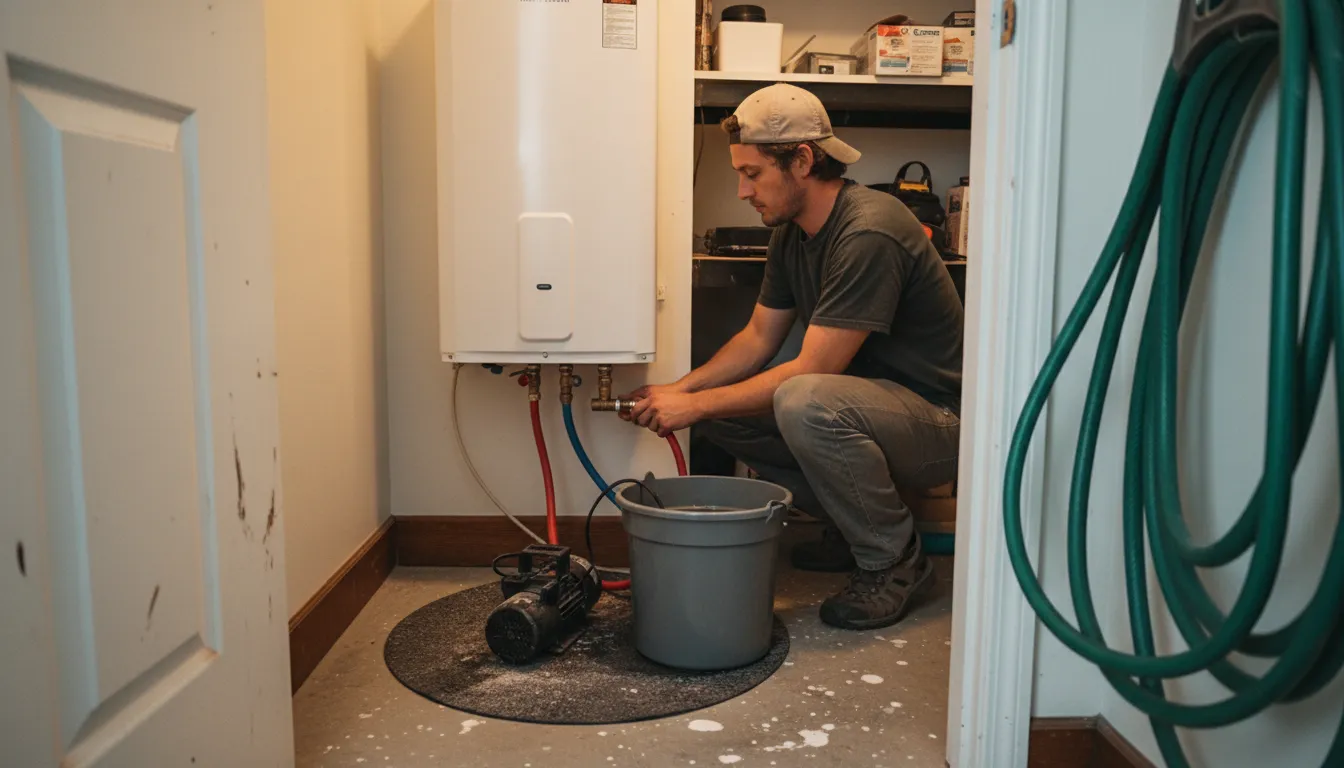
- Testing and Commissioning: The system is flushed, filled, and tested for leaks. The technician will power up the unit, check for proper ignition and operation, and often perform a descaling flush to clear the heat exchanger of manufacturing debris. Finally, they will walk you through the basic controls and maintenance requirements.
Rhode Island Code and Compliance
All installations must adhere to Rhode Island's state-adopted codes, which are based on national standards. Key regulations include:
- International Plumbing Code (IPC): Governs the water piping and drainage connections.
- International Mechanical Code (IMC) & International Fuel Gas Code (IFC): Dictate requirements for gas piping, venting materials, clearances, and combustion air. Direct-vent systems are common, bringing in outside air for combustion and exhausting fumes through a concentric pipe.
- National Electrical Code (NEC): Covers all wiring for electric units and control panels for gas units.
- Manufacturer's Instructions: These take precedence and must be followed for the warranty to remain valid. A professional will ensure the installation meets both code and manufacturer specs.
Ignoring these codes can lead to unsafe conditions (like carbon monoxide poisoning), failed inspections, and voided warranties.
Find the perfect tankless water heater service companies for your needs
Get personalized recommendations and expert advice
Understanding Costs in Rhode Island
The total investment for a tankless water heater in Rhode Island varies widely based on the unit type, home readiness, and labor complexity. Below is a breakdown of typical cost ranges6 7 8 9.
| Cost Component | Typical Range (Rhode Island) | Notes |
|---|---|---|
| Equipment (Unit Only) | $1,200 - $2,500+ (Gas) <br> $250 - $1,100 (Electric) | High-efficiency condensing gas models are at the top end. Electric point-of-use units are less expensive. |
| Professional Labor & Installation | $1,500 - $4,000+ | Covers removal, mounting, basic connections. Complex jobs (long pipe runs, difficult venting) cost more. |
| Gas Line Upgrade | $500 - $1,500+ | Very common. Required if existing line is undersized for the unit's BTU demand. |
| Electrical Service Upgrade | $300 - $800+ | May be needed for electric units if panel lacks capacity or available breaker space. |
| Venting Materials & Labor | $200 - $1,000+ | Depends on vent length, material (stainless steel), and complexity of roof/wall penetration. |
| Permits & Inspections | $50 - $150+ | Varies by city/town (e.g., Providence, Warwick, Cranston). |
Total Project Cost: A standard gas tankless water heater installation in Rhode Island typically ranges from $2,000 to $6,000 or more. A straightforward electric point-of-use installation might be at the lower end of this scale, while a whole-home gas system requiring a gas line upgrade, complex venting, and a high-end unit can exceed $6,000.
Repair and Maintenance Needs
While durable, tankless water heaters are complex appliances that may require specialized repair. Common issues include error codes, fluctuating water temperature, or a complete lack of hot water.
- Diagnostics: A technician will use manufacturer-specific error code readings and multimeter testing to diagnose problems with the flow sensor, igniter, gas valve, or circuit board.
- Common Repairs: These can include replacing a faulty flame sensor, cleaning or replacing a clogged air intake filter, or swapping out a malfunctioning internal pump10.
- Critical Maintenance - Descaling: Rhode Island's water is considered moderately hard. Mineral scale (limescale) buildup inside the heat exchanger is the primary enemy of a tankless system, reducing efficiency, causing overheating, and leading to failure. An annual descaling flush with a vinegar or citric acid solution is strongly recommended to ensure longevity and peak performance. Many professionals offer maintenance plans that include this service.
Choosing the Right Professional
Given the technical and regulatory complexity, selecting the right contractor is paramount.
- Licensing: Ensure the company holds a valid Rhode Island Master Plumber's license and, for gas work, appropriate HVAC or gas-fitting credentials.
- Experience: Ask how many tankless installations they complete annually and for references. Manufacturer-specific certifications (like Navien, Rinnai, or Noritz) are a major plus.
- Comprehensive Quote: A detailed written estimate should break down equipment (make/model), all labor, materials (venting type, pipe sizes), costs for potential upgrades (gas/electrical), and permit fees. Beware of quotes that seem unusually low, as they may omit necessary code-compliant work.
- Local Knowledge: A contractor familiar with your local building department's inspectors and specific requirements can streamline the permitting and inspection process.
Investing in a tankless water heater can provide Rhode Island homeowners with reliable hot water and energy savings for years to come. Success hinges on understanding the requirements, budgeting for the full scope of work, and partnering with a qualified, local expert who will ensure a safe, code-compliant installation.
Frequently asked questions
Sources
Footnotes
-
How Do Tankless Water Heaters Work? - The Home Depot - https://www.homedepot.com/c/ab/how-do-tankless-water-heaters-work/9ba683603be9fa5395fab90c29ab2eb ↩
-
Go Tankless...and Stay in Hot Water - IAEI Magazine - https://iaeimagazine.org/2004/may2004/go-tanklessand-stay-in-hot-water/ ↩
-
Tankless Water Heater | Temprite Climate Solutions - https://www.tempriteclimatesolutions.com/blog/water-heater-service/do-i-need-to-make-any-plumbing-or-heating-changes-for-a-tankless-water-heater-installation ↩
-
Unleash Endless Hot Water: Your Tankless Water Heater Installation Handbook - Expert HVAC & Plumbing Services in Longview, TX - https://www.alcoair.com/tankless-water-heater-installation-guide/ ↩
-
Tankless Water Heater Installation Guide - A. O. Smith - https://www.hotwater.com/info-center/tankless-water-heater-installation-guide.html ↩
-
How Do Tankless Water Heaters Work? Complete Rhode ... - https://stonelinkplumbing.com/how-tankless-water-heaters-work-rhode-island-guide/ ↩
-
Cost to install a tankless water heater in Providence, RI - https://www.handoff.ai/construction-costs/install-a-tankless-water-heater/providence-ri ↩
-
Cost to Replace a Water Heater - The Home Depot - https://www.homedepot.com/services/c/cost-install-water-heater/9058c024e ↩
-
Lowes Hot Water Heater Prices, Installation, Reviews (2024) - https://www.hvaccalc.org/lowes-water-heater/ ↩
-
Chapter 5 Water Heaters: Rhode Island Plumbing Code 2019 - https://up.codes/viewer/rhode_island/ri-plumbing-code-2019/chapter/5/water-heaters ↩