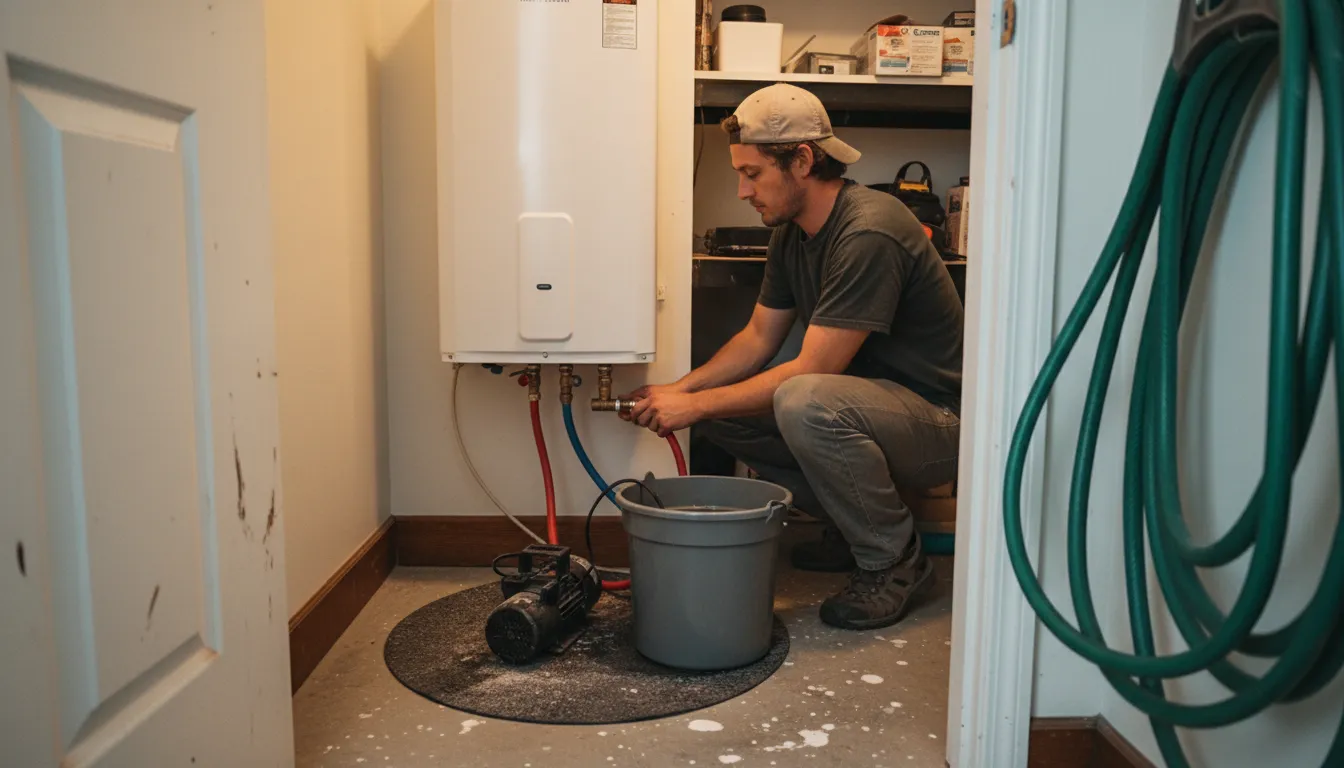
Find the Best Tankless Water Heater Service Companies for Your Business
No obligation • Fast responses • Nationwide coverage

Why you can trust Search a Plumber
Search a Plumber is a leading United States resource for finding and evaluating professional plumbing services. Our team researches licensing, experience, and customer feedback to create unbiased, fact-driven overviews. Companies cannot pay to change ratings or placement, ensuring homeowners get trustworthy information.
Search providers near you
Best Tankless Water Heater Service Companies in Alaska Ranked
Upgrading to a tankless water heater in Alaska is a smart move for efficiency and endless hot water, but it requires careful planning to handle the state's unique climate and building codes. This service connects you with licensed, local professionals who specialize in the proper installation and repair of these systems. Finding the right expert ensures your unit is sized correctly, installed safely, and protected against freezing-key factors for reliable performance in Alaska's demanding environment.
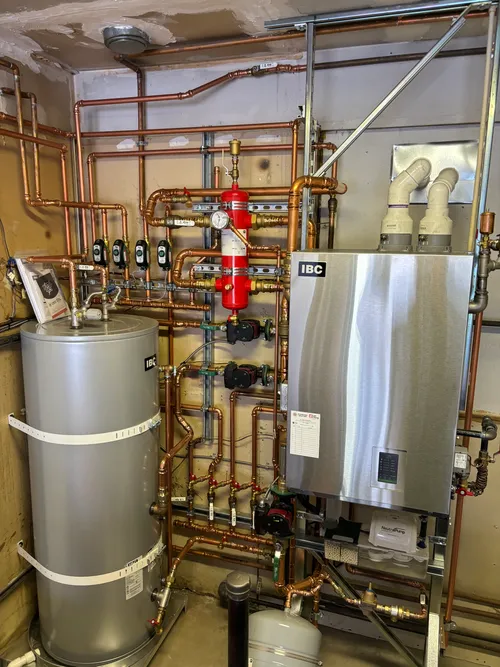
Diamond Heating & AirTemp Alaska
5406 Lake Otis Pkwy, Anchorage, AK 99507
Diamond Heating & AirTemp Alaska is a heating and plumbing service provider located in Anchorage, AK. They offer installation and repair services for water heaters, including tankless models, as well as gas line installation. With over 25 years of experience, the company serves residential and commercial clients, providing solutions such as furnaces, boilers, heat pumps, and indoor air quality products. Their team is trained to handle a variety of heating and plumbing needs to maintain comfort throughout the year.
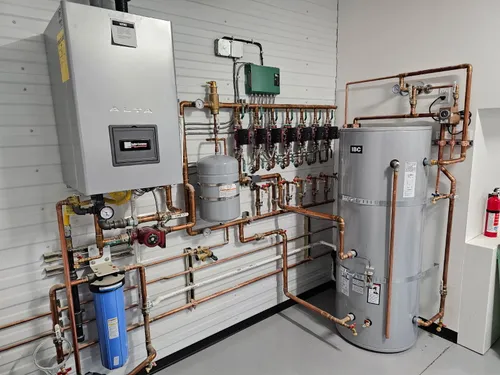
Mat-Su Mechanical Inc
1265 Lolly Cir, Wasilla, AK 99654
Mat-Su Mechanical Inc is a licensed and insured plumbing and HVAC contractor based in Wasilla, serving Anchorage, AK, and the surrounding Mat-Su Valley communities. They provide water heater installation, repair, and maintenance services, including tankless water heater solutions. The company has been operating since 1999, offering expertise in residential and commercial systems. They also maintain a well-stocked parts department to support timely repairs and installations.
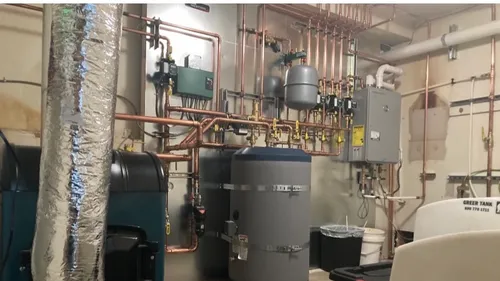
Knik Heating, LLC
4051 Lamont Way, Wasilla, AK 99623
Knik Heating, LLC is a veteran-owned HVAC company based in Wasilla, Alaska, serving Anchorage and the broader Mat-Su Valley, including Eagle River and Talkeetna. They provide a range of services including furnace and air conditioning repair and installation, water heater installation and repair, water softener installation, gas line installation, and water filtration systems. With over 30 years of experience, Knik Heating offers comprehensive heating and cooling solutions, including hydronic heating and emergency 24/7 furnace repairs to ensure home comfort throughout Alaska's cold seasons.
Boiler Man Plumbing & Heating
9161 E Frontage Rd, Palmer, AK 99645
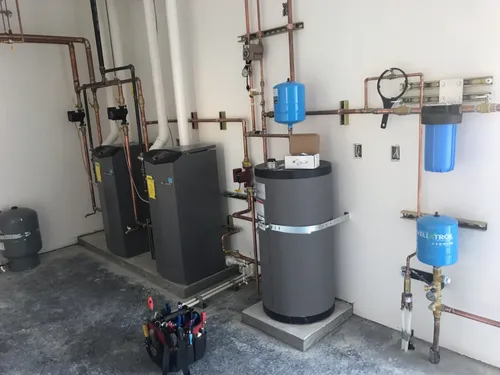
Boiler Man Plumbing & Heating is a family-owned business serving Anchorage, AK, since 2008. They provide a wide range of plumbing and heating services for both residential and commercial customers, including water heater installation and repair, gas line installation, sump pump repair, and boiler system services. The company is experienced in handling new construction, remodels, and additions, with capabilities such as hydronic in-floor heating and gas piping. Led by a team with over 28 years of industry experience, Boiler Man Plumbing & Heating has built a reputation based on quality work and customer referrals. They also offer maintenance plans and emergency heating services.
Hard Rok Plumbing & Heating LLC
4740 E Fattic Dr, Wasilla, AK 99654
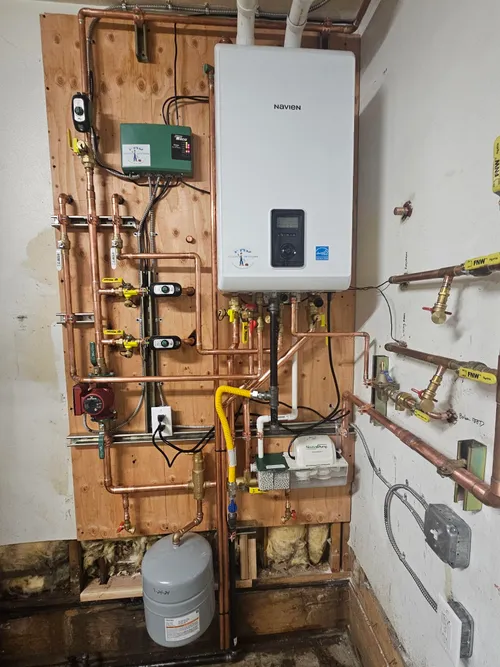
Hard Rok Plumbing & Heating LLC offers plumbing and heating services in Anchorage, AK, specializing in water heater repair, tankless water heater plumbing, and water softener installation. Serving the Valley and Alaska since 2002, the company provides 24/7 plumbing and heating service, including after-hours support. They are known for their hydronic and forced air systems service, with a 12-month warranty on service work and an optional Stress-Free service contract for ongoing maintenance and discounted rates on future repairs.
Why Choose a Tankless System in Alaska?
For Alaskan homeowners, the primary benefits of an on-demand water heater are significant. First, they eliminate the standby energy losses associated with a traditional storage tank, which can be costly when heating water in a cold climate. Second, they provide a continuous supply of hot water, ideal for larger households or after a long day outdoors. However, the cold incoming groundwater temperature in Alaska means your unit must be properly sized to achieve the necessary temperature rise, making professional assessment critical 1.
Key Considerations for Alaskan Installations
Installing an instantaneous water heater in Alaska isn't a simple swap. Several state-specific factors must be addressed to ensure safety, efficiency, and longevity.
- Extreme Cold & Freeze Protection: This is the foremost concern. Units installed in unheated spaces like garages or exterior walls require built-in freeze protection or must be professionally winterized. The best practice is to install the unit inside a conditioned space whenever possible.
- Strict Adherence to Codes: Alaska follows the Uniform Plumbing Code (UPC) with local amendments 2. Licensed professionals understand requirements for proper venting, gas pressure, clearances, and mandatory permits, which are essential for safety and insurance.
- Fuel Source & Infrastructure: Your choice between gas and electric models depends heavily on your home's existing infrastructure.
- Venting Requirements: Proper venting is non-negotiable, especially for gas models. Direct-vent (sealed combustion) systems are often required, using specialized, corrosion-resistant materials to safely handle combustion gases in cold weather.
Gas vs. Electric: Choosing Your Fuel Type
The right fuel type for your tankless system depends on availability, cost, and your home's capacity.
Natural Gas or Propane Tankless Heaters:
- Pros: Generally higher flow rates, better for simultaneously running multiple fixtures, and often more cost-effective to operate if gas is available.
- Cons: Installation is more complex and costly. It typically requires upgrading the gas supply line to a larger diameter (e.g., 3/4" or more) to deliver adequate volume and pressure 3. Venting must be meticulously installed per code, often using expensive stainless-steel materials.
Electric Tankless Water Heaters:
- Pros: Simpler installation with no venting needed, higher energy efficiency, and a smaller physical footprint.
- Cons: They demand a substantial electrical upgrade. A whole-house unit may require multiple new, high-amperage dedicated circuits (up to 150 amps total) 4 5. In Alaska's cold climate, an electric unit must be oversized to heat very cold water, which can further increase electrical demands and operating costs.
The Professional Installation Process
A proper installation by a qualified technician follows a meticulous sequence to ensure reliability and code compliance.
- Comprehensive Home Assessment: A pro will evaluate your home's gas line size and pressure or electrical service capacity. They will also check water pressure, identify a suitable location, and plan the venting route.
- Accurate System Sizing: This is crucial. The technician calculates the required flow rate (in gallons per minute, GPM) based on your household's peak demand and the temperature rise needed from Alaska's cold groundwater to your desired hot water temperature.
- Infrastructure Upgrades: This often includes installing a new, larger gas line or adding dedicated electrical circuits from your panel. These upgrades are a significant part of the project's labor and material cost 6.
- Venting Installation: For gas units, the technician will install the approved venting system, ensuring proper sealing, slope, and termination clearances away from windows and eaves as mandated by code 7.
- Water & Gas Connections: The unit is plumbed in with isolation valves for easy future service. A sediment filter is highly recommended to protect the unit's heat exchanger. Gas lines are connected with leak testing performed.
- Final Inspection & Activation: After connecting power and setting controls, the system is tested for safe operation, proper ignition, and correct water temperature delivery.
Find the perfect tankless water heater service companies for your needs
Get personalized recommendations and expert advice
Understanding Costs in Alaska
Installation costs in Alaska can be higher than the national average due to climate challenges, code requirements, and potential accessibility issues. Prices are highly variable based on the unit, home readiness, and labor.
- Equipment Cost: Tankless units range from around $200 for a basic electric point-of-use model to over $3,600 for a high-output gas or combination (combi) unit that also provides space heating.
- Gas Installation (with upgrades): A full installation of a gas tankless water heater, including necessary gas line upgrades, new venting, and plumbing, typically ranges from $2,400 to $5,400 or more.
- Electric Installation: Installing an electric model is generally less expensive, often between $650 and $950 for the unit and basic labor, but this cost can rise significantly if a major electrical service upgrade is required 8.
- Labor Rates: Professional plumbers and gas fitters typically charge between $100 and $200+ per hour, though most provide a project-based quote 9.
Common Repairs and Maintenance
Even robust tankless systems need occasional service. Common issues include error codes due to:
- Mineral Scale Buildup: Hard water can coat the heat exchanger, reducing efficiency. An annual descaling flush is recommended.
- Ignition Failure: Often caused by a faulty igniter, flame sensor, or gas valve.
- Air/Exhaust Flow Issues: Blocked intake or exhaust vents, or a failing fan motor.
- Cold Water Sandwich: A brief burst of cold water between uses, which can sometimes be mitigated with a small buffer tank.
Important: Repairs, especially on gas models, should always be performed by a licensed technician. They have the tools and expertise to safely diagnose issues, source correct parts, and ensure the system operates safely post-repair.
Permits, Codes, and Safety
Pulling permits is a standard and necessary part of a professional installation. Your contractor will handle this, ensuring the work meets all aspects of the Alaska-adopted Uniform Plumbing Code (UPC) and any local municipal requirements 10. Key code focuses for tankless systems include:
- Venting Specifications: Materials, sizing, and termination locations.
- Gas Line Sizing: Ensuring adequate volume and pressure.
- Freeze Protection: Mandating installation methods or equipment features to prevent freezing 11.
- Pressure Relief Valves: Required safety devices. A final inspection by the local building department provides an official verification that your new system is safe and compliant.