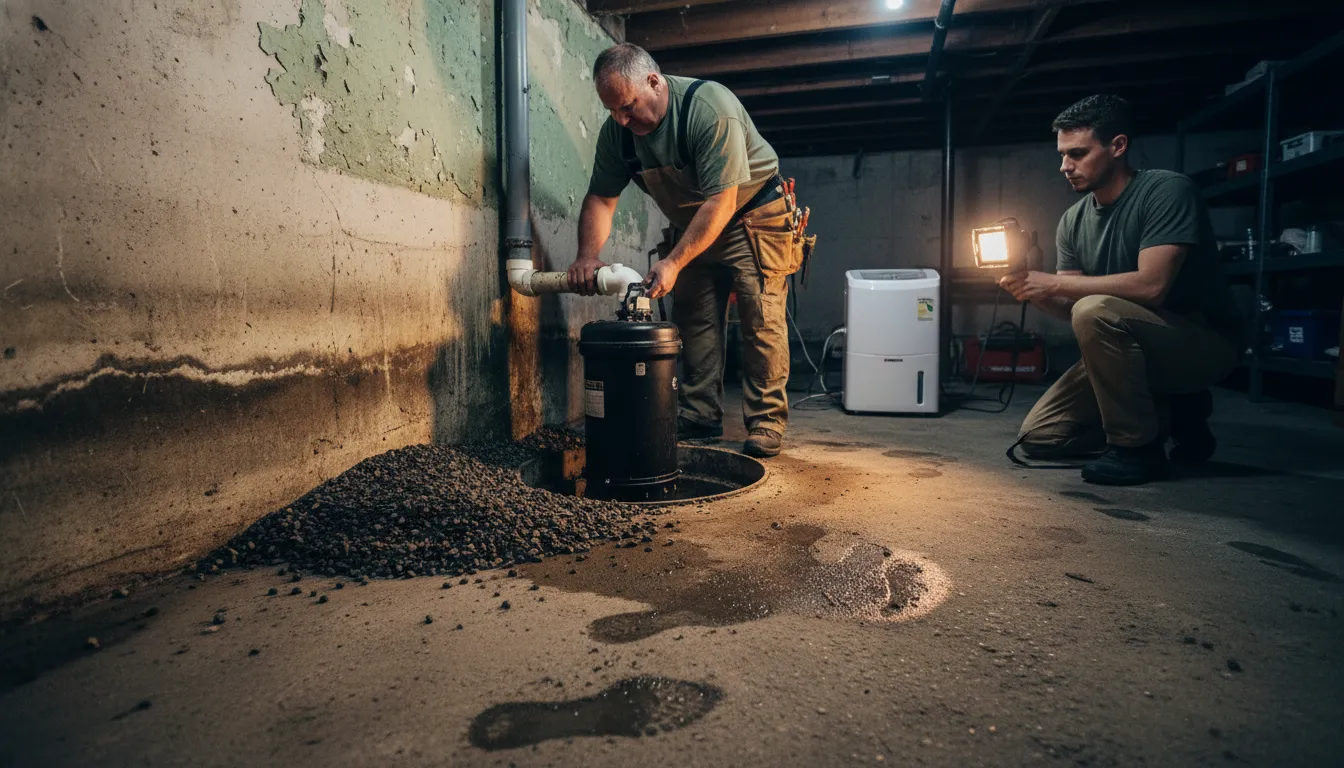
Find the Best Sump Pump Installation & Repair Companies for Your Business
No obligation • Fast responses • Nationwide coverage

Why you can trust Search a Plumber
Search a Plumber is a leading United States resource for finding and evaluating professional plumbing services. Our team researches licensing, experience, and customer feedback to create unbiased, fact-driven overviews. Companies cannot pay to change ratings or placement, ensuring homeowners get trustworthy information.
Search providers near you
Top Sump Pump Installation & Repair Companies in Kyle, Texas Ranked
A properly functioning sump pump is a critical line of defense for your Kyle home, protecting your basement or crawl space from costly water damage. Central Texas is no stranger to heavy downpours, and the region's clay-heavy soil can trap water around your foundation, making effective water management essential. This guide provides a detailed look at sump pump systems, their installation, and maintenance, helping you understand your options and connect with experienced local professionals who can assess your specific needs.
Roto-Rooter Plumbing & Water Cleanup of New Braunfels
1111 N Walnut Ave Ste 202, New Braunfels, TX 78130
Roto-Rooter Plumbing & Water Cleanup of New Braunfels offers a wide range of plumbing services for residential and commercial clients in San Antonio, TX. Their expertise includes sewer and drain cleaning, water heater repair and installation, sump pump repair, leak detection, and trenchless sewer line repair. The company is equipped to handle emergencies 24/7, providing same-day service for urgent plumbing issues such as burst pipes, sewer backups, and water heater failures. With a history dating back to 1935, Roto-Rooter combines decades of experience with advanced technology to serve the local community effectively.
Plumbing Outfitters
9415 Burnet Rd Suite 110, Austin, TX 78758
Plumbing Outfitters is a locally owned plumbing company serving Austin, TX. Led by Master Plumber Warren Stroud and co-owner Ashley Stroud, they provide a range of plumbing services including sewer camera inspections, water heater repair and installation, water softener installation, sump pump repair, drain cleaning, hydro jetting, sewer line repair, leak detection, repiping, gas line installation, and toilet repair. Their licensed plumbers use advanced tools like sewer cameras and pressure testing to accurately diagnose issues and ensure code-compliant repairs. Plumbing Outfitters has decades of combined experience working in Austin homes and neighborhoods, offering 24-hour emergency plumbing services to address urgent problems promptly.

Zoom Drain
1220 Satterwhite Rd Ste 1104, Buda, TX 78610
Zoom Drain provides drain cleaning and sewer repair services in Austin, TX, and surrounding areas including Buda and Bastrop. They serve both residential and commercial clients, addressing issues such as clogged sinks, toilets, grease traps, and sump pump repairs. The company uses advanced technology like sewer camera inspections and hydro jetting to diagnose and clear blockages effectively. Zoom Drain is known for its experience in handling a variety of plumbing challenges and offers tailored maintenance plans for property managers and specialized services for the food and hospitality industry.

Mr. Rooter Plumbing of San Marcos
1409 N Bishop St Ste C-6, San Marcos, TX 78666
Mr. Rooter Plumbing of San Marcos is a locally owned plumbing company serving the Austin, TX area, including San Marcos and Wimberley. They offer a wide range of plumbing services such as drain cleaning, water heater installation and repair, sewer line repair, trenchless sewer repair, hydro jetting, leak detection, repiping, and gas line installation. The company is led by a master plumber with extensive experience and provides upfront pricing with no overtime charges. They are available 24/7 for emergency plumbing services to minimize downtime and quickly resolve issues.
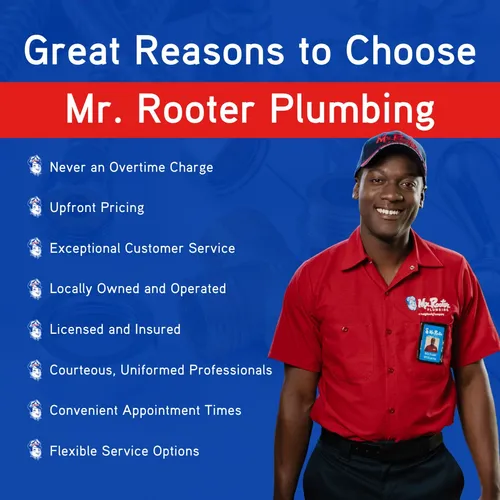
Mr. Rooter Plumbing of Seguin
301 N Austin St, Seguin, TX 78155
Mr. Rooter Plumbing of Seguin provides a range of plumbing services in San Antonio, TX, including water heater repair and installation, sump pump repair, drain cleaning, hydro jetting, sewer line repair, and leak detection. Their licensed and insured plumbers serve both residential and commercial customers, offering reliable solutions backed by the Neighborly Done Right Promise®. The company emphasizes clear communication with flat-rate pricing and professional workmanship to ensure customer confidence. They handle complex plumbing repairs and maintenance to prevent issues like leaks and sewer gas intrusion.
Understanding Sump Pumps and Kyle's Unique Challenges
A sump pump is a specialized pump installed in a pit (sump basin) in the lowest part of your basement or crawlspace. Its job is to collect incoming groundwater and pump it away from your home's foundation. In Kyle, this system is particularly vital due to the local climate and geology. The area experiences intense rainstorms, and the prevalent clay soil has a low absorption rate, meaning water tends to pool and exert hydrostatic pressure against basement walls and floors. Without a reliable drainage solution like a sump pump, this pressure can force water through cracks and joints, leading to flooding, mold growth, and structural damage.
How a Sump Pump System Works
The system begins with drainage. Water from the soil is channeled into the sump pit via perimeter drains, such as French drains or weeping tiles 1. When the water level in the pit rises to a certain point, a float switch activates the pump. The pump then moves the water through a discharge pipe, which must direct the water at least 10 feet away from your foundation to prevent it from simply seeping back into the ground near your home 2. Proper discharge is crucial; water should be directed to a storm drain, dry well, or sloped area away from your property and your neighbor's, in compliance with local Kyle and Hays County codes 3.
Types of Sump Pumps: Choosing the Right One
Selecting the correct pump type depends on your space, noise tolerance, and performance needs. The two primary categories are pedestal and submersible pumps.
- Pedestal Pumps: In this design, the motor is mounted on a long column (pedestal) above the sump pit, with only the impeller extending down into the water. These units are generally less expensive upfront and easier to service since the motor is accessible. However, they tend to be louder, less powerful, and more obtrusive. They are a common choice for shallow pits or tight budgets, with basic installation often ranging from $300 to $600.
- Submersible Pumps: These pumps are designed to operate while fully submerged in the sump pit. They are sealed to prevent electrical shorts and are typically more powerful and quieter than pedestal models. Because they are out of sight, they are also more discreet. Their increased durability and performance come at a higher cost, with installation frequently ranging from $800 to $2,000 or more.
A critical addition to any primary pump is a battery backup system. Power outages often coincide with severe storms-precisely when you need your sump pump the most. A battery backup provides essential peace of mind, automatically taking over if the main power fails. These systems can add $300 to $1,000 or more to the total project cost but are invaluable for preventing a flooded basement during an emergency.
The Installation Process: What to Expect
Professional installation ensures your system is effective, safe, and code-compliant. The process varies significantly depending on whether a pit already exists.
For a Brand New System (including pit excavation): This is the most involved scenario. A contractor will:
- Determine the optimal location in the lowest area of the basement or crawlspace.
- Excavate the sump pit, which involves breaking through the concrete floor if necessary.
- Install a durable liner (usually polyethylene) into the pit.
- Connect the pit to existing perimeter drains or install new drainage.
- Place and secure the pump, connecting it to a dedicated GFCI electrical outlet for safety.
- Install the discharge piping, ensuring it has a check valve to prevent backflow and routes water safely away from the foundation. This comprehensive work can range from $1,500 to $3,500+ for the complete system, heavily influenced by the difficulty of excavation and the materials used.
For Replacement or Pit-Only Installation: If a functional pit already exists, the job is more straightforward. A technician will remove the old pump, clean the pit, and install the new unit, connecting the discharge line and electrical. This typically costs between $200 and $600 for the pump and labor. If you have a pit but need a more powerful pump or a backup system added, the process is similar but may involve additional electrical work.
Find the perfect sump pump installation & repair companies for your needs
Get personalized recommendations and expert advice
Maintenance and Common Repairs
Like any mechanical system, sump pumps require regular attention to ensure reliability. An annual check, ideally before the rainy season, is recommended.
Essential Maintenance Tasks:
- Test the Pump: Pour a bucket of water into the pit to trigger the float switch and ensure the pump activates and drains the pit completely.
- Clean the Pit: Remove any dirt, gravel, or debris that could clog the pump or impede the float.
- Inspect the Discharge Line: Ensure the outdoor exit point is clear of obstructions like leaves or ice, and that water is flowing freely away from the house.
- Check the Check Valve: Listen for a "thump" when the pump shuts off, which indicates the valve is working to prevent water backflow.
- Test the Battery Backup: If you have one, unplug the primary pump to simulate a power outage and verify the backup engages.
Common Repair Issues: Even with maintenance, parts can wear out. Frequent repairs include:
- Clogged Impeller or Inlet Screen: Debris can restrict water flow, reducing efficiency.
- Faulty Float Switch: If the switch gets stuck or fails, the pump won't turn on or off automatically.
- Check Valve Failure: A broken valve allows water to flow back into the pit, causing the pump to cycle continuously.
- Motor Burnout: Pumps have a finite lifespan, and motors can fail due to age, power surges, or excessive sediment.
When repairs are no longer cost-effective, or if your pump is over 7-10 years old, replacement is the prudent choice. A professional can diagnose whether a simple repair or a full replacement is the best path forward 4.
Cost Considerations in Kyle
Understanding the factors that influence cost can help you budget effectively. The wide price range reflects the scope of work:
- Pump Replacement (existing pit): $200 - $600 5 6
- New System Installation (basic): $800 - $2,000+ 7
- New System with Pit Excavation: $1,500 - $3,500+ 8
- Battery Backup Add-on: $300 - $1,000+ 9 10
Key factors affecting your final price include the pump type and horsepower, the need for and complexity of pit excavation, the length and routing of the discharge line, local permit requirements, and the inclusion of a battery backup. Always seek detailed, written estimates from licensed and insured local plumbers or waterproofing specialists.
Finding Local Expertise
For residents of Kyle, working with a professional familiar with Central Texas soil conditions and local building codes is a significant advantage. Local providers understand the specific drainage challenges posed by clay soil and frequent heavy rains 11. Checking reviews and verifying licensing are important steps in selecting a reliable contractor for your sump pump project 12.
Frequently asked questions
Sources
Footnotes
-
Basement Sump Pump Installation | DryTech Waterproofing, LLC - https://www.thedrytech.com/basements/sump-pumps/ ↩
-
Sump Pump Basics and Basement Drainage - https://www.onpointnyct.com/2025/04/03/everything-you-need-to-know-about-sump-pumps-and-basement-drainage-systems/ ↩
-
Sump Pump Installation & Repair Services | Radiant Plumbing & Air - https://radiantplumbing.com/plumbing/sump-pumps/ ↩
-
Sump Pump Installation & Repair Services - https://radiantplumbing.com/plumbing/sump-pumps/ ↩
-
A User-Friendly Handbook on Sump Pump Costs - H2O Plumbing LLC - https://myh2oplumbing.com/sump-pump-cost/ ↩
-
Sump Pump Maintenance Tips - Fox Valley Plumbing - https://www.foxvalleyplumbing.com/basement-sump-pump-install-and-maintenance ↩
-
Sump Pump Installation Cost Guide | 2026 Prices & Factors - https://modernize.com/foundations/basement-waterproofing/sump-pump-installation-cost ↩
-
Basement Sump Pumps: Types, Costs, and Maintenance - https://www.arkbasementservices.com/basement-sump-pumps-types-costs-and-maintenance/ ↩
-
Sump Pump Installation Cost Breakdown - https://www.swiftplumb.com/blog/plumbing-service/the-cost-of-installing-a-sump-pump-what-to-expect/ ↩
-
Your Guide to Sump Pump Installation: Tips from the Pros - https://basementwaterproofingscientists.com/sump-pump-installation-guide-2025/ ↩
-
Sump Pump Services | G.L. Hunt - https://glhunt.com/drainage-gutters/sump-pumps/ ↩
-
TOP 10 BEST Sump Pump near Kyle, TX - Updated 2026 - Yelp - https://m.yelp.com/search?find_desc=Sump+Pump&find_loc=Kyle%2C+TX ↩