Find the Best Sump Pump Installation & Repair Companies for Your Business
No obligation • Fast responses • Nationwide coverage

Why you can trust Search a Plumber
Search a Plumber is a leading United States resource for finding and evaluating professional plumbing services. Our team researches licensing, experience, and customer feedback to create unbiased, fact-driven overviews. Companies cannot pay to change ratings or placement, ensuring homeowners get trustworthy information.
Search providers near you
Top Sump Pump Installation & Repair Companies in Irving, Texas Ranked
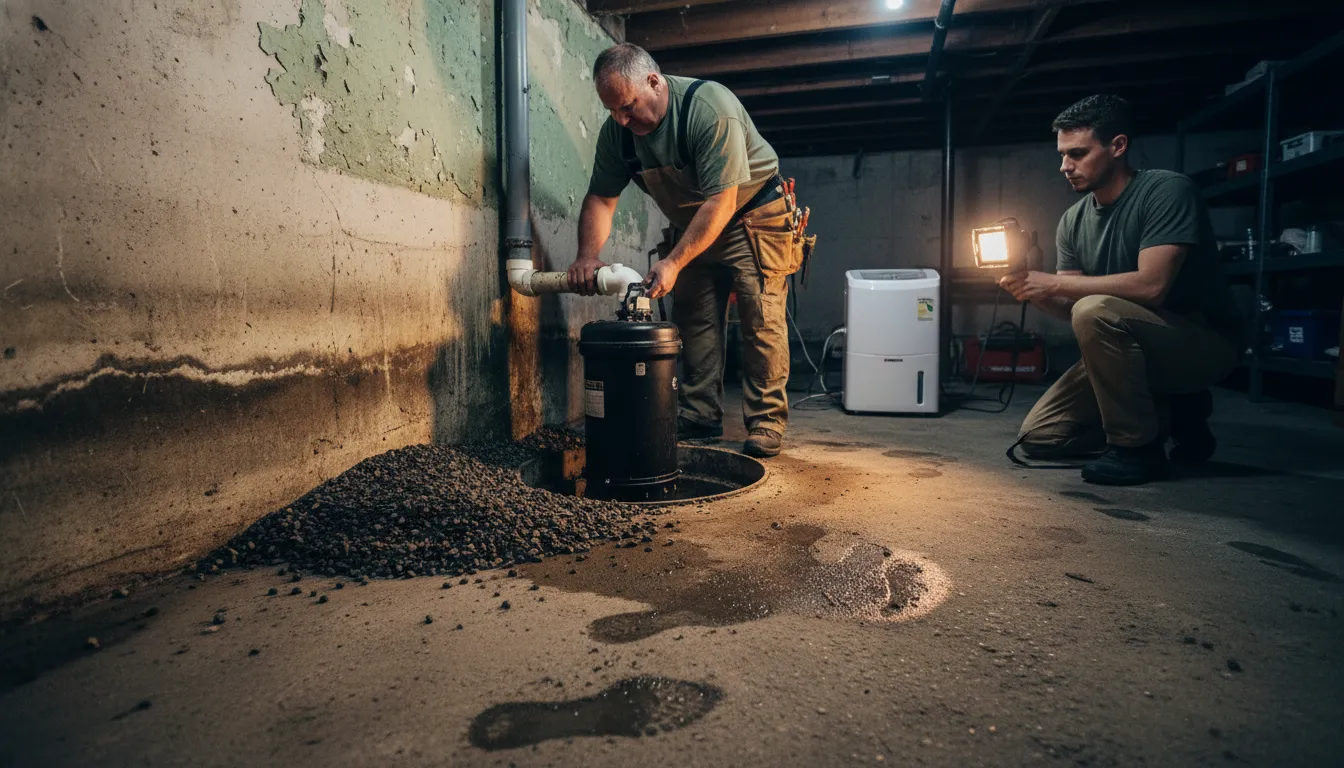
Living in Irving means enjoying a vibrant community, but it also comes with a unique challenge for homeowners: managing water around your foundation. The city's prevalent clay soil can turn a heavy rain into a serious threat to your basement or crawl space. When water drains slowly and builds up around your home's foundation, it creates hydrostatic pressure that can force moisture through cracks, leading to flooding, mold, and structural damage. A properly installed and maintained sump pump system is your home's primary defense, actively collecting this groundwater and pumping it safely away from your property. This guide will help you understand the critical role of sump systems in Irving, the types available, and what to consider when seeking professional installation or repair services.
Thorough Plumbing
1314 W McDermott Dr #106-727, Allen, TX 75013
Thorough Plumbing is a plumbing service provider based in Dallas, TX, offering a range of services including sewer camera inspections, sump pump repairs, drain cleaning, and leak detection. They serve Allen and surrounding areas, addressing various plumbing issues for homes and buildings. The company uses professional video camera inspections to diagnose problems efficiently and minimize invasiveness. With over 15 years of experience, Thorough Plumbing supports a wide range of plumbing needs and services all major brands of plumbing equipment.

Milestone Electric, A/C, & Plumbing
5414 Forest Ln, Dallas, TX 75229
Milestone Electric, A/C, & Plumbing is a full-service plumbing company based in Dallas, TX. They provide a wide range of plumbing services including water heater installation and repair, sewer line repair, drain cleaning, leak detection, and repiping. The company uses advanced tools such as sewer camera inspections and hydro jetting to address plumbing issues efficiently. Established in 2004, Milestone has a long history of serving the Dallas area and offers 24/7 emergency plumbing services to handle urgent repairs at any time.
Willard Heating, Cooling, & Plumbing
207 US-80, Forney, TX 75126
Willard Heating, Cooling, & Plumbing provides comprehensive HVAC, plumbing, and electrical services in Garland, TX. Their skilled technicians handle a wide range of plumbing needs including water heater repair, tankless water heater services, sump pump repair, drain cleaning, sewer line repair, leak detection, repiping, and gas line installation. The company offers 24/7 emergency repairs and backs their work with a two-year warranty on all repairs, ensuring reliable service for home comfort and safety. Willard serves the Dallas-Fort Worth area with multiple locations and a commitment to tailored solutions for each customer.
Willard Cooling, Heating, Plumbing, & Electrical (Max Air And Plumbing – Max Mechanical)
2313 Michigan Ct, Arlington, TX 76016
Willard Cooling, Heating, Plumbing, & Electrical (Max Air And Plumbing - Max Mechanical) provides comprehensive HVAC, plumbing, and electrical services in Fort Worth, TX. Their team handles a wide range of plumbing needs including water heater repair, tankless water heater services, sump pump repair, drain cleaning, sewer line repair, leak detection, repiping, and gas line installation. They also offer HVAC installations and repairs along with indoor air quality solutions, and full electrical services. Willard offers 24/7 emergency repairs and backs all work with a two-year warranty, ensuring reliable support for essential home systems across the Dallas-Fort Worth area.
Cactus Moon Plumbing
Fort Worth, TX
Cactus Moon Plumbing offers a wide range of plumbing services in Fort Worth, TX, and throughout the Dallas-Fort Worth metroplex. Their expertise includes sewer line repair, water heater installation and repair, sump pump services, leak detection, and trenchless sewer repair. They also provide specialized capabilities such as hydro jetting and camera inspections to diagnose and resolve plumbing issues efficiently. Serving numerous communities in the DFW area, Cactus Moon Plumbing covers both residential and commercial plumbing needs.
Why Irving Homes Need Sump Pump Systems
The need for basement waterproofing and flood control in Irving isn't just about heavy storms-it's about the ground beneath your feet. The area's clay-rich soil is the primary culprit. Unlike sandy soil that allows water to percolate down quickly, clay acts like a sponge, absorbing water and releasing it very slowly. During periods of sustained rain or rapid snowmelt, this leads to significant water accumulation in the soil surrounding your home's foundation.
This trapped water creates hydrostatic pressure, a constant force pushing against your basement walls and floor slab. Over time, this pressure will find the path of least resistance, seeping through hairline cracks, porous concrete, or the joint where the wall meets the floor. The result is often a damp, musty basement or, in worse cases, active flooding that can ruin stored belongings and create an environment for mold growth. A sump pump system directly counteracts this by providing a designated collection point-the sump pit-for this water, then automatically ejecting it away from your home via a discharge line.
Types of Sump Pumps and Backup Systems
Choosing the right water pump for your Irving home depends on the severity of your water issue, your budget, and your need for reliability. The two main types are pedestal and submersible pumps.
Pedestal Sump Pumps: In this design, the pump motor is mounted on a long column (pedestal) above the sump pit, with only the intake pipe extending down into the water. These units are generally less expensive to purchase and are easier to access for routine service or inspection. They can be a good fit for areas with moderate water intrusion or shallower pits. However, they tend to be noisier and are often less powerful than their submersible counterparts.
Submersible Sump Pumps: These units are designed to operate completely submerged in the water within the sump pit. They are typically more powerful, quieter, and take up less visible space in your basement. Because they are sealed against water, they are also less prone to overheating. For Irving homes with significant water pressure issues or a history of flooding, a submersible pump is frequently the recommended choice for its durability and pumping capacity.
Given Texas's propensity for powerful storms that can knock out power, a backup system is not a luxury-it's a critical component. The two primary backup options are:
- Battery Backup Systems: This involves a secondary pump (or your primary pump connected to) a large, deep-cycle battery and a charger. If the main power fails, the battery system takes over, ensuring your pump continues to operate. This is the most common and reliable backup method.
- Water-Powered Backup Pumps: These unique devices use your home's municipal water pressure to create a suction that pumps water out of the pit. They require no electricity, making them excellent for prolonged outages, but they depend on a steady supply of city water and can significantly increase your water bill if used extensively.
The Role of Perimeter Drainage
A sump pump is only as effective as the system that feeds it water. For comprehensive protection, especially against the hydrostatic pressure common in Irving, the pump should be part of a larger drainage solution. This often involves the installation of interior drain tile, such as a WaterGuard system or a traditional French drain 1.
These drainage systems consist of a perforated pipe installed along the interior perimeter of your basement floor, at the footing level. This pipe is then covered with gravel and a new layer of concrete. As water enters through the cove joint (where wall meets floor) or through cracks, it flows into this drain pipe, which channels it directly to the sump pit. This proactive collection prevents water from spreading across your floor, giving the pump a centralized source to manage. Combining a submersible pump with a perimeter drainage system and a battery backup is considered the gold standard for long-term flood protection in our local soil conditions 2.
Professional Installation and Repair Considerations
While some homeowners may consider a DIY approach, professional installation of a sump pump system is strongly advised. A correct installation involves more than just dropping a pump into a hole. It requires excavating a properly sized pit, ensuring stable and level placement, installing check valves on the discharge line to prevent backflow, and connecting to a dedicated GFCI (Ground Fault Circuit Interrupter) electrical circuit for safety 3 4. Professionals can also correctly assess the necessary pump horsepower (HP) and pit depth for your specific home and water table.
Find the perfect sump pump installation & repair companies for your needs
Get personalized recommendations and expert advice
Even the best systems require maintenance and eventual repair. Common issues that necessitate a service call include:
- Stuck or Faulty Float Switch: This is the most common point of failure. The float switch acts like a thermostat for water level; if it gets stuck or fails, the pump won't turn on or off automatically.
- Clogged Pump or Discharge Line: Debris can clog the pump intake or the line that carries water outside, causing the pump to run continuously without moving water or to burn out.
- Power Failure: This includes tripped circuits, failed GFCI outlets, or issues with the home's electrical supply to the pump.
- Worn-Out Components: Impellers (the spinning part that moves water) can wear down, and seals can fail over years of use, reducing efficiency.
A professional technician can diagnose these problems quickly, often performing repairs on the spot. Regular maintenance, such as cleaning the pit and testing the pump and backup system (especially before the spring rainy season), can prevent many emergencies.
Understanding Costs for Installation and Repair
Investing in a sump pump system is an investment in protecting your home's value and your peace of mind. Costs can vary widely based on the complexity of the job, the type of equipment selected, and the existing conditions in your basement. Here's a general breakdown based on regional and national data 5:
- Basic Sump Pump Installation: Installing a new pump into an existing, functional pit typically ranges from $800 to $2,000, with submersible models at the higher end of that range.
- Complete System Installation: This includes excavating a new sump pit, installing the pump, and connecting all necessary plumbing and electrical. For a standard submersible pump system, expect costs between $1,500 and $3,500+.
- System with Perimeter Drainage: Adding an interior drain tile system to channel water to the pit is a more involved project and can raise the total cost to $3,500 and above, depending on the linear footage of your basement perimeter.
- Backup Systems: Adding a quality battery backup system to a new or existing pump can cost an additional $300 to $1,000 for parts and installation 6.
- Repair Costs: Most common repairs, like replacing a float switch or unclogging a discharge line, fall in the range of $150 to $400. More significant repairs, such as replacing a pump motor or major components, will cost more.
The key takeaway for Irving homeowners is that while a basic system has a lower upfront cost, the combination of a submersible pump, a battery backup, and perimeter drainage often provides the most reliable and long-term solution for combating the challenges posed by our local clay soil 7.
Frequently asked questions
Sources
Footnotes
-
Sump Pump Installation - Basement Systems - https://www.basementsystems.com/sump-pump/sump-pump-installation.html ↩
-
Sump Pump Repair & Installation Dallas 214-296-2136 - https://bakerbrothersplumbing.com/drain-sewer/sump-pumps/ ↩
-
Sump Pump Installation and Repair in Argyle, Denton, Fort Worth - https://www.crplumbingdfw.com/plumbing-services/sump-pump/ ↩
-
Sump Pump Installation in Irving - Milestone Electric - https://callmilestone.com/irving/plumbing/sump-pumps/ ↩
-
Basement Sump Pumps: Types, Costs, and Maintenance - https://www.arkbasementservices.com/basement-sump-pumps-types-costs-and-maintenance/ ↩
-
Sump Pump Installation Cost Breakdown - Swift Plumbing & Heating - https://www.swiftplumb.com/blog/plumbing-service/the-cost-of-installing-a-sump-pump-what-to-expect/ ↩
-
Sump Pump Installation Cost Guide | 2026 Prices & Factors - https://modernize.com/foundations/basement-waterproofing/sump-pump-installation-cost ↩