Find the Best Sump Pump Installation & Repair Companies for Your Business
No obligation • Fast responses • Nationwide coverage

Why you can trust Search a Plumber
Search a Plumber is a leading United States resource for finding and evaluating professional plumbing services. Our team researches licensing, experience, and customer feedback to create unbiased, fact-driven overviews. Companies cannot pay to change ratings or placement, ensuring homeowners get trustworthy information.
Search providers near you
Best Sump Pump Installation & Repair Companies in South Dakota Ranked
A reliable sump pump system is a critical line of defense for South Dakota homeowners, protecting basements and crawl spaces from water intrusion and costly damage. These systems actively manage groundwater and surface runoff, especially important given the state's variable weather and high water tables in many areas. This guide provides essential information on sump pump types, costs, maintenance, and how to find qualified local professionals to ensure your home stays dry.
Why South Dakota Homes Need Sump Pumps
South Dakota's climate and geology create unique challenges for homeowners. Heavy spring rains, rapid snowmelt, and summer thunderstorms can overwhelm natural drainage, leading to saturated soil and a rising water table 1. In many regions, the water table is naturally high, meaning groundwater sits close to the foundation. Without an active drainage system, this water exerts hydrostatic pressure and can seep through cracks or the cove joint where the floor meets the wall 2.
A sump pump system combats this by collecting water in a specially dug pit (sump basin) and pumping it away from the home's foundation. Often, the pit is connected to a perimeter drain tile system that channels water from around the foundation's footings 3 4. This proactive approach is far more effective and less costly than reacting to a flooded basement, which can lead to mold, structural damage, and ruined belongings.
Types of Sump Pumps for Your Home
Choosing the right pump depends on your home's specific water management needs, pit size, and budget. The two primary designs are submersible and pedestal pumps.
- Submersible Sump Pumps: These units are designed to operate fully submerged in the sump pit. They are generally quieter, more powerful, and better suited for handling larger volumes of water, making them a popular choice for most residential installations. Because the motor is sealed within the pump housing, they are less obtrusive but can be more expensive to purchase and repair.
- Pedestal Sump Pumps: In this design, the motor is mounted on a long column (pedestal) above the sump pit, with only the pump intake submerged. They are typically less expensive, have a longer motor life due to better cooling, and are easier to access for simple servicing. Their main drawback is that they are louder and are best for narrower pits or situations with moderate water flow.
The Critical Role of Backup Systems
A primary sump pump is only reliable if it has power. During the severe storms that can sweep across South Dakota, power outages are a common occurrence, precisely when your pump is needed most. A backup system is not a luxury; it's an essential component for complete protection 5.
- Battery Backup Sump Pumps: This is the most common backup solution. It involves a secondary pump powered by a dedicated, high-capacity battery (like a deep-cycle marine battery) with a charger. If the primary pump fails or power is lost, the battery-powered pump automatically takes over. Modern systems can provide hours of pumping time and often include alarm systems to alert you to power loss or pump activation.
- Water-Powered Backup Pumps: These ingenious devices use your home's municipal water pressure to create a vacuum that pumps water out of the sump pit. They require no electricity or batteries, offering a truly fail-safe backup as long as city water pressure is maintained. They are highly reliable but do use a significant amount of water while operating, which may be a consideration 6.
Recognizing Signs You Need Service or a New Pump
Regular observation of your sump pump can prevent a small issue from becoming a major disaster. Be alert for these warning signs:
- Unusual Noises: Grinding, rattling, or screeching sounds often indicate a worn impeller, damaged bearing, or debris caught in the pump.
- Constant Running: If the pump runs continuously during dry weather or cycles on and off very frequently, it could signal a faulty float switch, an incorrectly set switch, or a pump that is undersized for the water volume.
- Failure to Activate: The most obvious sign of trouble is a pump that doesn't turn on when water rises in the pit. This could be due to a stuck float switch, a tripped breaker, a burned-out motor, or a failed check valve.
- Visible Rust or Corrosion: Significant rust on the pump or pit liner can indicate age and potential failure points.
- Musty Odors or Dampness: A persistent damp smell or visible moisture in the basement, even without standing water, can suggest the pump isn't effectively removing all water or that there is a leak in the discharge line 7.
If your pump is over 7-10 years old, proactively considering a replacement is a wise investment in prevention, as components wear out over time.
Find the perfect sump pump installation & repair companies for your needs
Get personalized recommendations and expert advice
Understanding Sump Pump Installation
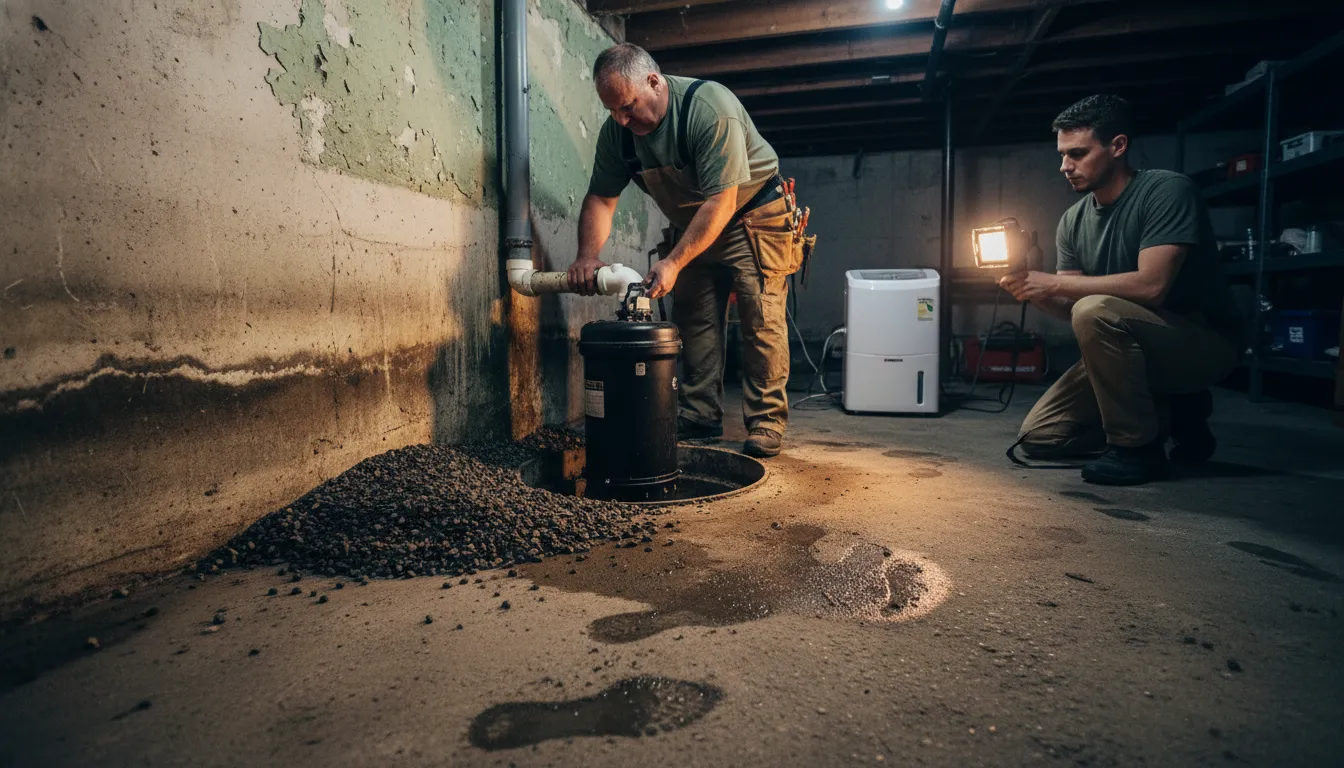
Professional installation is highly recommended to ensure the system is correctly sized, properly placed, and complies with local building codes. A typical installation involves several key steps:
- Site Assessment & Pit Excavation: A technician will determine the optimal location, often in the lowest corner of the basement or where water naturally collects. Concrete is broken, and a pit is dug to accommodate the basin.
- Basin & Pump Placement: The sump basin (liner) is set into the pit, and gravel is packed around it for stability and drainage. The chosen pump is then placed inside the basin.
- Plumbing & Electrical Work: A discharge pipe is connected to the pump and routed to exit the home, terminating away from the foundation (often with a splash block). A check valve is installed on this pipe to prevent pumped water from flowing back into the pit. A dedicated GFCI electrical outlet is installed to power the pump.
- Backup System Integration: If included, the battery backup or water-powered backup unit is installed and connected.
- Testing & Finalization: The system is tested by pouring water into the pit to ensure the float switch activates the pump, water is discharged properly, and all alarms function. The concrete floor is then patched around the pit cover.
Cost Factors for Repair and Installation in South Dakota
Costs can vary widely based on the scope of work, pump type, and your home's existing infrastructure. Here's a general breakdown of what to expect:
- New Pump Unit: The pump itself can range from $80 for a basic pedestal model to over $1,200 for a high-capacity submersible unit.
- Full Professional Installation: For a complete new system, including digging the pit, plumbing, electrical, and the pump, homeowners can expect to invest between $500 and $4,000, with an average cost around $1,200 8 9. Complexity (e.g., breaking through thick concrete, long pipe runs) increases the price.
- Battery Backup System: Adding a quality battery backup pump with a battery and charger typically costs $300 to $1,000 installed 10.
- Repair Costs: Simple repairs like fixing a stuck float switch or replacing a check valve may cost $100 to $300. More complex repairs involving motor or impeller replacement can range from $200 to $600.
- Pump Replacement: Swapping out an old pump for a new one in an existing pit is less labor-intensive, usually costing between $400 and $2,000 depending on the pump model and any additional parts needed 11 12.
Maintaining Your Sump Pump System
A little maintenance goes a long way in ensuring reliability, especially before the rainy season or spring thaw.
- Test Regularly: Every few months, slowly pour a 5-gallon bucket of water into the sump pit to ensure the pump activates, raises the float, and discharges the water quickly.
- Clean the Pit & Pump: At least once a year, unplug the pump, remove it from the pit, and clean out any silt, gravel, or debris that has accumulated. Check the pump intake screen and clean it.
- Inspect the Discharge Line: Ensure the outdoor discharge point is clear of leaves, dirt, and ice. Make sure water flows away from your foundation.
- Check the Check Valve: Listen for a "thump" when the pump shuts off; this indicates the check valve is working to prevent backflow.
- Backup System Check: Test battery backups according to the manufacturer's instructions and have the battery load-tested every year or two. For water-powered backups, ensure the supply line valve is always open.
Frequently asked questions
Sources
Footnotes
-
Residential Sump Pump Installation and Repair | - https://midwesternmechanical.com/residential-plumbing/sump-pump-installation-repair/ ↩
-
Basement Sump Pumps: Types, Costs, and Maintenance - https://www.arkbasementservices.com/basement-sump-pumps-types-costs-and-maintenance/ ↩
-
Sump Pump Installation South Dakota - https://www.rapidfoundationrepair.com/sump-pump-101/ ↩
-
Sump Pump Installation: How it Works - https://www.aquaguard.net/resources/basement-waterproofing/sump-pump-installation/ ↩
-
Sump Pump Repair | Serving South Dakota, Wyoming, NE - https://www.rapidfoundationrepair.com/sump-pump-repairs/ ↩
-
The Ultimate Guide to Sump Pumps for Basements - https://www.wholesalesepticsupply.com/blogs/guides/the-ultimate-guide-to-sump-pumps-for-basements-protecting-your-home-from-water-damage ↩
-
Sump Pump Service Sioux Falls, SD - Howe, Inc. - https://howeinc.com/residential/plumbing/sump-pump-service/ ↩
-
Sump Pump Installation Cost Guide | 2026 Prices & Factors - https://modernize.com/foundations/basement-waterproofing/sump-pump-installation-cost ↩
-
Your Guide to Sump Pump Installation: Tips from the Pros - https://basementwaterproofingscientists.com/sump-pump-installation-guide-2025/ ↩
-
Sump Pump Installation Cost Breakdown - https://www.swiftplumb.com/blog/plumbing-service/the-cost-of-installing-a-sump-pump-what-to-expect/ ↩
-
How Much Does Sump Pump Repair and Replacement Cost? - https://www.mrrooter.com/tampa/about-us/blog/how-much-does-sump-pump-repair-and-replacement-cost/ ↩
-
Sump Pump Installation: What Affects Cost? | Mr. Handyman - https://www.mrhandyman.com/blog/sump-pump-installation-cost/ ↩