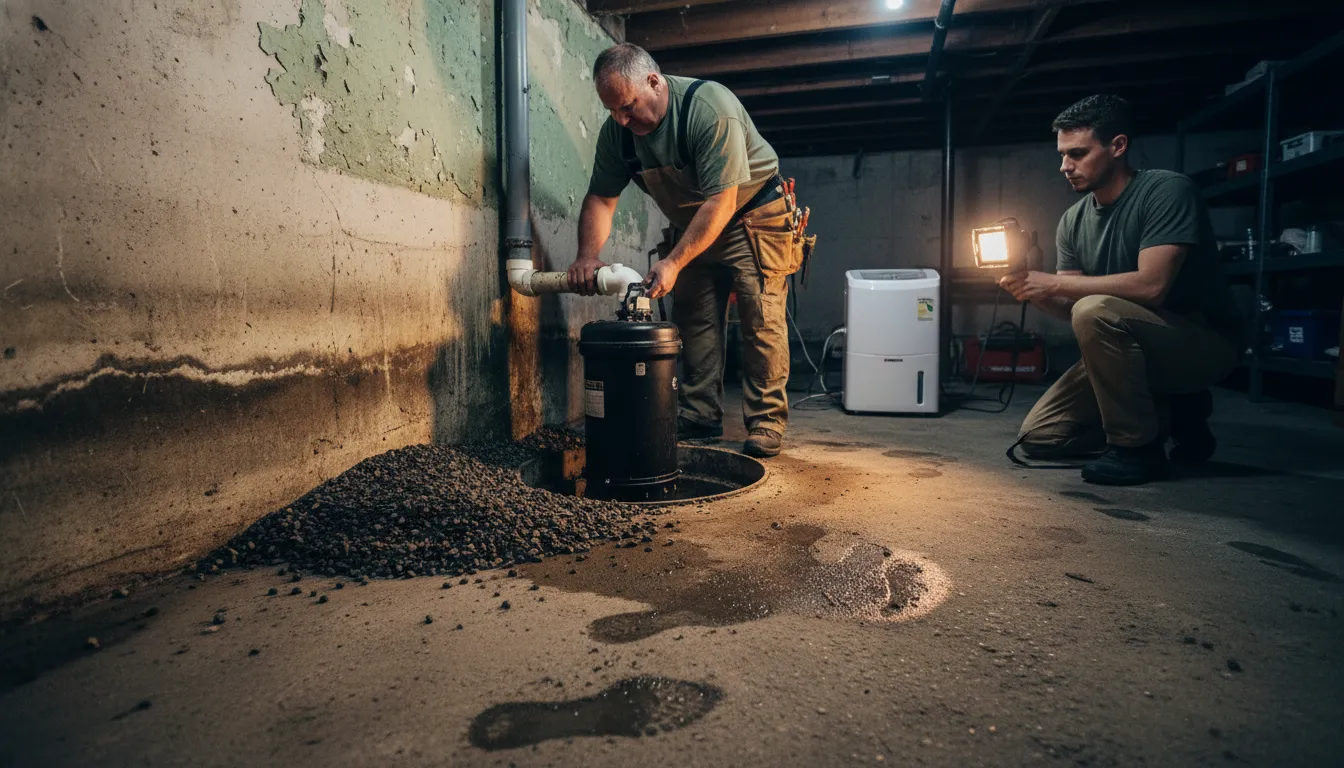
Find the Best Sump Pump Installation & Repair Companies for Your Business
No obligation • Fast responses • Nationwide coverage

Why you can trust Search a Plumber
Search a Plumber is a leading United States resource for finding and evaluating professional plumbing services. Our team researches licensing, experience, and customer feedback to create unbiased, fact-driven overviews. Companies cannot pay to change ratings or placement, ensuring homeowners get trustworthy information.
Search providers near you
Top Sump Pump Installation & Repair Companies in Rock Hill, South Carolina Ranked
A reliable sump pump system is a critical line of defense for Rock Hill homeowners, protecting basements and crawl spaces from costly water damage. Given the region's heavy clay soils and potential for intense rainfall, a properly installed and maintained sump pump is not just an appliance-it's an essential part of your home's health. This guide will help you understand the types of systems available, what to expect from the installation and repair process, and how to find qualified local professionals to safeguard your property.
LG Plumbing & Drain Services LLC
Charlotte, NC
LG Plumbing & Drain Services LLC is a plumbing company based in Charlotte, NC, offering a wide range of plumbing and drain services. Their work includes leak detection, water heater repair and installation, drain cleaning, sewer line repair, sump pump services, gas line installation, and whole-house repiping. They use video pipe inspection as a key capability to diagnose plumbing issues. The company provides same-day service to address urgent plumbing needs.

NuBlue Electric, Plumbing and Air
407 Basin St, Charlotte, NC 28203
NuBlue Electric, Plumbing and Air is a home service provider based in Charlotte, NC, offering plumbing, HVAC, and electrical services. Their plumbing services include water heater repair, water softener installation, sump pump repair, drain cleaning, sewer line repair, leak detection, and repiping. They also provide HVAC repairs and installations, as well as electrical work such as outlet wiring, panel replacement, whole-home generators, and smart home device installation. NuBlue serves multiple North Carolina cities including Charlotte and emphasizes same-day service and upfront pricing.
Mr. Rooter Plumbing of Charlotte
9305 Monroe Rd Ste G, Charlotte, NC 28270
Mr. Rooter Plumbing of Charlotte provides a wide range of plumbing services for homes and businesses in Charlotte, NC. Their offerings include water heater repair and installation, drain cleaning, pipe repair and replacement, trenchless sewer line repair, water softener installation, sump pump repair, and hydro jetting. The company is known for its Neighborly Done Right Promise®, which guarantees workmanship with specific timeframes for repairs and replacements. They also offer 24/7 emergency plumbing services to address urgent issues promptly.

Greymen's Plumbing
1344 Hollythorne Dr, Rock Hill, SC 29732
Greymen's Plumbing is a family-owned plumbing service based near Charlotte, NC, offering a wide range of plumbing solutions including water heater installation and repair, drain cleaning, sewer line repair, and leak detection. They serve Charlotte and surrounding areas with licensed professionals who use modern techniques such as sewer camera inspections and trenchless sewer repair to minimize property disruption. Available 24/7 for emergency plumbing needs, Greymen's Plumbing provides comprehensive services from small repairs to major system upgrades.
All Good Plumbing, LLC
2024 Independence Commerce Dr Suite E, Matthews, NC 28105
All Good Plumbing, LLC provides plumbing and electrical services for homes in Charlotte, NC. Their offerings include water heater installation and repair, sump pump services, drain cleaning, leak detection, repiping, and electrical work such as wiring upgrades and lighting installation. With over 25 years of experience, the company handles both routine maintenance and emergency repairs, including water filtration and electrical panel upgrades. They serve Charlotte and nearby communities, delivering services designed to keep home systems running efficiently and safely.
Understanding Rock Hill's Flooding Risks
The need for effective basement waterproofing and water management in Rock Hill is directly tied to local geography and weather patterns. The Southeastern United States, including South Carolina, is prone to heavy, sustained rainfall, particularly during hurricane season and severe thunderstorms. This precipitation can quickly saturate the ground, overwhelming surface drainage.
Compounding this issue is the prevalence of heavy clay soils in the area. Clay has very low permeability, meaning water drains through it extremely slowly 1. When the ground becomes saturated, this creates hydrostatic pressure against your home's foundation. This pressure will force moisture through any crack or porous concrete, leading to seepage, leaks, and ultimately, a flooded basement. A sump pump actively relieves this pressure by collecting water in a pit and pumping it away from the foundation, making it a vital component for any home with a below-grade space in Rock Hill.
Types of Sump Pump Systems
Choosing the right pump is the first step toward a dry basement. The two primary categories are pedestal and submersible pumps, each with distinct advantages.
Pedestal Sump Pumps In a pedestal system, the motor is mounted on a column (or pedestal) above the sump pit. This design keeps the motor out of the water. The main benefits are lower initial cost and easier access for maintenance and inspection 2. However, they tend to be louder during operation and are generally less powerful than their submersible counterparts, making them better suited for pits with lower water volumes or as a secondary backup system.
Submersible Sump Pumps As the name implies, a submersible pump's motor and pump assembly are designed to operate while fully submerged in the sump pit. This design makes them significantly quieter and allows them to be more powerful, capable of moving higher volumes of water 3 4. They are also less obtrusive, as only the discharge pipe is visible. The trade-offs are a higher purchase price and slightly more involved maintenance, as the entire unit must be lifted from the pit for service.
Backup and Combination Systems Power outages often coincide with the worst storms, which is precisely when you need your sump pump the most. A battery backup system is an essential add-on for complete protection. These systems use a deep-cycle battery to power a secondary pump (or the primary pump) when the electricity fails 5. More advanced combination systems, like a TripleSafe pump, integrate a primary AC pump, a backup DC pump, and a high-water alarm into a single unit for the highest level of security.
Professional Installation: What to Expect
While a sump pump may seem like a simple device, its effectiveness is entirely dependent on a correct installation. Professional installation is highly recommended to avoid common pitfalls that can lead to pump failure or even increased water damage.
The process typically involves several key steps:
- Pit Excavation: A proper sump pit (or basin) must be dug at the lowest point of the basement or crawl space, often near the foundation footing. This may involve breaking through concrete. The pit must be large enough to accommodate the pump and allow for adequate water collection.
- Pump Placement & Plumbing: The pump is secured in the pit, and a check valve is installed on the discharge pipe to prevent pumped water from flowing back into the pit. The discharge line must have a consistent slope away from the home to ensure proper drainage 6.
- Electrical Connection: A dedicated GFCI (Ground Fault Circuit Interrupter) outlet is installed to power the pump, meeting all local electrical codes for safety.
- Discharge Management: This is a critical and often overlooked step. The discharged water must be directed sufficiently far from the foundation-typically at least 10-20 feet-to ensure it doesn't simply seep back into the ground near the house. Options include above-ground extensions or burying a pipe that leads to a storm drain or a designated drainage area.
Find the perfect sump pump installation & repair companies for your needs
Get personalized recommendations and expert advice
Sump Pump Repair & Maintenance
Even the best system requires regular attention to perform when needed. Common signs your sump pump needs repair include unusual noises (grinding, rattling), running continuously, frequent cycling on and off, or failing to activate when water is present. Rust, a stuck float switch, or a clogged intake screen are frequent culprits 7.
Preventative maintenance is straightforward but crucial:
- Test Quarterly: Pour a bucket of water into the sump pit until the float rises and triggers the pump. Ensure it activates, pumps out the water, and shuts off automatically.
- Clean the Pit: Periodically remove debris, gravel, or silt that has accumulated in the pit, as it can clog the pump or interfere with the float.
- Inspect the Discharge Line: Check the exterior discharge point to ensure it is clear of leaves, ice, or other obstructions, especially before a major storm.
- Check the Backup: If you have a battery backup system, test it according to the manufacturer's instructions and check the battery's charge level and water levels (for flooded lead-acid types).
For homeowners, establishing a relationship with a local plumbing service for an annual inspection can provide peace of mind and catch small issues before they lead to a basement flood.
Cost Considerations for Rock Hill Homeowners
The investment in a sump pump system varies based on the scope of work. It's helpful to understand the components that influence the final price. These figures are regional estimates; always get a detailed quote from a local professional.
- Pump-Only Replacement: Installing a new pedestal pump in an existing pit can range from $300 to $600, while a submersible pump replacement typically costs between $500 and $1,000.
- Full System Installation: A complete new installation, including excavating a proper sump pit, installing a submersible pump, and running the discharge plumbing, is a more significant project. Costs in the Rock Hill area often range from $800 to over $2,000, with complexity and materials affecting the final price 8.
- Major Factors: The largest cost variable is often the need to excavate a new pit, especially through a concrete basement floor. This labor-intensive work can add $1,500 to $3,500+ to the project total 9 10. Adding a battery backup system is another key investment, typically adding $300 to $1,000 to the overall cost but providing indispensable protection during power outages 11 9.
The key takeaway is that while upfront costs exist, they are minimal compared to the expense of repairing water-damaged drywall, flooring, personal belongings, and addressing mold remediation. A professionally installed and maintained sump pump is a proactive investment that protects your home's value and your family's health 12 13 14.
Frequently asked questions
Sources
Footnotes
-
Do I Need a Sump Pump & How Do They Work? - https://jarboes.com/knowledge-center/do-i-need-a-sump-pump/ ↩
-
Basement sump pump installation: 7 Powerful Steps for Success 2025 - https://basementwaterproofingscientists.com/basement-sump-pump-installation/ ↩
-
Sump Pumps in Georgia and South Carolina | Sump Pump ... - https://www.lowcountryfoundationrepair.com/sump-pump.html ↩
-
Basement Sump Pump Installation | DryTech Waterproofing, LLC - https://www.thedrytech.com/basements/sump-pumps/ ↩
-
How Much Does Sump Pump Installation Cost? 5 Factors - https://freedomplumbingmidwest.com/sump-pump-installation-cost/ ↩
-
6 Easy Steps to Install and Maintain a Sump Pump - https://www.dryprosystems.com/resources/basement-waterproofing/sump-pump-installation/ ↩
-
Sump Pump Installation in NC & SC | Basement Waterproofing - https://www.carolinafoundationsolutions.com/sump-pumps/ ↩
-
Sump Pump Installation in Rock Hill, SC - Costs 12 / 2025 - https://www.homeyou.com/sc/sump-pump-installation-rock-hill-costs ↩
-
How Much Does It Cost to Install a Sump Pump? [2026 Data] | Angi - https://www.angi.com/articles/sump-pump-installation-cost.htm ↩ ↩2
-
How Much Does a Sump Pump Cost: A Clear Breakdown of Prices and ... - https://harrisplumbing.ca/Blog/blogpost/12be9385-8928-4051-a0e8-08ddd67fa1f3 ↩
-
Sump Pump Installation Cost Breakdown - Swift Plumbing & Heating - https://www.swiftplumb.com/blog/plumbing-service/the-cost-of-installing-a-sump-pump-what-to-expect/ ↩
-
Our Sump Pump Installation Process In the Southeast - https://www.canteycanfixit.com/basement-waterproofing/products/sump-pumps/sump-pump-install.html ↩
-
Top-Rated Sump Pump Services in Rock Hill, SC | Call Today - https://honestyservices.com/plumbing/sump-pumps/ ↩
-
Sump Pump Installation - Basement Systems - https://www.basementsystems.com/sump-pump/sump-pump-installation.html ↩