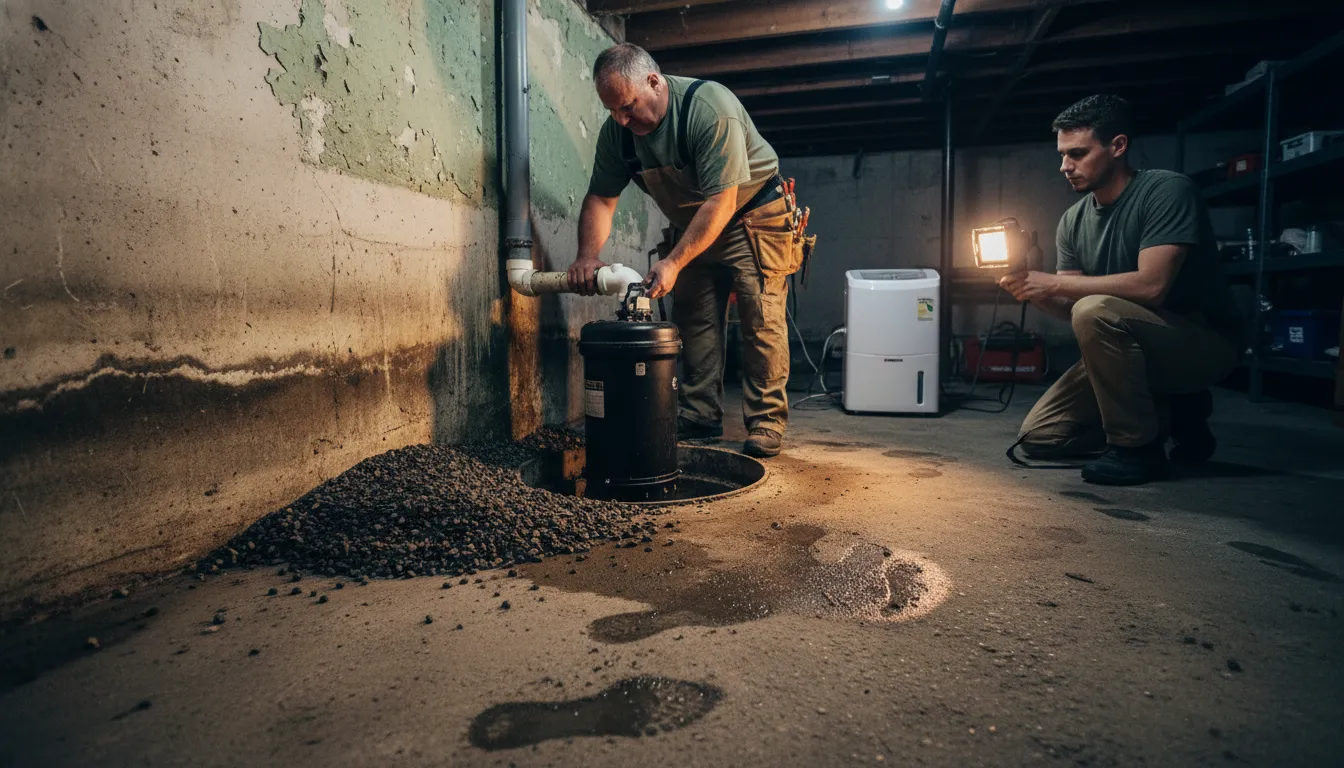
Find the Best Sump Pump Installation & Repair Companies for Your Business
No obligation • Fast responses • Nationwide coverage

Why you can trust Search a Plumber
Search a Plumber is a leading United States resource for finding and evaluating professional plumbing services. Our team researches licensing, experience, and customer feedback to create unbiased, fact-driven overviews. Companies cannot pay to change ratings or placement, ensuring homeowners get trustworthy information.
Search providers near you
Top Sump Pump Installation & Repair Companies in Huntersville, North Carolina Ranked
Protecting your Huntersville home from basement flooding and water damage is a critical investment in your property's health and value. Sump pump systems are the frontline defense against the high water tables and heavy rainfall common in the Charlotte region, actively removing groundwater before it can seep into your basement or crawl space. This guide explains the importance of sump pump services, the types of systems available, and how to find qualified local professionals to assess your needs, whether for a new installation, a replacement, or urgent repair work.
Zoom Drain
114 Eastbend Ct Ste 2, Mooresville, NC 28117
Zoom Drain is a plumbing company based in Charlotte, NC, specializing in drain and sewer services for residential and commercial customers. They offer a range of services including drain cleaning, sewer line repair, sump pump repair, toilet repair, and hydro jetting, which uses high-pressure water jets to clear tough clogs such as tree roots and grease. Serving the Charlotte area, Zoom Drain has been operating since 1995 and provides 24/7 emergency drain cleaning services to address urgent plumbing issues.
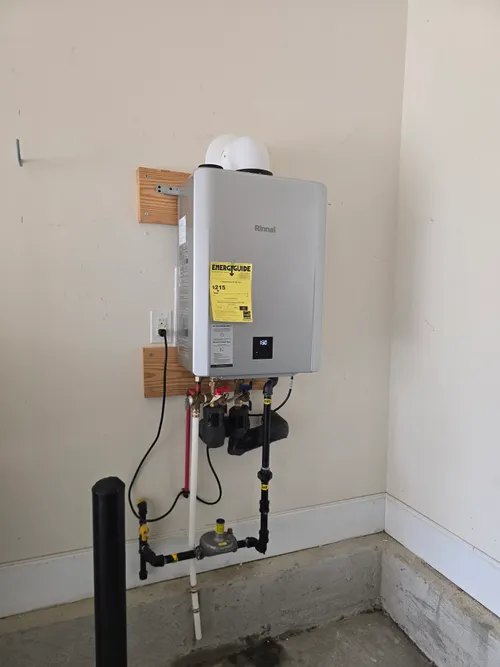
LG Plumbing & Drain Services LLC
Charlotte, NC
LG Plumbing & Drain Services LLC is a plumbing company based in Charlotte, NC, offering a wide range of plumbing and drain services. Their work includes leak detection, water heater repair and installation, drain cleaning, sewer line repair, sump pump services, gas line installation, and whole-house repiping. They use video pipe inspection as a key capability to diagnose plumbing issues. The company provides same-day service to address urgent plumbing needs.
NuBlue Electric, Plumbing and Air
19109 W Catawba Ave, Cornelius, NC 28031
NuBlue Electric, Plumbing and Air is a home service provider based in Charlotte, NC, offering plumbing, HVAC, and electrical services. Their plumbing services include water heater repair, water softener installation, sump pump repair, drain cleaning, sewer line repair, leak detection, and repiping. They handle a wide range of plumbing needs from minor leaks to major sewer line replacements. NuBlue also provides HVAC maintenance and repair, as well as electrical services such as outlet wiring, panel replacement, generator services, and smart home device installation. The company serves Charlotte and other cities in North Carolina, including Raleigh, Greensboro/Winston-Salem, Greenville, and Wilmington. They emphasize same-day service and upfront pricing to simplify scheduling and service delivery.

NuBlue Electric, Plumbing and Air
407 Basin St, Charlotte, NC 28203
NuBlue Electric, Plumbing and Air is a home service provider based in Charlotte, NC, offering plumbing, HVAC, and electrical services. Their plumbing services include water heater repair, water softener installation, sump pump repair, drain cleaning, sewer line repair, leak detection, and repiping. They also provide HVAC repairs and installations, as well as electrical work such as outlet wiring, panel replacement, whole-home generators, and smart home device installation. NuBlue serves multiple North Carolina cities including Charlotte and emphasizes same-day service and upfront pricing.
Mr. Rooter Plumbing of Charlotte
9305 Monroe Rd Ste G, Charlotte, NC 28270
Mr. Rooter Plumbing of Charlotte provides a wide range of plumbing services for homes and businesses in Charlotte, NC. Their offerings include water heater repair and installation, drain cleaning, pipe repair and replacement, trenchless sewer line repair, water softener installation, sump pump repair, and hydro jetting. The company is known for its Neighborly Done Right Promise®, which guarantees workmanship with specific timeframes for repairs and replacements. They also offer 24/7 emergency plumbing services to address urgent issues promptly.
Living in Huntersville means enjoying beautiful lakes and a vibrant community, but the local geology and climate also present unique challenges for homeowners. The combination of clay-rich soil and North Carolina's humid subtropical climate creates conditions where groundwater can easily accumulate around your home's foundation. Without a proper drainage solution, this water seeks the path of least resistance-often into your basement. A professionally installed and maintained sump pump system is not just an appliance; it's an integral part of your home's waterproofing strategy, designed to collect and eject water away from your foundation, safeguarding your belongings and your home's structural integrity.
Understanding Huntersville's Groundwater Challenges
The need for reliable basement waterproofing and sump pumps in Huntersville is directly tied to local environmental factors. The area's high water table means the level of saturated ground is naturally close to the surface, especially during and after periods of sustained rain. Furthermore, the prevalent clay soil acts like a sponge, holding moisture and slowly releasing it. This can lead to hydrostatic pressure building up against your basement walls and floor slab, which is a primary cause of seepage and cracks.
Key signs that your home may need a sump pump or that your existing system is inadequate include:
- Persistent dampness or musty odors in the basement or crawl space.
- Visible water seepage through cracks in the floor or walls.
- Efflorescence (white, chalky mineral deposits) on basement walls.
- Actual pooling water or past flooding events.
- A sump pit that runs constantly during wet weather, indicating a high water inflow.
Ignoring these signs can lead to far more expensive problems, including mold growth, rotting wood, damage to drywall and flooring, and even foundation settlement issues 1.
Types of Sump Pump Systems
Choosing the right pump is essential for effective water management. The two primary types of sump pumps are defined by where the motor is located.
Submersible Pumps: As the name implies, the entire pump and motor unit operates underwater inside the sump basin. These models are generally quieter, more discreet, and often more powerful, capable of handling a higher volume of water and some small debris. They are the most common choice for residential installations in Huntersville due to their efficiency and longevity 2.
Pedestal Pumps: In this design, the motor is mounted on a long column (pedestal) above the sump pit, with only the impeller extending down into the water. These pumps are typically less expensive and easier to access for simple maintenance, but they are louder and more visible. They are often used in shallower pits or where cost is a primary concern.
Beyond the pump itself, modern systems are often integrated solutions. A comprehensive water evacuation system may include:
- The Sump Liner: A durable basin set into a gravel-filled pit in the basement floor, which collects incoming water.
- Drainage Tile: Perforated piping installed along the interior perimeter (interior drain tile) or outside the foundation (exterior drain tile) that channels water to the sump pit.
- Backup Systems: A battery-powered backup pump or a water-powered backup pump that activates during a primary pump failure or power outage-a critical feature during North Carolina storms.
- Airtight Lid & Vapor Barrier: These components help seal the sump pit and crawl space, preventing moist air from entering the home and improving indoor air quality.
- Alarm Systems: Audible or smart device-connected alarms that alert you to high water levels in the pit, signaling a pump failure.
Find the perfect sump pump installation & repair companies for your needs
Get personalized recommendations and expert advice
Professional Installation: What to Expect
While a sump pump might seem like a simple device, its correct installation is complex and best left to licensed professionals. A proper installation ensures the system is sized correctly for your home's water load, meets local building codes, and functions reliably for years.
A professional installation typically involves:
- Assessment: A technician evaluates your basement moisture, identifies water entry points, checks the soil conditions, and determines the optimal location for the sump pit.
- Excavation: Cutting through the concrete floor to dig the pit for the sump liner.
- Pit Preparation: Placing the liner and surrounding it with washed gravel, which acts as a filter to keep silt out of the pump.
- Pump & Plumbing Setup: Setting the pump in the pit, installing a check valve on the discharge pipe to prevent backflow, and routing the discharge line to direct water well away from the home's foundation.
- Electrical Work: Providing a dedicated GFCI outlet for the pump and wiring any backup systems or alarms.
- System Testing: Filling the pit to trigger the pump and verifying its operation, switch activation, and discharge flow.
Improper installation-such as a pit that's too shallow, a poorly sealed liner, or a discharge line that empties too close to the house-can render the system ineffective and lead to recurring flooding.
Sump Pump Repair & Maintenance
Even the best systems require attention. Common sump pump problems in Huntersville homes include:
- Pump Failure: The motor burns out from age, overuse, or manufacturing defect.
- Switch Problems: The float switch or pressure switch that activates the pump gets stuck or fails.
- Clogged Intake or Discharge: Debris blocks the pump's impeller or the discharge line freezes or becomes obstructed.
- Power Loss: Storms knock out electricity, leaving a primary pump without a backup system useless.
Routine maintenance can prevent many emergencies. Homeowners should visually inspect their sump pit and pump every few months, ensure the outlet is working, and test the pump by pouring a bucket of water into the pit to trigger its cycle. It's also wise to have a professional plumber or waterproofing specialist perform an annual check, which includes cleaning the pit, inspecting the check valve, and testing the backup system.
Understanding Costs in Huntersville
The cost for sump pump services varies based on the scope of work, the type of equipment selected, and the complexity of your home's water management needs.
- Basic Pump Replacement: Swapping out an existing, failing pump with a new unit of similar capacity typically ranges from $500 to $1,500, including labor and parts 3.
- New Standard Installation: Installing a new primary sump pump system, including excavation, a quality submersible pump, liner, plumbing, and basic electrical work, generally falls between $1,200 and $3,000 in the Huntersville area 4 5.
- Advanced Integrated System: For homes with significant water issues, a complete solution with interior drainage tile, a high-capacity pump, a battery backup system, an airtight lid, and an alarm can range from $2,500 to $4,500 or more 6 7.
- Permits: Local building permits, which a professional will usually handle, may add $50 to $250 to the project cost 8.
While these figures represent an investment, it's important to weigh them against the potential cost of a single basement flood, which can easily run into tens of thousands of dollars in repairs, not to mention the health risks from mold.
Frequently asked questions
Sources
Footnotes
-
Basement sump pump installation: 7 Powerful Steps for Success 2025 - https://basementwaterproofingscientists.com/basement-sump-pump-installation/ ↩
-
Our Sump Pump Installation Process In Greater Greensboro - https://www.carolinabasementsystems.com/basement-waterproofing/products/sump-pumps/sump-pump-install.html ↩
-
Sump Pump Repair in Mooresville / Huntersville, NC. WyattWorks - https://wyattworks.com/mooresville-huntersville/services/plumbing/sump-pump-services ↩
-
Sump Pump Installation in North Carolina - https://www.carolinabasementsystems.com/basement-waterproofing/products/sump-pumps.html ↩
-
Sump Pump Installation Cost Guide | 2026 Prices & Factors - https://modernize.com/foundations/basement-waterproofing/sump-pump-installation-cost ↩
-
Basement Sump Pumps: Types, Costs, and Maintenance - https://www.arkbasementservices.com/basement-sump-pumps-types-costs-and-maintenance/ ↩
-
What Should Your Basement Waterproofing Budget Include? - https://www.tarheelbasementsystems.com/resources/basement-waterproofing/variation-of-an-interior-drain-and-drainage-system-installed-outside/ ↩
-
How Much Does It Cost to Install a Sump Pump? [2026 Data] | Angi - https://www.angi.com/articles/sump-pump-installation-cost.htm ↩