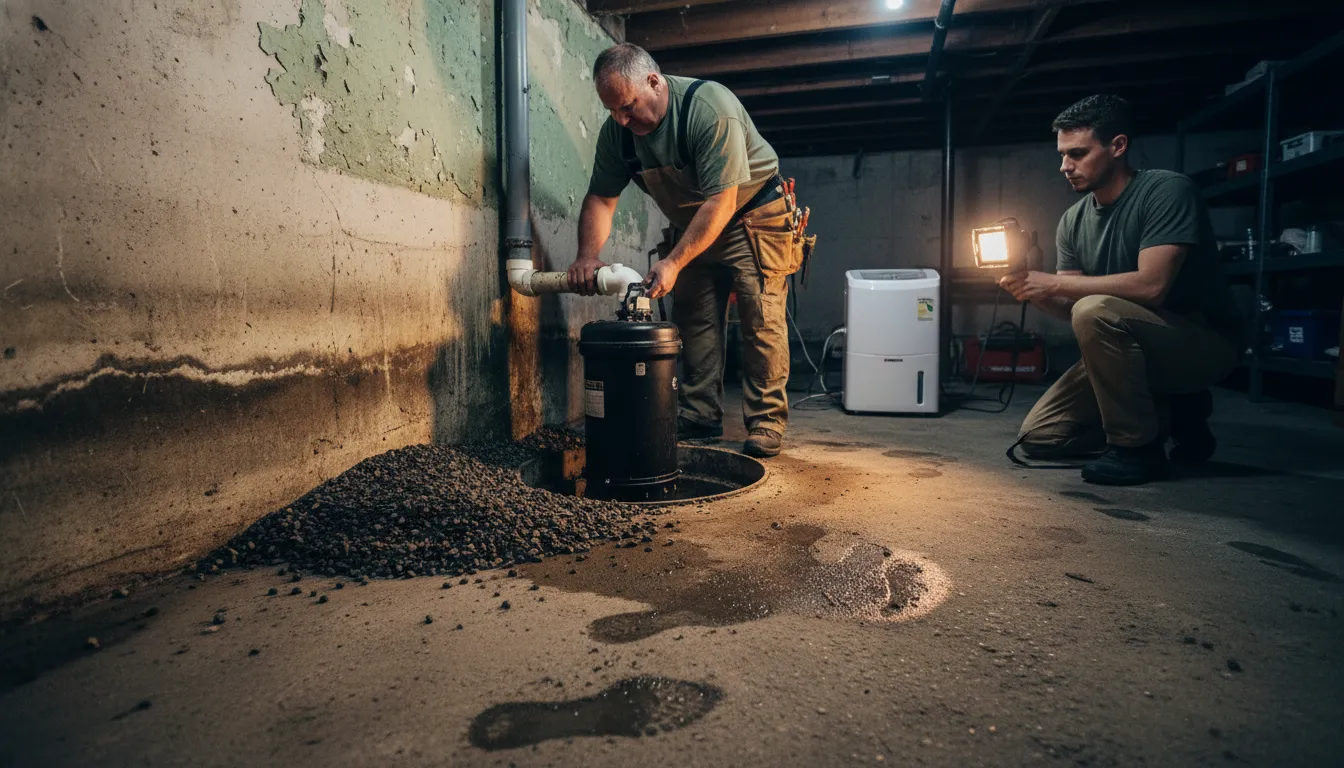
Find the Best Sump Pump Installation & Repair Companies for Your Business
No obligation • Fast responses • Nationwide coverage

Why you can trust Search a Plumber
Search a Plumber is a leading United States resource for finding and evaluating professional plumbing services. Our team researches licensing, experience, and customer feedback to create unbiased, fact-driven overviews. Companies cannot pay to change ratings or placement, ensuring homeowners get trustworthy information.
Search providers near you
Best Sump Pump Installation & Repair Companies in Montana Ranked
A reliable sump pump is a critical line of defense for Montana homes, protecting basements and crawl spaces from costly water damage caused by spring snowmelt, heavy rains, and high groundwater tables. This service involves installing, maintaining, or fixing the pump and drainage system that actively removes accumulating water from beneath your home. Finding a qualified local professional ensures your system is correctly sized, properly installed, and ready to handle Montana's unique weather challenges.
Why Montana Homes Need Sump Pumps
Montana's climate and geology create specific water management challenges for homeowners. Heavy winter snowpack followed by rapid spring thaw can lead to significant groundwater rise and surface runoff 1. Combined with intense summer thunderstorms, this puts constant hydrostatic pressure on foundation walls and slabs. Without an active drainage system, this water can seep through cracks, leak at cove joints (where the wall meets the floor), or even flood the entire basement space 1 2. A properly functioning sump pump system collects this water and ejects it away from the home's foundation, preserving structural integrity and preventing mold, mildew, and property loss.
Core Components of a Sump Pump System
Understanding the key parts of your system helps in discussing repairs or new installations with a professional.
- The Sump Pit: This is a cylindrical hole, typically lined with a durable plastic or concrete liner, dug into the lowest point of the basement floor. It collects incoming water.
- The Pump: The mechanical device that removes water from the pit. The two main types are:
- Submersible Pumps: Situated inside the pit, completely underwater. They are generally quieter, more space-efficient, and less obtrusive but require a larger pit and can be more costly to repair 3.
- Pedestal Pumps: The motor is mounted on a pedestal above the pit, with only the intake pipe extending down. They are easier and less expensive to service, tend to have a longer motor life, and are ideal for smaller pits, but they are noisier.
- Drainage System: This is how water gets to the pit. In Montana, interior perimeter drain channels (often called French drains or WaterGuard systems) are commonly installed beneath the basement slab along the foundation walls. These channels capture water and direct it toward the sump pit.
- Discharge Pipe: The pipe that carries the pumped water from your home to a designated drainage area well away from the foundation.
- Check Valve: A one-way valve installed on the discharge pipe inside the basement that prevents ejected water from flowing back into the pit once the pump turns off.
- Float Switch: The mechanism that activates the pump when water in the pit reaches a certain level. It can be a traditional floating ball, a vertical switch, or a more advanced electronic sensor.
Types of Sump Pump Systems for Montana
Beyond the basic primary pump, several system enhancements are crucial for reliability in Montana, where power outages during storms are a real concern.
- Primary Pump Systems: A single, robust pump (submersible or pedestal) designed to handle typical water volume. This is the minimum recommended installation.
- Battery Backup Systems: An auxiliary pump powered by a deep-cycle battery that takes over if the primary pump fails or if a power outage occurs during a storm. This is considered essential in Montana for complete peace of mind 4. Backup units add $300 to $1,000+ to an installation cost.
- Combination Units: These integrated systems include both a primary AC-powered pump and a secondary DC-powered backup pump in a single unit, often with an alarm system. They offer maximum security in a compact package.
- Water-Powered Backup Pumps: These use municipal water pressure to create a suction effect, ejecting water without electricity. They are a reliable alternative but depend on a constant municipal water supply and can use significant amounts of water during operation.
The Professional Installation Process
A proper installation by a licensed professional is complex and ensures long-term performance and compliance with local codes.
- Assessment & Planning: A technician will evaluate your basement's moisture issues, identify the low point, check the local water table, and determine the necessary pump capacity (measured in gallons per hour) and the best system type for your home.
- Excavation: If a pit does not exist, concrete is broken and a hole is excavated to the proper depth and width. This is the most labor-intensive part of a new installation.
- Liner & Pit Placement: A durable sump liner is placed in the hole and leveled. Gravel is often placed around the base for stability and drainage.
- Drainage Connection: If being installed, interior perimeter drainage channels are trenched into the slab and connected to the pit liner.
- Pump & Component Installation: The pump is placed in the pit, and the check valve, discharge piping, and electrical connections are installed. A dedicated GFCI (Ground Fault Circuit Interrupter) outlet is required for safety 5 6.
- Testing & Backfill: The system is thoroughly tested by pouring water into the pit. The discharge line is secured, and the area around the pit is backfilled and patched.
Find the perfect sump pump installation & repair companies for your needs
Get personalized recommendations and expert advice
Common Sump Pump Repairs in Montana
Even well-maintained pumps can fail. Common issues that require professional repair include:
- Stuck or Faulty Float Switch: The most common repair. The pump may run continuously or not turn on at all. This is often a quick fix (1-2 hours) 7.
- Clogged Intake Screen or Discharge Line: Debris can block water flow, causing the pump to overwork or fail to move water. The line may need to be cleared, especially after heavy runoff events.
- Failed Pump Motor: Burnout from overuse (often due to an undersized pit or pump), power surges, or old age. Motor replacement or a full pump swap is needed.
- Check Valve Failure: A broken valve allows water to flow back into the pit, causing the pump to short-cycle (turn on and off rapidly), which burns out the motor.
- Electrical Problems: Issues with the GFCI outlet, wiring, or switch require immediate attention from a qualified professional.
Cost Guide for Sump Pump Services in Montana
Costs vary widely based on the home's needs, the system's complexity, and labor rates. The figures below are estimates to help you budget.
- Basic Pump Replacement (Existing Pit): $300 - $1,200. This covers the cost of a new pump, labor to install it in an existing, functional pit, and basic materials.
- New Sump Pump System with Pit Excavation: $1,500 - $3,500+. This is the typical range for a complete professional installation, including breaking concrete, excavating the pit, installing the liner and a primary pump, and all necessary plumbing and electrical work 8.
- Adding a Battery Backup System: $300 - $1,000+ added to the base installation cost. This includes the backup pump, a deep-cycle battery, battery box, and charger 9.
- Interior Perimeter Drainage System: $2,500 - $6,000+. Installing channels like a WaterGuard system around the basement perimeter is a significant add-on but is often the most effective way to manage water ingress 10.
- Repair Service Call: Most repairs, like fixing a float switch or clearing a jam, range from $150 to $400, depending on the part and labor time 11.
Note: The total investment for a comprehensive new system with a backup can reach $4,000 or more for complex jobs but provides the highest level of protection 12 13. Most Montana homeowners can expect to pay around $1,200 for a standard professional installation 12.
Essential Maintenance for Reliability
Preventative maintenance is the key to avoiding a wet basement emergency.
- Test Quarterly: Pour a 5-gallon bucket of water into the pit to ensure the pump activates, ejects the water, and shuts off automatically.
- Clean Annually: Unplug the pump, remove it from the pit, and clean the intake screen and the pit itself of silt, gravel, and debris.
- Inspect the Check Valve & Discharge Line: Ensure the valve is operating and that the discharge line is clear and directs water at least 20 feet away from your foundation.
- Test Backup Systems: For battery backups, test the system by unplugging the primary pump. Check and maintain the battery according to the manufacturer's instructions.
- Professional Inspection: Consider having a professional inspect your entire system every few years, especially before the spring thaw season.
Frequently asked questions
Sources
Footnotes
-
How Sump Pumps Prevent Basement Flooding in Montana - https://www.wildwestplumbing.com/how-sump-pumps-prevent-basement-flooding-in-montana/ ↩ ↩2
-
Sump Pump for Flooded Basement: Essential Solutions to Prevent ... - https://harrisplumbing.ca/Blog/blogpost/33f16856-0e5e-4b09-1a61-08ddce962bf6 ↩
-
Basement Sump Pumps: Types, Costs, and Maintenance - https://www.arkbasementservices.com/basement-sump-pumps-types-costs-and-maintenance/ ↩
-
Sump Pump System Repair/Upgrade - Montana Basement Solutions - https://montanabasementsolutions.com/sump-system-repair-upgrade/ ↩
-
Sump Pump Installation - Basement Systems - https://www.basementsystems.com/sump-pump/sump-pump-installation.html ↩
-
Sump Pump Installation in Montana - https://www.southeastmtbasementsystems.com/sump-pump/sump-pump-install.html ↩
-
Sump Pump Installation & Repair in Missoula MT - https://gardencityplumbing.com/plumbing/sump-pumps/ ↩
-
How Much Does Sump Pump Installation Cost? 5 Factors - https://freedomplumbingmidwest.com/sump-pump-installation-cost/ ↩
-
Your Guide to Sump Pump Installation: Tips from the Pros - https://basementwaterproofingscientists.com/sump-pump-installation-guide-2025/ ↩
-
Interior/Exterior Sump Pump Drain Systems - Montana Basement Solutions - https://montanabasementsolutions.com/interior-exterior-drain-systems/ ↩
-
Sump Pump Installation & Repair in Missoula MT - https://gardencityplumbing.com/plumbing/sump-pumps/ ↩
-
Sump Pump Installation Cost Breakdown - Swift Plumbing & Heating - https://www.swiftplumb.com/blog/plumbing-service/the-cost-of-installing-a-sump-pump-what-to-expect/ ↩ ↩2
-
Sump Pump Installation Cost Guide | 2026 Prices & Factors - https://modernize.com/foundations/basement-waterproofing/sump-pump-installation-cost ↩