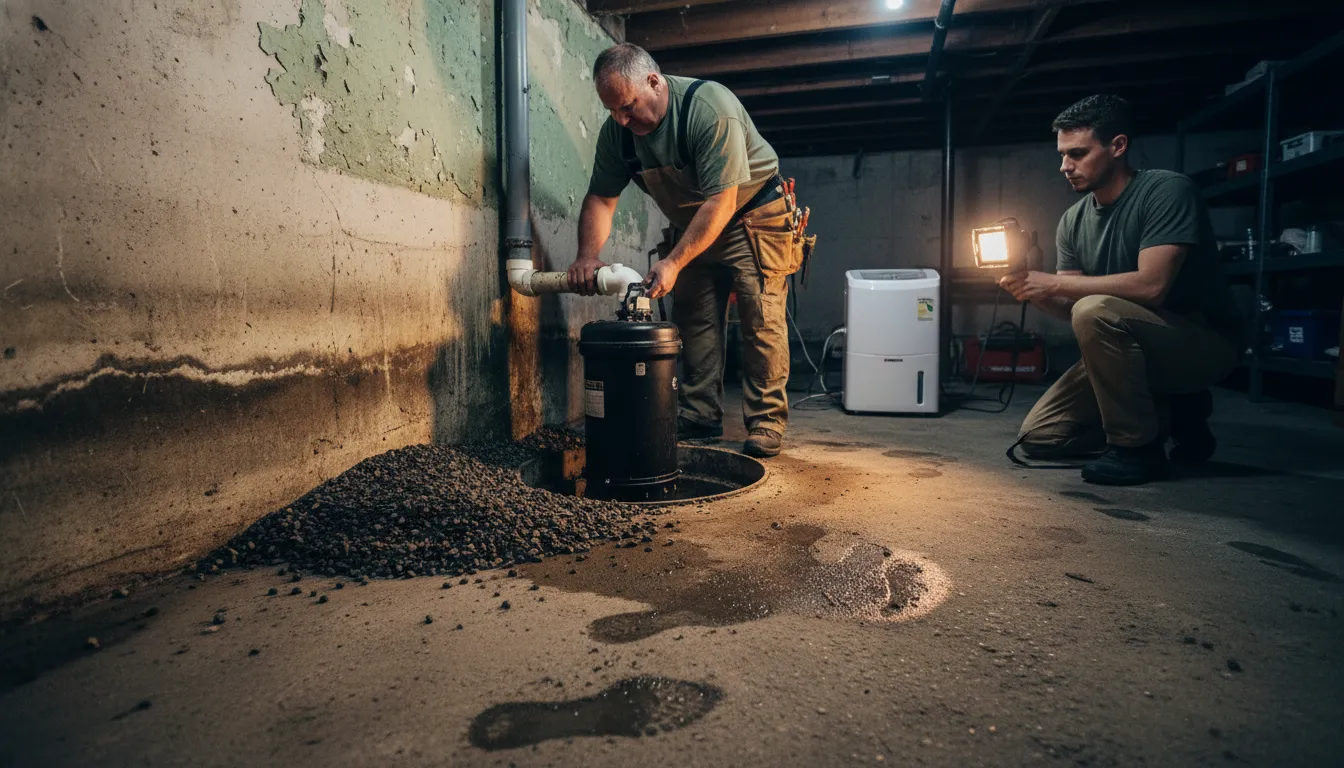
Find the Best Sump Pump Installation & Repair Companies for Your Business
No obligation • Fast responses • Nationwide coverage

Why you can trust Search a Plumber
Search a Plumber is a leading United States resource for finding and evaluating professional plumbing services. Our team researches licensing, experience, and customer feedback to create unbiased, fact-driven overviews. Companies cannot pay to change ratings or placement, ensuring homeowners get trustworthy information.
Search providers near you
Top Sump Pump Installation & Repair Companies in Lowell, Massachusetts Ranked
In Lowell, managing groundwater and preventing basement flooding is a critical concern for homeowners. Sump pump systems are essential for protecting your property from the costly damage caused by heavy rain and snowmelt. This guide will help you understand the key considerations for sump pump installation and maintenance, and how to find qualified local professionals to ensure your home stays dry.
Perricone Home Services
111 Middlesex Turnpike #1103, Burlington, MA 01803
Perricone Home Services is a plumbing and gas service provider based in Boston, MA. They offer a range of services including water heater repair and installation, tankless water heater services, sump pump repair, leak detection, repiping, gas line installation, and garbage disposal repair. The company is known for thorough inspections, clear communication, and using quality materials. They have experience handling complex plumbing issues such as re-piping and interior gas leaks. Customers appreciate their detailed explanations and multiple repair options. Perricone Home Services responds promptly to emergencies, including after-hours and weekend calls, ensuring timely repairs and installations.

Woody’s Plumbing & Heating
594 Marrett Rd STE 16, Lexington, MA 02421
Woody's Plumbing & Heating provides plumbing and heating services in Boston, MA. The company handles water heater repair and installation, sump pump repair, repiping, and gas line installation. They are certified professionals experienced in designing and installing plumbing and gas piping systems. Woody's Plumbing & Heating offers emergency services and flexible scheduling to address urgent plumbing and heating needs. Their expertise includes installing and repairing boilers and sump pumps to manage water issues effectively. The company is known for its practical solutions and customer-focused approach.
Green Tech Plumbing & Heating
165 Middlesex Ave #1057, Somerville, MA 02145
Green Tech Plumbing & Heating is a family-owned company serving Boston, MA, with licensed plumbers providing a wide range of plumbing and HVAC services. They offer water heater installation and repair, tankless water heater services, sump pump repair, drain cleaning, sewer line repair, leak detection, repiping, and water softener system installation. With 15 years of experience, the company handles both routine and emergency plumbing needs and works with insurance companies to assist customers efficiently.
Dello Russo Plumbing & Heating
28 Jasper St, Saugus, MA 01906
Dello Russo Plumbing & Heating is a family-owned residential plumbing and heating company based near Boston, MA. They provide a wide range of services including water heater repair and installation, sump pump repair, leak detection, gas line installation, and toilet repair. The company also offers emergency boiler and water heater replacements and specializes in heating system installations and repairs such as oil to gas conversions and high-efficiency heating systems. Serving Boston and surrounding areas, Dello Russo Plumbing & Heating has built a reputation for thorough workmanship and dependable service. They emphasize an all-encompassing approach to home comfort and provide free estimates along with a satisfaction guarantee.

HomeServe of New England
5 Constitution Way Suite B, Woburn, MA 01801
HomeServe of New England provides a wide range of plumbing and HVAC services in Boston, MA, including water heater repair and installation, tankless water heaters, water softeners, sump pump repair, drain cleaning, sewer line repair, leak detection, gas line installation, toilet repair, and garbage disposal repair. They serve Eastern Massachusetts and Rhode Island, offering 24/7 emergency repair services. Their team includes licensed and certified technicians, and they back their work with a one-year labor warranty.
Why Lowell Homes Need Sump Pumps
Lowell's climate and geography make basement waterproofing a priority. Eastern Massachusetts experiences significant precipitation throughout the year, including heavy rainstorms and substantial snowmelt in the spring. This water naturally seeks the lowest point, which is often your basement or crawl space. Without a proper drainage system, this can lead to persistent dampness, mold growth, and even structural damage.
Local plumbing and waterproofing experts emphasize that a sump pump is your first line of defense. It works by collecting water from perimeter drains into a specially constructed pit (the sump basin). When the water level in the pit rises to a certain point, the pump activates and discharges the water safely away from your home's foundation. This is not just about convenience; it's about protecting one of your largest investments from water damage.
Key Considerations for Your Sump Pump System
Choosing and installing a sump pump isn't a one-size-fits-all project. Several local factors must be considered to ensure a reliable system.
Understanding Local Soil and Water Tables: The performance of your sump pump is heavily influenced by Lowell's specific soil conditions and the height of the local water table. Contractors with experience in the area understand how clay-heavy soils or sandy soils affect drainage rates and can design a system that responds effectively to the groundwater pressure in your neighborhood 1. Talking to neighbors can also provide valuable insight into common water issues on your street.
Proper Sizing and Power: A pump that's too small will be overwhelmed during a major storm, while an oversized pump can short-cycle, leading to premature wear. Professionals calculate the correct pump capacity (measured in gallons per hour) based on the size of your basement, the rate of water inflow, and the vertical distance the water must be pumped out 2.
The Importance of a Backup System: Power outages often coincide with severe storms, which is the worst possible time for your primary pump to fail. Installing a battery backup pump or a water-powered backup pump is a highly recommended safeguard for Lowell homes. This ensures your basement remains protected even when the electricity goes out.
Find the perfect sump pump installation & repair companies for your needs
Get personalized recommendations and expert advice
Types of Sump Pumps: Pedestal vs. Submersible
The two main types of sump pumps each have their advantages, and the right choice depends on your basement's layout and your noise tolerance.
Pedestal Pumps: In this design, the motor is mounted on a long column (pedestal) above the sump pit. The main advantage is easier access for maintenance and repair. They are generally less expensive upfront and often have a longer lifespan because the motor stays out of the water. The trade-off is that they tend to be louder during operation and are less powerful, making them suitable for pits with lower water volumes.
Submersible Pumps: These units are designed to operate completely submerged in the water within the sump pit. They are significantly quieter, more powerful, and take up less visible space in your basement. Because the motor is sealed, they are ideal for pits that may receive a high volume of water quickly. They are typically more expensive than pedestal models but offer discreet and efficient operation.
The Role of Drainage: Interior and Exterior French Drains
A sump pump is only as good as the water it receives. For it to work, water must be directed to the sump pit. This is where drain tile systems, commonly called French drains, come in.
Interior Drain Tile: This is the most common solution for existing homes. A channel is cut into the basement floor slab around the perimeter. Perforated pipe is laid in this channel, covered with gravel, and then sealed over. This pipe collects water seeping through the cove joint (where the wall meets the floor) or up through the floor, and channels it directly to the sump pit. It's a highly effective way to manage water that's already entering the basement.
Exterior Drain Tile: While more invasive and costly, exterior drainage is considered the gold standard for preventing water from ever entering the basement. The foundation is excavated, a waterproof membrane is applied to the walls, and perforated pipe is installed at the footing level, surrounded by gravel. This system intercepts groundwater before it reaches the foundation walls and directs it to the sump pit or a daylight discharge point 3.
Installation Process and Associated Costs
Professional installation is crucial for a system that works reliably for years. The process and cost can vary widely based on your home's needs.
Excavating a New Sump Pit: If your home doesn't have an existing pit, one must be created. This involves breaking through the concrete floor, digging a hole deep and wide enough for the basin, and ensuring proper drainage into it. This excavation work is a significant part of the labor cost. Installing a new pit, along with the pump and necessary plumbing, can add $1,500 to $3,500 or more to the total project cost, depending on complexity.
Complete System Cost: For a full sump pump installation in Lowell-including a quality pump, a new pit, a sealed lid, and the necessary discharge piping-homeowners can expect a total cost ranging from approximately $800 to over $3,500 4. The final price depends on the pump type (pedestal vs. submersible), the need for a backup system, the complexity of the drainage work, and whether interior or exterior drain tile is also being installed.
Critical Installation Details: A proper installation includes a check valve on the discharge pipe to prevent water from flowing back into the pit, a airtight lid to reduce humidity and radon gas entry, and a discharge line that carries water at least 10-20 feet away from the foundation to a point where it can drain freely.
Maintenance and Repair for Longevity
A sump pump is a mechanical device with a typical lifespan of about 10 years. Regular maintenance is key to reaching or exceeding that lifespan and avoiding a failure when you need it most.
Annual Maintenance Checklist: Before the rainy season (spring in Lowell), it's wise to test your pump. Pour a bucket of water into the pit to trigger the float and ensure the pump activates and drains the pit completely. Check that the discharge line is clear of debris and ice. Listen for unusual noises. Experts like Denommee Plumbing recommend an annual professional inspection to clean the intake screen, test the backup system, and verify all components are in good working order 5.
Common Repair Needs: Even with maintenance, parts can wear out. Common issues include stuck or faulty float switches, clogged impellers, and burned-out motors. Strange noises, continuous running, or failure to turn on are clear signs you need a repair service. Local professionals, such as A. Fagundes Plumbing, can diagnose and fix these issues to restore your basement's protection 6.
Ignoring minor problems can lead to a complete pump failure, which inevitably happens during the next heavy downpour. Proactive repair and replacement are far less costly than dealing with the aftermath of a flooded basement.
Frequently asked questions
Sources
Footnotes
-
Prevent Water Damage With Sump Pumps in MA | LeBlanc - https://www.leblancbasementwaterproofing.com/blog/the-benefits-of-installing-a-sump-pump_ae19.html ↩
-
Sump Pump Installation - LaPan Waterproofing - https://lapansbasementwaterproofing.net/sump-pump-installation/ ↩
-
2025 Drain Tile Costs: What to Expect for Interior, Exterior, and Sump ... - https://basementwaterproofingscientists.com/drain-tile-installation-cost-guide/ ↩
-
Sump Pump Installation Cost Breakdown - Swift Plumbing & Heating - https://www.swiftplumb.com/blog/plumbing-service/the-cost-of-installing-a-sump-pump-what-to-expect/ ↩
-
Sump Pump Installation & Care | Denommee Plumbing - https://www.denommeeplumbing.com/blog/explore-sump-pump-system-installation-and-maintenance ↩
-
Sump Pump Repair in Lowell, MA | A. Fagundes Plumbing - https://www.afphpro.com/plumbing/sump-pump-repair/ ↩