Find the Best Sump Pump Installation & Repair Companies for Your Business
No obligation • Fast responses • Nationwide coverage

Why you can trust Search a Plumber
Search a Plumber is a leading United States resource for finding and evaluating professional plumbing services. Our team researches licensing, experience, and customer feedback to create unbiased, fact-driven overviews. Companies cannot pay to change ratings or placement, ensuring homeowners get trustworthy information.
Search providers near you
Top Sump Pump Installation & Repair Companies in Greenwood, Indiana Ranked
Living in Greenwood means enjoying the changing seasons, but it also means dealing with the heavy rains that are common across Indiana. When the soil becomes saturated, water relentlessly seeks the path of least resistance, often finding its way toward your home's foundation and basement. A properly functioning sump pump system is your primary defense against this invasive moisture, actively removing water to prevent flooding, structural damage, and mold growth. This guide will help you understand the critical aspects of sump pump services, from recognizing when you need one to choosing the right type and maintaining it, so you can find the right local expertise to protect your home.
Roto-Rooter Plumbing & Water Cleanup
18 E Main St Ste 230, Greenfield, IN 46140
Roto-Rooter Plumbing & Water Cleanup provides a wide range of plumbing services in Indianapolis, IN, including sewer and drain cleaning, water heater repair and installation, sump pump services, and leak detection. They specialize in both residential and commercial plumbing, offering advanced solutions such as hydro jetting and trenchless sewer repair to address complex plumbing issues. Established in 1935, Roto-Rooter has a long history of innovation and expertise in plumbing, and they offer 24/7 emergency services to handle urgent plumbing problems at any time.

Home Heroes Plumbing Heating & Air
7768 Kane Ct, Fishers, IN 46038
Home Heroes Plumbing Heating & Air is a locally owned plumbing, heating, and air conditioning service provider based in Fishers, Indiana. Serving Indianapolis, IN, and surrounding areas, they offer a range of services including water heater repair and installation, tankless water heater services, water softener installation, sump pump repair, drain cleaning, leak detection, gas line installation, and toilet repair. The company specializes in handling plumbing emergencies during business hours and provides expert solutions such as Rheem water heater installations, including tankless models. With over a decade of experience, Home Heroes Plumbing Heating & Air is committed to delivering reliable service tailored to customer needs.
Plumber Near Me LLC
Indianapolis, IN
Plumber Near Me LLC is a family-owned plumbing company serving Indianapolis, IN, and nearby communities. They offer a wide range of plumbing services including water heater repair and installation, water softener installation, sump pump repair, drain cleaning, sewer line repair, leak detection, and garbage disposal repair. With over 40 years of combined experience, they provide solutions for both new installations and repairs, including emergency plumbing services for urgent issues like leaks and sewer backups. Their expertise includes professional water service repair and main shutoff valve installation to protect homes from water damage.

Cornwell Plumbing
5724 N Green St 2nd Floor, Brownsburg, IN 46112
Cornwell Plumbing is a family-owned plumbing company serving Indianapolis, IN, and surrounding areas including Brownsburg, Pittsboro, and Hendricks County. Established in 1989, they offer a wide range of plumbing services such as sewer camera inspections, water heater repair and installation, water softener installation, sump pump and sewage pump repair, drain cleaning, leak detection, repiping, toilet and garbage disposal repair. Their expertise includes using advanced tools like sewer cameras to diagnose pipe issues accurately. Cornwell Plumbing provides emergency plumbing services when available and focuses on personalized, honest service for both residential and commercial clients.
Mr. Plumber by Metzler & Hallam
1033 3rd Ave SW Suite 205, Carmel, IN 46032
Mr. Plumber by Metzler & Hallam is a licensed plumbing service provider based in Indianapolis, IN, offering a wide range of plumbing solutions. Their services include sewer camera inspection, water heater repair, water softener installation, sump pump repair, sewer line repair with trenchless technology, leak detection, gas line installation, toilet and garbage disposal repair, among others. They utilize advanced tools such as camera snaking systems and infrared cameras to diagnose plumbing issues efficiently. The company emphasizes trenchless sewer line repair methods like pipe bursting and relining to minimize property disruption. Mr. Plumber provides 24/7 emergency service, ensuring assistance is available whenever needed.
Why Greenwood Homes Need Sump Pumps
The need for basement water management in Greenwood isn't a matter of if but when. The region's weather patterns lead to significant soil saturation, creating hydrostatic pressure that pushes groundwater through even the smallest cracks in your foundation or floor slab. Without an exit strategy, this water accumulates, leading to a host of problems. A sump pump installation provides that crucial exit, collecting water in a specially dug pit (the sump basin) and ejecting it safely away from your home's structure.
Key warning signs that your home may need a sump pump or that your existing system is failing include:
- Persistent dampness or musty odors in the basement or crawl space.
- Visible water stains on walls or floors.
- Standing water after a heavy rain.
- Cracks in the foundation or basement walls that seep water.
- A history of minor flooding in the lower level of your home 1 2.
Addressing these signs promptly with a professional assessment can prevent much more costly repairs down the line, such as foundation stabilization or extensive mold remediation.
Types of Sump Pumps for Your Home
Not all water pumps are created equal. Choosing the right type depends on your home's specific needs, the size of the sump pit, and your desired level of protection. Local professionals typically recommend and install several common configurations.
Pedestal Sump Pumps: In this design, the motor is mounted on a pedestal above the sump pit, with only the intake pipe extending down into the water. These are a good option for narrower, shallower pits and are generally easier to service. However, they can be noisier than other types.
Submersible Sump Pumps: As the name implies, the entire pump and motor unit operates submerged in the water within the pit. This design makes them much quieter, provides natural cooling for the motor, and is often considered more durable and out of the way. They are ideal for homes where the pump may run frequently 3.
Battery Backup Systems: This is not a separate pump type but a critical add-on. A battery backup sump pump provides a secondary layer of security, activating automatically if the primary pump fails or, more commonly, during a power outage-precisely when heavy storms often strike. It's an essential investment for complete peace of mind 4.
Dual Pump Systems: For maximum reliability, some homeowners opt for a system with two primary pumps or a combination of a primary and a dedicated backup pump. These systems share the workload and provide an immediate failover if one pump becomes overwhelmed or malfunctions 5.
The Professional Installation Process
Proper installation is just as important as selecting a quality pump. A correct installation ensures efficiency, longevity, and compliance with local codes. Here's what a professional installation typically involves:
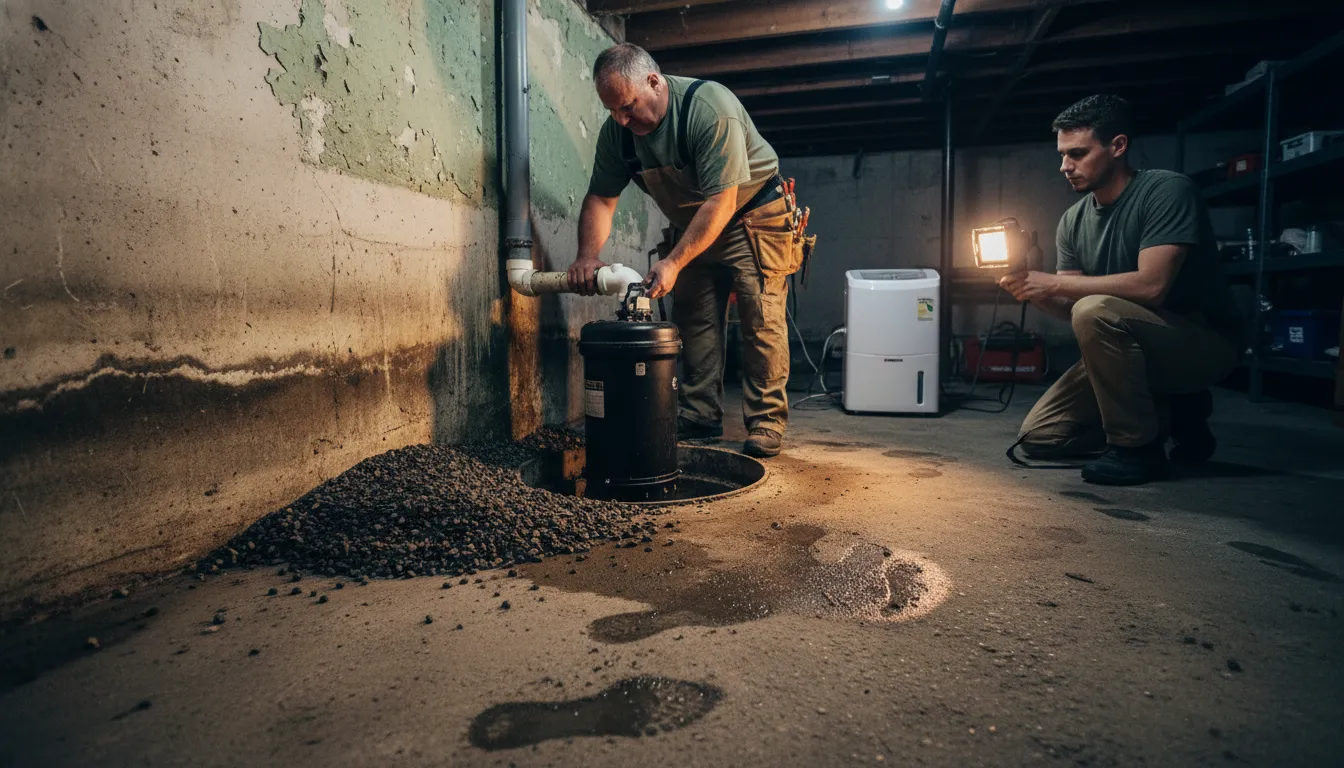
- Assessment and Pit Location: A technician will identify the lowest point in your basement or crawl space where water naturally collects. This is where the sump pit will be excavated.
- Pit Excavation and Liner Installation: A hole is dug, and a durable, perforated liner (often PVC or heavy-duty plastic) is set in place. Gravel is packed around the liner to facilitate water flow into the pit.
- Pump Placement and Plumbing: The pump is set on a stable base (like bricks or pavers) inside the liner. The discharge pipe is connected and must be routed with a consistent slope away from your home's foundation to prevent water from simply cycling back. A check valve is installed on this pipe to prevent ejected water from flowing back into the pit 6.
- Electrical Connection: The pump is connected to a dedicated Ground Fault Circuit Interrupter (GFCI) outlet for safety. For battery backups, the charger and control panel are also properly installed 7.
The most critical aspects of a successful installation are the correct routing and grading of the discharge line and the inclusion of a check valve. A poorly directed discharge line can undermine the entire system by allowing water to pool right next to your foundation 8.
Find the perfect sump pump installation & repair companies for your needs
Get personalized recommendations and expert advice
Repair and Maintenance Essentials
Even the best systems require attention. Common sump pump repairs address issues like pump failure (burned-out motors), switch problems (stuck or faulty float switches), clogged intakes from debris, and worn-out check valves allowing backflow. Repair costs in the Greenwood area for these common issues can range from $500 to $600.
Preventative maintenance is far more cost-effective. An annual inspection and service, typically costing between $200 and $300, can include:
- Cleaning the pump intake screen and the sump pit of silt and debris.
- Testing the pump by pouring water into the pit to ensure it activates and shuts off correctly.
- Inspecting the float switch for free movement.
- Checking the discharge line for obstructions or freezing potential.
- Testing the battery backup system (if installed) to ensure it holds a charge and activates.
This routine check can identify minor issues before they lead to a basement flood.
Integrated Water Management Solutions
A sump pump is often one component of a broader strategy to keep your home dry. Local experts frequently integrate them with other systems for comprehensive moisture control.
- Perimeter Drainage: Interior French drain systems (a pipe surrounded by gravel buried along the interior perimeter of your foundation) are designed to channel water directly to the sump pit, where the pump can eject it. This is a highly effective combination for managing groundwater 9.
- Crawl Space Encapsulation: In homes with crawl spaces, a sump pump is a critical part of the encapsulation process. By sealing the space with a vapor barrier and managing any water intrusion with a pump, you can protect floor joists, prevent mold, and improve indoor air quality 10.
- Foundation Crack Repair: While a sump pump manages water that has already entered, injecting specialized epoxy or polyurethane into foundation cracks addresses the point of entry, creating a more complete defense 11.
Understanding Costs in Greenwood
Investing in a sump pump system is an investment in protecting your home's value and livability. Costs can vary based on the pump type, complexity of installation, and any additional components.
- Standard Installation: For a primary submersible or pedestal pump with a new pit and basic discharge line, homeowners can expect costs to generally range from about $1,300 to $2,500 or more.
- Battery Backup Add-On: Adding a quality battery backup system to a new or existing installation typically adds between $200 and $1,000 to the project cost.
- Repairs: As noted, common repairs like replacing a pump or switch often fall in the $500 to $600 range 12.
- Annual Maintenance: Scheduling a professional tune-up usually costs between $200 and $300 13.
While these figures provide a guideline, obtaining a detailed, written estimate from a qualified local professional is essential, as your home's specific conditions will determine the final project scope and price.
Frequently asked questions
Sources
Footnotes
-
Sump Pumps: Everything You Need to Know - https://www.hammandsons.plumbing/blog/everything-about-sump-pumps ↩
-
Sump Pump Installation in Indianapolis & Central Indiana - Americrawl - https://www.americrawl.com/sump-pump/sump-pump-installation ↩
-
Greenwood Sump Pumps - Mister Quik - https://mrquikhomeservices.com/greenwood-plumbing/sump-pumps/ ↩
-
Types of Sump Pumps in Indianapolis Homes - https://mrplumberindy.com/knowledge-center/types-of-sump-pumps/ ↩
-
Sump Pump Installation in Indiana - https://www.basementsystemsofindiana.com/basement-waterproofing/products/sump-pumps.html ↩
-
Sump Pump Installation in Greenwood, IN - Hope Plumbing - https://www.hopeplumbing.com/sump-pump-greenwood-in/ ↩
-
Sump Pump Installation | Jake Miller Plumbing | Contact Us - https://jakemillerplumbing.com/plumbing-services/sump-pump-installation/ ↩
-
The Homeowner's Guide to Sump Pump Installation in ... - https://www.justindorseyplumbing.com/protecting-your-foundation-the-homeowners-guide-to-sump-pump-installation-in-indianapolis/ ↩
-
Sump Pump Installation in Indianapolis & Marion - SmartCrawl - https://www.smartcrawl.net/basement-waterproofing/sump-pump-installation ↩
-
Crawl Space Sump Pump Installation - Indiana Foundation Service - https://www.indianafoundation.com/services/crawl-space-repair/solutions/crawl-space-sump-pump/ ↩
-
Basement Sump Pump Solutions - Indiana Foundation Service - https://www.indianafoundation.com/services/basement-waterproofing/solutions/sump-pump-systems/ ↩
-
Greenwood Sump Pump Repair - Mister Quik - https://mrquikhomeservices.com/greenwood-plumbing/sump-pumps/sump-pump-repair/ ↩
-
How Much Does Sump Pump Installation Cost? 5 Factors - https://freedomplumbingmidwest.com/sump-pump-installation-cost/ ↩