Find the Best Sump Pump Installation & Repair Companies for Your Business
No obligation • Fast responses • Nationwide coverage

Why you can trust Search a Plumber
Search a Plumber is a leading United States resource for finding and evaluating professional plumbing services. Our team researches licensing, experience, and customer feedback to create unbiased, fact-driven overviews. Companies cannot pay to change ratings or placement, ensuring homeowners get trustworthy information.
Search providers near you
Top Sump Pump Installation & Repair Companies in Carmel, Indiana Ranked
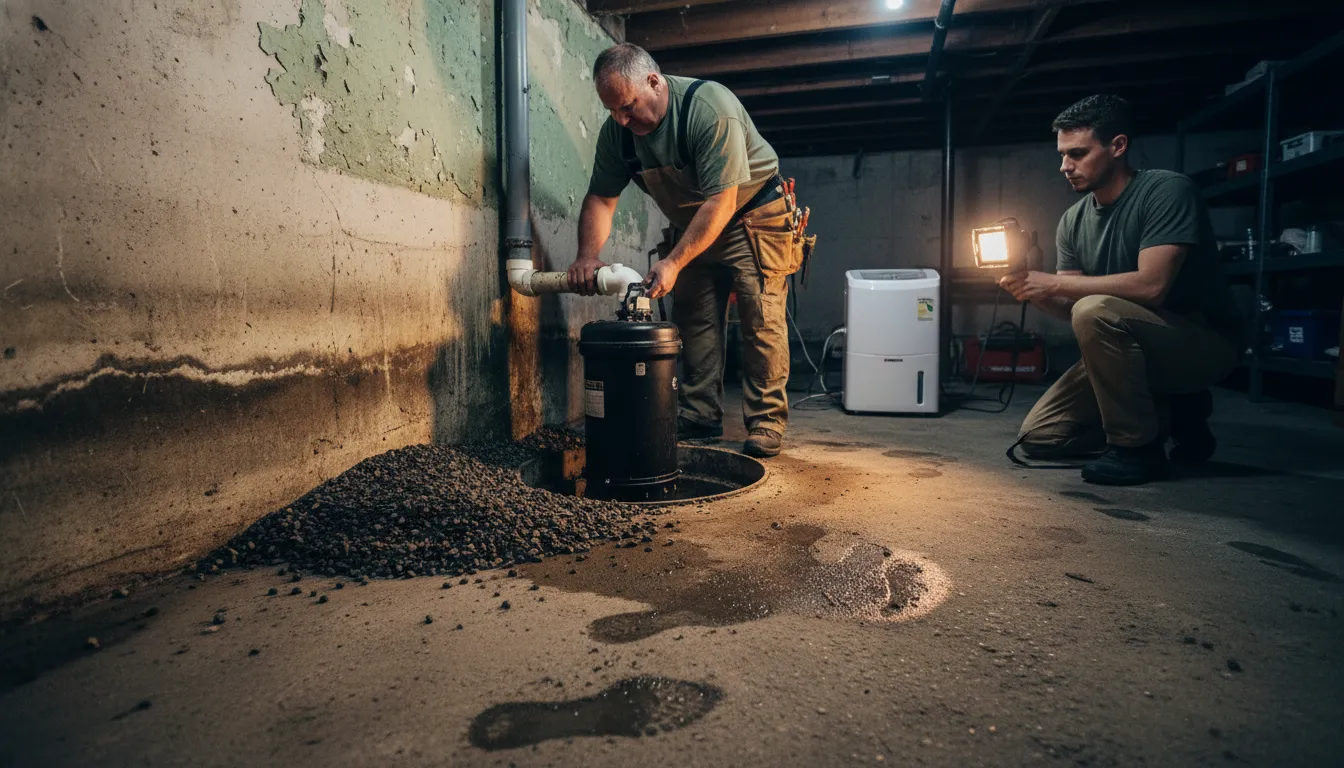
A sump pump is a critical defense system for your Carmel home, actively removing water that accumulates around your foundation to prevent basement flooding and water damage. Given the local soil conditions and water table, these systems are not just optional but essential for protecting your property's value and structural integrity. This guide will help you understand the specifics of sump pump service, from local regulations to choosing the right system, so you can make informed decisions about installation, maintenance, and repair with a qualified local professional.
Roto-Rooter Plumbing & Water Cleanup
18 E Main St Ste 230, Greenfield, IN 46140
Roto-Rooter Plumbing & Water Cleanup provides a wide range of plumbing services in Indianapolis, IN, including sewer and drain cleaning, water heater repair and installation, sump pump services, and leak detection. They specialize in both residential and commercial plumbing, offering advanced solutions such as hydro jetting and trenchless sewer repair to address complex plumbing issues. Established in 1935, Roto-Rooter has a long history of innovation and expertise in plumbing, and they offer 24/7 emergency services to handle urgent plumbing problems at any time.

Home Heroes Plumbing Heating & Air
7768 Kane Ct, Fishers, IN 46038
Home Heroes Plumbing Heating & Air is a locally owned plumbing, heating, and air conditioning service provider based in Fishers, Indiana. Serving Indianapolis, IN, and surrounding areas, they offer a range of services including water heater repair and installation, tankless water heater services, water softener installation, sump pump repair, drain cleaning, leak detection, gas line installation, and toilet repair. The company specializes in handling plumbing emergencies during business hours and provides expert solutions such as Rheem water heater installations, including tankless models. With over a decade of experience, Home Heroes Plumbing Heating & Air is committed to delivering reliable service tailored to customer needs.
Plumber Near Me LLC
Indianapolis, IN
Plumber Near Me LLC is a family-owned plumbing company serving Indianapolis, IN, and nearby communities. They offer a wide range of plumbing services including water heater repair and installation, water softener installation, sump pump repair, drain cleaning, sewer line repair, leak detection, and garbage disposal repair. With over 40 years of combined experience, they provide solutions for both new installations and repairs, including emergency plumbing services for urgent issues like leaks and sewer backups. Their expertise includes professional water service repair and main shutoff valve installation to protect homes from water damage.

Cornwell Plumbing
5724 N Green St 2nd Floor, Brownsburg, IN 46112
Cornwell Plumbing is a family-owned plumbing company serving Indianapolis, IN, and surrounding areas including Brownsburg, Pittsboro, and Hendricks County. Established in 1989, they offer a wide range of plumbing services such as sewer camera inspections, water heater repair and installation, water softener installation, sump pump and sewage pump repair, drain cleaning, leak detection, repiping, toilet and garbage disposal repair. Their expertise includes using advanced tools like sewer cameras to diagnose pipe issues accurately. Cornwell Plumbing provides emergency plumbing services when available and focuses on personalized, honest service for both residential and commercial clients.
Mr. Plumber by Metzler & Hallam
1033 3rd Ave SW Suite 205, Carmel, IN 46032
Mr. Plumber by Metzler & Hallam is a licensed plumbing service provider based in Indianapolis, IN, offering a wide range of plumbing solutions. Their services include sewer camera inspection, water heater repair, water softener installation, sump pump repair, sewer line repair with trenchless technology, leak detection, gas line installation, toilet and garbage disposal repair, among others. They utilize advanced tools such as camera snaking systems and infrared cameras to diagnose plumbing issues efficiently. The company emphasizes trenchless sewer line repair methods like pipe bursting and relining to minimize property disruption. Mr. Plumber provides 24/7 emergency service, ensuring assistance is available whenever needed.
Understanding Carmel's Need for Sump Pumps
In Central Indiana, basements and crawlspaces are particularly prone to water intrusion due to the region's soil composition and water table levels. Water naturally seeks the path of least resistance, and in Carmel's clay-heavy soil, drainage is slow. This leads to hydrostatic pressure building up against your home's foundation, forcing moisture through cracks and joints. A sump pump system is designed to combat this by collecting incoming water in a specially dug pit (sump basin) and ejecting it safely away from your home 1. Without a properly functioning sump pump, homeowners risk costly damage from mold, mildew, ruined drywall and flooring, and compromised structural elements.
Local Regulations: Connecting Correctly is Crucial
Carmel has specific and important regulations governing sump pump discharge. Carmel Utilities mandates that all sump pumps must be connected to the storm sewer system, not the sanitary sewer 2 3. Discharging groundwater into the sanitary sewer can overwhelm the public wastewater system, leading to potential backups and environmental issues. The city actively encourages compliance by offering a Sump Pump Redirection Program, which includes free inspections to determine your current connection status 3. If your pump is incorrectly connected, redirecting it to the proper storm sewer outlet is required, and doing so may make you eligible for utility credits 2.
Proper Discharge Requirements
Once connected to the storm system, the actual point where water leaves the discharge pipe must also be managed correctly:
- Water should be directed at least 25 feet away from your home's foundation onto a pervious surface like your lawn.
- If yard space is limited, discharge can be placed closer to the house, but it must be done in a way that doesn't allow water to simply recirculate back to the foundation.
- The discharge point should be clear of obstructions to prevent freezing or clogging in winter.
Types of Sump Pumps for Your Home
Choosing the right pump depends on your home's specific needs, the size of your sump pit, and your budget. A professional can assess which type is best for you.
- Submersible Pumps: These units operate while fully submerged in the sump pit. They are generally quieter, more discreet, and often have greater pumping capacity, making them a common choice for new installations and replacements.
- Pedestal Pumps: In this design, the motor is mounted on a long pedestal above the sump pit, with only the intake pipe extending into the water. They are typically less expensive and easier to service, but can be noisier and are more suitable for narrower pits.
- Battery Backup Systems: This is not a primary pump type, but an essential add-on. A battery backup pump provides protection during power outages, which often coincide with heavy storms. Systems like the UltraSump integrate a backup pump with the primary unit for seamless operation 4.
- Water-Powered Backup Pumps: These devices use your home's municipal water pressure to pump water out during a power failure. They are a reliable backup option but do require a significant amount of water to operate 5.
The Professional Installation Process
Proper installation by a licensed plumber is key to system longevity and compliance. The process typically involves:
- Excavation: Digging the sump pit in the lowest area of the basement or crawlspace, usually near the foundation's perimeter.
- Liner Placement: Setting a durable, perforated sump liner (often plastic or concrete) into the pit to keep the walls from collapsing and to filter out debris.
- Pump Placement: Installing the primary pump (and backup if included) at the correct height within the liner.
- Plumbing & Discharge: Connecting the pump to a discharge pipe that is properly routed and secured, leading to the approved outdoor location 6.
- Electrical Connection: Wiring the pump to a dedicated GFCI outlet with a visible disconnect switch for safety.
- Testing & Final Check: Filling the pit with water to test the pump's automatic activation, float switch operation, and discharge flow.
For new home construction in Carmel, builders often integrate the sump pump with a comprehensive interior drainage system, such as a French drain, that channels water from the foundation footer directly into the sump pit for the most effective water management 7.
Find the perfect sump pump installation & repair companies for your needs
Get personalized recommendations and expert advice
Recognizing When You Need Repairs
Even a well-installed sump pump requires attention. Typical lifespan is 7 to 10 years, but components can fail sooner. Watch for these warning signs:
- Frequent or Constant Running: The pump cycles on and off too often or runs non-stop, which can indicate a switch problem, improper sizing, or a high water table.
- Unusual Noises: Grinding, rattling, or screeching sounds often point to a damaged impeller or worn-out bearings.
- Visible Leaking: Water pooling around the sump pit or from the pump itself signals a failing seal or cracked housing.
- Failure to Activate: The most dangerous sign; the pump doesn't turn on when water rises, leaving your basement vulnerable.
- Clogged Discharge Line: Ice or debris can block the outdoor discharge, causing water to back up.
Never ignore these issues. A malfunctioning pump provides a false sense of security. Contact a professional for an assessment to determine if a repair or full replacement is needed.
Cost Considerations for Installation and Repair
Costs can vary based on pump type, labor, materials, and the complexity of the job.
- New Installation/Replacement: A full professional installation, including labor, materials, and a standard submersible pump, typically ranges from $800 to $2,000 in the Carmel area 8. Adding a battery backup system can increase the total cost, with backup units themselves ranging from $150 to $2,000 9 10.
- Repair Services: Repair costs are generally lower, often between $100 and $500+, depending on the part needed (e.g., check valve, float switch, new seal) and the labor involved 11. A professional diagnosis is the first step to get an accurate estimate.
Essential Maintenance for Longevity
Proactive maintenance can prevent emergencies and extend your pump's life. Homeowners should:
- Test the Pump Quarterly: Pour a bucket of water into the sump pit until the float rises and triggers the pump. Ensure it activates, pumps out the water, and shuts off automatically.
- Clean the Pit Annually: Unplug the pump, remove any gravel, silt, or debris that has accumulated in the bottom of the pit, which can clog the intake.
- Inspect the Discharge Line: Check the outdoor exit point for clogs, especially in fall and winter. Ensure the line is sloped away from the house.
- Check the Backup Battery: If you have a battery system, test it according to the manufacturer's instructions and replace the battery every 2-3 years.
- Listen and Look: Be aware of any changes in operation sounds or performance during testing.
Frequently asked questions
Sources
Footnotes
-
Sump Pump Installation in Indianapolis & Marion - SmartCrawl - https://www.smartcrawl.net/basement-waterproofing/sump-pump-installation ↩
-
Prevent Sanitary Sewer Overflows and Backups Is Your Sump ... - https://carmelutilities.com/wp-content/uploads/2024/08/Carmel-Sump-Pump-Final-to-PIP-Printing.pdf ↩ ↩2
-
Sump Pump Redirection Program - Carmel Utilities - https://carmelutilities.com/sump-pump-redirection-program/ ↩ ↩2
-
Sump Pump Installation Cost Guide | 2026 Prices & Factors - https://modernize.com/foundations/basement-waterproofing/sump-pump-installation-cost ↩
-
Sump Pump Installation in Indiana - https://www.basementsystemsofindiana.com/basement-waterproofing/products/sump-pumps.html ↩
-
Sump Pump Repair & Installation Carmel, IN - https://callhomeheroes.com/carmel/sump-pump-repair/ ↩
-
Sump Pump & Interior Drainage Upgrades for New Builds in ... - https://swaincollc.com/sump-pump-interior-drainage-upgrades-for-new-builds-in-westfield-carmel/ ↩
-
Sump Pumps Carmel, IN - Coopers Water - https://cooperswater.com/carmel-sump-pumps/ ↩
-
Sump Pumps - Fite Plumbing, LLC - https://fiteplumbing.com/sump-pumps/ ↩
-
Sump Pump Installation in Indianapolis & Central Indiana - Americrawl - https://www.americrawl.com/sump-pump/sump-pump-installation ↩
-
Sump Pump Installation: What Affects Cost? | Mr. Handyman - https://www.mrhandyman.com/blog/sump-pump-installation-cost/ ↩