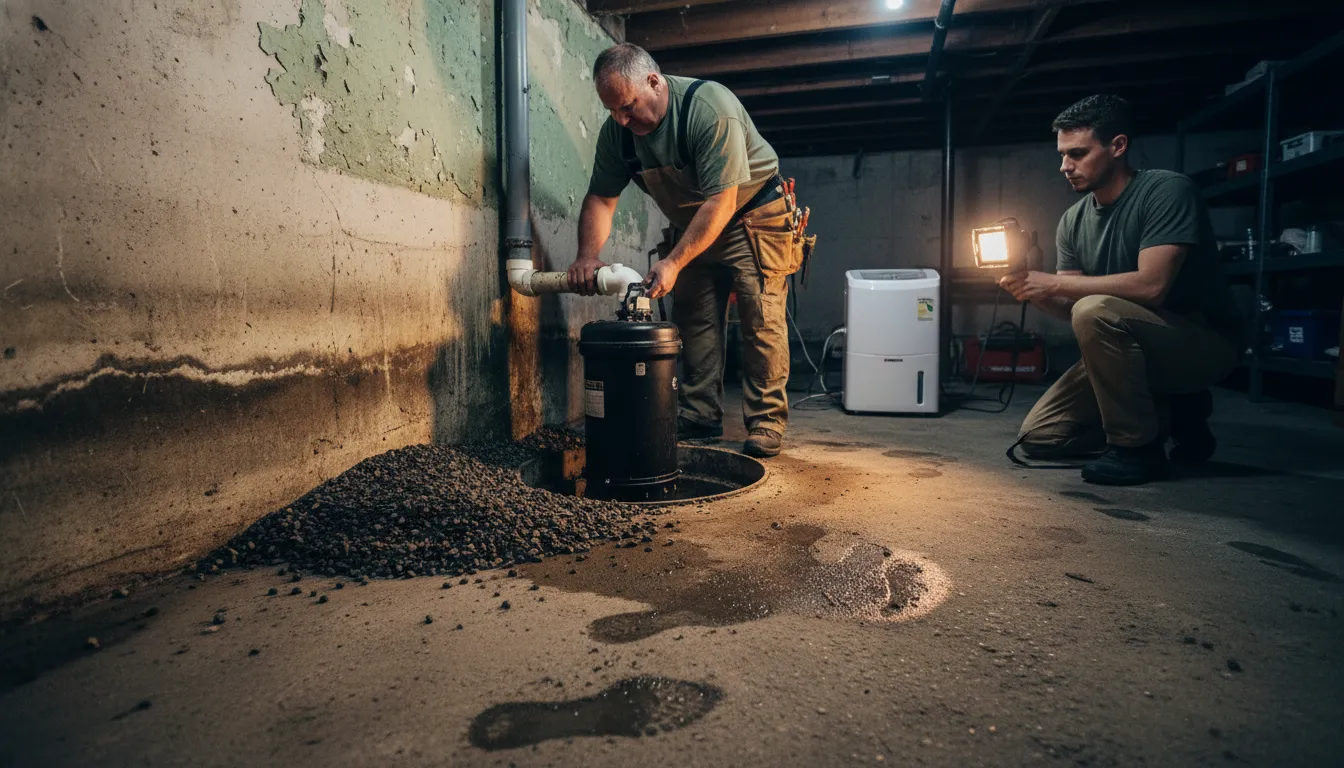
Find the Best Sump Pump Installation & Repair Companies for Your Business
No obligation • Fast responses • Nationwide coverage

Why you can trust Search a Plumber
Search a Plumber is a leading United States resource for finding and evaluating professional plumbing services. Our team researches licensing, experience, and customer feedback to create unbiased, fact-driven overviews. Companies cannot pay to change ratings or placement, ensuring homeowners get trustworthy information.
Search providers near you
Top Sump Pump Installation & Repair Companies in Santa Clara, California Ranked
A sump pump is a critical defense system for your home, actively protecting your basement or crawl space from flooding and water damage. In Santa Clara, where seasonal rains and specific soil conditions can lead to groundwater issues, having a reliable pump system is not just an upgrade-it's often a necessity for preserving your property's foundation and interior. This guide explains everything you need to know about sump pump services, from choosing the right type to understanding costs, so you can make an informed decision and connect with qualified local specialists for your project.
Caccia Home Services
1660 Gilbreth Rd, Burlingame, CA 94010
Caccia Home Services is a plumbing and home services provider based in Oakland, CA. They offer a wide range of plumbing solutions including water heater repair and installation, tankless water heaters, water softener installation, sump pump repair, hydro jetting, sewer line repair, trenchless sewer services, repiping, gas line installation, toilet and garbage disposal repairs. Their capabilities include advanced hydro jetting and trenchless sewer repair techniques. The company also provides emergency plumbing services and water treatment options.
Mr. Rooter Plumbing of The Oakland-Berkeley Area
50 Hegenberger Loop, Oakland, CA 94621
Mr. Rooter Plumbing of The Oakland-Berkeley Area provides a wide range of plumbing services to residential and commercial customers in San Francisco, CA, and the surrounding cities including Oakland, Berkeley, and Alameda. Their services include drain cleaning, sewer line repair, water heater installation and repair, sump pump repair, leak detection, and trenchless sewer repair. The company uses advanced technology such as HydroScrub® Jetting and plumbing video cameras to address plumbing issues effectively. With decades of experience, Mr. Rooter Plumbing offers emergency plumbing services and backs their work with a satisfaction promise to ensure quality results.
Michael Gardner Plumbing
16038 Vía Nueva, San Lorenzo, CA 94580
Michael Gardner Plumbing is a locally owned plumbing service based in San Francisco, CA. Established in 2022, the company offers a wide range of plumbing services including sewer camera inspections, water heater repair and installation, sump pump repair, drain cleaning, hydro jetting, sewer line repair, trenchless sewer repair, repiping, gas line installation, and toilet repair. Michael Gardner, a third-generation plumber, brings extensive experience from working with Oro Loma Sanitary District and ARS Rescue Rooter East Bay, specializing in gas, sewer, and water repair and replacement. The business is licensed, bonded, and insured, and provides services for new construction, remodels, and emergency plumbing needs.
Advanced Quality Plumbing & Rooter
7052 Santa Teresa Blvd #77, San Jose, CA 95139
Advanced Quality Plumbing & Rooter is a plumbing service provider based in San Jose, CA. They offer a wide range of plumbing solutions including water heater repair and installation, sewer camera inspections, hydro jetting, drain cleaning, sump pump repair, leak detection, repiping, and gas line installation. Their capabilities include high-quality 4K video pipe inspections and high-pressure hydro jetting with advanced tip technology. The company emphasizes craftsmanship and staying updated with the latest plumbing technologies to ensure thorough and reliable service.
Roto-Rooter Plumbing & Water Cleanup
2078 Walsh Ave c1, Santa Clara, CA 95050
Roto-Rooter Plumbing & Water Cleanup provides a wide range of plumbing services in San Jose, CA, including drain cleaning, water heater repair and installation, sewer line repair, and water softener installation. They serve both residential and commercial clients, offering specialized capabilities such as hydro jetting and trenchless sewer repair. The company is fully licensed and insured, with emergency plumbing services available 24/7 throughout the year.
Why Santa Clara Homes Need Sump Pumps
Santa Clara's unique geography and climate create specific challenges for homeowners concerned with water management. The area is known for its clay-heavy soils, which are expansive and have poor natural drainage. When it rains, water doesn't percolate down quickly; instead, it can saturate the ground and create hydrostatic pressure against your home's foundation. This pressure seeks the path of least resistance, often leading to water intrusion through cracks, seams, or the cove joint where the floor meets the wall.
Furthermore, the local water table can rise significantly during the wet season or due to extensive landscape irrigation 1. This rising groundwater is a primary culprit for damp basements and flooded crawl spaces. For homes with below-grade living areas, a sump pump system acts as an automatic safety net, collecting this water and ejecting it away from the foundation before it can cause damage, mold growth, or structural issues.
Core Components of a Sump Pump System
Understanding the parts of a sump system helps you communicate effectively with professionals and understand their recommendations.
- Sump Pit (or Basin): This is the heart of the system-a hole (typically 18-24 inches in diameter and 24-36 inches deep) dug into the lowest point of your basement or crawl space floor. It collects incoming groundwater.
- The Pump Itself: This is the mechanical device that moves the water. The two main types are pedestal pumps, where the motor sits above the pit on a column, and submersible pumps, where the entire unit operates underwater inside the pit.
- Discharge System: This includes the pipe that carries water from the pump to the exterior of your home and a check valve. The check valve is crucial as it prevents ejected water from flowing back into the pit once the pump turns off 2. The discharge pipe must slope away from the foundation to ensure proper drainage.
- Perimeter Drainage (Often French Drains): Many effective systems include a network of perforated pipes, sometimes called a French drain or WaterGuard system, installed around the interior perimeter of the foundation footing. These pipes capture water seeping through the walls or floor and channel it directly into the sump pit.
- Battery Backup: A critical add-on for reliability. During a storm, when flooding risk is highest, power outages are common. A battery backup system ensures your pump continues to operate, providing peace of mind.
Choosing the Right Pump: Pedestal vs. Submersible
The choice between a pedestal and submersible sump pump is one of the most significant decisions for your installation.
Pedestal Pumps are a more traditional and budget-friendly option. The motor is mounted on a long shaft (pedestal) that keeps it out of the water, sitting above the pit cover. The main advantages are lower initial cost and often easier access for maintenance or inspection. However, they tend to be louder during operation, take up more visible space in your basement, and are generally less powerful than their submersible counterparts.
Submersible Pumps are the modern standard for most residential installations. The entire pump and motor are housed in a sealed, waterproof casing that sits directly in the water within the pit. The key benefits are much quieter operation, greater pumping capacity and efficiency, and a more discreet, out-of-sight installation 3. They are better suited for handling larger volumes of water, which can be important in areas with heavy water flow. The trade-off is a higher upfront cost.
For Santa Clara homes, where living space is valuable and quiet operation is often preferred, submersible pumps are frequently the recommended choice, despite the higher initial investment.
Installation Process and Key Considerations
Professional installation is vital for a system that works correctly and lasts for years. A proper installation involves more than just dropping a pump into a hole.
First, a technician will assess your property to identify the true source of water intrusion and determine the optimal location for the sump pit-always at the lowest point where water naturally collects 4. If a new pit is needed, concrete will be broken and excavated. For comprehensive protection, a perimeter French drain system may be installed, which involves channeling around the foundation's interior edge and connecting it to the pit 5.
The pump is then placed and connected to a dedicated electrical circuit with a Ground Fault Circuit Interrupter (GFCI) outlet for safety. The discharge line is carefully routed, ensuring it has a consistent downward slope away from the house and terminates in a location where water will not drain back toward the foundation. Finally, the system is tested by pouring water into the pit to trigger the pump's automatic float switch and verify proper operation.
Find the perfect sump pump installation & repair companies for your needs
Get personalized recommendations and expert advice
Understanding Costs: Installation and Repair
Investing in a sump pump system involves both installation and potential future repair costs. In the Santa Clara area, prices can vary based on system complexity, pump quality, and labor rates.
Installation Costs: A basic pedestal pump installation, where an existing pit is usable, might range from $300 to $600 for parts and labor 6. A submersible pump installation typically starts around $800 and can go up to $2,000 or more for higher horsepower models 6. If the project requires excavating a new sump pit and adding a perimeter drainage system, homeowners should expect a more significant investment, often between $1,500 and $3,500+ 6 7. Adding a battery backup system is highly recommended and adds another $300 to $1,000 to the total project cost 7 8.
Repair Costs: Even well-maintained pumps will eventually need service. Common issues include a stuck float switch, a failing check valve, or a clogged intake. Repairs for these simpler problems generally fall in the range of $150 to $400 9. More complex repairs, such as replacing a pump motor, addressing electrical issues, or fixing a damaged discharge line, can cost $400 to $750 or more, especially if significant labor is involved 10 9.
Maintenance Tips for Longevity
A little maintenance can prevent costly emergencies. Test your pump every few months by slowly pouring a bucket of water into the pit until the float rises and activates the pump. Ensure the discharge line outlet is clear of debris, leaves, or ice. Listen for unusual noises during operation and check that the pit itself is free of silt, gravel, or other debris that could clog the pump. If you have a battery backup, test it according to the manufacturer's instructions and replace the battery as recommended (usually every 3-5 years). An annual professional inspection can catch minor issues before they lead to a failure during a storm.
Signs You Need Sump Pump Service
Don't wait for a flood to address pump problems. Be proactive if you notice:
- The pump runs continuously, even when it hasn't rained.
- It fails to turn on when water is poured into the pit.
- You hear unusual grinding, rattling, or screeching sounds.
- The pump vibrates excessively during operation.
- Visible rust or corrosion on the pump or in the pit.
- Frequent cycling (turning on and off in rapid succession).
- Water is not being discharged far enough from the house, or you notice it flowing back.
Frequently asked questions
Sources
Footnotes
-
Sump Pump Installation in Santa Clara, CA - Costs 01 / 2026 - https://www.homeyou.com/ca/sump-pump-installation-santa-clara-costs ↩
-
Sump Pump Installers in California - So Cal Crawl Space Solutions - https://www.socalcrawlspacesolutions.com/sump-pump.html ↩
-
Sump Pump Installation & Repair - https://www.swagsplumbing.com/sewer-drain/sump-pump-installation/ ↩
-
Sump Pump Services in Gilroy & Santa Clara County - https://www.fantasticrooter.com/sump-pump-installation---repair ↩
-
Sump Pump Installation Bay Area - Cardona Construction Inc - https://www.cardonaconstruction.com/sump-pump-installation ↩
-
Sump Pump Installation In the San Francisco Bay Area - https://www.foundationrepairofca.com/sump-pump/sump-pump-install.html ↩ ↩2 ↩3
-
The Ultimate Guide to Sump Pumps for Southern California - https://easypeezyplumbing.com/sump-pump-guide-southern-california/ ↩ ↩2
-
How Much Does Sump Pump Installation Cost? 5 Factors - https://freedomplumbingmidwest.com/sump-pump-installation-cost/ ↩
-
Sump Pump Repair & Replacement Costs (2026 Guide) - Modernize - https://modernize.com/foundations/basement-waterproofing/sump-pump-repair-replacement-cost ↩ ↩2
-
Sump Pump Installation Cost Breakdown - Swift Plumbing & Heating - https://www.swiftplumb.com/blog/plumbing-service/the-cost-of-installing-a-sump-pump-what-to-expect/ ↩