Find the Best Sump Pump Installation & Repair Companies for Your Business
No obligation • Fast responses • Nationwide coverage

Why you can trust Search a Plumber
Search a Plumber is a leading United States resource for finding and evaluating professional plumbing services. Our team researches licensing, experience, and customer feedback to create unbiased, fact-driven overviews. Companies cannot pay to change ratings or placement, ensuring homeowners get trustworthy information.
Search providers near you
Best Sump Pump Installation & Repair Companies in Arkansas Ranked
A reliable sump pump system is your home's primary defense against basement flooding and water damage, especially in Arkansas where heavy rains and high water tables are common. This service involves installing or repairing a pump in a pit (sump basin) to collect and eject groundwater away from your foundation. Finding a qualified local professional is crucial for proper system design, installation, and maintenance to protect your property's value and structural integrity.
Why Arkansas Homes Need Sump Pumps
Arkansas's climate, with its significant rainfall and regions with high groundwater levels, creates a persistent risk of water intrusion in basements and crawl spaces. Homes located near streams, in low-lying areas, or with poor natural drainage are particularly vulnerable. The goal of a sump pump system is not just to react to flooding but to proactively manage subsurface water pressure (hydrostatic pressure) that can force moisture through cracks in your foundation walls and floor 1. A properly installed system is an investment in preserving your home's foundation, preventing mold growth, and avoiding costly repairs from water damage.
Types of Sump Pump Systems
Choosing the right type of pump depends on your home's specific needs, the volume of water, and your budget. Here are the most common systems installed by Arkansas professionals:
- Submersible Pumps: The pump unit sits entirely within the sump pit, submerged in water. These are generally quieter, more discreet, and better suited for homes with heavier or more frequent water flow. They are a popular choice for primary pump installations.
- Pedestal Pumps: In this design, the motor is mounted on a pedestal above the sump pit, with only the intake pipe extending down into the water. Pedestal pumps are often less expensive and easier to access for service, but they tend to be louder and are typically recommended for smaller pits or drier applications.
- Battery Backup Pumps: This is not a primary pump type but an essential add-on system. A battery backup pump is a separate, secondary pump that activates during a power outage or if the primary pump fails. Given Arkansas's storm activity, a battery backup is considered critical for reliable protection.
- Water-Powered Backup Pumps: These backup systems use your home's municipal water pressure to pump water out of the pit. They provide an unlimited runtime during a blackout but pump at a slower rate and consume household water. They are a viable alternative where battery backups are not preferred.
Integrating Perimeter Drainage
For comprehensive protection, a sump pump is often just one component of a larger waterproofing strategy. Many Arkansas homes, especially those with chronic dampness or wall leaks, benefit from integrating the sump pit with a perimeter drainage system.
- Interior French Drains (Drain Tile): A perforated pipe is installed along the interior perimeter of the foundation footing, beneath the floor. This channel collects water seeping through the walls or floor and directs it to the sump pit, where the pump ejects it. This system is highly effective at managing hydrostatic pressure and is a common solution for existing homes with water issues.
- Exterior Drainage Systems: While more invasive and costly, exterior systems involve excavating around the foundation to install waterproofing membranes and drain pipes that divert water before it reaches the foundation wall. This is often considered during new construction or major renovation.
The Professional Installation Process
Proper installation by a licensed professional is non-negotiable for a system that works when you need it most. A typical installation involves several key steps:
- Assessment and Pit Location: A contractor will identify the lowest point in your basement or crawl space, which is where the sump pit should be dug to effectively collect water.
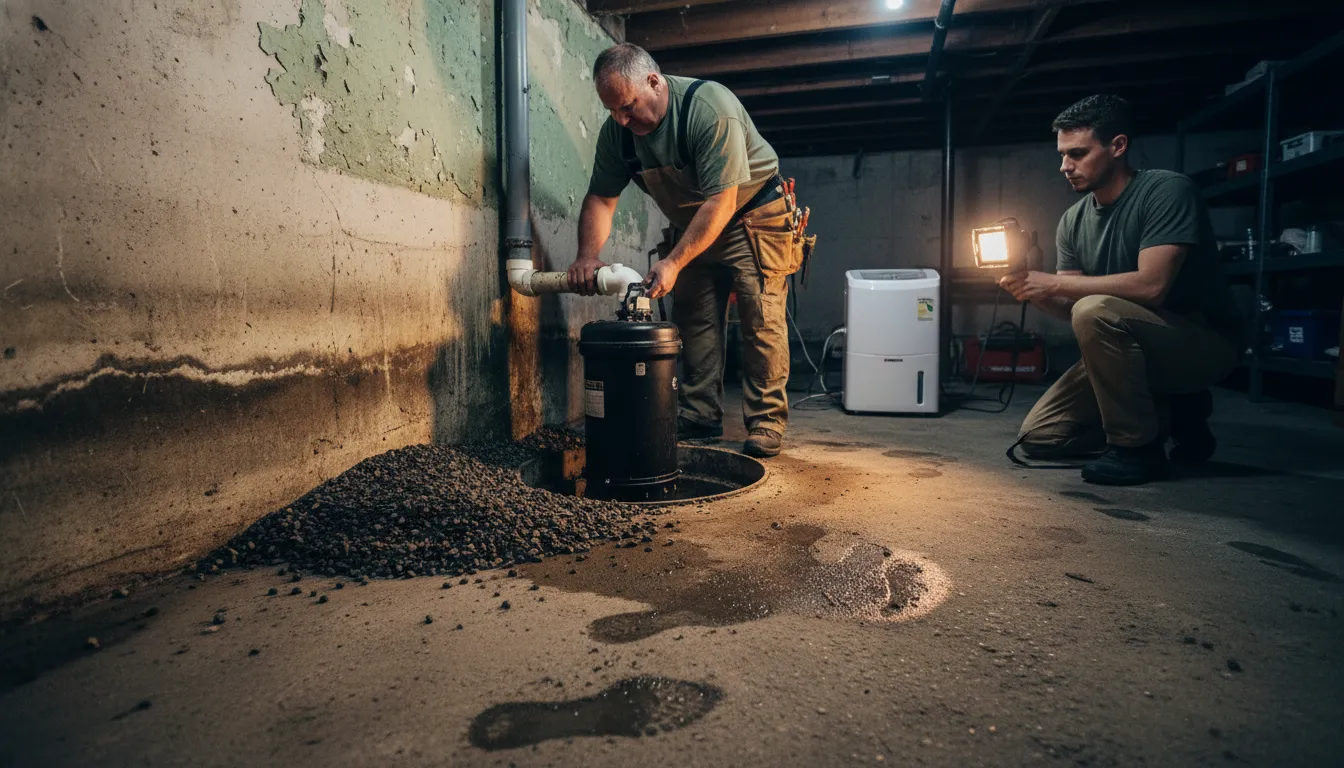
- Excavation and Pit Placement: A hole is dug, and a pre-formed sump liner (pit) is set in place, often surrounded by gravel for proper drainage.
- Plumbing and Discharge: A discharge pipe is installed to carry pumped water well away from the foundation. A check valve is critical in this line to prevent ejected water from flowing back into the pit.
- Electrical Connection: A dedicated Ground Fault Circuit Interrupter (GFCI) electrical outlet is required. Using an extension cord for a sump pump is unsafe and not up to code. For systems with a battery backup, the backup unit will also be wired and connected.
- System Testing: The installer will test the pump by pouring water into the pit to ensure it activates automatically, pumps efficiently, and shuts off correctly.
Find the perfect sump pump installation & repair companies for your needs
Get personalized recommendations and expert advice
Understanding Costs in Arkansas
The cost of sump pump services in Arkansas varies widely based on the scope of work, the type of equipment, and the complexity of the installation.
- Basic Pump Installation: Installing a single primary pump (submersible or pedestal) typically ranges from $1,200 to $2,500, including labor and materials 2.
- Adding a Battery Backup System: Incorporating a battery backup pump adds $150 to $400+ to the project cost for the unit and additional labor 3.
- Complete System with Interior Drainage: Installing a sump pump as part of a full interior perimeter drain (French drain) system is a more significant project. Costs for a comprehensive system can range from $4,000 to $15,000 or more, depending on the linear footage of drainage and the accessibility of the space 4 5.
- Annual Maintenance: A professional inspection, cleaning, and test typically costs between $100 and $250. This service is highly recommended to ensure reliability 6.
- Repairs: Common repair issues include clearing clogged impellers, fixing stuck float switches, or replacing faulty check valves. Repair costs vary based on the part and labor required 7.
Common Repair Issues and Maintenance
Even well-installed pumps require attention. Being aware of common problems can help you address them quickly:
- Clogged Impeller: Debris in the pit can jam the pump's impeller, preventing it from spinning. Regular cleaning of the pit helps avoid this.
- Stuck Float Switch: The float switch acts as the "on/off" trigger for the pump. If it gets stuck in the "up" or "down" position, the pump will either run continuously or not activate at all.
- Faulty Check Valve: A broken check valve allows water to flow back into the pit after the pump cycles off, causing the pump to short-cycle and wear out prematurely.
- Power Failure: This is not a pump malfunction, but it's the most common cause of failure. A battery backup system is the direct solution.
Essential Maintenance Tips:
- Test your pump quarterly by pouring a bucket of water into the pit.
- Ensure the discharge line is clear and directs water several feet away from your foundation.
- Clean the pit and inspect the pump intake screen annually, or have a professional do it.
- If you have a battery backup, check and maintain the battery according to the manufacturer's instructions.
Choosing the Right Professional in Arkansas
For a system this important, selecting the right contractor is key. Look for a licensed plumber or a specialized basement waterproofing company with proven experience in sump pump and drainage system installation. They should provide a detailed, written estimate that outlines the pump type, backup options, drainage work (if needed), and all associated costs. Ask for references and verify they will pull any necessary permits. A reputable professional will focus on diagnosing the source of your water issue and designing a system that solves it effectively for the long term 8 9 10.
Frequently asked questions
Sources
Footnotes
-
Basement sump pump installation: 7 Powerful Steps for Success 2025 - https://basementwaterproofingscientists.com/basement-sump-pump-installation/ ↩
-
Sump Pump Installation in Little Rock - Plumbing - BR McGinty - https://www.brmcginty.com/plumbers-little-rock-arkansas/sump-pump-installation/ ↩
-
Backup Sump Pumps Contractor Near Little Rock, Benton, Fayetteville - https://www.arkansascrawlspace.com/sump-pump/system/backup-pump.html ↩
-
Sump Pump Installation Cost Guide | 2026 Prices & Factors - https://modernize.com/foundations/basement-waterproofing/sump-pump-installation-cost ↩
-
2025 Drain Tile Costs: What to Expect for Interior, Exterior, and Sump ... - https://basementwaterproofingscientists.com/drain-tile-installation-cost-guide/ ↩
-
Basement Sump Pumps: Types, Costs, and Maintenance | Ark Basement Waterproofing | Serving the cities of Pittsburgh, Erie and Canton - https://www.arkbasementservices.com/basement-sump-pumps-types-costs-and-maintenance/ ↩
-
Install a Sump Pump: A Step-by-Step Guide - https://www.effectivewaterproofing.com/how-to-install-a-sump-pump-step-by-step-guide/ ↩
-
Sump Pump Installation Near Benton, Little Rock, Fayetteville - https://www.arkansascrawlspace.com/sump-pump/sump-pump-install.html ↩
-
Your Guide to Sump Pump Installation: Tips from the Pros - https://basementwaterproofingscientists.com/sump-pump-installation-guide-2025/ ↩
-
Sump Pump Systems Installed in Arkansas - https://www.arkansascrawlspace.com/sump-pump/system.html ↩