Find the Best Garbage Disposal Service Companies for Your Business
No obligation • Fast responses • Nationwide coverage

Why you can trust Search a Plumber
Search a Plumber is a leading United States resource for finding and evaluating professional plumbing services. Our team researches licensing, experience, and customer feedback to create unbiased, fact-driven overviews. Companies cannot pay to change ratings or placement, ensuring homeowners get trustworthy information.
Search providers near you
Best Garbage Disposal Service Companies in Montana Ranked
A functional garbage disposal is a key component of a modern Montana kitchen, making daily cleanup easier and more efficient. When this appliance fails-whether it's jammed, leaking, or simply won't turn on-it disrupts your routine and can lead to bigger plumbing issues. This guide covers everything you need to know about garbage disposal services in the Treasure State, from choosing the right horsepower for your household to understanding the unique considerations for homes with septic systems. You'll find practical information to help you navigate repairs, replacements, and finding the right local professional for the job.
Understanding Garbage Disposal Basics
A garbage disposal, or food waste disposer, is an electrically powered unit mounted beneath your kitchen sink. It grinds food scraps into small particles that can be safely washed down your drainpipe. In Montana, these appliances involve both plumbing (drain connections, potential clogs, leaks) and electrical components (dedicated power source, wiring, switch). Most installations and repairs are handled by plumbers who are also qualified to manage the basic electrical connections, though complex electrical work may require a licensed electrician.
Choosing the right unit starts with understanding horsepower (HP), which indicates grinding power and capability:
- 1/3 to 1/2 HP: Suitable for basic use in smaller households or those who generate minimal food waste. These are typically the most affordable options.
- 3/4 HP: A popular mid-range choice for average families. These units handle a wider variety of food waste more effectively and are offered by major brands like InSinkErator and Moen.
- 1 HP and Above: High-power, quieter models designed for frequent use and tougher food scraps. These are often continuous-feed disposals and come at a higher price point for premium performance.
Key Considerations for Montana Homes
Montana's mix of municipal sewer systems and private septic systems requires special attention when installing or using a garbage disposal.
Septic System Compatibility
A significant number of Montana homes rely on private septic systems. The Montana Department of Environmental Quality (DEQ) notes that garbage disposals increase the amount of solids entering a septic tank, which can accelerate sludge buildup and potentially lead to system failure or groundwater contamination. If you have a septic system:
- Use the disposal sparingly, primarily for small, soft scraps.
- Avoid putting fibrous, starchy, or greasy foods down the disposal.
- Consult local DEQ guidance and consider having your septic tank pumped more frequently.
- In some cases, it may be advisable to avoid installing a disposal altogether to protect your system's longevity and Montana's groundwater.
Plumbing and Electrical Compatibility
Before purchasing a new unit or scheduling a repair, assess your existing setup. Compatibility issues are a common source of installation headaches and added costs.
- Plumbing: Check the size and type of your drainpipe. Most disposals connect to a standard 1.5-inch drain. Ensure there is a proper dishwasher connection if needed, and that the physical space under your sink can accommodate the unit.
- Electrical: A garbage disposal requires a dedicated circuit. It can be plugged into a grounded outlet under the sink or be hardwired directly. You'll also need an approved switch, typically a wall switch or an air-activated switch mounted on the countertop 1.
Find the perfect garbage disposal service companies for your needs
Get personalized recommendations and expert advice
Repair vs. Replacement: Making the Right Choice
When your disposal stops working, the first decision is whether to repair it or replace it entirely.
Common Problems and Repairs
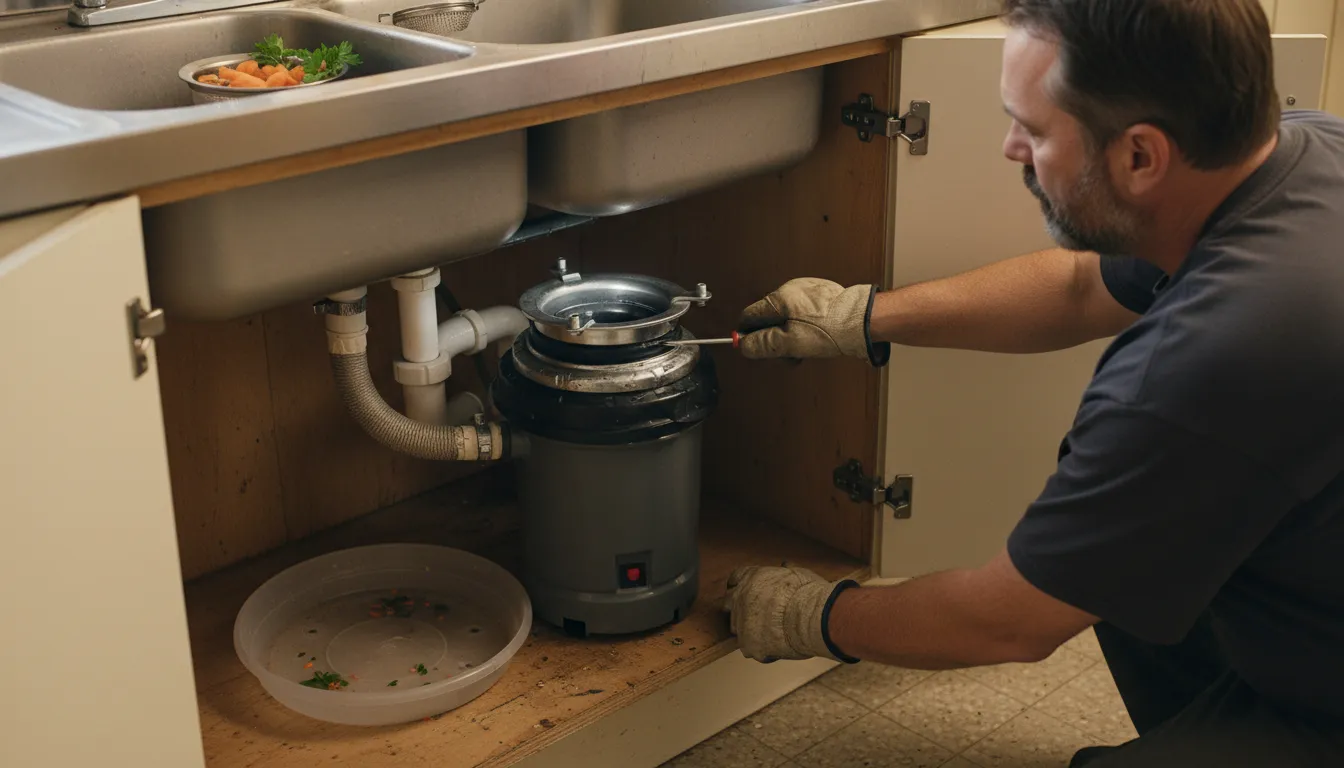
Typical issues include jams, leaks, humming without spinning, or complete failure to turn on. Many jams can be cleared manually with a special wrench (often provided with the unit). Leaks may originate from the sink flange, drainpipe connections, or the unit itself and often require tightening or replacing seals.
When is repair a viable option? If the unit is relatively new (under 5-7 years), a high-end model, or the problem is a simple clog or minor leak, repair is usually the most cost-effective path. Professional repair costs in Montana typically range from $100 to $250, depending on the parts needed and labor time.
Signs You Need a Replacement
Sometimes, replacement is more practical and economical than repair. Consider a new unit if:
- The disposal is over 10 years old.
- The motor is burned out or the unit has major internal damage.
- Repair costs are estimated to be 50% or more of the price of a new, comparable unit.
- You want to upgrade to a more powerful, quieter, or more efficient model.
The total cost for a replacement, including the unit and professional installation, generally ranges from $200 to over $700 in Montana. This wide range depends heavily on the unit's horsepower and features (basic to high-end) and the complexity of the installation.
The Professional Installation Process
Hiring a professional ensures the job is done safely and correctly, adhering to local codes. Here's what to expect.
Who to Hire
For a full installation or complex repair, a licensed plumber is the most common and qualified professional. They handle the drain connections, mounting, and typically the basic electrical hookup 2. If your installation requires running a new electrical circuit or significant wiring work, you may also need to involve a licensed electrician 2.
Preparing for the Service Call
You can make the process smoother and potentially reduce labor time by preparing your kitchen:
- Clear out the cabinet under your sink completely.
- Shut off power to the disposal at the circuit breaker.
- Shut off the water supply under the sink if needed.
- Know your setup. Note the brand and model of your old disposal if possible, and identify whether it's plugged in or hardwired.
- Have a bucket and towels on hand for any residual water.
DIY vs. Professional Installation
DIY installation can be feasible if you are replacing an existing disposal with a similar model and are comfortable with basic plumbing and electrical work. The key is that the plumbing connections and electrical supply are already in place and compatible.
You should call a professional for:
- Installing a disposal where one never existed (new location).
- Switching from a batch-feed to a continuous-feed model or vice-versa, which may require different electrical switches.
- Any uncertainty about electrical wiring or circuit capacity.
- Homes with septic systems, to discuss the best practices and potential impacts.
- If you encounter rusted or corroded fittings that are difficult to remove 3 4.
Cost Breakdown for Montana Homeowners
Understanding the cost components helps in budgeting and getting accurate estimates.
- Unit Cost: The disposal itself can range from $50 for a basic, low-HP model to $325 or more for a premium 1+ HP unit from brands like InSinkErator.
- Labor Cost: Professional labor rates in Montana typically fall between $50 and $125 per hour. A standard replacement of a similar model often takes 1-2 hours, while a new installation or complex repair will take longer.
- Total Project Costs:
Always get a detailed estimate that separates parts and labor before work begins.
Maintaining Your Garbage Disposal
Proper maintenance extends the life of your unit and prevents problems.
- Run with Cold Water: Always use a strong flow of cold water before, during, and for about 30 seconds after grinding. Cold water solidifies grease, allowing it to be chopped up and carried away.
- Grind Suitable Items: Stick to small, soft food scraps. Avoid fibrous materials (celery, corn husks), starchy foods (pasta, rice), grease/oils, and non-food items.
- Clean Regularly: Periodically grind a handful of ice cubes or citrus peels to help clean the grinding chamber and sharpen the blades.
- Septic System Care: If you have a septic tank, use a disposal minimally and consider using enzyme treatments designed for septic systems to help break down solids.
Frequently asked questions
Sources
Footnotes
-
Is My Garbage Disposal Compatible with My Plumbing and Electrical? - https://agentisplumbing.com/is-my-garbage-disposal-compatible-with-my-plumbing-and-electrical/ ↩
-
Who Installs Garbage Disposals | Plumber or Electrician? - https://hallerent.com/blog/garbage-disposal-installation-plumber-or-electrician/ ↩ ↩2
-
Garbage Disposal Installation in Missoula, MT | Call a Pro Today - https://rightnowplumbingmt.com/garbage-disposal-installation-missoula/ ↩
-
A Montana Homeowner's Guide to Septic Systems - https://deq.mt.gov/files/Land/SolidWaste/Documents/HomeownerGuideSepticSystems.pdf ↩
-
How Much Does Garbage Disposal Replacement Cost? - https://modernize.com/plumbing/garbage-disposal/replacement-cost ↩
-
2026 Garbage Disposal Replacement & Repair Costs - https://homeguide.com/costs/garbage-disposal-repair-cost ↩
-
Garbage Disposal Repair vs. Replacement: What's Cheaper? - https://qualityplumbing.com/garbage-disposal-repair/ ↩
-
2026 Garbage Disposal Installation Cost - HomeGuide - https://homeguide.com/costs/garbage-disposal-installation-cost ↩