
How often to flush and descale a tankless water heater
Tankless water heaters are efficient, but they're also more sensitive to mineral buildup than old-style tanks. If you live in a hard-water area and skip flushing and descaling, you can lose efficiency fast and dramatically shorten the unit's life. A bit of routine maintenance-either DIY or by a plumber-keeps hot water steady and helps you avoid expensive repairs.
Quick answer
Most tankless water heaters should be flushed and descaled about once a year, and every 6-12 months in hard-water areas or high-use homes. Minerals in hard water form limescale inside the heat exchanger, restricting flow and forcing the heater to work harder. Manufacturers and pros typically call for annual descaling in average water conditions, with more frequent service when hardness is high or usage is heavy.1 2 If your water is softened and usage is low, a plumber may stretch full descaling to every 18-24 months, but you should still have the unit checked yearly.
Why tankless heaters need flushing and descaling
Tankless water heaters push water through a compact heat exchanger. When your water has calcium and magnesium (hard water), those minerals fall out of solution on the hot metal surfaces and turn into limescale.
That scale layer:
- Insulates the heat exchanger so it takes more energy to heat the same water.
- Narrows internal passages, reducing flow on the hot side only.
- Can cause overheating, noisy operation, and error codes.
Lab testing on gas and tankless heaters has shown that units run on hard water lose efficiency quickly and can even fail early from heavy scale buildup, while those on softened water tend to maintain their original efficiency for many years.3 Descaling is simply a controlled flush with a mild acid solution (or vinegar) that dissolves that mineral layer before it can do real damage.
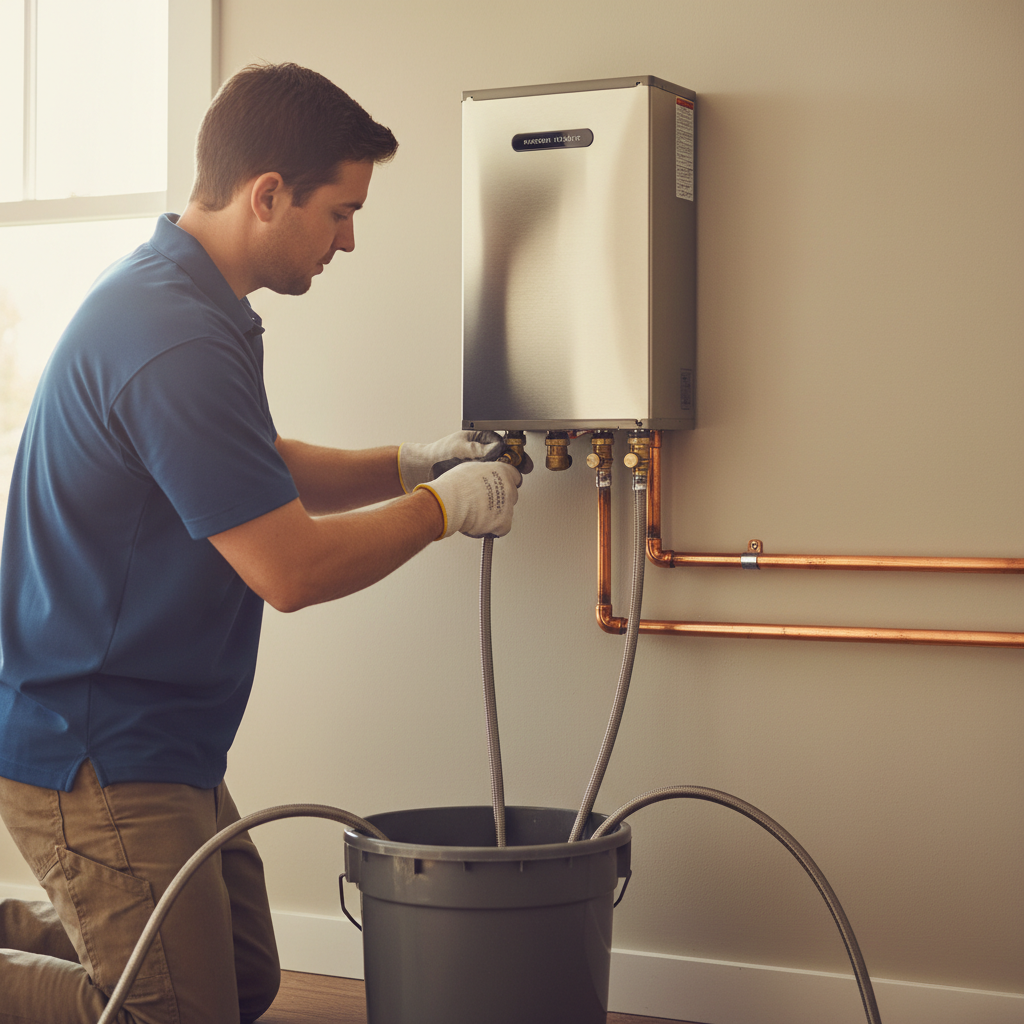
How often to flush and descale (by water hardness and usage)
Use your owner's manual as the final word, but these are typical U.S. schedules based on water hardness and how much hot water you use:1 2
1. Very hard water or well water
(Areas with noticeably white scale on fixtures, or hardness often above ~10-12 grains per gallon; many parts of the Southwest and Midwest.)
- Flush and descale: every 6 months.
- Have a plumber inspect: at least yearly (gas pressure, venting, condensate, filters).
2. Moderately hard to hard water
(Most city supplies measure as "hard" but not extreme.)
- Flush and descale: every 12 months.
- This is the most common manufacturer recommendation.
3. Softened or naturally soft water
- Professional checkup: every 12 months (clean filters, check combustion/venting, look for leaks).
- Full chemical descaling: about every 18-24 months, or sooner if you see performance issues.
4. Heavy-use households or commercial-style loads
- If you have a large family, soaking tubs, or multiple showers running at once daily, lean toward the shorter interval above.
Signs you may need service sooner
Schedule a flush and inspection soon if you notice:
- Hot water pressure dropping while cold pressure is normal.
- Water taking noticeably longer to get hot.
- Temperature swings or lukewarm water under normal demand.
- New noises from the unit (whining, rumbling, or sizzling).
- Repeated error codes related to flow, temperature, or overheating.
These usually point to scale buildup or a clogged inlet filter.
What plumbers do during a tankless flush and descale
A routine tankless maintenance visit typically takes about an hour to an hour and a half.1 2 While every brand is a little different, most plumbers will:
-
Shut the unit down safely
- Turn off electrical power (or unplug) and shut off the gas valve for gas models.
- Close the hot and cold isolation valves at the heater.
-
Hook up flushing equipment
- Connect hoses to the built-in service ports.
- Attach hoses to a small circulation pump and a bucket filled with descaling solution or vinegar.
-
Circulate descaling solution
- Pump the solution through the heat exchanger in a loop, usually 30-60 minutes, until scale is dissolved.
- Some pros reverse the flow compared to normal operation to help loosen deposits more effectively.
-
Rinse and restore
- Flush clean water through the heater to clear any remaining solution.
- Reopen valves, restore gas and power, and check operation.
-
Inspect and clean other components
- Clean or replace the cold-water inlet screen/filter.
- Check venting, combustion air, and condensate drain.
- Look over fittings and unions for small leaks or corrosion.
Many plumbers also note the condition of the scale they remove; if it's heavy even with yearly service, they may recommend a water softener or scale-reduction filter to protect the heater.
Simple precautions homeowners can take between visits
You don't have to wait for a plumber to baby your tankless heater. A few simple habits go a long way:
1. Clean the cold-water inlet screen
Most tankless units have a small mesh screen on the cold inlet to catch debris. With power and water off to the unit, many homeowners can safely:
- Remove the screen per the manual.
- Rinse out sand, rust, or grit.
- Reinstall it snugly before turning water and power back on.
This helps prevent flow problems and keeps particles from lodging in the heat exchanger.
2. Control water hardness
If you already have a water softener, keep salt levels up and the system serviced so it's actually reducing hardness. When a softener or anti-scale filter is working properly, it can significantly reduce scale formation and extend the time between chemical descaling cycles.3
If you don't have any treatment and live in a known hard-water area, get your water tested and ask a plumber or water-treatment pro whether a softener, anti-scale cartridge, or both make sense for your home.
3. Keep settings and surroundings reasonable
- Set temperature around 120°F unless you have a special need for hotter water. Higher temps speed up scale formation and increase scald risk.
- Give the heater some breathing room. Don't stack boxes against it or block combustion air openings.
- Check for drips or corrosion under and around the unit a few times a year so you catch small issues early.
4. DIY flushing-only if you're comfortable
Many homeowners do their own tankless flush using a pump and hose kit, following the manufacturer's instructions. Done right, this can save some money. But be cautious:
- Using the wrong chemicals or concentration can damage seals and the heat exchanger.2
- Poor hose connections can cause leaks and water damage.
- Skipping steps or not rinsing correctly can leave residue in the system and may void the warranty.
If you're unsure at any point-or if the unit is still under a strong manufacturer warranty-it's smart to have a licensed plumber perform the work.
Conclusion
In most U.S. homes, plan on a professional tankless water heater flush and descale every year-and every 6-12 months in hard-water or heavy-use situations-to keep your hot water reliable and your equipment running efficiently.
Sources
Footnotes
-
Stiebel Eltron USA - "How to Descale Your Tankless Water Heater for Better Performance" (descaling steps and frequency guidance). https://www.stiebel-eltron-usa.com/how-descale-your-tankless-water-heater-better-performance ↩ ↩2 ↩3
-
Sureway Comfort - "Tankless water heater descaling: complete guide" (common manufacturer recommendation of annual descaling, 6-12 months in hard water). https://www.surewaycomfort.com/blog/tankless-water-heater-descaling-complete-guide ↩ ↩2 ↩3 ↩4
-
Clear Creek Water Works summarizing Battelle study - "The Energy Efficiencies of Soft Water" (impact of hard vs softened water on heater efficiency and lifespan, including tankless results). https://clearcreekwaterworks.com/energy-efficient-appliances/ ↩ ↩2